Vital Wheat Gluten Market
Vital Wheat Gluten Market Summary
As per Market Research Future analysis, the Vital Wheat Gluten Market Size was estimated at 1.374 USD Billion in 2024. The Vital Wheat Gluten industry is projected to grow from 1.422 USD Billion in 2025 to 2.005 USD Billion by 2035, exhibiting a compound annual growth rate (CAGR) of 3.49% during the forecast period 2025 - 2035
Key Market Trends & Highlights
The Vital Wheat Gluten Market is experiencing robust growth driven by evolving consumer preferences and industry innovations.
- The demand for plant-based proteins is surging, particularly in North America, as consumers seek healthier dietary options.
- Clean label products are gaining traction, reflecting a shift towards transparency in food ingredients across the Asia-Pacific region.
- E-commerce channels are expanding rapidly, facilitating greater access to vital wheat gluten products for both consumers and businesses.
- The growth in the bakery sector and rising health consciousness are key drivers propelling the market forward.
Market Size & Forecast
| 2024 Market Size | 1.374 (USD Billion) |
| 2035 Market Size | 2.005 (USD Billion) |
| CAGR (2025 - 2035) | 3.49% |
Major Players
Tereos (FR), Cargill (US), Archer Daniels Midland (US), Kraft Foods (US), Manildra Group (AU), MGP Ingredients (US), Bunge (BR), Mühlenchemie (DE), Malt Products Corporation (US)
Vital Wheat Gluten Market Trends
The Vital Wheat Gluten Market is currently experiencing a notable transformation, driven by evolving consumer preferences and increasing demand for plant-based protein sources. This market segment appears to be gaining traction as more individuals seek healthier dietary options, which has led to a rise in the incorporation of vital wheat gluten in various food products. Additionally, the growing awareness regarding gluten's functional properties in enhancing texture and elasticity in baked goods is likely to further bolster its appeal among manufacturers. As a result, the market landscape is shifting, with producers exploring innovative applications and formulations to meet the diverse needs of consumers. Moreover, the Vital Wheat Gluten Market seems to be influenced by the expanding trend of clean label products. Consumers are increasingly inclined towards transparency in food labeling, prompting manufacturers to highlight the natural and wholesome attributes of their offerings. This shift may encourage the development of gluten-based products that align with clean label standards, thereby attracting health-conscious buyers. Furthermore, the rise of e-commerce platforms is facilitating greater accessibility to vital wheat gluten, allowing consumers to purchase these products conveniently. Overall, the market appears poised for growth as it adapts to the changing dynamics of consumer behavior and preferences.
Rising Demand for Plant-Based Proteins
The Vital Wheat Gluten Market is witnessing an upsurge in demand for plant-based protein alternatives. As consumers become more health-conscious, they are increasingly opting for products that offer nutritional benefits without animal-derived ingredients. This trend is likely to drive innovation in product formulations, leading to a broader range of offerings that cater to diverse dietary preferences.
Focus on Clean Label Products
There is a growing emphasis on clean label products within the Vital Wheat Gluten Market. Consumers are seeking transparency in food ingredients, prompting manufacturers to develop gluten-based items that are free from artificial additives and preservatives. This trend may enhance consumer trust and loyalty, as buyers gravitate towards brands that prioritize natural ingredients.
Expansion of E-Commerce Channels
The Vital Wheat Gluten Market is experiencing a shift towards e-commerce platforms, which are becoming increasingly popular for purchasing food ingredients. This trend may provide consumers with greater access to a variety of gluten products, facilitating informed choices and encouraging experimentation with new recipes. As online shopping continues to grow, it could reshape the distribution landscape for vital wheat gluten.
Vital Wheat Gluten Market Drivers
Growth in the Bakery Sector
The bakery sector is experiencing notable growth, which seems to be a significant driver for the Vital Wheat Gluten Market. Vital wheat gluten is essential in bread-making, enhancing dough elasticity and improving texture. As the demand for artisanal and specialty breads rises, the need for high-quality vital wheat gluten is likely to increase. Market analysis shows that the bakery industry is projected to expand, with a compound annual growth rate that supports the increasing use of vital wheat gluten. This trend indicates that the Vital Wheat Gluten Market could benefit from the bakery sector's growth, as manufacturers seek to improve product quality and meet consumer preferences.
Increasing Health Consciousness
The rising awareness regarding health and nutrition among consumers appears to be a pivotal driver for the Vital Wheat Gluten Market. As individuals increasingly seek healthier dietary options, the demand for plant-based proteins, including vital wheat gluten, is likely to surge. This ingredient is recognized for its high protein content and low fat, making it an attractive choice for health-conscious consumers. Market data indicates that the plant-based protein segment is projected to grow significantly, with vital wheat gluten playing a crucial role in this expansion. The shift towards healthier eating habits suggests that the Vital Wheat Gluten Market may experience sustained growth as more consumers incorporate this ingredient into their diets.
Rising Vegan and Vegetarian Trends
The growing trend towards veganism and vegetarianism appears to be a crucial driver for the Vital Wheat Gluten Market. As more consumers adopt plant-based diets, the demand for meat alternatives is likely to rise. Vital wheat gluten serves as a primary ingredient in many meat substitutes, providing texture and protein content. Market data suggests that the meat alternatives segment is expanding rapidly, with vital wheat gluten being a key component in various products. This shift in dietary preferences indicates that the Vital Wheat Gluten Market may see increased demand as manufacturers innovate and create new plant-based offerings to cater to this evolving consumer base.
Sustainability and Environmental Concerns
Sustainability and environmental concerns are increasingly shaping consumer preferences, which appears to be a significant driver for the Vital Wheat Gluten Market. As consumers become more environmentally conscious, they are likely to favor plant-based ingredients over animal-derived products. Vital wheat gluten, being a plant-based protein, aligns well with these sustainability goals. Market data indicates that the demand for sustainable food products is on the rise, with consumers actively seeking out ingredients that have a lower environmental impact. This trend suggests that the Vital Wheat Gluten Market may experience growth as manufacturers respond to consumer demands for more sustainable and eco-friendly food options.
Technological Advancements in Food Processing
Technological advancements in food processing are likely to influence the Vital Wheat Gluten Market positively. Innovations in production techniques and processing methods can enhance the quality and functionality of vital wheat gluten, making it more appealing to food manufacturers. These advancements may lead to improved extraction processes, resulting in higher yields and better product characteristics. As food manufacturers seek to optimize their formulations, the demand for high-quality vital wheat gluten is expected to rise. This trend suggests that the Vital Wheat Gluten Market could benefit from ongoing technological developments, which may enhance product offerings and meet the evolving needs of consumers.
Market Segment Insights
By Type: Dry Gluten (Largest) vs. Wheat Protein Isolate (Fastest-Growing)
In the Vital Wheat Gluten Market, Dry Gluten holds the largest market share, reflecting its extensive application across various food products, particularly in baked goods and meat substitutes. Its ability to enhance texture and improve protein content has made it the preferred choice for many manufacturers. Meanwhile, Wheat Protein Isolate, while a smaller segment, is rapidly expanding due to its high purity level and its rising use in health-oriented food products and sports nutrition, catering to a growing market segment concerned with fitness and wellness.
Dry Gluten (Dominant) vs. Wheat Protein Concentrate (Emerging)
Dry Gluten stands out as the dominant segment in the Vital Wheat Gluten Market due to its extensive applicability and strong demand in both commercial and home cooking environments. It is primarily favored for its functional properties, such as water absorption and elasticity, which are critical in baking and meat processing. On the other hand, Wheat Protein Concentrate is emerging as a noteworthy player, positioned well in the health and wellness space. It offers a balanced protein source, appealing to consumers looking for plant-based alternatives and protein enrichment, reflecting a significant shift towards healthier dietary choices.
By Usage: Food Industry (Largest) vs. Non-Food Industry (Fastest-Growing)
In the Vital Wheat Gluten Market, the Food Industry holds the largest share, driven by the increasing demand for plant-based proteins and gluten-free products. This segment benefits from consumer trends leaning towards healthier food choices, making it a significant driver of market growth. As a vital ingredient in various food items, including baked goods and meat alternatives, the Food Industry is crucial for maintaining the growth of the vital wheat gluten market. On the other hand, the Non-Food Industry, particularly the Feed Industry, is emerging rapidly due to heightened interest in sustainable and high-quality animal feed. The growing livestock production globally, coupled with the demand for nutritious feed ingredients, positions this segment as the fastest-growing within the vital wheat gluten market. Innovations in feed formulations and health-focused approaches are propelling this upward trend.
Food Industry (Dominant) vs. Non-Food Industry (Emerging)
The Food Industry is the dominant segment within the Vital Wheat Gluten Market, characterized by its established presence and extensive applications in various food products. This segment incorporates vital wheat gluten in an array of offerings, such as breads, noodles, and snacks, catering to the rising trend of plant-based and gluten-free diets. Meanwhile, the Non-Food Industry, primarily within the Feed Industry, is emerging as a new frontier. This segment leverages the nutritional benefits of vital wheat gluten to enhance animal feed, appealing to livestock producers focused on optimizing animal health and growth. Together, these segments illustrate a dynamic landscape where traditional food applications coalesce with innovative approaches in animal nutrition.
By Application: Bakery and Cereals (Largest) vs. Meat Analogue Products (Fastest-Growing)
In the Vital Wheat Gluten market, the application segment reveals a diverse distribution of market shares. The Bakery and Cereals category stands out as the largest, benefiting from the rising demand for various baked goods and breakfast cereals, where wheat gluten is prized for its functional properties. Other notable segments include Bakery Products and Texturized Vegetable Proteins, which are also experiencing growth due to increasing consumer interest in plant-based diets and alternative protein sources. Growth trends indicate that the Meat Analogue Products segment is the fastest-growing application, driven by an escalating consumer shift towards vegetarian and vegan options. This shift is further fueled by rising health consciousness and environmental awareness among consumers, who seek sustainable protein sources. The versatility of vital wheat gluten as a binding and texturizing agent makes it an appealing ingredient for manufacturers of meat alternatives, further enhancing its market prospects.
Bakery Products (Dominant) vs. Texturized Vegetable Proteins (Emerging)
In the realm of Vital Wheat Gluten, Bakery Products maintain their position as a dominant application due to their widespread use in traditional and artisanal foods. The demand for gluten-rich formulations in bread and pastries emphasizes the essential role of vital wheat gluten in achieving desired textures and flavors. On the other hand, Texturized Vegetable Proteins are gaining traction as an emerging segment, influenced by a consumer trend towards healthier and sustainable eating practices. This allows varied food manufacturers to capitalize on new product innovations that cater to flexitarian and plant-based diets. Both segments demonstrate lucrative potential; however, the distinctive characteristics of vital wheat gluten in enhancing the sensory attributes of Bakery Products secure their dominance, while Texturized Vegetable Proteins indicate significant future growth.
By Source: Wheat (Largest) vs. Corn (Fastest-Growing)
In the Vital Wheat Gluten Market, the source segment is predominantly dominated by wheat, which holds the largest market share due to its superior protein content and functional properties. Corn, on the other hand, is gradually increasing its presence as a source for gluten, benefiting from the growing demand for gluten-free alternatives and its versatility in various applications. This shift is indicative of changing consumer preferences towards more sustainable and alternative sources of gluten.
Wheat: Dominant vs. Corn: Emerging
Wheat is recognized as the dominant source in the Vital Wheat Gluten Market, primarily due to its high protein quality and the functional benefits it provides in food applications, such as improved texture and elasticity in baked goods. Conversely, corn is emerging as a significant player, particularly in markets emphasizing health-conscious and gluten-free products. Corn gluten is perceived as an alternative to traditional wheat-based gluten, appealing to non-wheat consumers and those with gluten sensitivities. This change is propelled by an increasing interest in plant-based diets and novel food formulations, allowing corn to carve out a gradual share among health-conscious consumers.
Vital Wheat Gluten Market Vital Wheat Gluten Market Share by End-User, 2021 Insights
The 'Food Industry' segment held the largest share of the Vital Wheat Gluten Market in 2021, accounting for around 70% of the market revenue. The food industry uses vital wheat gluten as an additive to improve the texture, elasticity, and protein content of various food products, including bread, pasta, and baked goods. The rising demand for gluten-free and high-protein food products is driving the growth of the vital wheat gluten market in the food industry.
On the other hand, the 'Non-Food Industry' segment is expected to experience significant growth during the forecast period.Vital wheat gluten is used in various non-food applications, such as adhesives, cosmetics, and pharmaceuticals. The growing demand for biodegradable and eco-friendly materials is contributing to the growth of the vital wheat gluten market in the non-food industry.
Vital Wheat Gluten Market Regional Insights
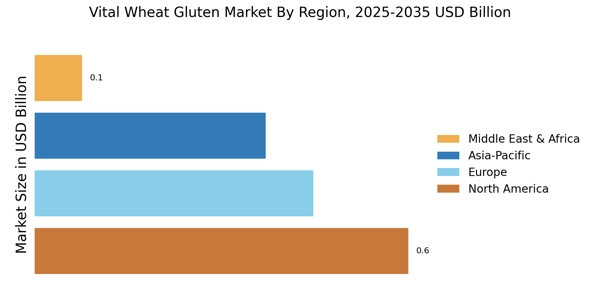
North America is expected to hold the largest share of the Vital Wheat Gluten Market in 2023, owing to the increasing demand for gluten-free products and the presence of major manufacturers in the region. The market growth can be attributed to rising consumer awareness about the benefits of gluten-free diets and the growing popularity of plant-based meat alternatives. Europe is expected to be the second-largest market for Vital Wheat Gluten Market due to the growing demand for baked goods and processed foods.
The APAC region is expected to witness significant growth in the market, owing to the increasing population and rising disposable income.South America and the MEA region are expected to have a modest share of the market, but they are expected to grow at a steady pace in the coming years.
Source Primary Research, Secondary Research, Market Research Future Database and Analyst Review
Regional Insights
Key Players and Competitive Insights
Key Companies in the Vital Wheat Gluten Market include
Industry Developments
The Vital Wheat Gluten Market is projected to reach USD 1.75 billion by 2032, exhibiting a CAGR of 3.49% during the forecast period 2024-2032. This growth is attributed to rising demand for gluten-free products, increasing awareness of celiac disease and gluten intolerance, and growing applications in the food and beverage industry. The market has witnessed significant growth in recent years, driven by the increasing popularity of plant-based diets and the growing demand for gluten-free alternatives.
Key market players are focusing on expanding their production capacities and product offerings to meet the growing demand.Recent developments in the Vital Wheat Gluten Market include the launch of new products, such as gluten-free flours and baking mixes, by major manufacturers. Additionally, there has been a growing focus on research and development to improve the quality and functionality of vital wheat gluten. This has led to the development of new production techniques and the use of advanced technologies to enhance the nutritional value and functionality of vital wheat gluten.
Future Outlook
Vital Wheat Gluten Market Future Outlook
The Vital Wheat Gluten Market is projected to grow at 3.49% CAGR from 2025 to 2035, driven by increasing demand in food applications and plant-based protein trends.
New opportunities lie in:
- Expansion into emerging markets with tailored gluten products.
- Development of gluten-based meat alternatives for health-conscious consumers.
- Investment in sustainable production methods to enhance brand reputation.
By 2035, the market is expected to solidify its position as a key player in the global food industry.
Market Segmentation
Vital Wheat Gluten Market Type Outlook
- Dry Gluten
- Wheat Protein Isolate
- Wheat Protein Concentrate
Vital Wheat Gluten Market Usage Outlook
- Food Industry
- Non-Food Industry (Feed Industry)
Vital Wheat Gluten Market Source Outlook
- Wheat
- Corn
- Soy
- Peas
Vital Wheat Gluten Market Application Outlook
- Bakery and Cereals
- Bakery Products
- Meat Analogue Products
- Texturized Vegetable Proteins
Report Scope
| MARKET SIZE 2024 | 1.374(USD Billion) |
| MARKET SIZE 2025 | 1.422(USD Billion) |
| MARKET SIZE 2035 | 2.005(USD Billion) |
| COMPOUND ANNUAL GROWTH RATE (CAGR) | 3.49% (2025 - 2035) |
| REPORT COVERAGE | Revenue Forecast, Competitive Landscape, Growth Factors, and Trends |
| BASE YEAR | 2024 |
| Market Forecast Period | 2025 - 2035 |
| Historical Data | 2019 - 2024 |
| Market Forecast Units | USD Billion |
| Key Companies Profiled | Tereos (FR), Cargill (US), Archer Daniels Midland (US), Kraft Foods (US), Manildra Group (AU), MGP Ingredients (US), Bunge (BR), Mühlenchemie (DE), Malt Products Corporation (US) |
| Segments Covered | Type, Usage, Application, Source, End-Use , 2021, Regional |
| Key Market Opportunities | Growing demand for plant-based proteins enhances opportunities in the Vital Wheat Gluten Market. |
| Key Market Dynamics | Rising demand for plant-based proteins drives growth in the Vital Wheat Gluten Market, influencing supply chain dynamics. |
| Countries Covered | North America, Europe, APAC, South America, MEA |
FAQs
What is the current valuation of the Vital Wheat Gluten Market as of 2024?
The Vital Wheat Gluten Market was valued at 1.374 USD Billion in 2024.
What is the projected market size for the Vital Wheat Gluten Market in 2035?
What is the expected CAGR for the Vital Wheat Gluten Market during the forecast period 2025 - 2035?
Which companies are considered key players in the Vital Wheat Gluten Market?
What are the main segments of the Vital Wheat Gluten Market by type?
How does the Food Industry compare to the Non-Food Industry in terms of market usage?
What applications dominate the Vital Wheat Gluten Market?
What sources are primarily used for Vital Wheat Gluten production?
What was the market valuation for Bakery Products in 2024?
What is the projected growth trend for Wheat Protein Isolate from 2024 to 2035?
Kindly complete the form below to receive a free sample of this Report
Customer Stories
“This is really good guys. Excellent work on a tight deadline. I will continue to use you going forward and recommend you to others. Nice job”
“Thanks. It’s been a pleasure working with you, please use me as reference with any other Intel employees.”
“Thanks for sending the report it gives us a good global view of the Betaïne market.”
“Thank you, this will be very helpful for OQS.”
“We found the report very insightful! we found your research firm very helpful. I'm sending this email to secure our future business.”
“I am very pleased with how market segments have been defined in a relevant way for my purposes (such as "Portable Freezers & refrigerators" and "last-mile"). In general the report is well structured. Thanks very much for your efforts.”
“I have been reading the first document or the study, ,the Global HVAC and FP market report 2021 till 2026. Must say, good info! I have not gone in depth at all parts, but got a good indication of the data inside!”
“We got the report in time, we really thank you for your support in this process. I also thank to all of your team as they did a great job.”