Request Free Sample ×

Kindly complete the form below to receive a free sample of this Report

* Please use a valid business email

Leading companies partner with us for data-driven Insights

clients tt-cursor
Hero Background

Epilepsy Devices Market

ID: MRFR/HC/8947-CR
169 Pages
Rahul Gotadki
Last Updated: May 15, 2026
癫痫设备市场研究报告信息按产品类型(传统设备、可穿戴设备、植入式设备、饮食等)、按技术(迷走神经刺激、深部脑刺激、加速计、响应性神经刺激等)、最终用户(医院和诊所、神经病学中心、家庭护理机构等)和地区(北美、欧洲、亚太地区和其他地区)世界)——2032 年之前的市场预测
Download PDF ×

We do not share your information with anyone. However, we may send you emails based on your report interest from time to time. You may contact us at any time to opt-out.

癫痫设备市场概述

2023 年癫痫设备市场规模为 7.5 亿美元,预计将从 2024 年的 7.9 亿美元增长到 2032 年的 11.8 亿美元,在预测期内(2024 - 2032 年)复合年增长率 (CAGR) 为 5.21%。企业职工颈椎病发病率的上升以及车祸颈椎损伤发生率的增加是推动市场增长的主要市场驱动力。

癫痫设备市场1

癫痫设备市场趋势

  • 未开发的新兴市场的巨大潜力预计将推动癫痫设备市场的增长

癫痫设备行业医疗保健基础设施的增强、未满足的医疗保健需求的增加、癫痫患病率的增加以及对传统和可穿戴癫痫设备的需求激增可能会推动未经开发的新兴国家的增长。此外,由于对改善医疗服务的需求增加以及政府对医疗基础设施的大量投资,新兴国家的医疗保健行业正在迅速扩张。对癫痫设备的需求不仅限于发达国家;中国、日本和印度等发展中国家也存在这种现象,这推动了市场的增长。未来几年癫痫设备市场的关键机遇将受到以下因素的推动:缺血性中风发病率的增加、对开发具有成本效益的癫痫设备的日益关注、对先进癫痫设备的发现和开发的研发投资的增加以及对使用癫痫设备进行癫痫诊断和监测的认识的提高。

此外,由于拥有大量注重健康的客户,癫痫设备制造的医疗器械行业的增长和创新为癫痫设备市场带来了机遇。对癫痫较敏感的老年人比例的上升是推动市场扩张的首要因素。由于拥有大量具有健康意识的客户,用于制造癫痫设备的医疗设备行业的增长和创新为癫痫设备市场提供了机会。对癫痫较敏感的老年人比例上升是推动市场扩张的首要因素。

例如,国家卫生统计中心报告称,美国每年有超过 795,000 人中风。此外,美国疾病控制与预防中心 (CDC) 报告称,缺血性中风约占所有记录中风的 87%。

然而,严格的政府法规是癫痫小工具解决方案的制造和批准的主要障碍。许多政府制定了明确的法规来监督新设备和新技术的进入。不同的监管部门提供了不同的指导方针,新事物的推出必须严格遵循。由于清关程序复杂且耗时,新产品的推出可能会被延迟。此外,脑电图和心电图 (ECG) 设备的高成本预计将限制未来几年癫痫设备的市场规模。

癫痫设备细分市场洞察

癫痫设备产品类型洞察

根据产品类型,癫痫设备市场细分包括传统设备、可穿戴设备、植入设备、饮食设备等。传统设备和可穿戴设备领域在 2021 年占据全球市场主导地位,预计在整个预测期内将保持其主导地位。这是因为它的优点包括易于携带、出色的无线可读性、检测癫痫发作的灵敏度更高、提高癫痫患者的活动能力和生活质量,以及跟踪癫痫患者的远程位置的能力,这在癫痫发作的情况下很有帮助。

癫痫设备技术见解

基于技术的癫痫设备市场细分包括迷走神经刺激、深部脑刺激、加速度计、响应性神经刺激等。在预测期内,预计深部脑刺激领域将继续主导全球市场,就像 2021 年一样。深部脑刺激器变得越来越受欢迎,这是造成这种情况的原因。深部脑刺激器越来越多地用于治疗各种神经肌肉疾病,包括帕金森病、癫痫和肌张力障碍,这有助于细分市场的扩大。

癫痫设备最终用户见解

根据最终用户,全球癫痫设备行业已细分为医院和诊所、神经病学中心、家庭护理机构等。 2021年,医院部门占据了癫痫设备最大的市场份额,预计在整个预测期内将保持其主导地位。这是因为医院拥有训练有素的医务人员,这使他们能够为患者提供更好的服务,并为包括癫痫在内的神经肌肉疾病的诊断和治疗提供额外的优势。

图 2:2021 年和 2021 年癫痫设备市场(按最终用户划分) 2030 年(百万美元)2021 年和 2030 年最终用户癫痫设备市场

资料来源:二次研究、初步研究、MRFR 数据库和分析师评论

癫痫设备区域见解

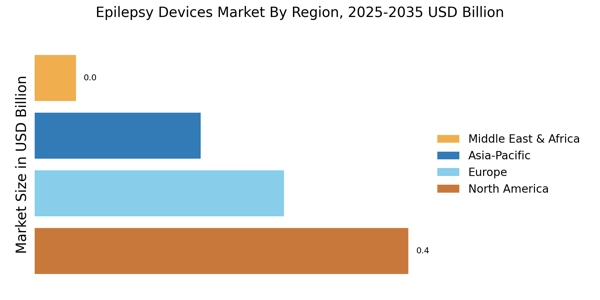
按地区划分,该研究提供了北美、欧洲、亚太地区和世界其他地区的市场洞察。 2021年,北美在癫痫设备市场中占据重要份额,预计在快速时期将保持其主导地位。此外,该地区接受神经外科手术的患者数量的增加也有助于市场的增长。此外,高购买力和癫痫设备采用率的增加预计将推动市场增长。

此外,市场报告研究的主要国家有:美国、加拿大、德国、法国、英国、意大利、西班牙、中国、日本、印度、澳大利亚、韩国和巴西。

图 3:2021 年各地区癫痫设备市场份额 (%)2021 年各地区癫痫设备市场份额

资料来源:二次研究、初步研究、MRFR 数据库和分析师评论 由于医疗保健支出的增加和大量老年人口的存在,欧洲癫痫设备市场占据第二大市场份额。此外,德国癫痫设备市场占有最大的市场份额,英国癫痫设备市场是欧洲地区增长最快的市场。

预计从 2022 年到 2030 年,亚太地区癫痫器械市场将以最快的复合年增长率增长。这是由于该地区医疗器械公司的存在,以及中国和印度等人口稠密国家购买力的不断上升。此外,医疗保健成本的不断上升以及表面肌电图、脑电图系统和加速度计等癫痫设备的使用不断增加推动了市场的扩张。  此外,中国癫痫器械市场占有最大的市场份额,印度癫痫器械市场是亚太地区增长最快的市场。

癫痫设备主要市场参与者和市场参与者竞争洞察

主要行业参与者正在研发上投入大量资金以扩大其产品范围,这将刺激癫痫设备市场的进一步增长。随着新产品发布、合同协议、并购、投资增加以及与其他组织的合作等重大市场发展,市场参与者也在开展各种战略活动来扩大其全球影响力。为了在竞争激烈、经济蓬勃发展的环境中发展和生存,癫痫设备行业的竞争对手必须提供价格实惠的产品。

本地制造以降低运营成本是全球癫痫设备行业制造商为使客户受益并扩大市场份额而采用的主要业务方法之一。医学上最近一些最重要的进展来自于癫痫小工具业务。癫痫设备市场的主要参与者包括 Boston Scientific Corporation、Natus Medical Incorporated、Nihon Kohden Corporation、MC10、Empatica Inc. 和 NeuroPace, Inc.(美国)

美敦力公司(爱尔兰)是一家全球医疗保健解决方案提供商,致力于通过医疗技术、服务和解决方案改善人们的生活。通过 Covidien,该公司加速并增强了实现有意义的突破的能力,使医院、卫生系统和医疗保健提供者能够为世界各地的患者及其家人提供最好的护理。 2021 年 6 月,Medtronic plc 推出的 Vanta 是一款植入式神经刺激器,无需充电即可提供出色的性能。

Neuronetics 是一家位于宾夕法尼亚州马尔文的上市公司,于 2003 年 4 月在特拉华州成立[4],致力于研究对标准药物表现出耐药性或缺乏反应的精神疾病的非侵入性治疗方法。治疗中使用了神经调节技术。 2020 年 9 月,Neuronostics 获得了开发其 BioEP 平台的资金,这是一个基于人工智能的系统,可以更快、更准确地诊断癫痫并监测抗癫痫药物治疗 (AD) 的反应

癫痫设备市场的主要公司包括

  • LivaNova Plc(英国)
  • 美敦力公司(爱尔兰),
  • Medpage Ltd(英国),
  • Koninklijke Philips NV(荷兰)
  • Compumedics Limited(澳大利亚)
  • 内特斯医疗公司(美国)
  • Nihon Kohden Corporation(日本)
  • MC10(美国)、Empatica Inc(美国)
  • NeuroPace Inc(美国)
  • 波士顿科学公司(美国)等

癫痫设备行业发展

2019 年 2 月,飞利浦与埃因霍温理工大学、肯本海格大学和比利时根特大学的研究人员合作,开发了一种使用放置在头部而不是内部的电极来刺激大脑的方法。他们的目标是为患有严重癫痫症的患者制定治疗方案。

2020 年 3 月,FDA 批准了 NeuroPace R用于 MRI 标记的 NS 系统,使更多患者能够从个性化、数据驱动的癫痫治疗中受益。

2020 年 5 月,

癫痫设备市场细分

癫痫设备产品类型展望

癫痫设备技术展望

  • 迷走神经刺激
  • 深部脑刺激
  • 加速度计
  • 响应性神经刺激

癫痫设备最终用户展望

癫痫设备区域展望

  • 北美
    • 美国
    • 加拿大
  • 欧洲
    • 德国
    • 法国
    • 英国
    • 意大利
    • 西班牙
    • 欧洲其他地区
  • 亚太地区
    • 中国
    • 日本
    • 印度
    • 澳大利亚
    • 韩国
    • 澳大利亚
    • 亚太地区其他地区
  • 世界其他地区
    • 中东
    • 非洲
    • 拉丁美洲

FAQs

What is the current valuation of the Epilepsy Devices Market as of 2024?

The Epilepsy Devices Market was valued at 0.79 USD Billion in 2024.

What is the projected market valuation for the Epilepsy Devices Market in 2035?

The market is projected to reach 1.519 USD Billion by 2035.

What is the expected CAGR for the Epilepsy Devices Market during the forecast period 2025 - 2035?

The expected CAGR for the market during 2025 - 2035 is 6.12%.

Which product types are included in the Epilepsy Devices Market segments?

The product types include Conventional Devices, Wearable Devices, Implantable Devices, Diet, and Others.

What are the projected valuations for Conventional Devices in 2025?

The projected valuation for Conventional Devices ranges from 0.25 to 0.5 USD Billion.

Which technologies are driving the Epilepsy Devices Market?

Key technologies include Vagus Nerve Stimulation, Deep Brain Stimulation, Accelerometry, Responsive Neurostimulation, and Others.

What is the expected market size for Responsive Neurostimulation by 2035?

The expected market size for Responsive Neurostimulation is projected to be between 0.25 and 0.5 USD Billion.

Who are the key players in the Epilepsy Devices Market?

Key players include Medtronic, Abbott, Boston Scientific, NeuroPace, LivaNova, Zywave, Nexstim, ElectroCore, and Soterix Medical.

What end-user segments are present in the Epilepsy Devices Market?

End-user segments include Hospitals and Clinics, Neurology Centers, Home Care Settings, and Others.

What is the projected valuation for Home Care Settings in 2035?

The projected valuation for Home Care Settings ranges from 0.2 to 0.4 USD Billion.
作者
Author
Author Profile
Rahul Gotadki LinkedIn
Research Manager
He holds an experience of about 9+ years in Market Research and Business Consulting, working under the spectrum of Life Sciences and Healthcare domains. Rahul conceptualizes and implements a scalable business strategy and provides strategic leadership to the clients. His expertise lies in market estimation, competitive intelligence, pipeline analysis, customer assessment, etc.
发表评论

Research Approach

Secondary Research

The secondary research process involved comprehensive analysis of regulatory databases, peer-reviewed medical journals, clinical publications, and authoritative health organizations. Key sources included the US Food & Drug Administration (FDA), European Medicines Agency (EMA), National Institutes of Health (NIH), National Center for Biotechnology Information (NCBI/PubMed), Centers for Disease Control and Prevention (CDC), World Health Organization (WHO) Global Health Observatory, European Commission Health and Food Safety Directorate, National Institute for Health and Care Excellence (NICE), American Academy of Neurology (AAN), American Epilepsy Society (AES), International League Against Epilepsy (ILAE), National Health Service (NHS) England, Centers for Medicare & Medicaid Services (CMS), EU Eurostat Health Database, Organisation for Economic Co-operation and Development (OECD) Health Statistics, National Center for Health Statistics (NCHS), and national health ministry reports from key markets including Japan's Ministry of Health, Labour and Welfare (MHLW), China's National Medical Products Administration (NMPA), and India's Central Drugs Standard Control Organization (CDSCO). These sources were used to collect epilepsy prevalence statistics, regulatory approval data for neurostimulation devices, clinical safety studies on VNS and DBS systems, demographic trends in neurological disorders, reimbursement policies for epilepsy treatments, and market landscape analysis for conventional EEG devices, wearable seizure monitors, implantable neurostimulators, and responsive neurostimulation technologies.

Primary Research

Qualitative and quantitative insights were obtained by interviewing supply-side and demand-side stakeholders during the primary research process. The supply-side sources consist of CEOs, VPs of Product Development, regulatory affairs chiefs, and commercial directors from epilepsy device manufacturers and OEMs, including Medtronic, Abbott, Boston Scientific, NeuroPace, LivaNova, and emerging wearable device companies. Healthcare administrators from academic medical centers, procurement leads from hospitals and neurology clinics, medical directors of epilepsy centers, and board-certified neurologists, epileptologists, and neurosurgeons constituted demand-side sources. The market segmentation was validated across product types (conventional, wearable, implantable), the neurostimulation device pipeline timelines were confirmed, and insights on clinical adoption patterns for VNS and RNS therapies, pricing strategies for implantable devices, and reimbursement dynamics for epilepsy monitoring units were gathered through primary research.

Primary Respondent Breakdown:

By Designation: C-level Primaries (32%), Director Level (31%), Others (37%)

By Region: North America (38%), Europe (25%), Asia-Pacific (28%), Rest of World (9%)

Market Size Estimation

Global market valuation was derived through revenue mapping and device utilization analysis. The methodology included:

Identification of 35+ key manufacturers across North America, Europe, Asia-Pacific, and Latin America specializing in epilepsy monitoring and neurostimulation devices

Product mapping across conventional EEG systems, wearable seizure detection devices, implantable VNS/DBS/RNS systems, and dietary management devices

Analysis of reported and modeled annual revenues specific to epilepsy device portfolios

Coverage of manufacturers representing 75-80% of global market share in 2024

Extrapolation using bottom-up (device volume × ASP by country/region) and top-down (manufacturer revenue validation) approaches to derive segment-specific valuations for Vagus Nerve Stimulation, Deep Brain Stimulation, Responsive Neurostimulation, Accelerometry-based wearables, and conventional diagnostic EEG systems

下载免费样本

请填写以下表格以获取本报告的免费样本