Cloud Computing Market Summary
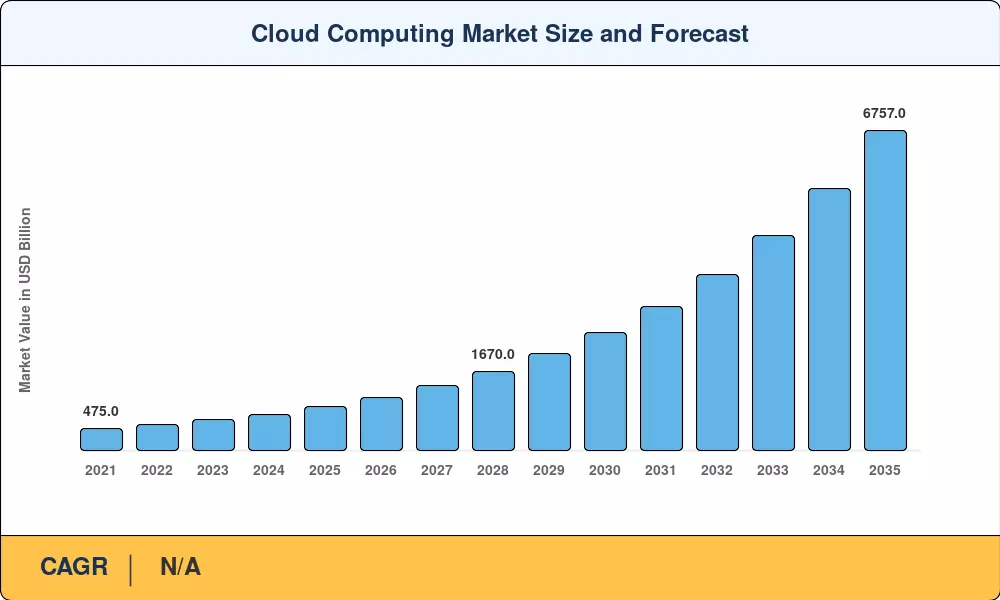
Le marché du cloud computing a atteint environ 0,92 billion de dollars en 2025, la période de prévision commençant à 1,12 billion de dollars en 2026 et devrait grimper à 6,76 billions de dollars d'ici 2035, à un taux de croissance annuel composé de 22,1 %. Deux catalyseurs propulsent cette trajectoire : l'intégration rapide des charges de travail d'IA générative dans les piles cloud des entreprises - un changement que les fournisseurs hyperscale eux-mêmes ont cité comme le principal moteur de la demande de calcul incrémentielle - et une vague de réglementations souveraines sur le cloud, en particulier les mandats de localisation des données de la loi européenne sur les données et du Conseil de coopération du Golfe, qui obligent les organisations à mettre en place des environnements cloud conformes plutôt que de s'appuyer sur des transferts de données transfrontaliers.
Les anciens centres de données sur site construits dans les années 2000 entrent désormais dans leur dernier cycle de remplacement. Les entreprises qui consacraient autrefois 60 à 70 % de leur budget informatique à la maintenance de matériel vieillissant réorientent ces fonds versLogiciel-abonnements en tant que service et environnements Platform-as-a-Service accélérés par GPU. À elle seule, la stratégie fédérale américaine en matière de cloud computing a consacré 8,7 milliards de dollars au cours de l’exercice 2025 à la migration vers le cloud au sein des agences civiles, ce qui témoigne de l’ampleur à laquelle les dépenses du secteur public rejoignent la vague du secteur privé.
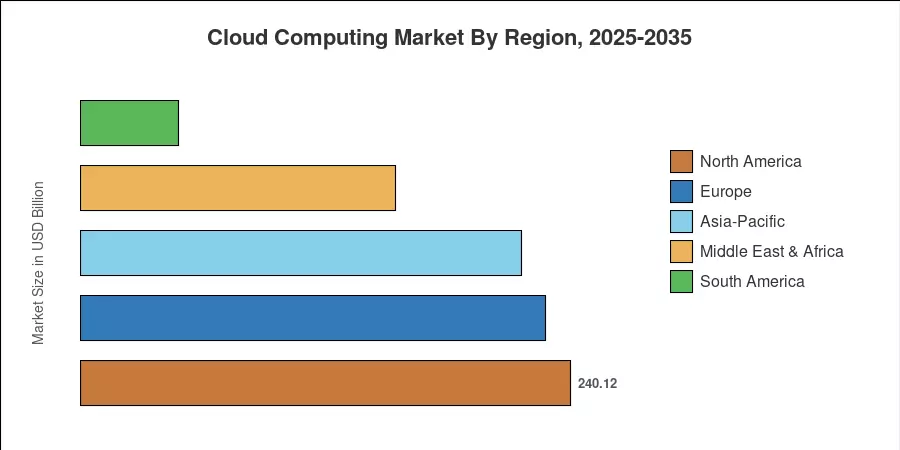
L’Amérique du Nord a conservé la position dominante sur le marché du cloud computing avec une part d’environ 26,1 % en 2025, ancrée par la concentration de centres de données hyperscale en Virginie, au Texas et en Oregon. L’Asie-Pacifique devrait enregistrer le TCAC le plus rapide de 23,5 % jusqu’en 2035, grâce aux programmes nationaux d’infrastructure numérique en Inde, en Chine et en Indonésie. L'Europe détenait la deuxième plus grande base de revenus, avec environ 228 milliards de dollars, soutenue par les efforts de la Commission européenne en faveur de cadres multi-cloud ouverts. À mesure que les applications natives d’IA prolifèrent et que les architectures Edge Cloud mûrissent, le marché du Cloud Computing s’apprête à connaître une décennie d’expansion continue qui remodèlera l’économie informatique des entreprises dans le monde entier.
Points clés du rapport
• Par modèle de service
- Le SaaS représentait environ 49,2 % des revenus du marché du cloud computing en 2025, grâce à l'adoption par les entreprises des suites de collaboration, de CRM et d'ERP.
- Le segment Platform-as-a-Service devrait progresser à un TCAC de 21,2 % jusqu’en 2035, alimenté par la demande des développeurs pour l’hébergement de modèles d’IA et le calcul sans serveur.
• Par modèle de déploiement
- Le cloud privé détenait environ 43,0 % de la part de marché du cloud computing en 2025, reflétant la préférence des industries réglementées pour une infrastructure dédiée.
- L'adoption du cloud hybride devrait croître à un TCAC de 20,5 %, à mesure que les entreprises équilibrent la portabilité des charges de travail et la discipline des coûts.
• Par secteur vertical d'utilisateur final
- Bancaire, les services financiers et les assurances représentaient une part estimée à 25,4 % du marché du cloud computing en 2025.
- Les soins de santé sont apparus comme le secteur vertical à la croissance la plus rapide, affichant un TCAC prévu de 22,6 % jusqu'en 2035.
• Par région
- L’Amérique du Nord a conservé une part de 26,1 % du marché du cloud computing en 2025, ancrée par des dépenses en capital hyperscaler.
- L’Asie-Pacifique devrait enregistrer le TCAC le plus élevé de 23,5 % jusqu’en 2035 parmi toutes les régions.
Taille et prévisions du marché du cloud computing (2021-2035)
Le cadre d'estimation exclusif de Market Research Future intègre une modélisation ascendante des revenus à partir de divulgations financières à grande échelle, d'enquêtes sur les dépenses informatiques des entreprises et d'évaluations d'impact réglementaire régional. Les chiffres historiques (2021-2024) s'appuient sur les dossiers audités des cinq plus grands fournisseurs, représentant plus de 60 % des revenus globaux du cloud. Les projections (2026-2035) appliquent des hypothèses pondérées par scénarios pour les taux de migration des charges de travail d’IA, la création de cloud souverain et les déploiements d’infrastructures de périphérie, validées de manière croisée par rapport à des guides de dépenses.