Durabilité environnementale
Les préoccupations concernant la durabilité environnementale deviennent de plus en plus importantes, influençant les choix des consommateurs sur le marché des substituts de viande. Le secteur de l'élevage est connu pour contribuer de manière significative aux émissions de gaz à effet de serre, à la déforestation et à l'utilisation de l'eau. À mesure que les consommateurs deviennent plus soucieux de l'environnement, ils sont susceptibles de se tourner vers des substituts de viande qui offrent une empreinte écologique plus faible. Des rapports suggèrent que la production de protéines d'origine végétale peut utiliser jusqu'à 90 % moins d'eau et générer significativement moins d'émissions par rapport à la production de viande traditionnelle. Ce changement vers des habitudes alimentaires durables devrait propulser le marché des substituts de viande, alors que de plus en plus d'individus cherchent à aligner leurs choix alimentaires avec leurs valeurs environnementales.
Changement des préférences alimentaires
Le changement dans les préférences alimentaires vers des régimes à base de plantes est un moteur notable du marché des substituts de viande. À mesure que de plus en plus d'individus adoptent des modes de vie végétariens ou flexitariens, la demande pour des alternatives à la viande devrait augmenter. Des enquêtes indiquent qu'un pourcentage significatif de consommateurs réduit sa consommation de viande pour des raisons de santé, éthiques ou environnementales. Cette tendance se reflète dans la disponibilité croissante de substituts de viande dans les secteurs de la vente au détail et de la restauration. En 2023, le marché des substituts de viande était estimé à représenter environ 10 % du marché total des protéines, suggérant un changement substantiel dans le comportement des consommateurs qui devrait continuer à influencer le marché des substituts de viande.
Innovations technologiques dans la production
Les avancées technologiques dans la production de substituts de viande jouent un rôle crucial dans la formation du marché des substituts de viande. Des innovations telles que la technologie de fermentation et la fermentation de précision permettent la création d'alternatives à la viande plus savoureuses et nutritives. Ces technologies améliorent non seulement le goût et la texture des substituts de viande, mais aussi leurs profils nutritionnels. En 2023, l'introduction d'alternatives à la viande cultivées en laboratoire a gagné en traction, plusieurs entreprises rapportant des lancements de produits réussis. Cette innovation est susceptible d'attirer une base de consommateurs plus large, élargissant ainsi le marché des substituts de viande, car elle offre une alternative viable à la viande traditionnelle.
Soutien réglementaire et initiatives politiques
Le soutien réglementaire et les initiatives politiques visant à promouvoir les régimes alimentaires à base de plantes émergent comme un moteur clé sur le marché des substituts de viande. Les gouvernements de diverses régions mettent en œuvre des politiques qui encouragent la production et la consommation alimentaires durables. Par exemple, les subventions à la production alimentaire à base de plantes et les initiatives visant à réduire la consommation de viande deviennent de plus en plus courantes. Ces politiques soutiennent non seulement la croissance du secteur des substituts de viande, mais visent également à répondre aux préoccupations en matière de santé publique et d'environnement. À mesure que ces cadres réglementaires évoluent, ils sont susceptibles de créer un environnement plus favorable au marché des substituts de viande, facilitant son expansion et son acceptation par les consommateurs.
Avantages pour la santé des substituts de viande
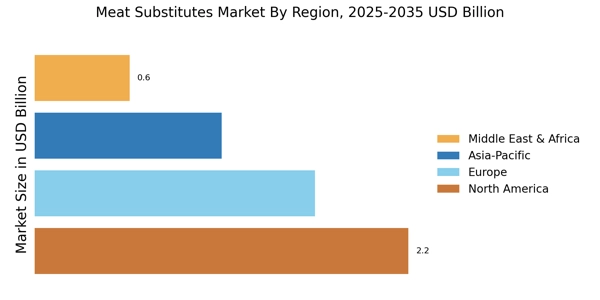
La prise de conscience croissante des bienfaits pour la santé associés aux substituts de viande semble être une force motrice sur le marché des substituts de viande. Les consommateurs recherchent de plus en plus des alternatives qui sont plus faibles en graisses saturées et en cholestérol, ce que les substituts de viande offrent souvent. Des recherches indiquent que les protéines d'origine végétale peuvent contribuer à améliorer la santé cardiaque et à réduire le risque de maladies chroniques. En 2023, le marché des substituts de viande était évalué à environ 4,5 milliards USD, avec des projections suggérant un taux de croissance annuel composé d'environ 15 % jusqu'en 2030. Cette tendance indique une préférence croissante des consommateurs pour des options alimentaires plus saines, ce qui devrait encore renforcer le marché des substituts de viande.