Automated Material Handling Market Summary
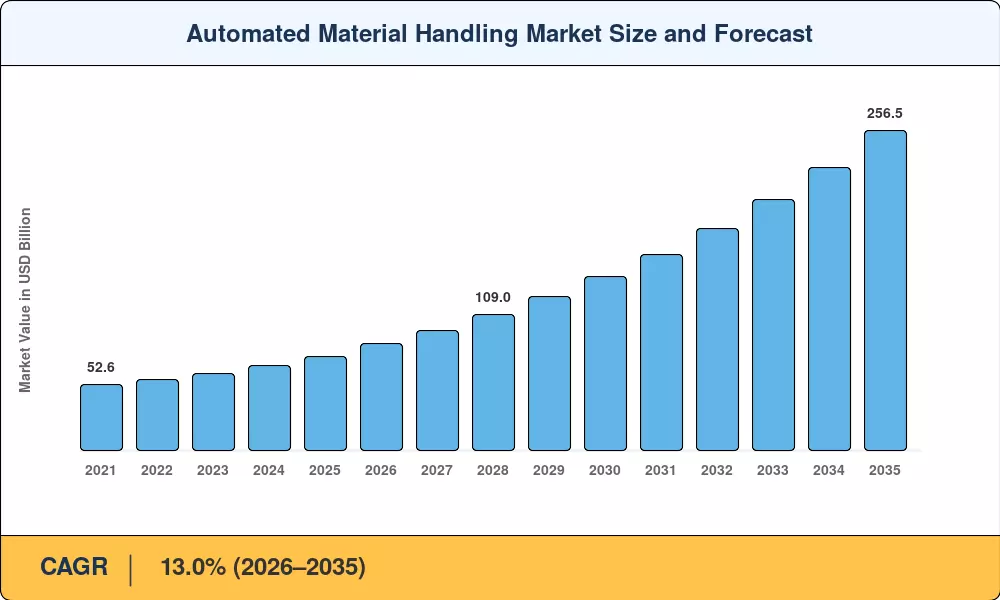
自動マテリアルハンドリング市場は、2025年に756億米ドルと評価され、2026年には854億米ドルに達し、2035年までに2,565億米ドルに達すると予測されており、予測期間(2026年から2035年)中に13.0%のCAGRを記録します。 e コマースの注文量が加速 — 2024 年に世界の荷物量は 1,600 億個を突破[1]− OECD 諸国全体で倉庫労働力の確保が強化されることと相まって、物流事業者は資本集約型の自動化サイクルを推進しています。ドイツ、日本、中国における政府支援のインダストリー 4.0 プログラムは、スマートファクトリーのアップグレードに年間 180 億米ドル以上を注ぎ込んでおり、自動マテリアルハンドリング市場に直接利益をもたらしています。[2].
抜本的なテクノロジーの移行が進行中です。従来の固定コンベヤ ラインと手動のパレット処理業務は、AI で調整された自律型の車両に取って代わられています。移動ロボット、クラウドベースの倉庫実行プラットフォーム、およびビジョンガイド付きピッキング システム。 Amazon だけでも、2024 年にロボットの研究開発に 7 億 5,000 万ドル以上を投入し、ウォルマートの次世代配送センターは現在、エンドツーエンドの自動フルフィルメント アーキテクチャで稼働しています。[3]。この変化は単に速度に関するものではなく、リアルタイムのスループット最適化を可能にする豊富なデータ運用の可視性に関するものです。
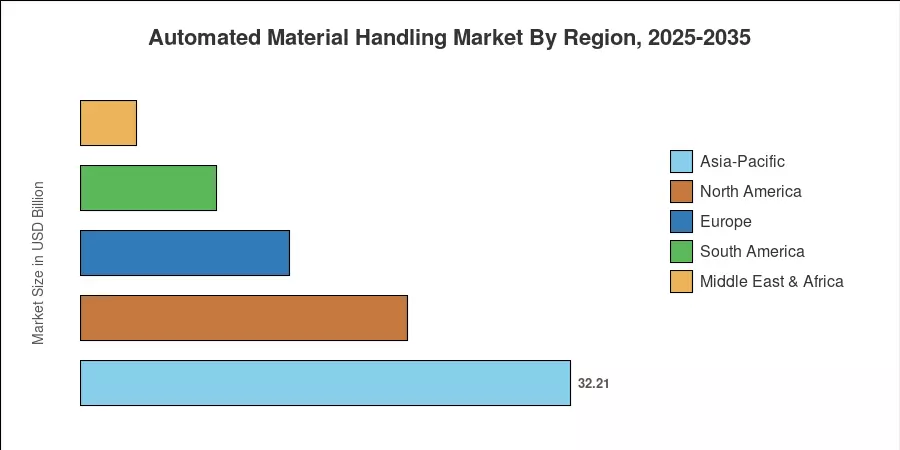
アジア太平洋地域は世界収益の約42.6%を占め、自動マテリアルハンドリング市場の支配的かつ最も急成長している地域としてリードしており、2035年までCAGR13.6%で拡大します。北米は米国のサードパーティロジスティクス(3PL)近代化支出に支えられ、約28.5%のシェアを占めています。 EU のサプライチェーンの回復力に関する指令により、ヨーロッパが 18.2% のシェアで続きます。東南アジアやラテンアメリカ全体で人件費が上昇する中、自動化されたマテリアルハンドリングインフラストラクチャへの投資は、10年間を通じてさらに強化される見通しです。[4].
レポートの重要なポイント
• 製品タイプ別
- ロボットアーム、シャトルシステム、パレタイザーに対する強い需要を反映して、ハードウェアは2025年の自動マテリアルハンドリング市場の収益シェア65.9%を維持しました。
- ソフトウェア ソリューションは、倉庫管理とフリート オーケストレーション プラットフォームの採用により、2035 年まで 19.6% の CAGR で拡大すると予測されています。
• 機器のタイプ別
- モバイル ロボットは、2025 年に自動マテリアル ハンドリング市場の機器レベルの収益の 32.6% を獲得しました。
- 自律移動ロボット (AMR) は 28.3% CAGR で進歩しており、すべての機器カテゴリの中で最も急速に成長しているセグメントです。
• エンドユーザーによる
- 小売、倉庫、流通事業者は、2025 年に自動マテリアル ハンドリング市場の 25.0% のシェアを占めました。
- 食品および飲料のエンドユーザーは、コールドチェーンの自動化が拡大するにつれて、2035 年まで 18.4% の CAGR で成長すると予測されています。
• 地域別
- アジア太平洋地域は、2025 年に 42.6% の収益シェアを獲得し、自動マテリアル ハンドリング市場をリードしました。
- 北米は 2 番目に大きな地域を代表し、2025 年の収益に約 215 億米ドルを貢献しました。
市場規模と予測 (2021 ~ 2035 年)
Market Research Future の推計は、トップダウンのマクロ経済モデリング、ボトムアップの企業収益集計、および 120 社を超える物流事業者からの需要側の注文帳分析を統合した三角測量の方法論に基づいています。過去の数値 (2021 ~ 2024 年) は監査済みの年次報告書を使用しています。 2025 年基準年は、第 1 四半期から第 3 四半期までの実績とアナリストのコンセンサス予測を組み合わせたものです。また、2026 ~ 2035 年の予測には、設備投資サイクル指標に基づいて調整された検証済みの複合成長フレームワークが適用されます。





















.webp?v=1787579595)
