Hardware Security Modules Market Summary
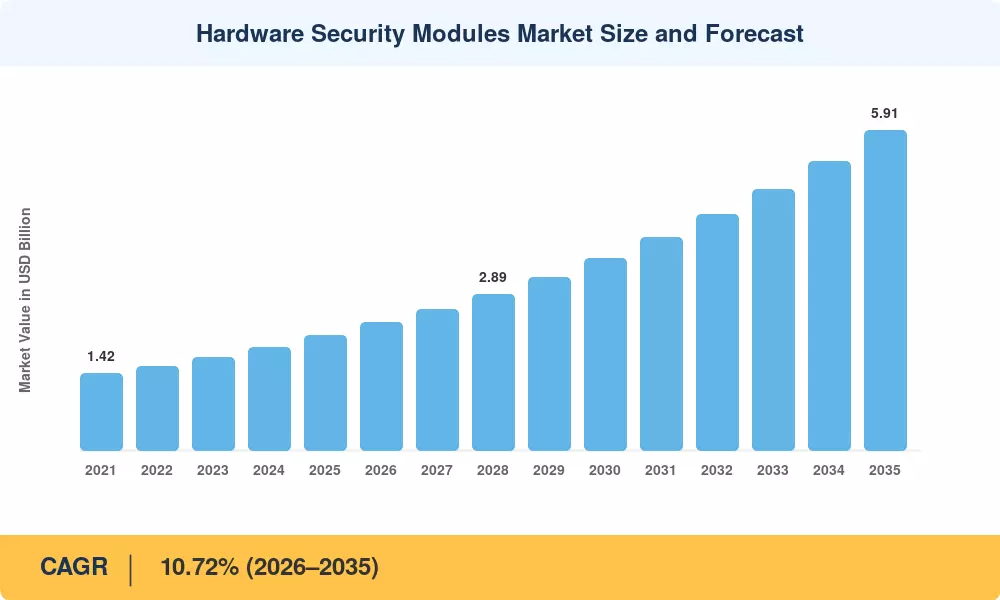
ハードウェア セキュリティ モジュール市場は、2025 年に 21 億 3000 万米ドルでしたが、2026 年には 23 億 6000 万米ドルに達すると予測されており、2035 年までに 59 億 1000 万米ドルにまで上昇し、2026 ~ 2035 年の予測期間中に 10.72% の CAGR を記録します。更新された PCI DSS 4.0 ガイドラインに組み込まれた保存時の暗号化の必須要件と、認定された耐タンパー性アプライアンスへのソブリン キー管理ワークロードの移行の加速という 2 つの触媒が企業全体の購買行動を再構築しています。[1]。これらの規制当局は、HSM 調達を裁量的な IT 支出からコンプライアンスに義務付けられた資本配分に移行させました。
世代間のテクノロジー移行が進行中です。従来のソフトウェア ベースのキー ストアと第 1 世代の PKCS#11 アプライアンスは、ポスト量子暗号アルゴリズムを処理できる FIPS 140-3 レベル 3 検証済みのモジュールに置き換えられています。クラウド サービス プロバイダーは、2024 年だけで HSM インフラストラクチャの構築に推定 6 億 8,000 万ドルを投資しました[2]これは、マルチテナント環境内でハードウェアに根ざしたトラスト アンカーを顧客に提供するという緊急性を反映しています。サブスクリプション ベースのクラウド HSM サービスは、従来のオンプレミス アプライアンスの販売を補完し、これまで専用ハードウェアの予算が不足していた中規模企業にハードウェア セキュリティ モジュール市場を開拓します。
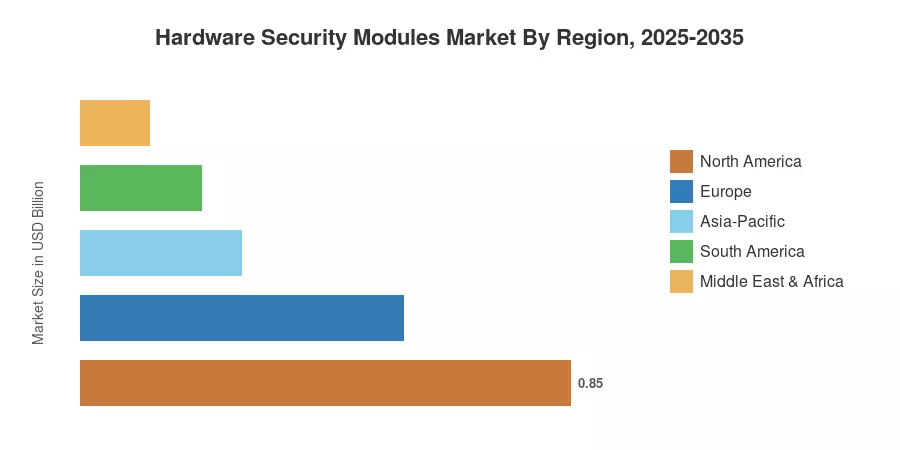
北米はハードウェア セキュリティ モジュール市場の約 39.7% を占めており、これは NIST SP 800-131A や CMMC 認定要件などの初期の連邦政府の指令によって推進されています。アジア太平洋地域は、ハイパースケーラーがデータ主権プラットフォームをインド、日本、東南アジア全体にローカライズするため、2035 年まで 13.08% の CAGR で最速の地域成長を遂げます。ヨーロッパは、MiCA 主導の暗号資産管理規制と eIDAS 2.0 デジタル ID インフラストラクチャへの投資に支えられ、約 26.3% で 2 番目に大きなシェアを占めています。量子コンピューティングのタイムラインと既存の暗号負債の収束により、ハードウェア セキュリティ モジュール市場は、今後 10 年間にわたって継続的に 2 桁の拡大を遂げる見通しです。
レポートの重要なポイント
• 導入とタイプ別
- オンプレミス アプライアンスは、2025 年にハードウェア セキュリティ モジュール市場の収益の約 76.9% を獲得しました。これは、規制分野における物理的に制御された主要な境界に対する企業の好みを反映しています。
- クラウド ホスト型 HSM 導入は最も急速に成長しているタイプのセグメントであり、マネージド サービス モデルにより分散ワークロードの総所有コストが削減されるため、11.55% の CAGR で進歩しています。
- 汎用 HSM ユニットは 2025 年にタイプレベルの収益シェアの 63.6% を占め、認証、コード署名、データベース暗号化のユースケースに対応しました。
• アプリケーションおよびエンドユーザー別
- 決済処理アプリケーションは、EMV 端末の展開とリアルタイム決済レールに支えられ、2025 年のハードウェア セキュリティ モジュール市場の 40.8% を占めました。
- BFSI 垂直産業は 2025 年のエンドユーザー需要の 36.3% を占め、クラウド サービス プロバイダーは 2035 年までに最高の垂直 CAGR である 11.78% を記録すると予測されています。
• 地域別
- 2025 年には北米がハードウェア セキュリティ モジュール市場で 39.7% のシェアを獲得し、欧州が 26.3% で続きます。
- アジア太平洋地域は、インドと ASEAN 経済全体にわたる主権データのローカリゼーション義務により、2035 年までに 13.08% の CAGR が見込まれると予測されています。
市場規模と予測 (2021 ~ 2035 年)
Market Research Future のサイジング フレームワークは、ベンダー開示、輸出入データベース、エンドユーザー調達調査からのボトムアップ収益モデリングを統合します。過去の数値 (2021 ~ 2024 年) は監査済みの出荷データを反映していますが、2025 年が調整された基準年です。予測値 (2026 ~ 2035 年) は、規制パイプライン分析とハイパースケール クラウド オペレーターからの資本支出スケジュールに対して検証された、セグメント加重成長の仮定を適用します。






















.webp?v=1787579603)
