Research Methodology on Hydrogen & Fuel Cells Market
ABSTRACT
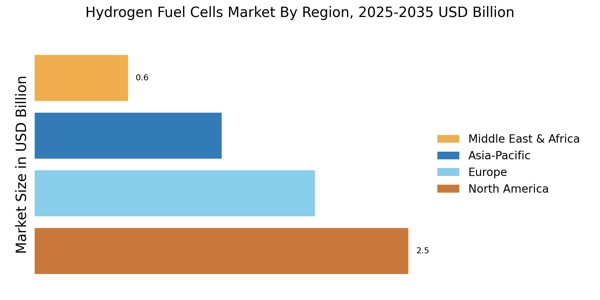
The global hydrogen fuel cells market is projected to witness rapid growth to achieve the highest growth rate during the forecast period of 2024 to 2030. With advancements in the development of lightweight and reliable fuel cell systems, their cost has slowly started to come down because of which their commercialization has become possible. Additionally, state and federal governments have continued to support and promote the use of fuel cells through various subsidies and grants which has further boosted the growth of the global hydrogen fuel cells market.
RESEARCH METHODOLOGY
Research Objectives
This research study aims to identify the current market trends, prospects and opportunities of the global hydrogen fuel cells market. In addition, the research also seeks to provide an in-depth analysis of the recent developments, regulatory framework, market size, segmentation and CAGR of the global hydrogen fuel cells market from 2023 to 2030.
Research Design
The research methodology adopted for this study is a combination of primary and secondary research. For primary research, multiple interviews are conducted with the suppliers, manufacturers, distributors and other industry professionals. Secondary research is conducted by analyzing existing literature such as company reports, SEC filings, whitepapers, third-party sources, market research reports, industry magazines and journals.
Market Estimation
The global hydrogen fuel cells market is estimated by utilizing the top-down as well as bottom-up approach. The data obtained from secondary sources such as white papers, industry magazines, industry journals, and other government sources are further validated with the help of primary research.
Data Validation
In the data validation process, the triangulation method is used to validate the primary and secondary data gathered for the study. The triangulation method involves the collection of data using various sources such as interviews, surveys and other sources.
Data Collection Tools
The data collected for this study is collected through primary research as well as secondary research. For primary research, different sources such as white papers, surveys, interviews and discussions are used. For secondary research, various sources such as government reports, industry journals, news websites and magazines are used.
Analysis Tools
The data collected through various sources is analyzed with the help of various tools such as descriptive statistics, trend analysis and others. In addition, multiple regression techniques are applied to understand the trends influencing the global hydrogen fuel cells market.