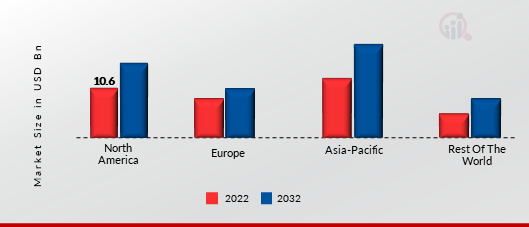
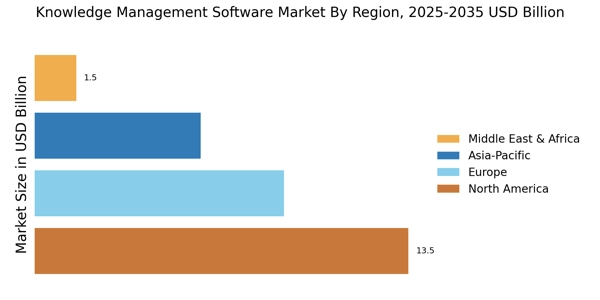
To gather both qualitative and quantitative insights, supply-side and demand-side stakeholders were interviewed during the primary research process. CEOs, CTOs, VPs of Product Development, Chief Knowledge Officers, and heads of SaaS strategy from platform developers, systems integrators, and knowledge management software providers were examples of supply-side suppliers. Demand-side sources included procurement heads, IT directors, enterprise architects, Chief Information Officers (CIOs), Chief Knowledge Officers (CKOs), and Knowledge Management leads from Fortune 500 companies, mid-market businesses, professional services firms, healthcare systems, financial institutions, and government organizations. Primary research gathered information on business adoption trends, subscription pricing dynamics, data sovereignty requirements, and cybersecurity compliance methods in addition to validating deployment model preferences and confirming AI integration roadmaps.
Primary Respondent Breakdown:
By Designation: C-level Primaries (32%), Director Level (30%), Others (38%)
By Region: North America (38%), Europe (25%), Asia-Pacific (28%), Rest of World (9%)
Global market valuation was derived through revenue mapping and deployment volume analysis. The methodology included:
Identification of 50+ key software vendors across North America, Europe, Asia-Pacific, and Latin America
Solution mapping across cloud-based SaaS, on-premise installations, hybrid environments, and mobile-native platforms (Android/iOS)
Analysis of reported and modeled annual recurring revenue (ARR) specific to knowledge management portfolios
Coverage of vendors representing 75-80% of global market share in 2024
Extrapolation using bottom-up (seat licenses/acquired user count × ARPU by segment and region) and top-down (vendor revenue validation against analyst estimates) approaches to derive segment-specific valuations for cloud deployment, on-premise solutions, and SME vs. Enterprise adoption rates