モバイル仮想ネットワークオペレーター市場

モバイル仮想ネットワークオペレーター(MVNO)市場の規模、シェアおよび調査報告書:ビジネスモデル別(ディスカウントMVNO、ファンクショナルMVNO、ブランドMVNO、ニッチMVNO)、サービスタイプ別(プリペイドサービス、ポストペイドサービス、データ専用サービス、音声専用サービス)、顧客セグメント別(個人消費者、中小企業、大企業、政府)、ネットワークインフラ別(フルMVNO、ライトMVNO、スリムMVNO)、および地域別(北米、ヨーロッパ、南米、アジア太平洋、中東およびアフリカ) - 2035年までの業界予測
ID: MRFR/ICT/0462-HCR
200 Pages
Aarti Dhapte
Last Updated: July 28, 2026
Mobile Virtual Network Operator Market
Market Size
Forecast Period2025 - 2035
CAGR (2025 - 2035)3.71%
2024 Market Size$ 60.26 Billion
2025 Market Size$ 62.5 Billion
2035 Market Size$ 89.96 Billion
Key Players
TracFone Wireless
Virgin Mobile
Boost Mobile
Lycamobile
Giffgaff
Republic Wireless
Opportunities
  • Cost-Effective Service Offerings
  • Regulatory Support for MVNO Growth
  • Increased Demand for Flexible Plans

モバイル仮想ネットワークオペレーター市場 概要

マーケットリサーチフューチャーの分析によると、モバイルバーチャルネットワークオペレーター市場(MVNO)の市場規模は2024年に602.6億米ドルと推定されています。MVNO業界は、2025年に625億米ドルから2035年までに899.6億米ドルに成長すると予測されており、2025年から2035年の予測期間中に年平均成長率(CAGR)は3.71%となる見込みです。

主要な市場動向とハイライト

モバイル仮想ネットワークオペレーター市場(MVNO)は、ニッチな提供とデジタルトランスフォーメーションに向けてダイナミックなシフトを経験しています。

  • 北米は多様なサービス提供によってMVNOの最大市場であり続けています。
  • アジア太平洋地域は、スマートフォンの普及とデジタルサービスの増加により、最も成長している市場として浮上しています。
  • ディスカウントMVNOが市場を支配しており、ニッチなMVNOは特定の消費者セグメントの間で急速に支持を得ています。
  • コスト効率の良いサービス提供と柔軟なプランへの消費者の好みの高まりが、MVNOの成長を促進する主要な要因です。

市場規模と予測

2024年の市場規模 60.26(米ドル十億)
2035年の市場規模 89.96(米ドル十億)
CAGR(2025 - 2035) 3.71%

主要なプレーヤー

トラックフォンワイヤレス(米国), ヴァージンモバイル(英国), ブーストモバイル(米国), ライカモバイル(英国), ギフガフ(英国), リパブリックワイヤレス(米国), ティング(米国), フリーダムポップ(米国), クードモバイル(カナダ)

モバイル仮想ネットワークオペレーター市場 運転手

コスト効率の良いサービス提供

モバイル仮想ネットワークオペレーター市場(MVNO市場)は、コスト効率の良いサービス提供が特徴です。MVNOは通常、従来のモバイルネットワークオペレーターと比較して、オーバーヘッドコストが低いため、消費者に対して節約を提供することができます。この競争的な価格戦略は、特に手頃さが重要な新興市場において、価格に敏感な顧客を引き付けます。2025年までに、MVNOはモバイル加入者基盤の重要なシェアを獲得すると見込まれており、総モバイル契約の20%以上を占める可能性があると予測されています。この傾向は、サービスの質を損なうことなく、予算に優しい代替手段を求める消費者にとって、MVNOモデルがますます魅力的であることを示唆しています。

MVNO成長のための規制支援

モバイル仮想ネットワークオペレーター市場(MVNO市場)は、競争と革新を促進することを目的とした規制支援の増加から恩恵を受けています。多くの政府は、消費者の選択肢を増やし、通信分野の価格を引き下げる上でのMVNOの価値を認識しています。ネットワークインフラへの公平なアクセスを促進する規制フレームワークは、新規参入者が既存のプレーヤーと効果的に競争できるようにしています。2025年10月までに、有利な規制条件が市場に参入するMVNOの数を20%増加させると予想されており、競争環境を豊かにし、消費者により多くの選択肢を提供することが期待されています。

柔軟なプランへの需要の増加

モバイル仮想ネットワークオペレーター市場(MVNO市場)は、柔軟なモバイルプランへの需要の急増を目の当たりにしています。消費者は、特定のニーズに応じてモバイルサービスをカスタマイズできるオプションをますます好むようになっています。この変化は、長期契約よりも柔軟性を優先する若い世代の間で特に顕著です。MVNOは、従量課金制やデータ専用オプションなど、さまざまな使用パターンに対応するプランを提供することで、このトレンドを活かすことができます。2025年までに、柔軟なプランがMVNOの成長の大部分を推進し、来年中に加入者数が15%増加する可能性があると予想されています。

デジタルサービスに対する消費者の好みの高まり

モバイル仮想ネットワークオペレーター市場(MVNO市場)は、デジタルサービスに対する消費者の好みの高まりによってますます形作られています。より多くの人々がコミュニケーション、エンターテインメント、商取引など、生活のさまざまな側面にモバイルデバイスを利用するようになるにつれて、統合されたデジタルソリューションへの需要が高まっています。MVNOは、モバイル接続とデジタルコンテンツやアプリケーションを組み合わせたバンドルサービスを提供することで応えています。このトレンドは、消費者が包括的なデジタル体験を提供するプロバイダーに惹かれるため、顧客の忠誠心と維持を高めることが期待されています。2025年までに、デジタルサービス統合に焦点を当てたMVNOは、顧客基盤が12%増加する可能性があると見込まれています。

ネットワークインフラにおける技術革新

モバイル仮想ネットワークオペレーター市場(MVNO市場)は、ネットワークインフラにおける技術革新の影響を大きく受けています。5G技術の進化とネットワーク仮想化の改善により、MVNOは広範な物理インフラを必要とせずに強化されたサービスを提供できるようになっています。この技術的変化により、MVNOはより効率的に運営し、消費者の接続性に対する高まる需要を満たす高速データサービスを提供することが可能になります。2025年10月までに、先進的なネットワーク技術を活用するMVNOは、年間約10%の成長率を経験すると予測されており、これらの革新に適応する企業にとって堅実な未来を示しています。

市場セグメントの洞察

By Business Model: Discount MVNO (Largest) vs. Niche MVNO (Fastest-Growing)

The Mobile Virtual Network Operator Market (MVNO) market is experiencing a robust distribution among various business models. Currently, the Discount MVNO segmentholds the largest share, attracting budget-conscious consumers seeking affordable mobile services. This segment is characterized by low-cost offerings and competitive pricing strategies, appealing to mass-market consumers. On the other hand, Niche MVNOs are emerging rapidly, catering to specialized customer needs or demographics. They are gradually capturing attention with unique propositions that large carriers often overlook.

Discount MVNO (Dominant) vs. Niche MVNO (Emerging)

Discount MVNOs operate by providing basic mobile services at reduced prices, leveraging wholesale agreements with network providers. This model is dominant due to its mass appeal and cost-effective solutions which attract a large volume of subscribers. In contrast, Niche MVNOs focus on specific customer segments, such as gamers or seniors, offering tailored services and community-driven experiences that foster loyalty. While Discount MVNOs thrive on scale, Niche MVNOs differentiate themselves by addressing unmet market needs, thereby establishing a dedicated customer base.

By Service Type: Prepaid Services (Largest) vs. Postpaid Services (Fastest-Growing)

The Mobile Virtual Network Operator Market (MVNO) market has a significant distribution of service types, with prepaid services holding the largest share. Prepaid services are widely favored among consumers for their flexibility and cost-effectiveness, attracting a large segment of cost-conscious users. In contrast, while postpaid services currently command a smaller market share, their growth trajectory is impressive as more customers across various demographics lean towards bundled offerings that provide additional features such as family plans and premium data options. The growth trends in the MVNO market reflect a shift in consumer preferences, with increasing demand for personalized and cost-effective mobile solutions. Data-only services and voice-only services are also gaining traction, particularly among niche markets such as business users and high-data consumers. The rise of digital applications and the need for uninterrupted connectivity are key drivers, leading to innovative offerings and enhanced customer experiences in the service type segment.

Prepaid Services (Dominant) vs. Data-Only Services (Emerging)

Prepaid services remain the dominant force within the MVNO market, driven by a strong focus on affordability and control over expenses. These services are appealing to a wide range of users, including students and budget-conscious individuals. Furthermore, they are increasingly bundled with value-added features like data rollovers and unlimited texting. On the other hand, data-only services are emerging rapidly, catering to specific user needs such as mobile data for tablets and IoT devices. As consumers continue to rely heavily on data-driven applications, these services are capturing interest, particularly from tech-savvy users who prioritize data access over traditional voice calls. As networks evolve and data speeds improve, data-only services are becoming an attractive alternative.

By Customer Segment: Individual Consumers (Largest) vs. Small and Medium Enterprises (Fastest-Growing)

In the Mobile Virtual Network Operator Market (MVNO) Market, the customer segment is crucial to understanding market dynamics. Individual consumers represent the largest share of the market, driven by the demand for affordable and flexible mobile plans. This segment enjoys substantial market penetration due to the growing reliance on mobile communication and data services among everyday consumers. Meanwhile, small and medium enterprises (SMEs) are emerging as the fastest-growing segment, motivated by their need for cost-effective mobile solutions that cater to their unique operational requirements.

Individual Consumers (Dominant) vs. Small and Medium Enterprises (Emerging)

The individual consumer segment is characterized by a diverse range of preferences, from budget-friendly plans to premium data packages. With a focus on personal technology, this segment sees high competition among MVNOs striving to offer tailored services. Conversely, small and medium enterprises are rapidly adopting mobile virtual network services to enhance their operational efficiency. SMEs prioritize flexible contracts and customized plans that can scale with business growth, making them a key target for MVNOs aiming to innovate and expand their offerings. Their growing tech adoption positions them as essential players in the market.

By Network Infrastructure: Full MVNO (Largest) vs. Thin MVNO (Fastest-Growing)

In the Mobile Virtual Network Operator Market (MVNO) Market, network infrastructure plays a critical role in defining operational capabilities and market share. The Full MVNO segment leads the market, possessing the most substantial share due to its comprehensive control over the network. This segment allows MVNOs to offer a broad variety of services, enhancing customer experience and loyalty. In contrast, the Thin MVNO retains a smaller share but is rapidly gaining traction in the market by focusing on niche customer segments and innovative service offerings.

Infrastructure: Full MVNO (Dominant) vs. Thin MVNO (Emerging)

The Full MVNO segment is characterized by its ability to utilize its own core network elements, giving it significant flexibility and control over services and billing. This allows Full MVNOs to innovate and cater to diverse consumer needs, ensuring a competitive edge in service quality. Conversely, the Thin MVNO operates with limited infrastructure, relying heavily on host network operators for core services. Despite this, Thin MVNOs have emerged as agile businesses targeting specific market niches, capitalizing on trends like personalized offerings and competitive pricing, thus driving significant growth in less saturated segments.

モバイル仮想ネットワークオペレーター市場に関する詳細な洞察を得る

地域の洞察

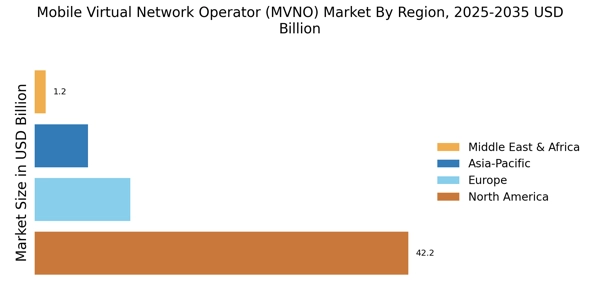
モバイルバーチャルネットワークオペレーター市場(MVNO)は、今後数年間で大きな成長が見込まれています。地域別の内訳では、北米が2024年に200億米ドルという注目すべき評価を持ち、柔軟なモバイルサービスに対する高い需要によってMVNOエコシステムにおける主要な役割を反映しています。

ヨーロッパは、2024年に150億米ドルの評価を持ち、規制の支援と技術の進歩によって大きな市場シェアを表しています。アジア太平洋地域は150億米ドルの評価を持ち、急速に成長する消費者基盤を強調しています。一方、南米は50億米ドル、中東およびアフリカは52.6億米ドルの評価を持ち、拡大の可能性を秘めた新興市場を表しています。

市場規模は小さいものの、南米とアフリカではモバイルインフラへの投資が増加しており、将来の成長の機会として位置付けられています。これらの地域の洞察は、消費者のニーズや規制フレームワークの違いによって推進されるモバイルバーチャルネットワークオペレーター市場(MVNO)の多様な風景を強調しています。

モバイル仮想ネットワークオペレーター市場 Regional Image

主要企業と競争の洞察

モバイルバーチャルネットワークオペレーター市場(MVNO)は、さまざまなプレーヤーがユニークなビジネスモデルと消費者中心の戦略を活用して競争するダイナミックな環境が特徴です。MVNOは、基盤となるネットワークインフラを所有せずに運営しているため、異なる地域でコスト効果の高い通信ソリューションを提供することができます。主要なMVNO企業は、価格革新とターゲットサービス提供を通じて競争しています。競争は、技術の急速な進歩、消費者の好みの変化、パーソナライズされたモバイルサービスの必要性によって激化しています。市場参入者は引き続き出現しており、既存のオペレーターは差別化を図るために革新を進めており、ニッチセグメントに対応する多様な提供ポートフォリオが生まれています。デジタルの採用が進み、モバイルサービスが普及することで、競争のダイナミクスがさらに強化され、企業はカスタマイズされたプランや付加価値サービスを通じて顧客エンゲージメントと維持を強化しようとしています。コムキャストは、統合サービスとバンドル提供に戦略的に焦点を当てることで、モバイルバーチャルネットワークオペレーター市場(MVNO)で重要な存在感を確立しています。同社は、消費者が便利さと節約を求める中で、手頃なモバイルソリューションを提供するために、広範なインフラとリソースを活用しています。コムキャストの強みは、既存の顧客関係を活用できる能力にあり、多くのユーザーがすでにインターネットやケーブルテレビなどの他のサービスに加入しています。この相乗効果により、コムキャストは魅力的なモバイルプランを提供し、加入者がそのエコシステム内に留まるように促しています。同社は、パートナーシップやコラボレーションを通じて市場プレゼンスを拡大する機会を積極的に模索しており、MVNOセクターでの競争力を強化しています。AT&Tは、確立された評判と広範なネットワークカバレッジによって、モバイルバーチャルネットワークオペレーター市場(MVNO)で重要な役割を果たしています。同社は、MVNOパートナーシップを通じて、さまざまな消費者セグメントを対象としたプリペイドおよびポストペイドプランを提供しています。AT&Tの強みは、ネットワークインフラと技術への多大な投資によって裏付けられており、MVNOに対して信頼性の高いサービスと高品質な接続を保証しています。同社は、戦略的な合併や買収を追求して市場プレゼンスを強化し、追加の機能を統合し、サービス提供を改善しています。顧客満足と競争力のある価格戦略に焦点を当てることで、AT&TはグローバルなMVNOの風景の中での地位を強化し、常に進化する通信環境でのリーチを拡大しています。

モバイル仮想ネットワークオペレーター市場市場の主要企業には以下が含まれます

業界の動向

2023年3月、テスコモバイルは550万人のユーザーを超え、英国で最大のMVNOとしてヴァージンメディアO2を上回りました。また、2034年までのネットワークカバレッジと継続性を確保するために、ヴァージンメディアO2との50:50の合弁事業をさらに10年間更新しました。テスコモバイルは、Ofcomの基準に準拠するために、2024年12月に新しい価格戦略を実施し、インフレに連動した契約中の価格上昇を明確で固定された年間増加に置き換えました。

2025年6月、T-Mobile USはMint Mobileを13.5億ドルで購入し、T-Mobileのプリペイド部門の下でマーケティングアプローチとユーザーベースを統合しました。これは、2024年1月に電話プランの切り替えをターゲットにしたMVNO成長を促進する試みの後に行われました。ライカモバイルは、2025年6月時点でアイルランドで予測される2.6%のMVNO市場シェア(全体で14.3%)を維持するために、Threeネットワーク全体でeSIMとプリペイドサービスを引き続き使用しました。

通信規制当局の更新によると、ギフガフ(英国)や他のMVNOは、2025年6月にeSIMのサポートを増やし、顧客により多くの柔軟性と旅行に優しい選択肢を提供しました。オレンジは、2025年6月に更新された規制フレームワークの下で余剰容量を管理するために、ヨーロッパ全体での卸売アクセスを最大化することでMVNO計画を強化しました。

今後の見通し

モバイル仮想ネットワークオペレーター市場 今後の見通し

モバイル仮想ネットワークオペレーター市場(MVNO)は、2025年から2035年の間に3.71%のCAGRで成長する見込みであり、技術の進歩、柔軟なプランへの需要の増加、顧客体験の向上が推進要因となっています。

新しい機会は以下にあります:

  • IoTプロバイダーとの提携によるカスタマイズされた接続ソリューション。
  • サービスが行き届いていない人口層をターゲットにしたニッチ市場セグメントの開発。
  • ユーザーエンゲージメント向上のためのAI駆動のカスタマーサービスプラットフォームの統合。

2035年までに、MVNO市場は多様な提供と戦略的パートナーシップによって特徴づけられる堅調な市場になると予想されています。

市場セグメンテーション

モバイル仮想ネットワークオペレーター市場サービスタイプの展望

  • プリペイドサービス
  • ポストペイドサービス
  • データ専用サービス
  • 音声専用サービス

モバイル仮想ネットワークオペレーター市場ビジネスモデルの展望

  • ディスカウントMVNO
  • ファンクショナルMVNO
  • ブランドMVNO
  • ニッチMVNO

モバイル仮想ネットワークオペレーター市場顧客セグメントの展望

  • 個人消費者
  • 中小企業
  • 大企業
  • 政府

モバイル仮想ネットワークオペレーター市場ネットワークインフラの展望

  • フルMVNO
  • ライトMVNO
  • スリムMVNO

レポートの範囲

市場規模 2024 602.6(米ドル億)
市場規模 2025 625(米ドル億)
市場規模 2035 899.6(米ドル億)
年平均成長率(CAGR) 3.71%(2025 - 2035)
レポートの範囲 収益予測、競争環境、成長要因、トレンド
基準年 2024
市場予測期間 2025 - 2035
歴史的データ 2019 - 2024
市場予測単位 米ドル億
主要企業のプロファイル トラックフォンワイヤレス(米国)、ヴァージンモバイル(英国)、ブーストモバイル(米国)、ライカモバイル(英国)、ギフガフ(英国)、リパブリックワイヤレス(米国)、ティング(米国)、フリーダムポップ(米国)、クードモバイル(カナダ)
カバーされるセグメント ビジネスモデル、サービスタイプ、顧客セグメント、ネットワークインフラ、地域
主要市場機会 5Gサービスの拡大がモバイルバーチャルネットワークオペレーター(MVNO)市場の成長に新たな道を開く。
主要市場ダイナミクス モバイルバーチャルネットワークオペレーター間の競争が激化し、革新と消費者中心のサービス提供を促進。
カバーされる国 北米、ヨーロッパ、APAC、南米、MEA

FAQs

現在のモバイル仮想ネットワークオペレーター(MVNO)市場の評価額はどのくらいですか?

全体の市場評価額は2024年に602.6億米ドルでした。

2035年までのMVNO市場の予測市場規模はどのくらいですか?

MVNO市場の予測評価額は2035年までに899.6億米ドルです。

2025年から2035年の予測期間中のMVNO市場の期待CAGRはどのくらいですか?

2025年から2035年の予測期間中のMVNO市場の期待CAGRは3.71%です。

MVNO市場で最も高い成長が期待されるビジネスモデルセグメントはどれですか?

機能的MVNOセグメントは200.0億米ドルから300.0億米ドルに成長する見込みです。

MVNO市場の主要なサービスタイプとその評価額は何ですか?

プリペイドサービスは200.0億米ドルから300.0億米ドルの評価額であり、ポストペイドサービスは150.0億米ドルから250.0億米ドルの範囲です。

MVNO市場の主要なプレーヤーは誰ですか?

MVNO市場の主要なプレーヤーにはTracFone Wireless、Virgin Mobile、Boost Mobileが含まれます。

どの顧客セグメントがMVNO市場の成長を促進していますか?

個人消費者が301.3億米ドルから430.0億米ドルの評価額でリードしています。

ネットワークインフラストラクチャセグメントはMVNO市場にどのように貢献していますか?

ライトMVNOセグメントは250.0億米ドルから350.0億米ドルに成長する見込みで、強力なインフラサポートを示しています。

市場におけるニッチMVNOの評価範囲はどのくらいですか?

ニッチMVNOは152.6億米ドルから229.6億米ドルの評価額です。

サービスタイプに関するMVNO市場でどのようなトレンドが浮上していますか?

データ専用サービスは100.0億米ドルから150.0億米ドルに成長する見込みで、消費者の嗜好の変化を反映しています。

著者
Author
Author Profile
Aarti Dhapte LinkedIn
AVP - Research
A consulting professional focused on helping businesses navigate complex markets through structured research and strategic insights. I partner with clients to solve high-impact business problems across market entry strategy, competitive intelligence, and opportunity assessment. Over the course of my experience, I have led and contributed to 100+ market research and consulting engagements, delivering insights across multiple industries and geographies, and supporting strategic decisions linked to $500M+ market opportunities. My core expertise lies in building robust market sizing, forecasting, and commercial models (top-down and bottom-up), alongside deep-dive competitive and industry analysis. I have played a key role in shaping go-to-market strategies, investment cases, and growth roadmaps, enabling clients to make confident, data-backed decisions in dynamic markets.

Research Approach

Secondary Research

The secondary research process involved comprehensive analysis of telecommunications regulatory databases, industry association reports, spectrum allocation records, and ICT statistics repositories. Key sources included the International Telecommunication Union (ITU), Global System for Mobile Communications Association (GSMA), Organisation for Economic Co-operation and Development (OECD) Communications Outlook, Federal Communications Commission (FCC) U.S. Wireless Competition Reports, European Commission Digital Economy and Society Index (DESI), Ofcom UK Market Reports, Bundesnetzagentur (BNetzA) German Telecom Market Monitoring, ARCEP (France) Electronic Communications Market Analysis, CTIA (U.S. Wireless Association) Annual Survey, World Bank ICT Development Reports, International Data Corporation (IDC) Mobility Trackers, Ovum Telecoms Market Data, and national statistical offices from key markets including China Ministry of Industry and Information Technology (MIIT), India Telecom Regulatory Authority (TRAI), and Brazil National Telecommunications Agency (Anatel).

Subscriber statistics, spectrum licensing information, wholesale pricing agreements, trends in mobile number portability, eSIM adoption metrics, and competitive landscape analysis across discount, functional, brand, and specialized MVNO categories were all gathered from these sources.

Primary Research

To gather both qualitative and quantitative insights, supply-side and demand-side stakeholders were interviewed during the primary research process. CEOs, CCOs, wholesale agreement managers, and network strategy heads from mobile network operators (host MNOs), MVNO service providers, and mobile virtual network enablers (MVNEs) were examples of supply-side suppliers. Demand-side sources included telecommunications consultants, IT infrastructure managers from large companies, procurement directors from small and medium-sized businesses, and consumer focus groups from various user segments. Business model segmentation was validated by primary research, which also verified eSIM and 5G implementation timetables and collected information on enterprise IoT adoption, churn trends, pricing elasticity, and wholesale infrastructure access discussions.

Primary Respondent Breakdown:

By Designation: C-level Primaries (38%), Director Level (32%), Others (30%)

By Region: North America (38%), Europe (30%), Asia-Pacific (25%), Rest of World (7%)

Market Size Estimation

Subscriber mapping and average revenue per user (ARPU) analysis were used to get the global market valuation. The following were part of the methodology:

Identification of more than 65 major MVNOs and host MNO wholesale partners across the Middle East and Africa, Asia-Pacific, Latin America, Europe, and North America

Prepaid, postpaid, data-only, and voice-only service mapping together with regionally specific ARPU analysis

Analysis of service revenues and reported and modeled subscriber bases unique to MVNO portfolios spanning functional, brand, discount, and specialized business models

Coverage of operators that will account for 75–80% of the worldwide MVNO industry in 2024

Extrapolation of segment-specific valuations utilizing top-down (host MNO wholesale revenue validation) and bottom-up (subscriber count × ARPU by nation and service type) techniques, taking into account anticipated eSIM-enabled device penetration and IoT connectivity revenues until 2035

無料サンプルをダウンロード

このレポートの無料サンプルを受け取るには、以下のフォームにご記入ください

Download PDF ×

We do not share your information with anyone. However, we may send you emails based on your report interest from time to time. You may contact us at any time to opt-out.