Automotive Cockpit Electronics Market

Key Players: Bosch (DE), Denso (JP), Continental (DE), Harman (US), Panasonic (JP), Valeo (FR), NXP Semiconductors (NL), Aptiv (IE), Magna International (CA)
Automotive Cockpit Electronics Market

자동차 조종석 전자 장치 시장 조사 보고서 - 2034년까지의 글로벌 전망
ID: MRFR/AT/3762-CR
128 Pages
Triveni Bhoyar, Swapnil Palwe
Last Updated: June 09, 2026

Automotive Cockpit Electronics Market 요약

MRFR 분석에 따르면, 자동차 조종석 전자 장치 시장 규모는 2024년에 534억 1천만 달러로 추산됩니다. 자동차 조종석 전자 산업은 2025년 577억 2천만 달러에서 2035년까지 1,255억 7천만 달러로 성장하여 2025~2035년 예측 기간 동안 8.08%의 연평균 성장률(CAGR)을 나타낼 것으로 예상됩니다.

주요 시장 동향 및 하이라이트

자동차 조종석 전자 제품 시장은 기술 발전과 진화하는 소비자 선호도에 힘입어 상당한 성장을 이룰 준비가 되어 있습니다.

  • 첨단 운전자 지원 시스템(Advanced Driver-Assistance Systems)의 통합이 점점 더 보편화되어 차량 안전과 사용자 경험이 향상되고 있습니다.
  • 연결성 및 인포테인먼트 솔루션은 특히 고급 기능에 대한 소비자 수요가 높은 북미 지역에서 급증하고 있습니다.
  • 지속 가능하고 에너지 효율적인 기술은 특히 아시아 태평양 지역에서 더욱 친환경적인 자동차 솔루션으로의 전환을 반영하여 주목을 받고 있습니다.
  • 전기 자동차 시장의 확장과 사용자 경험에 대한 소비자의 기대치 상승은 조종석 전자 장치의 성장을 촉진하는 주요 동인입니다.

시장 규모 및 예측

2024년 시장규모 53.41 (USD Billion)
2035년 시장규모 125.57 (USD Billion)
CAGR (2025 - 2035) 8.08%
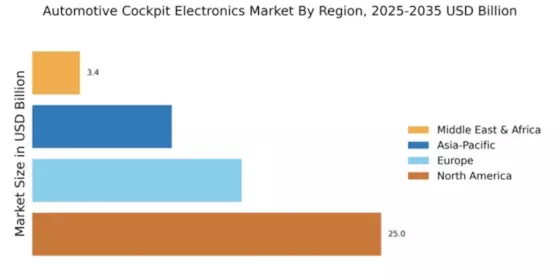
2024년 지역 시장 점유율 최대 북아메리카

주요 기업

보쉬(독일), 덴소(일본),콘티넨털(DE), Harman(미국), Panasonic(일본), Valeo(프랑스), NXP Semiconductors(NL), Aptiv(IE), Magna International(CA)

Our Impact
Enabled $4.3B Revenue Impact for Fortune 500 and Leading Multinationals
Partnering with 2000+ Global Organizations Each Year
30K+ Citations by Top-Tier Firms in the Industry

시장 세그먼트 통찰력

애플리케이션별: 인포테인먼트 시스템(최대) 및 고급 운전자 지원 시스템(가장 빠르게 성장)

자동차 조종석 전자제품 시장에서 시장 점유율 분포를 보면 인포테인먼트 시스템이 가장 큰 부문이며 향상된 자동차 내 엔터테인먼트 및 연결 옵션에 대한 소비자 수요에 크게 힘입은 것으로 나타났습니다. 그 뒤를 이어 첨단 운전자 지원 시스템은 안전 기능과 자율 주행 기술에 대한 관심이 높아지는 것을 반영하여 가장 빠르게 성장하는 부문으로 떠오르고 있습니다. 계기판, 헤드업 디스플레이 등 다른 부문도 시장 다양성에 기여하지만 점유율과 성장 속도 측면에서는 뒤처져 있습니다. 이 부문의 성장 추세는 주로 급속한 기술 발전과 변화하는 소비자 선호도에 의해 촉진됩니다. 스마트폰 통합 및 연결 기능의 증가로 인포테인먼트 시스템 부문이 크게 발전했으며, 보다 안전한 운전 기술을 향한 노력은 첨단 운전자 지원 시스템의 성장을 주도하고 있습니다. AI와 IoT 프레임워크의 통합은 이러한 애플리케이션의 기능을 더욱 향상시켜 향후 자동차 전체의 채택률을 높일 것으로 예상됩니다.

인포테인먼트 시스템(주요)과 고급 운전자 지원 시스템(신흥)

인포테인먼트 시스템 부문은 풍부한 멀티미디어 기능, 대화형 터치스크린, 원활한 스마트폰 연결 옵션을 특징으로 하는 자동차 조종석 전자제품 시장에서 지배적인 위치를 차지하고 있습니다. 이 부문은 우수한 엔터테인먼트 및 내비게이션 솔루션에 대한 소비자의 욕구를 충족시켜 다양한 차량 카테고리에서 더 높은 채택률을 달성합니다. 반대로, 첨단 운전자 지원 시스템(Advanced Driver Assistance System) 부문은 새롭게 떠오르는 동시에 적응형 크루즈 컨트롤 및 차선 유지 지원과 같은 기능이 새로운 모델에 빠르게 통합되어 강력한 잠재력을 보여줍니다. 이 부문은 안전에 대한 규제 압력과 자동화를 향한 기술 전환의 영향을 크게 받습니다. 따라서 제조업체가 기술에 정통한 소비자에게 어필하기 위해 이러한 고급 기능에 투자함에 따라 매력적인 시장 위치를 ​​제시합니다.

최종 용도별: 승용차(최대) 대 전기 자동차(가장 빠르게 성장)

자동차 조종석 전자 제품 시장에서는 최종 사용 부문 간의 분포가 눈에 띄게 다양합니다. 승용차는 주로 고급 인포테인먼트 및 연결 기능에 대한 소비자 수요 증가로 인해 가장 큰 점유율을 차지하고 있습니다. 승용차에 대한 이러한 강한 선호는 향상된 운전 경험에 대한 욕구에서 비롯되며 승용차가 시장에서 지배적인 부문이 됩니다. 한편, 전기 자동차는 환경 친화적인 매력과 조종석 전자 장치에 대한 기술 발전으로 인해 소비자와 제조업체 모두로부터 큰 관심을 끌면서 활발하게 부상하고 있습니다. 이 부문의 성장 추세는 자동차 디자인과 소비자 선호도의 중추적인 변화를 강조합니다. 특히 전기 자동차는 환경에 대한 인식이 높아지고 지속 가능한 자동차 솔루션을 요구하는 정부 규제로 인해 가장 빠른 성장을 보이고 있습니다. 이러한 추세는 제조업체가 소비자의 기대를 충족하고 전반적인 운전 경험을 향상시키기 위해 전기 모델에 고급 조종석 기술을 통합하는 데 우선순위를 두어 시장의 경쟁 환경을 재편하는 혁신적인 변화를 나타냅니다.

승용차(주요) vs. 상업용 차량(신흥)

자동차 조종석 전자 제품 시장은 고급 조종석 기술의 상당한 점유율과 광범위한 채택으로 인해 승용차를 지배적인 부문으로 선보입니다. 이들 차량에는 최첨단 인포테인먼트 시스템, 첨단 운전 보조 기술, 원활한 연결 솔루션이 탑재되어 있어 향상된 편안함과 안전성에 대한 소비자 선호도가 높아지고 있습니다. 이와 대조적으로, 전통적으로 뒤쳐져 있는 상용차는 제조업체들이 운영 효율성과 사용자 경험을 개선하기 위해 첨단 전자 장치를 통합하는 것의 중요성을 점점 더 인식함에 따라 새로운 부문으로 떠오르고 있습니다. 텔레매틱스 및 차량 관리 시스템을 포함한 스마트 차량 솔루션으로의 전환이 이 부문의 성장을 주도하고 있습니다. 결과적으로 상용차에는 더욱 정교한 조종석 전자 장치가 통합되어 전통적인 기능과 현대적인 기술 이점 간의 격차를 해소하기 시작했습니다.

기술별: 디스플레이 기술(최대) 대 오디오 기술(가장 빠르게 성장)

자동차 조종석 전자 제품 시장에서는 자동차의 고해상도 디스플레이에 대한 수요 증가로 인해 디스플레이 기술이 가장 큰 점유율을 차지하고 있습니다. 이 기술에는 인포테인먼트, 계기판, 고급 운전자 지원 시스템에 사용되는 다양한 유형의 화면이 포함되어 향상된 사용자 경험에 대한 소비자 기대에 부응합니다. 이와 대조적으로 오디오 기술은 프리미엄 오디오 시스템에 대한 소비자 선호도가 높아짐에 따라 빠르게 성장하고 있습니다. 음질 향상, 스마트 기능 통합, 개인화된 오디오 경험을 통해 자동차 제조업체가 차량 내 엔터테인먼트 향상에 주력하면서 이 부문은 상당한 시장 관심을 받고 있습니다.

디스플레이 기술(주요)과 오디오 기술(신흥)

디스플레이 기술은 주로 현대 자동차 인테리어의 모든 측면에 통합되기 때문에 자동차 조종석 전자 제품 시장에서 지배적인 힘입니다. 이는 미적 매력을 향상시킬 뿐만 아니라 사용자 상호 작용 및 탐색에서 중요한 역할을 합니다. 아날로그에서 디지털 디스플레이로의 전환은 운전 경험에 혁명을 일으키고 안전 기능에 기여했습니다. 한편, 오디오 기술은 첨단 사운드 시스템과 스마트 기술을 융합해 핵심 플레이어로 떠오르고 있다. 이 부문은 제조업체가 서라운드 사운드 및 연결 옵션과 같은 요소를 통합하여 사운드 엔지니어링을 혁신함에 따라 상당한 성장을 경험하고 있으며, 이는 젊은 소비자의 관심을 끌고 전반적인 운전 경험을 향상시킵니다.

구성 요소 유형별: 디스플레이(최대) 및 마이크로컨트롤러(가장 빠르게 성장)

자동차 조종석 전자 시장은 다양한 구성 요소 유형이 특징이며 디스플레이가 가장 큰 시장 점유율을 차지합니다. 세그먼트를 장악하고 있는 디스플레이는 고급 그래픽 인터페이스를 통해 중요한 정보를 제공함으로써 운전 경험을 향상시킵니다. 디스플레이에 이어 마이크로컨트롤러는 시장의 상당 부분을 차지하며 조종석 내의 다양한 전자 기능을 제어하는 ​​데 중요한 역할을 합니다. 채택이 증가하는 것은 보다 지능적이고 통합된 조종석 시스템으로의 전환을 강조하여 전반적인 차량 성능과 사용자 참여에 효과적으로 기여합니다.

디스플레이(주요)와 마이크로컨트롤러(신흥)

디스플레이는 자동차 조종석 전자 제품 시장에서 매우 중요하며 운전자와 승객에게 실시간 데이터와 멀티미디어를 제공하는 주요 구성 요소 역할을 합니다. 터치 스크린, 증강 현실 등 첨단 기술과의 통합으로 사용자 상호 작용이 향상되어 운전 경험이 더욱 직관적이 됩니다. 한편, 마이크로컨트롤러는 신흥 부문으로서 인포테인먼트 시스템, 실내 온도 조절 등 차량 조종석 내 다양한 ​​기능을 관리할 수 있는 기능으로 인해 빠르게 주목을 받고 있습니다. 이들의 성장은 반도체 기술의 발전과 보다 스마트한 차량 운영에 대한 필요성에 의해 주도되며, 이는 미래 자동차 혁신을 위한 필수 구성 요소로 자리매김하고 있습니다.

차량 유형별: 내연 기관(최대) 대 전기 자동차(가장 빠르게 성장)

자동차 조종석 전자 제품 시장은 차량 유형 부문에서 상당한 다양성을 보이며, 내연 기관(ICE)이 가장 큰 시장 점유율을 유지합니다. 새로운 기술의 도전에 직면했음에도 불구하고 ICE 차량의 지속적인 존재는 소비자 선호도에 뿌리 깊게 통합되어 있음을 반영합니다. 한편, 전기자동차(EV)는 자동차 산업에 획기적인 변화를 가져오며 급속도로 주목을 받고 있습니다. 조종석 전자 부문에서의 점유율 증가는 유리한 정부 정책과 인프라 개발에 힘입어 첨단 기술과 지속 가능성에 대한 소비자 선호도가 높아지고 있음을 강조합니다. 자동차 환경이 변화함에 따라 전기 자동차의 성장 궤적이 특히 주목할 만합니다. 배터리 기술의 발전과 환경 지속 가능성에 대한 강조로 인해 EV는 향후 몇 년 내에 기존 ICE 차량을 능가할 것으로 예상됩니다. 이러한 성장은 전기 이동성을 촉진하는 인센티브와 충전 인프라의 가용성 증가로 인해 더욱 가속화됩니다. 결과적으로 EV용으로 설계된 조종석 전자 장치는 기술에 정통한 소비자의 진화하는 요구 사항을 충족하는 최첨단 기능을 통합하여 상당한 혁신을 이룰 가능성이 높습니다.

내연 기관(주요)과 전기 자동차(신흥)

내부 연소 엔진 차량은 확립된 기술과 광범위한 채택으로 인해 자동차 조종석 전자 장치 시장에서 여전히 지배적인 세력으로 남아 있습니다. 이러한 차량에는 일반적으로 고급 인포테인먼트 시스템, 운전자 지원 기술 및 운전자 경험을 향상시키는 기타 조종석 기능이 장착되어 있습니다. 기존 차량에 대한 소비자의 의존도가 계속됨에 따라 ICE는 이 시장 부문에서 여전히 핵심 기업으로 남아 있습니다. 반대로, 전기 자동차는 획기적인 기술과 전기 모빌리티에 맞춤화된 혁신적인 조종석 솔루션을 특징으로 하는 신흥 부문을 대표합니다. EV는 환경을 생각하는 소비자에게 어필하도록 설계된 스마트 기술, 인포테인먼트 및 연결 기능의 원활한 통합을 통해 사용자 상호 작용을 우선시합니다. EV 부문의 급속한 성장은 운전석 전자 장치 환경을 재편하고 있으며 혁신과 시장 요구에 대한 대응을 장려하는 경쟁 환경을 조성하고 있습니다.

Automotive Cockpit Electronics Market에 대한 더 자세한 통찰력 얻기

Automotive Cockpit Electronics Market 시장의 주요 기업은 다음과 같습니다

보고서 범위

FAQs

What is the projected market valuation of the Automotive Cockpit Electronics Market by 2035?

The Automotive Cockpit Electronics Market is projected to reach a valuation of 125.57 USD Billion by 2035.

What was the market valuation of the Automotive Cockpit Electronics Market in 2024?

In 2024, the market valuation of the Automotive Cockpit Electronics Market was 53.41 USD Billion.

What is the expected CAGR for the Automotive Cockpit Electronics Market during the forecast period 2025 - 2035?

The expected CAGR for the Automotive Cockpit Electronics Market during the forecast period 2025 - 2035 is 8.08%.

Which segment is anticipated to have the highest valuation in the Automotive Cockpit Electronics Market by 2035?

The Infotainment System segment is anticipated to have the highest valuation, projected to reach between 20.0 and 45.0 USD Billion by 2035.

How does the valuation of the Electric Vehicle segment compare to that of the Commercial Vehicle segment by 2035?

By 2035, the Electric Vehicle segment is projected to reach between 15.0 and 35.0 USD Billion, whereas the Commercial Vehicle segment is expected to reach between 10.0 and 25.0 USD Billion.

What are the key players in the Automotive Cockpit Electronics Market?

Key players in the Automotive Cockpit Electronics Market include Robert Bosch GmbH, Denso Corporation, Continental AG, and Harman International, among others.

What is the projected valuation range for the Advanced Driver Assistance System segment by 2035?

The Advanced Driver Assistance System segment is projected to reach a valuation range of 10.0 to 25.0 USD Billion by 2035.

Which technology segment is expected to show significant growth in the Automotive Cockpit Electronics Market?

The Telematics Technology segment is expected to show significant growth, with a projected valuation range of 16.41 to 35.57 USD Billion by 2035.

What is the anticipated valuation for the Audio Systems component type by 2035?

The Audio Systems component type is anticipated to reach a valuation of between 20.41 and 45.57 USD Billion by 2035.

How does the market for Instrument Clusters compare to that of Head-Up Displays by 2035?

By 2035, the Instrument Cluster segment is projected to reach between 10.0 and 25.0 USD Billion, while the Head-Up Display segment is expected to reach between 5.0 and 15.0 USD Billion.
저자
Author
Author Profile
Triveni Bhoyar LinkedIn
Senior Research Analyst
Triveni Bhoyar has over 5 years of experience in the market research industry, specializing in the Automotive and Aerospace & Defense sectors. She has contributed to 200+ reports, including numerous custom projects for leading global companies, delivering solutions to complex business challenges. Renowned for her ability to generate valuable insights, Triveni excels in addressing unique market dynamics with precision and depth. Her expertise spans market sizing, competitive intelligence, and trend analysis, enabling clients to craft data-driven growth strategies. With strong analytical rigor and a client-centric approach, she plays a pivotal role in driving impactful, strategic decision-making.
Co-Author
Co-Author Profile
Swapnil Palwe LinkedIn
Team Lead - Research
With a technical background as Bachelor's in Mechanical Engineering, with MBA in Operations Management , Swapnil has 6+ years of experience in market research, consulting and analytics with the tasks of data mining, analysis, and project execution. He is the POC for our clients, for their consulting projects running under the Automotive/A&D domain. Swapnil has worked on major projects in verticals such as Aerospace & Defense, Automotive and many other domain projects. He has worked on projects for fortune 500 companies' syndicate and consulting projects along with several government projects.
댓글 남기기

Research Approach


Secondary Research

The secondary research process involved comprehensive analysis of regulatory databases, automotive industry publications, technical standards documentation, and authoritative transportation organizations. Key sources included the US National Highway Traffic Safety Administration (NHTSA), European Automobile Manufacturers' Association (ACEA), European Telecommunications Standards Institute (ETSI), International Organization for Standardization (ISO/TC 22) for automotive standards, Society of Automotive Engineers (SAE) International, International Electrotechnical Commission (IEC) for electronics standards, US Department of Transportation (DOT), European Commission Mobility and Transport Directorate-General, China Association of Automobile Manufacturers (CAAM), Japan Automobile Manufacturers Association (JAMA), National Highway Traffic Safety Administration (NHTSA) Fatality Analysis Reporting System, International Energy Agency (IEA) Global EV Outlook, World Economic Forum (WEF) Future of Mobility, International Telecommunication Union (ITU) for connectivity standards, German Association of the Automotive Industry (VDA), and national automotive ministry reports from key markets (US, Germany, Japan, China, South Korea, India). These sources were used to collect vehicle production statistics, regulatory compliance data, autonomous driving framework developments, consumer technology adoption trends, and market landscape analysis for Head-Up Display systems, Infotainment platforms, Driver Information Displays, Climate Control electronics, Telematics modules, Audio systems, and other cockpit technologies.


Primary Research

In order to gather both qualitative and quantitative insights, supply-side and demand-side stakeholders were interviewed during the primary research process. CEOs, vice presidents of product development, heads of cockpit electronics engineering, chief technology officers, heads of user experience (UX) design, directors of regulatory compliance, and commercial directors from Tier-1 automotive electronics suppliers, cockpit system integrators, display manufacturers, semiconductor companies, and OEMs were among the supply-side sources. Chief engineers from international automakers, heads of interior design, procurement directors for cockpit electronics, fleet managers from commercial vehicle operators, ride-sharing technology leaders, and quality assurance managers from automobile manufacturing facilities were examples of demand-side sources. Primary research verified product pipeline timelines for next-generation cockpit platforms, validated market segmentation across HUD, infotainment, and driver information systems, and obtained information on supply chain dynamics, software integration tactics, cybersecurity frameworks, and HMI adoption trends.

Primary Respondent Breakdown:

• By Designation: C-level Primaries (28%), Director Level (45%), Others (27%)

• By Region: North America (42%), Europe (23%), Asia-Pacific (30%), Rest of World (5%)


Market Size Estimation

Global market valuation was derived through revenue mapping and vehicle unit production analysis. The methodology included:

• Identification of 55+ key manufacturers across North America, Europe, Asia-Pacific, and Latin America specializing in cockpit electronics, display technologies, and HMI systems

• Product mapping across Head-Up Display, Infotainment System (Cockpit Integration Platform, Display and Integration System), Driver Information Display (Central Display, Passenger Display, Controls and Integration Elements), Climate Control System, Telematics, Audio System, Dash Cameras, and other emerging categories

• Analysis of reported and modeled annual revenues specific to cockpit electronics portfolios and subsystem categories

• Coverage of manufacturers representing 75-80% of global market share in 2024

• Extrapolation using bottom-up (vehicle unit production × average system content value by region) and top-down (manufacturer revenue validation against OEM procurement data) approaches to derive segment-specific valuations for passenger cars (hatchback, sedan, SUV/MUV, sports/hypercar) and commercial vehicles (LCVs, trucks, buses)

무료 샘플 다운로드

이 보고서의 무료 샘플을 받으려면 아래 양식을 작성하십시오

Download PDF ×

We do not share your information with anyone. However, we may send you emails based on your report interest from time to time. You may contact us at any time to opt-out.