×
Request Free Sample ×

Kindly complete the form below to receive a free sample of this Report

* Please use a valid business email

Leading companies partner with us for data-driven Insights

clients tt-cursor
Hero Background

Beauty Tools Market

ID: MRFR/CG/7312-CR
128 Pages
Snehal Singh
February 2021

Beauty Tools Market Research Report: Information By Type (Hair Care Tools (Hair Straighteners & Flat Irons, Curling Irons, Hair Dryers And Others), Razors, Trimmers, Brushes & Combs, Manicure & Pedicure Tools, Nail File, Nail Cutter, Cuticle Pusher & Nipper And Others), By End-Use (HouseHold And Commercial), By Distribution Channel (Store-Based And Non-Store-Based (Online/ E-Commerce)) And By Region (North America, Europe, Asia-Pacific, And Rest Of The World) –Market Forecast Till 2035

Share:
Download PDF ×

We do not share your information with anyone. However, we may send you emails based on your report interest from time to time. You may contact us at any time to opt-out.

Beauty Tools Market Infographic
Purchase Options

Beauty Tools Market Summary

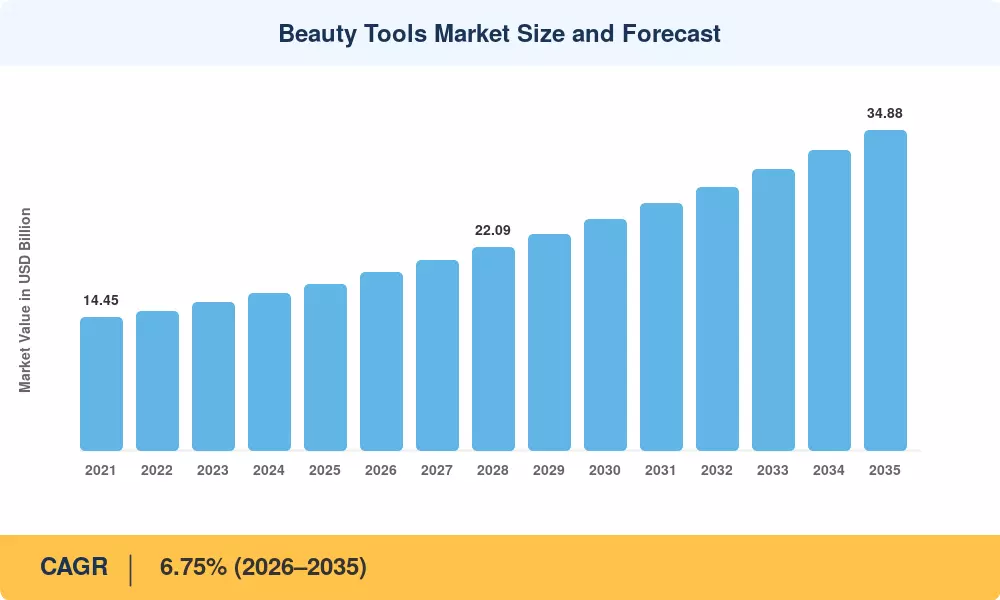
As per MRFR analysis, the Beauty Tools Market Size was estimated at 89.92 USD Billion in 2024. The Beauty Tools industry is projected to grow from 102.71 USD Billion in 2025 to 388.24 USD Billion by 2035, exhibiting a compound annual growth rate (CAGR) of 14.22 during the forecast period 2025 - 2035.

Key Market Trends & Highlights

The Beauty Tools Market is experiencing a dynamic evolution driven by technological advancements and changing consumer preferences.

  • The rise of smart beauty tools is reshaping consumer engagement and product functionality.
  • Sustainability is becoming a pivotal focus, with eco-friendly beauty tools gaining traction among consumers.
  • Social media continues to exert a profound influence on beauty trends, driving demand for innovative products.
  • Technological advancements and the growing demand for eco-friendly beauty tools are key drivers propelling market growth in North America and Asia-Pacific, particularly in the facial care and hair styling tools segments.

Market Size & Forecast

2024 Market Size 89.92 (USD Billion)
2035 Market Size 388.24 (USD Billion)
CAGR (2025 - 2035) 14.22%

Major Players

Procter & Gamble (US), Estée Lauder (US), L'Oréal (FR), Revlon (US), Shiseido (JP), Coty (US), Mary Kay (US), Amway (US), Avon (GB)

Beauty Tools Market Trends

The Beauty Tools Market is currently experiencing a dynamic evolution, driven by shifting consumer preferences and technological advancements. As individuals increasingly prioritize personal grooming and self-care, the demand for innovative beauty tools has surged. This market encompasses a wide array of products, including skincare devices, makeup applicators, and hair styling tools, all designed to enhance the beauty regimen. The rise of social media and influencer culture has further propelled interest in these tools, as consumers seek to replicate professional results at home. Additionally, sustainability concerns are influencing purchasing decisions, with many consumers gravitating towards eco-friendly and ethically produced beauty tools. In December 2025, the Beauty Tools Market appears poised for continued growth, as brands adapt to emerging trends and consumer expectations. The integration of smart technology into beauty tools is becoming increasingly prevalent, offering users personalized experiences and enhanced functionality. Furthermore, the expansion of e-commerce platforms is facilitating greater accessibility to a diverse range of beauty tools, allowing consumers to explore and purchase products from the comfort of their homes. As the market evolves, it is likely that innovation and sustainability will remain at the forefront, shaping the future landscape of beauty tools.

Rise of Smart Beauty Tools

The Beauty Tools Market is witnessing a notable shift towards the incorporation of smart technology. Devices equipped with sensors and connectivity features are gaining traction, allowing users to customize their beauty routines. This trend suggests a growing consumer preference for tools that offer personalized experiences, enhancing the overall effectiveness of beauty regimens.

Sustainability in Beauty Tools

Sustainability is becoming a pivotal factor in the Beauty Tools Market. Consumers are increasingly seeking products made from eco-friendly materials and those that promote ethical practices. This trend indicates a broader movement towards responsible consumption, as brands respond by developing sustainable beauty tools that align with consumer values.

Influence of Social Media on Beauty Tools

The impact of social media on the Beauty Tools Market is profound. Platforms like Instagram and TikTok are shaping consumer behavior, as influencers showcase various beauty tools and techniques. This trend highlights the power of visual content in driving product awareness and influencing purchasing decisions among consumers.

Beauty Tools Market Drivers

Diverse Product Offerings

The Global Beauty Tools Industry is characterized by a diverse array of product offerings, catering to various consumer needs and preferences. From skincare tools like facial rollers to makeup applicators, the variety ensures that consumers can find products that suit their specific requirements. This diversity not only attracts a broader customer base but also encourages brand loyalty as consumers seek to explore different tools. The ongoing innovation in product design and functionality further enhances this diversity, making the market more appealing. As a result, the industry is projected to reach 89.9 USD Billion in 2024.

Growing E-commerce Sector

The expansion of the e-commerce sector significantly contributes to the growth of the Global Beauty Tools Industry. Online retail platforms provide consumers with convenient access to a wide range of beauty tools, often at competitive prices. This accessibility is particularly beneficial for consumers in regions with limited physical retail options. Additionally, e-commerce allows for personalized shopping experiences through targeted marketing and recommendations based on consumer preferences. As a result, the market is poised for substantial growth, with projections indicating a potential increase to 388.2 USD Billion by 2035.

Influence of Social Media

The impact of social media on the Global Beauty Tools Industry cannot be overstated. Platforms like Instagram and TikTok serve as powerful marketing channels, where beauty influencers showcase their favorite tools and techniques. This visibility drives consumer interest and encourages purchases, particularly among younger demographics. The viral nature of beauty trends on social media platforms fosters a culture of experimentation, prompting consumers to explore new products. Consequently, the market is expected to grow at a compound annual growth rate of 14.22% from 2025 to 2035, reflecting the influence of digital marketing strategies.

Rising Consumer Awareness

The Global Beauty Tools Industry experiences a notable surge in consumer awareness regarding personal grooming and skincare. This heightened consciousness leads to increased demand for beauty tools that promote self-care and enhance appearance. As consumers become more informed about the benefits of various beauty tools, they are more likely to invest in high-quality products. This trend is particularly evident in emerging markets, where the beauty industry is expanding rapidly. The Global Beauty Tools Market is projected to reach 89.9 USD Billion in 2024, indicating a robust growth trajectory fueled by this awareness.

Technological Advancements

Technological innovations play a pivotal role in shaping the Global Beauty Tools Industry. The introduction of smart beauty tools, such as devices that utilize artificial intelligence for personalized skincare routines, is transforming consumer experiences. These advancements not only enhance the efficacy of beauty tools but also attract tech-savvy consumers who seek cutting-edge solutions. Moreover, the integration of sustainable materials in product design aligns with the growing demand for eco-friendly options. As a result, the market is likely to witness a significant expansion, with projections indicating a growth to 388.2 USD Billion by 2035.

Market Segment Insights

By Application: Facial Care (Largest) vs. Hair Care (Fastest-Growing)

The beauty tools market is broadly segmented into Facial Care, Hair Care, Nail Care, Body Care, and Oral Care. Among these, Facial Care holds the largest market share, mainly driven by the rising demand for skincare tools such as facial cleansing brushes, masks, and serums. In contrast, Hair Care is rapidly gaining attention, fueled by innovations in styling and grooming tools that cater to diverse hair types and consumer preferences.

Facial Care: Cleansing Brushes (Dominant) vs. Facial Rollers (Emerging)

Cleansing brushes, a dominant player in the Facial Care segment, are designed to offer enhanced cleansing and skin rejuvenation, appealing to consumers seeking effective skincare solutions. Their advanced technology and ease of use make them a staple in beauty routines. Conversely, facial rollers represent an emerging trend within this segment, gaining popularity for their perceived benefits in lymphatic drainage and skin tightening. While still in the growth phase, facial rollers attract consumers looking for holistic approaches to beauty, blending traditional practices with contemporary skincare needs.

By Product Type: Makeup Brushes (Largest) vs. Hair Styling Tools (Fastest-Growing)

The Beauty Tools Market is significantly influenced by various product types, with Makeup Brushes holding the largest share. This segment is favored for its versatility and essential role in makeup application. Following closely, Hair Styling Tools are rapidly gaining popularity, driven by innovative designs and the increasing demand for professional-grade styling at home. Skincare Tools, Nail Tools, and Epilators also contribute to the market but exhibit comparatively lower shares.

Makeup Brushes (Dominant) vs. Hair Styling Tools (Emerging)

Makeup Brushes dominate the Beauty Tools Market due to their integral role in enhancing makeup application and achieving desired looks. They come in various shapes and sizes, catering to different makeup products and techniques, thus appealing to a wide customer base. On the other hand, Hair Styling Tools are emerging as a fast-growing segment, fueled by advancements in technology and an increasing trend of at-home styling. Consumers are seeking high-quality, easy-to-use tools that enable them to achieve salon-like results at home. This shift signifies a change in consumer behavior towards hair care, prioritizing efficiency and professional results in everyday routines.

By Material: Plastic (Largest) vs. Silicone (Fastest-Growing)

In the Beauty Tools Market, material choice significantly influences consumer preferences and purchasing decisions. Currently, Plastic emerges as the dominant material, capturing a significant share due to its durability, versatility, and cost-effectiveness. It is extensively used in various beauty tools such as brushes, sponges, and applicators. In contrast, Silicone has garnered attention for its unique properties, providing a soft, flexible feel that appeals to consumers seeking high-quality beauty tools, especially in makeup sponges and brushes, making it a rapidly growing segment.

Plastic: Dominant vs. Silicone: Emerging

Plastic reigns supreme in the Beauty Tools Market due to its affordability and practicality. Volume-driven, Plastic products are lightweight and moldable, enabling intricate designs that cater to consumer demand for functionality and style. On the other hand, Silicone has emerged as a popular choice for those seeking high-end tools with excellent hygiene features. Renowned for its non-porous nature, Silicone does not harbor bacteria, making it ideal for makeup application tools. As sustainability trends rise, manufacturers are exploring innovative ways to enhance Silicone's market position, ensuring that both segment values continue to evolve within the dynamic Beauty Tools sector.

By Distribution Channel: Online Retail (Largest) vs. Department Stores (Fastest-Growing)

The Beauty Tools Market exhibits a diverse distribution landscape, with online retail being the largest channel. This segment has carved out a significant portion of the market, driven by the convenience and accessibility provided to consumers. Following online retail, department stores remain a notable player, attracting traditional customers who appreciate in-store experiences and product testing before purchase. Specialty stores, pharmacies, and supermarkets also contribute to the market but do not command the same level of market share as the leading segments. Growth trends indicate a robust shift towards online shopping, fueled by increased internet penetration and the rising popularity of e-commerce platforms. The online retail segment is accelerated by changing consumer shopping behaviors and a preference for hassle-free purchasing experiences. Meanwhile, department stores are experiencing rejuvenation strategies to capture emerging market trends, making them the fastest-growing channel as they adapt to changing shopper preferences and integrate advanced technology into their services.

Distribution Channel: Online Retail (Dominant) vs. Specialty Stores (Emerging)

Online retail stands as the dominant force in the Beauty Tools Market, characterized by its vast reach and continuous expansion in product offerings. The convenience of shopping from home and the wide variety of beauty tools available online drive significant consumer engagement. In contrast, specialty stores, while classified as an emerging segment, offer personalized services and curated selections that attract niche consumer bases. Specialty stores excel in customer service and product expertise, creating a unique shopping environment that draws buyers interested in exclusive products. Together, these two distribution channels reflect the dynamic nature of consumer preferences, highlighting a blend of convenience and dedicated shopping experiences.

By Consumer Demographics: Age Group (Largest) vs. Lifestyle (Fastest-Growing)

In the Beauty Tools Market, age groups are pivotal in determining consumer preferences, with younger demographics, particularly those aged 18-24, commanding the largest market share. This segment values innovation and trendiness, often gravitating towards tools that enhance beauty routines efficiently. Conversely, consumers aged 35 and above are also significant players, showing a preference for established brands that promise reliability and quality. This multi-age appeal underscores the diverse consumer base within the market.

Age Group: 18-24 (Dominant) vs. Lifestyle: Eco-Conscious (Emerging)

The 18-24 age group remains dominant in the Beauty Tools Market due to its inclination towards social media influences and a desire for self-expression. They prefer beauty tools that align with current trends, often opting for multifunctional devices that cater to their fast-paced lifestyle. On the other hand, the eco-conscious lifestyle segment is emerging rapidly. Consumers are increasingly seeking sustainable and environmentally friendly beauty tools. This shift reflects a broader societal trend focused on health and environmental impacts, driving brands to innovate and adapt their offerings to meet the expectations of this conscientious demographic.

Get more detailed insights about Beauty Tools Market

Regional Insights

North America : Market Leader in Beauty Tools

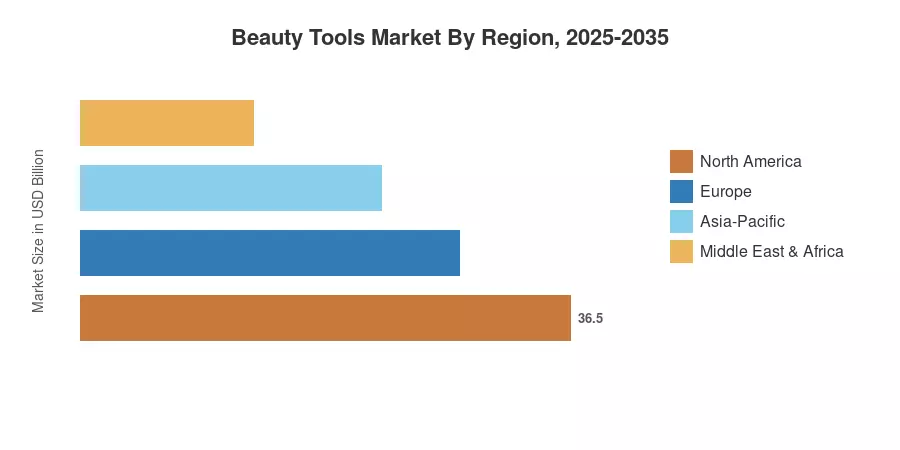
North America continues to lead The Beauty Tools, holding a significant share of 44.96% as of 2024. The region's growth is driven by increasing consumer demand for innovative beauty solutions, coupled with a strong emphasis on personal grooming and self-care. Regulatory support for cosmetic safety and product efficacy further enhances market dynamics, encouraging brands to innovate and expand their offerings. The competitive landscape in North America is robust, featuring key players such as Procter & Gamble, Estée Lauder, and Revlon. The U.S. remains the largest market, characterized by high disposable incomes and a trend towards premium beauty products. Companies are increasingly focusing on sustainability and eco-friendly products, aligning with consumer preferences for responsible beauty solutions.

Europe : Emerging Trends in Beauty Tools

Europe's beauty tools market is valued at €27.98 billion, reflecting a growing trend towards innovative and multifunctional products. The region benefits from a strong regulatory framework that emphasizes product safety and quality, driving consumer trust and demand. Additionally, the rise of e-commerce and social media influences purchasing behaviors, with consumers seeking the latest beauty trends and tools. Leading countries in this market include France, Germany, and the UK, where brands like L'Oréal and Coty dominate. The competitive landscape is marked by a mix of established players and emerging brands, focusing on sustainability and inclusivity. The European market is increasingly characterized by collaborations between beauty brands and tech companies, enhancing product offerings and consumer engagement.

Asia-Pacific : Rapid Growth in Beauty Tools

The Asia-Pacific beauty tools market, valued at $15.99 billion, is witnessing rapid growth fueled by rising disposable incomes and a growing middle class. Consumers in this region are increasingly investing in beauty and personal care, driven by social media trends and the influence of beauty influencers. Regulatory frameworks are evolving to ensure product safety, which is crucial for consumer confidence and market expansion. Countries like Japan, China, and South Korea are at the forefront of this growth, with brands such as Shiseido and Amway leading the charge. The competitive landscape is vibrant, with a mix of local and international players. The region is also seeing a surge in demand for innovative beauty tools that cater to specific skin types and beauty needs, reflecting the diverse consumer base.

Middle East and Africa : Emerging Market Potential

The Middle East and Africa beauty tools market, valued at $1.99 billion, is in its nascent stages but shows significant growth potential. Factors such as increasing urbanization, rising disposable incomes, and a growing interest in personal grooming are driving demand. Regulatory bodies are beginning to implement stricter guidelines to ensure product safety and quality, which is essential for market growth. Countries like South Africa and the UAE are leading the market, with a growing presence of international brands. The competitive landscape is evolving, with local brands emerging to cater to regional preferences. The market is characterized by a blend of traditional beauty practices and modern beauty tools, creating unique opportunities for innovation and growth.

Key Players and Competitive Insights

The Beauty Tools Market is currently characterized by a dynamic competitive landscape, driven by innovation, consumer demand for high-quality products, and the increasing integration of technology. Major players such as Procter & Gamble (US), Estée Lauder (US), and L'Oréal (FR) are at the forefront, each adopting distinct strategies to enhance their market presence. Procter & Gamble (US) focuses on sustainability and eco-friendly product lines, which resonates with the growing consumer preference for environmentally conscious brands. Estée Lauder (US) emphasizes digital transformation, leveraging e-commerce and social media platforms to engage with consumers directly. L'Oréal (FR) is heavily investing in research and development to innovate new beauty tools that incorporate advanced technology, thereby enhancing user experience and efficacy. Collectively, these strategies contribute to a competitive environment that is increasingly centered around innovation and consumer engagement.

In terms of business tactics, companies are localizing manufacturing to reduce costs and improve supply chain efficiency. This approach not only enhances responsiveness to market demands but also mitigates risks associated with global supply chain disruptions. The Beauty Tools Market appears moderately fragmented, with a mix of established brands and emerging players. The collective influence of key players shapes market dynamics, as they compete not only on product quality but also on brand loyalty and consumer trust.

In November 2025, Procter & Gamble (US) announced a partnership with a leading tech firm to develop smart beauty tools that utilize AI for personalized skincare routines. This strategic move is likely to position Procter & Gamble (US) as a pioneer in the integration of technology within beauty tools, potentially attracting tech-savvy consumers seeking tailored solutions. The collaboration underscores the importance of innovation in maintaining competitive advantage in a rapidly evolving market.

In October 2025, Estée Lauder (US) launched a new line of beauty tools designed specifically for the Asian market, incorporating local beauty trends and preferences. This localized approach not only caters to regional consumer needs but also strengthens Estée Lauder's (US) foothold in a lucrative market segment. By aligning product offerings with cultural nuances, the company enhances its relevance and appeal among diverse consumer bases.

In September 2025, L'Oréal (FR) unveiled a sustainability initiative aimed at reducing the carbon footprint of its beauty tools production by 30% by 2027. This commitment to sustainability reflects a broader trend within the industry, where consumers increasingly prioritize eco-friendly products. L'Oréal's (FR) proactive stance on environmental responsibility may enhance its brand image and attract environmentally conscious consumers, thereby fostering long-term loyalty.

As of December 2025, the Beauty Tools Market is witnessing trends such as digitalization, sustainability, and the integration of AI technologies. Strategic alliances are becoming increasingly vital, as companies collaborate to enhance product offerings and market reach. The competitive landscape is shifting from traditional price-based competition to a focus on innovation, technology, and supply chain reliability. Moving forward, differentiation will likely hinge on the ability to innovate and adapt to consumer preferences, with a strong emphasis on sustainable practices and technological advancements.

Key Companies in the Beauty Tools Market market include

Industry Developments

In 2024, Tira Tools, a new beauty accessory brand containing Pro Makeup Brushes, Facial Rollers, and Beauty Sponges, will be launched by Reliance Retail's Tira Beauty. The collection targets professional artists and beauty fans with ethical, cruelty-free items manufactured from high-quality materials such as actual jade and quartz. Tira Tools, which is available both online and in stores, promises to transform the beauty industry.

May 2022, Estée Lauder and Shoppers Stop collaborated to build an exclusive SS Beauty store in Mumbai. The two companies' collaboration in India has been strengthened by this establishment. Only Estée Lauder products such as MAC Cosmetics, Clinique, Bobbi Brown, Jo Malone, Estee Lauder, Smashbox, and Tom Ford will be available at the SS beauty boutique.

March 2022, Colgate-Palmolive Company introduced Visible White O2 toothpaste. This is a unique whitening toothpaste that lightens stains from the inside out. The company has introduced this in the premium personal care market with the goal of targeting a certain consumer group.

In January 2022, Procter & Gamble has bought the luxury skincare brand Tula, which will add to the company's prestige brand portfolio. Tula is a clean skincare company that relies on microbial extracts and superfoods. As part of the acquisition agreement, P&G Beauty will work with the Tula team to drive brand growth and support expansion and innovation.

Future Outlook

Beauty Tools Market Future Outlook

The Beauty Tools Market is projected to grow at a 14.22% CAGR from 2024 to 2035, driven by technological advancements, increasing consumer awareness, and rising demand for innovative beauty solutions.

New opportunities lie in:

  • Expansion of eco-friendly beauty tool lines
  • Development of AI-driven personalized beauty devices
  • Integration of subscription models for beauty tool access

By 2035, the Beauty Tools Market is expected to achieve substantial growth and innovation.

Market Segmentation

Beauty Tools Market Material Outlook

  • Plastic
  • Metal
  • Silicone
  • Wood
  • Glass

Beauty Tools Market Application Outlook

  • Facial Care
  • Hair Care
  • Nail Care
  • Body Care
  • Oral Care

Beauty Tools Market Product Type Outlook

  • Makeup Brushes
  • Hair Styling Tools
  • Skincare Tools
  • Nail Tools
  • Epilators

Beauty Tools Market Distribution Channel Outlook

  • Online Retail
  • Department Stores
  • Specialty Stores
  • Pharmacies
  • Supermarkets

Beauty Tools Market Consumer Demographics Outlook

  • Age Group
  • Gender
  • Income Level
  • Lifestyle
  • Skin Type

Report Scope

MARKET SIZE 202489.92(USD Billion)
MARKET SIZE 2025102.71(USD Billion)
MARKET SIZE 2035388.24(USD Billion)
COMPOUND ANNUAL GROWTH RATE (CAGR)14.22% (2024 - 2035)
REPORT COVERAGERevenue Forecast, Competitive Landscape, Growth Factors, and Trends
BASE YEAR2024
Market Forecast Period2025 - 2035
Historical Data2019 - 2024
Market Forecast UnitsUSD Billion
Key Companies ProfiledProcter & Gamble (US), Estée Lauder (US), L'Oréal (FR), Revlon (US), Shiseido (JP), Coty (US), Mary Kay (US), Amway (US), Avon (GB)
Segments CoveredApplication, Product Type, Material, Distribution Channel, Consumer Demographics
Key Market OpportunitiesIntegration of smart technology in Beauty Tools Market enhances user experience and personalization.
Key Market DynamicsRising consumer demand for innovative beauty tools drives technological advancements and competitive dynamics in the market.
Countries CoveredNorth America, Europe, APAC, South America, MEA

Market Highlights

Author
Snehal Singh
Assistant Manager - Research

High acumen in analyzing complex macro & micro markets with more than 6 years of work experience in the field of market research. By implementing her analytical skills in forecasting and estimation into market research reports, she has expertise in Packaging, Construction, and Equipment domains. She handles a team size of 20-25 resources and ensures smooth running of the projects, associated marketing activities, and client servicing.

Leave a Comment

FAQs

How much is the beauty tools market?

The beauty tools market size was valued at USD 78.72 Billion in 2023.

What is the growth rate of the beauty tools market?

The market is projected to grow at a CAGR of 14.2% during the forecast period, 2025-2034.

Which region held the largest market share in the beauty tools market?

North America had the largest share of the market

Who are the key players in the beauty tools market?

The key players in the market are Avon Products, Inc. (UK), Paris Presents Incorporated (US), Moët Hennessy - Louis Vuitton (LVMH) (UK), and Edgewell Personal Care (US).

Which type led the beauty tools market?

The hair care tools category dominated the market in 2022.

Which distribution channel had the largest market share in the beauty tools market?

The store based had the largest share of the market.

Download Free Sample

Kindly complete the form below to receive a free sample of this Report

Compare Licence

×
Features License Type
Single User Multiuser License Enterprise User
Price $4,950 $5,950 $7,250
Maximum User Access Limit 1 User Upto 10 Users Unrestricted Access Throughout the Organization
Free Customization
Direct Access to Analyst
Deliverable Format
Platform Access
Discount on Next Purchase 10% 15% 15%
Printable Versions