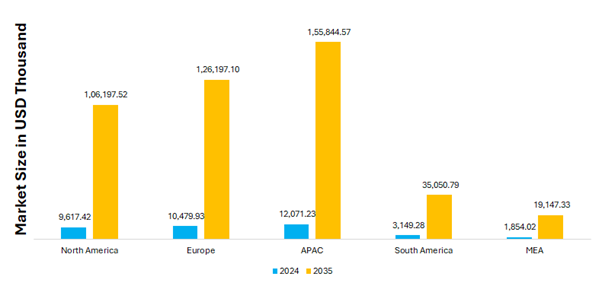
The global biochar market for EAF steelmaking is witnessing steady growth as the steel industry increasingly prioritizes decarbonization and sustainable production practices.
Biochar is gaining attention as a viable renewable carbon source that helps reduce reliance on fossil-based inputs while supporting emission reduction targets.
Advancements in biomass conversion technologies, along with greater availability of agricultural and forestry equipment residues, are improving the commercial feasibility of biochar.
In parallel, regulatory support and industry-led green steel initiatives are accelerating the transition from pilot projects to broader commercial adoption.
Biochar Adoption in EAF Steelmaking
Biochar is increasingly being adopted in EAF steelmaking as a renewable alternative to coal and coke, helping steel producers reduce direct carbon emissions.
Its biogenic origin allows it to support carbon-neutral or carbon-negative production pathways.
Steelmakers are integrating biochar to align with global decarbonization targets without significantly altering existing EAF infrastructure.
Improvements in biochar quality, such as higher fixed carbon content and controlled reactivity, are enhancing its suitability for metallurgical applications.
The shift also helps reduce dependence on volatile fossil fuel markets.
As emission reduction commitments intensify, biochar is becoming a strategic input in low-carbon steel production.
Biomass Feedstock and Policy Support
The use of agricultural equipment residues and forestry waste as biochar feedstock is improving raw material availability while lowering production costs.
This approach enables the conversion of low-value biomass into high-value metallurgical carbon.
It also reduces disposal challenges associated with biomass waste, supporting sustainable resource management.
Increased feedstock diversity improves supply chain resilience for biochar producers.
Regional availability of biomass further encourages localized production, reducing transportation costs.
Overall, waste-based feedstock utilization strengthens both economic and environmental viability.
Government policies aimed at reducing industrial emissions are creating favourable conditions for biochar adoption in steelmaking.
Carbon pricing mechanisms increase the cost of fossil-based carbon, improving the competitiveness of biochar alternatives.
Incentives, subsidies, and funding programs are supporting pilot projects and commercial-scale investments.
Regulatory frameworks promoting renewable materials are also encouraging steelmakers to explore biochar integration.
These policy-driven measures help mitigate initial cost barriers.
As regulations tighten, policy support is expected to play a key role in accelerating market growth.
Green Steel Production Initiatives
The global push toward green steel production is motivating steel producers to move beyond pilot trials of biochar toward commercial implementation.
Customers across automotive, construction, and infrastructure sectors are increasingly demanding low-carbon steel products.
Biochar adoption supports corporate sustainability goals and enhances environmental credentials.
Collaboration between steelmakers and biochar suppliers is improving product customization and performance consistency.
Demonstrated success at pilot scale is building confidence for large-scale deployment.
This trend is expected to significantly expand biochar usage in EAF steelmaking over the coming years.