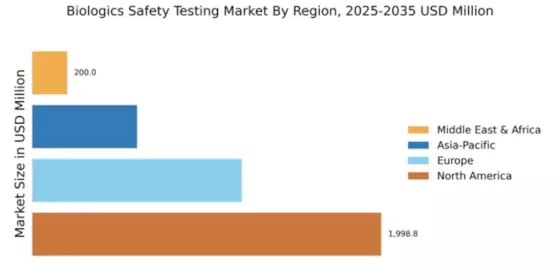
The Biologics Safety Testing Market is currently experiencing a transformative phase, driven by the increasing demand for safe and effective biologics. This market encompasses a range of testing services aimed at ensuring the safety and efficacy of biological products, including vaccines, blood products, and therapeutic proteins.
Regulatory bodies are placing heightened emphasis on stringent testing protocols, which has led to the adoption of advanced technologies and methodologies. As a result, companies are investing in innovative solutions to enhance testing accuracy and efficiency, thereby fostering growth in this sector.
Moreover, the market is witnessing a shift towards outsourcing testing services. Many biopharmaceutical companies are opting to collaborate with specialized contract research organizations (CROs) to streamline their operations and reduce costs.
Robust biologics testing is essential for characterizing the structural integrity and potency of monoclonal antibodies throughout the manufacturing process. This trend not only allows access to cutting-edge technologies but also enables companies to focus on their core competencies.
Additionally, the rise of personalized medicine is likely to further influence the market, as tailored therapies necessitate rigorous safety testing to ensure patient safety and treatment efficacy. Overall, the market appears poised for continued expansion, driven by innovation and evolving regulatory landscapes.
Automated systems for cell and gene therapy sterility testing offer real-time contamination monitoring, significantly accelerating the release of life-saving treatments.
Technological Advancements in Testing Methods
The market is increasingly influenced by technological innovations. Advanced testing methods, such as molecular techniques and automation, are enhancing the precision and speed of safety assessments.
Modern in vitro assays have replaced many animal models for the rapid identification of pyrogens in vaccine batches. These developments not only improve the reliability of results but also reduce the time required for testing, thereby accelerating the overall product development process.
CDC highlights that nearly 70% of clinical decisions depend on laboratory test results, driving adoption of automated and molecular biologics testing systems. WHO-supported lab strengthening initiatives in over 150 countries enhance rapid diagnostic capacity, improving accuracy, reducing turnaround time, and supporting safer biologics development globally.
Outsourcing Trends in Biologics Testing
A notable trend within the market is the growing preference for outsourcing testing services. Strategic outsourcing to biologics testing services allows small biotech firms to access high-end mass spectrometry and chromatography without capital investment.
Biopharmaceutical companies are increasingly partnering with contract research organizations (CROs) to leverage specialized expertise and state-of-the-art facilities. This approach allows companies to optimize resources and focus on their primary research and development activities.
Global biopharmaceutical outsourcing is expanding as companies leverage CRO expertise. According to Gavi-supported ecosystem reports, over 1 billion vaccine doses have been delivered through partnered manufacturing and testing networks since 2000, demonstrating increased reliance on external validated facilities for scalable biologics safety assurance.
Regulatory Changes and Compliance Requirements
The landscape of the market is significantly shaped by evolving regulatory frameworks. Specialized biosafety testing services are crucial for identifying adventitious agents like viruses or mycoplasma in master cell banks.
This is why regulatory agencies are continuously updating guidelines to enhance safety standards for biologics. Companies must adapt to these changes, ensuring compliance while maintaining the integrity of their testing processes. This dynamic environment necessitates ongoing investment in training and technology to meet stringent requirements.
WHO emphasizes that strengthened regulatory frameworks and biosafety guidelines have improved biologics quality surveillance across more than 194 member states. Enhanced compliance systems reduce contamination risks in vaccines and biologics, supporting safer global distribution and accelerating approval pathways for innovative therapeutic products.