Rising Cybersecurity Threats
The virtual mobile-infrastructure market is increasingly influenced by the rising threats to cybersecurity. As cyberattacks become more sophisticated, Canadian businesses are prioritizing the implementation of secure mobile infrastructures to protect their data and operations. Reports indicate that 60% of Canadian organizations have experienced a cyber incident in the past year, underscoring the urgent need for enhanced security measures. This trend is likely to drive investment in virtual mobile-infrastructure solutions that offer robust security features, such as encryption and multi-factor authentication, to safeguard against potential breaches and ensure business continuity.
Advancements in Mobile Technology
Technological advancements in mobile devices and connectivity are propelling the virtual mobile-infrastructure market forward. The proliferation of 5G technology in Canada is enhancing mobile network capabilities, allowing for faster data transmission and improved user experiences. This evolution in mobile technology is expected to increase the demand for virtual mobile-infrastructure solutions, as businesses look to leverage these advancements for better operational efficiency. Furthermore, the integration of Internet of Things (IoT) devices into mobile infrastructures is likely to create new opportunities for innovation and growth within the market, as organizations seek to optimize their operations through connected technologies.
Shift Towards Digital Transformation
The ongoing shift towards digital transformation across various sectors in Canada is a key driver for the virtual mobile-infrastructure market. Organizations are increasingly adopting digital tools and platforms to enhance their operational efficiency and customer engagement. This transformation necessitates a reliable and flexible mobile infrastructure that can support various applications and services. As businesses invest in digital solutions, the demand for virtual mobile-infrastructure is expected to rise, with companies seeking to integrate their mobile operations seamlessly into their overall digital strategy. This trend indicates a promising future for the virtual mobile-infrastructure market as it aligns with broader technological advancements.
Growing Demand for Remote Work Solutions
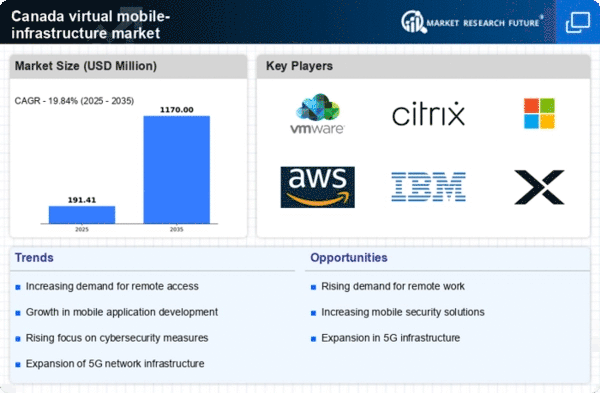
The shift towards remote work has catalyzed a growing demand for virtual mobile-infrastructure market solutions in Canada. Organizations are increasingly seeking flexible and scalable infrastructure to support their remote workforce. According to recent data, approximately 30% of Canadian employees are now working remotely, which necessitates robust mobile infrastructure to ensure seamless connectivity and productivity. This trend is likely to continue, as companies recognize the benefits of remote work, including reduced overhead costs and access to a broader talent pool. Consequently, the virtual mobile-infrastructure market is expected to expand, driven by the need for secure and efficient remote access to corporate resources.
Increased Focus on Data Privacy Regulations
As data privacy regulations become more stringent in Canada, businesses are compelled to adopt solutions that ensure compliance. The virtual mobile-infrastructure market is significantly impacted by the need for secure data handling and storage practices. With the implementation of laws such as the Personal Information Protection and Electronic Documents Act (PIPEDA), organizations must invest in infrastructure that safeguards sensitive information. This regulatory environment is likely to drive growth in the virtual mobile-infrastructure market, as companies seek to mitigate risks associated with data breaches and non-compliance penalties, which can reach up to $100,000 for serious violations.