Cattle Feed Market (2025 - 2035)

Cattle Feed Market Size, Share, Industry Trend & Analysis Research Report Information By Animal Type (Dairy Cattle, Beef Cattle), By Ingredient (Cereals, Cakes and Mixes, Food Wastages, Feed Additives, Other Ingredients), By Form (Pellets, Mash, Crumble, Liquid), By Geography (North America, Europe, Asia-Pacific, South America, Middle East & Africa) – Forecast Till 2035

Forecast Period
2025-2035
CAGR
4.70%
2025 Market Size
USD 81.50 Billion
2035 Market Size
USD 129.02 Billion
Agriculture ● Updated June 2026 Report ID: MRFR/Agri/2321-CR 110 Pages Snehal Singh, Tejas Chaudhary

Cattle Feed Market Summary

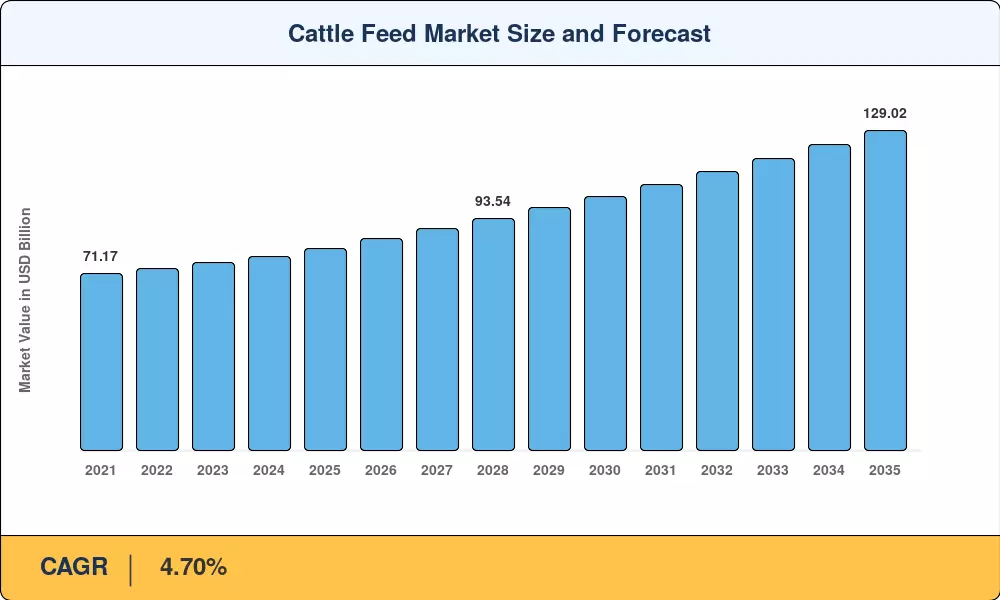
The global Cattle Feed Market reached an estimated USD 81.50 billion in 2025 and is projected to climb from USD 85.33 billion in 2026 to USD 129.02 billion by 2035, registering a compound annual growth rate of 4.70% across the forecast window. Sovereign protein-security mandates in over forty countries now channel surplus grain harvests toward domestic milling operations, while rapid feedlot expansion across South America has shifted economics decisively in favor of high-energy manufactured rations over pasture conversion [1]. These structural forces anchor a demand base that has proven resilient even during volatile crop cycles.

Feed production technology is undergoing a generational shift. Legacy dry-batch mixing lines are giving way to liquid feeding platforms capable of real-time nutrient dosing, a transition accelerated by the European Union's 2022 ban on prophylactic antimicrobials that redirected over USD 1.2 billion in annual additive spending toward phytogenic and probiotic alternatives [2]. Automated dairies in Northern Europe now report 8–12% reductions in dust-related ingredient loss after adopting liquid delivery, and similar installations are scaling across India's cooperative dairy belt [3].

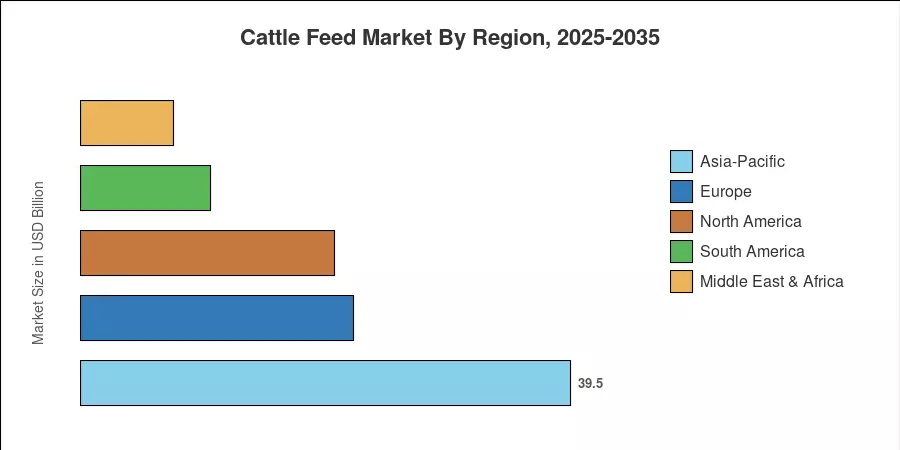
Asia-Pacific commands the largest share of the Cattle Feed Market at roughly 39.5% of 2025 revenue, anchored by China's industrial herd programs and India's expanding dairy cooperatives. Africa is positioned as the fastest-growing region with an anticipated CAGR of 5.9%, driven by credit-backed cooperative models that bundle fortified rations with veterinary services [4]. Europe holds the second-largest position at approximately 22.0%, sustained by stringent feed-safety regulation and high per-animal spending. The Cattle Feed Market outlook through 2035 hinges on how quickly emerging-market herds transition from subsistence grazing to formulated feeding regimes.


Key Report Takeaways

• By Animal Type

  • Dairy cattle accounted for 57.0% of the Cattle Feed Market in 2025, reflecting the dominance of fluid-milk demand across Asia and Europe.
  • Beef cattle segments are forecast to grow at a 5.7% CAGR through 2035, propelled by feedlot intensification in Brazil and Argentina.

• By Ingredient

  • Cereals represented 45.4% of the Cattle Feed Market by ingredient value in 2025.
  • Feed additives are projected to register a 5.8% CAGR from 2026 to 2035, the fastest-expanding ingredient category as phytogenic compounds displace older antimicrobials.

• By Form

  • Pellets commanded a 56.5% share of the Cattle Feed Market in 2025, favored for storage efficiency and controlled nutrient delivery.
  • Liquid feed is expected to grow at a 5.1% CAGR through 2035, gaining traction inside automated dairy operations.

• By Region

  • Asia-Pacific held a 39.5% share of the Cattle Feed Market in 2025.
  • Africa is projected to post a 5.9% CAGR from 2026 to 2035.


Cattle Feed Market Size and Forecast (2021–2035)

Market size estimates draw on primary interviews with feed millers, cooperative procurement officers, and grain-trading desks across 35 countries, cross-referenced with customs data and national livestock census records [5]. Historical values reflect actual trade, while forecast projections apply a supply-demand equilibrium model calibrated to herd growth trajectories, ingredient price indices, and regulatory timelines.
Cattle Feed Market Size and Forecast
Our Impact
Enabled $4.3B Revenue Impact for Fortune 500 and Leading Multinationals
Partnering with 2000+ Global Organizations Each Year
30K+ Citations by Top-Tier Firms in the Industry

Driver Impact Analysis

Driver ~% Impact on CAGR Geographic Relevance Impact Timeline
Protein-security grain mandates +0.65 Global Short-term (≤2 yr)
Feedlot intensification in South America +0.55 South America Medium-term (2–4 yr)
Antimicrobial replacement regulations +0.50 Europe, North America Short-term (≤2 yr)
Dairy cooperative expansion in emerging markets +0.45 Africa, Asia-Pacific Medium-term (2–4 yr)
Automation and liquid feeding adoption +0.40 Europe, Asia-Pacific Long-term (≥4 yr)
Rising per-capita meat consumption +0.35 Asia-Pacific, Africa Long-term (≥4 yr)
Climate-resilient ingredient R&D +0.25 Global Long-term (≥4 yr)


Protein-Security Grain Mandates

Governments in India, Indonesia, and Nigeria have implemented grain diversion policies requiring that a fixed share of domestic cereal output be processed locally before export permits are issued [1]. India's 2023 directive alone redirected an estimated 4.2 million metric tons of maize toward domestic feed mills, expanding raw material availability for the Cattle Feed Market and lowering procurement costs for cooperative buyers by roughly 6% year-on-year [9].

Feedlot Intensification in South America

A fundamental change toward intensive production systems is taking place in Brazil's cattle industry. The number of cattle kept in Brazilian feedlots increased significantly, with a projected 7.1% increase in 2025 over 2024, according to statistics from DSM-Firmenich's 2025 Feedlot Tour. With the most restricted cattle in the nation, Mato Grosso is still at the forefront of this trend. Demand in the specialist cow feed industry is primarily driven by this shift from pasture-based to confinement-based systems, as producers aim to increase weight-gain efficiency through balanced, high-energy feeds.


Antimicrobial Replacement Regulations

Regulation 2019/6 of the European Union, which went into full effect in January 2022, forbids the regular use of antibiotics in animal feed [2]. The ensuing reformulation wave has directed more than USD 1.2 billion in yearly additive procurement toward probiotic cultures, organic acids, and phytogenic extracts. With the FDA's revised Veterinary Feed Directive increasing regulation of medically significant antibiotics in cattle feeds, North America is following suit [13].


Dairy Cooperative Expansion in Emerging Markets

Programs for integrated dairy development are essential to raising productivity in emerging markets. However, there isn't just one "USD 800 million." As part of its larger regional integration plan, the African Development Bank continues to give dairy value-chain investments top priority in its program that covers the three nations mentioned. Similar to this, India's post-Operation Flood initiatives continue to set the standard for success; by offering integrated services like veterinary care and balanced feed, these programs dramatically increased per-cow milk yields, demonstrating the great efficacy of cooperative models in increasing rural dairy productivity.


Restraints Impact Analysis

The impacts below are directional estimates. They represent headwinds that partially offset growth drivers rather than direct CAGR deductions.

Restraint ~% Impact on CAGR Geographic Relevance Impact Timeline
Grain price volatility –0.45 Global Short-term (≤2 yr)
Water scarcity and drought risk –0.35 Africa, South Asia Long-term (≥4 yr)
Fragmented regulatory standards –0.25 Asia-Pacific, Africa Medium-term (2–4 yr)
High capital cost of automated feed systems –0.20 Emerging markets Medium-term (2–4 yr)
Competition from alternative protein sources –0.15 Europe, North America Long-term (≥4 yr)


Grain Price Volatility

Over 45% of the expenses of ingredients for cow feed come from cereal feedstocks, making the cattle feed market vulnerable to fluctuations in commodity prices. Mill margins throughout European and North American operations were anticipated to have been tightened by 200–350 basis points due to the 2022 surge in maize and soybean prices, which was caused by interruptions in Black Sea exports [7]. Although futures-based hedging reduces spot vulnerability, it puts further strain on smaller regional millers' working cash.


Water Scarcity and Drought Risk

The upstream supply chain is extremely vulnerable to drought cycles since feed-grain farming uses 1,200–1,500 liters of water per kilogram of maize produced [14]. The El Niño event in 2024 caused a 12% decrease in maize yields in southern Africa, which led to the need for emergency feed imports and increased landed costs for cooperative buyers by almost USD 45 per metric ton. The Cattle Feed Market is also structurally constrained by recurrent drought episodes in South Asia.


Fragmented Regulatory Standards

Divergent feed-safety and labeling standards across ASEAN nations create compliance friction for multinational suppliers seeking regional scale [15]. A feed additive approved in Thailand may require separate registration in Vietnam and Indonesia, adding 12–18 months of lead time and USD 200,000–400,000 in testing fees per product per country.


Cattle Feed Market Opportunities

Precision Livestock Feeding and IoT Integration

Near-infrared sensors and automated dispensing systems now enable per-animal feed optimization, reducing overfeeding waste by up to 15% in early-adopter dairies [10]. As hardware costs decline below USD 5,000 per station, precision feeding stands to penetrate mid-sized operations across the Cattle Feed Market, unlocking both volume efficiency and premium pricing for sensor-ready feed formulations.

Organic and Climate-Resilient Feed Blends

Consumer willingness to pay 12–18% premiums for organic dairy and grass-finished beef products is pulling demand for certified organic feed ingredients [12]. Ingredient innovators developing drought-tolerant sorghum and millet-based blends can capture emerging-market share where conventional maize supply is unreliable, representing a high-margin niche within the broader Cattle Feed Market.

African Cooperative Bundled-Services Model

Credit-backed dairy cooperatives in East Africa have demonstrated 25–30% improvements in per-cow productivity when fortified rations are bundled with veterinary extension and cold-chain access [4]. Replicating this model across West and Southern Africa represents a largely untapped addressable segment in the Cattle Feed Market.

Data Monetization Through Feed-Performance Analytics

Feed millers that capture consumption, yield, and health outcome data from connected dairy farms can license anonymized benchmarking insights back to ingredient suppliers, veterinary pharmaceutical firms, and agricultural lenders [17]. This data-as-a-service layer creates recurring revenue streams decoupled from commodity price cycles.

Insect-Protein and Single-Cell Protein Integration

Black soldier fly larvae and fermentation-derived proteins offer a 60–70% lower carbon footprint per unit of crude protein compared with soybean meal [18]. Regulatory approvals for insect-based feed ingredients in the EU (2023) and select ASEAN jurisdictions open a pathway for blending these novel proteins into ruminant total mixed ration formulations at a commercial scale.


Cattle Feed Market Future Outlook

AI-Driven Precision Feeding

Artificial intelligence platforms that integrate rumen sensor data, weather forecasts, and commodity price feeds are moving from pilot to commercial deployment across large-scale dairy and beef operations [10]. By 2030, the FAO estimates that AI-optimized feeding programs could reduce feed waste by 18–22% globally, translating into measurable margin improvement for operations participating in the Cattle Feed Market [19].

Sustainability-Linked Feed Certification

Scope 3 emissions reporting mandates under the EU Corporate Sustainability Reporting Directive and California's SB 253 will compel food processors to trace carbon intensity back through feed supply chains [20]. Feed millers that achieve verified low-carbon certification stand to capture procurement preference from multinational dairy processors, creating a differentiated tier within the Cattle Feed Market by the late 2020s.

Methane-Reducing Feed Additives

Enteric methane from cattle accounts for roughly 14.5% of global anthropogenic methane emissions, according to the sources [21]. Feed additives such as 3-NOP (marketed as Bovaer) and seaweed-derived bromoform compounds have demonstrated 20–35% reductions in methane output during commercial trials [22]. Regulatory clearance in the EU, Brazil, and Australia positions methane-mitigating additives as a high-growth Cattle Feed Market subsegment through 2035.

Regional Feed-Ingredient Sovereignty

Supply-chain disruptions during 2020–2022 exposed the vulnerability of import-dependent feed systems, prompting governments in the Middle East, ASEAN, and East Africa to invest in domestic ingredient processing capacity [15]. Saudi Arabia's National Agricultural Development Company allocated USD 340 million toward local feed-grain cultivation and processing between 2023 and 2025, a pattern likely to replicate across food-insecure regions and reshape sourcing dynamics in the Cattle Feed Market [23].


Cattle Feed Market Segmentation

By Animal Type

Segment Key Metric Primary Demand Driver
Dairy Cattle 57.0% share (2025) Global fluid-milk and dairy-product consumption
Beef Cattle 5.7% CAGR (2026–2035) Feedlot intensification and export beef demand


Dairy cattle represent the dominant consumption segment within the Cattle Feed Market because lactating cows require consistent, nutritionally balanced rations year-round to maintain milk yields. Average daily feed intake for a high-producing dairy cow ranges from 22 to 28 kg of dry matter, roughly double that of a beef finishing animal at comparable body weight. Cooperative procurement networks in India and East Africa further concentrate dairy-oriented feed demand.

Beef cattle segments are accelerating as South American and ASEAN feedlot operators shift from pasture finishing to confined high-energy programs. Brazilian export abattoirs increasingly mandate minimum feeding-period certifications of 90–120 days, guaranteeing sustained demand for formulated beef rations in the Cattle Feed Market [8].

By Ingredient

Segment Key Metric Primary Demand Driver
Cereals 45.4% share (2025) Maize and barley availability as an energy base
Cakes and Mixes USD 18.50 Billion (2025) Soybean and canola meal protein supplementation
Food Wastages 3.8% CAGR (2026–2035) Circular-economy regulations
Feed Additives 5.8% CAGR (2026–2035) Antimicrobial replacement mandates
Other Ingredients USD 5.20 Billion (2025) Mineral and vitamin premix demand


Cereals anchor the Cattle Feed Market ingredient mix because maize, barley, and wheat provide the energy-dense carbohydrate backbone of most compound rations. Price transmission from global grain exchanges directly influences feed-mill margins, making cereal procurement strategy a core competitive variable.

Feed additives are the fastest-growing ingredient category, fueled by the regulatory phase-out of growth-promoting antibiotics across the EU and North America. Phytogenic extract suppliers and probiotic culture developers have captured a significant portion of the reformulation spend, with additive innovation pipelines now extending into methane-reducing compounds [2][22].

By Form

Segment Key Metric Primary Demand Driver
Pellets 56.5% share (2025) Storage stability and automated dispensing compatibility
Mash USD 12.40 Billion (2025) Low-cost small-scale operations
Crumble 4.3% CAGR (2026–2035) Calf starter feed demand
Liquid 5.1% CAGR (2026–2035) Automated dairy feeding systems


Pellets dominate the Cattle Feed Market by form because their uniform density supports precise automated dispensing, reduces dust loss during handling, and extends shelf life in tropical climates. Global pelleting capacity additions in 2023–2024 exceeded 8 million metric tons, concentrated in India, Brazil, and Indonesia [5].

Liquid feed is the fastest-growing form segment, driven by adoption in Northern European and North American automated dairies where integrated mixing-and-delivery systems enable real-time nutrient adjustment. Liquid formats reduce ingredient segregation and allow millers to incorporate liquid co-products such as molasses and whey permeate that would otherwise require disposal [3].


Regional Market Share Analysis

Region Key Metric Primary Investment Themes
Asia-Pacific 39.5% share (2025) Dairy cooperative modernization, feedlot scaling
Europe 22.0% share (2025) Regulatory-driven additive reformulation, organic feed
North America 20.5% share (2025) Precision feeding, grain-trading integration
South America 10.5% share (2025) Beef feedlot expansion, export-grade rations
Middle East & Africa 7.5% share (2025) Cooperative bundled services, import substitution
Total 100.0%

The Cattle Feed Market exhibits a concentrated regional hierarchy, with Asia-Pacific and Europe together accounting for over 60% of global revenue. Growth momentum, however, is shifting toward Africa and South America, where herd industrialization remains in early stages.


North America

Country Key Metric Key Driver
US 4.3% CAGR (2026–2035) Veterinary Feed Directive compliance and precision feeding
Canada USD 3.45 Billion (2025) Canola-meal integration in western feedlots
Mexico 5.0% CAGR (2026–2035) Beef export growth to Asian destinations


The US Cattle Feed Market benefits from vertically integrated grain-to-feed supply chains that buffer against commodity volatility, while the FDA's updated Veterinary Feed Directive continues to push formulation upgrades [13]. Canada's western provinces are leveraging abundant canola processing byproducts as cost-effective protein supplements, and Mexico's expanding beef export corridor to Japan and South Korea is driving demand for standardized high-energy finishing rations.

Europe

Country Key Metric Key Driver
Germany USD 3.80 Billion (2025) Organic dairy transition and additive reformulation
UK 4.2% CAGR (2026–2035) Post-Brexit domestic feed security programs
France USD 3.25 Billion (2025) Cooperative procurement efficiencies
Italy 3.9% CAGR (2026–2035) Parmigiano-Reggiano consortium feed standards
Spain USD 2.10 Billion (2025) Beef export to North Africa
Nordic Countries 4.5% CAGR (2026–2035) Automated dairy feeding pioneers
Russia USD 2.55 Billion (2025) Import substitution strategy post-2022
Rest of Europe 4.0% CAGR (2026–2035) Eastern European herd modernization


European feed regulation remains the world's most prescriptive, with the EU's Farm-to-Fork Strategy targeting a 50% reduction in antimicrobial sales for livestock by 2030 [2]. This regulatory environment channels Cattle Feed Market innovation toward phytogenic additives and fermentation-based protein supplements, creating a premium-tier segment that commands 10–15% higher pricing than conventional blends.

Asia-Pacific

Country Key Metric Key Driver
China USD 12.80 Billion (2025) Government herd consolidation programs
India 5.4% CAGR (2026–2035) Dairy cooperative modernization
Japan USD 2.90 Billion (2025) High-value Wagyu feed specialization
South Korea 4.6% CAGR (2026–2035) Hanwoo beef premium feed demand
ASEAN USD 3.15 Billion (2025) Dairy import substitution
Rest of Asia-Pacific 4.8% CAGR (2026–2035) Emerging livestock intensification


China's centralized herd consolidation policies have relocated millions of cattle from smallholder operations into industrial feedlots, creating concentrated demand for formulated rations in the Cattle Feed Market [1]. India's National Dairy Development Board continues to expand cooperative feed distribution networks, with per-cow balanced-ration coverage increasing from 18% to an estimated 29% of the national herd between 2021 and 2025 [9].

South America

Country Key Metric Key Driver
Brazil USD 5.85 Billion (2025) Feedlot finishing for export beef
Argentina 5.1% CAGR (2026–2035) Currency-linked grain procurement advantage
Rest of South America USD 1.20 Billion (2025) Emerging dairy intensification


Brazil dominates the South American Cattle Feed Market, with Mato Grosso's feedlot corridor alone consuming over 11 million metric tons of compound feed annually [8]. The country's competitive grain-production base keeps input costs 15–20% below global averages, attracting foreign direct investment into vertically integrated feed-to-beef operations.

Middle East & Africa

Country Key Metric Key Driver
Saudi Arabia USD 1.05 Billion (2025) Domestic food-security investment
UAE 4.8% CAGR (2026–2035) Premium imported dairy feed demand
South Africa USD 1.40 Billion (2025) Commercial feedlot sector
Egypt 5.3% CAGR (2026–2035) Nile Delta dairy expansion
Rest of MEA 5.9% CAGR (2026–2035) Cooperative-bundled fortified rations


Africa's trajectory as the fastest-growing region in the Cattle Feed Market is rooted in donor-funded cooperative models that lower adoption barriers for smallholder dairy farmers [4]. The African Development Bank's dairy value-chain investments, paired with private-sector cold-chain buildouts in Kenya and Ethiopia, have created a self-reinforcing cycle in which improved feed access lifts yields, boosting farm incomes that fund further feed purchases.


Cattle Feed Market By Region, 2025-2035

Competitive Benchmarking

The Cattle Feed Market exhibits moderate concentration, with the top five players holding an estimated combined share of 28–34%. The Herfindahl-Hirschman Index sits in the low-to-moderate range, reflecting a fragmented tail of regional millers and cooperative-owned operations that collectively serve over half the global market. Multinational grain integrators leverage origination networks and logistics scale, while regional specialists compete on formulation expertise, organic certification, and proximity to livestock clusters.

Company Est. Revenue Share Range Key Offerings for the Cattle Feed Market Strategic Positioning
Cargill Inc. 7–10% Complete cattle rations, premixes, and Provimi brand feeds Vertically integrated grain-to-feed supply chain
Archer Daniels Midland (ADM) 5–8% Soybean meal, specialty additives, custom blends Global oilseed processing and origination scale
Land O'Lakes / Purina Animal Nutrition 4–7% Purina cattle mineral programs, starter feeds Cooperative distribution and brand loyalty in North America
Nutreco N.V. (Trouw Nutrition) 4–6% Precision nutrition software, Selko additive portfolio R&D-led additive innovation under SHV Holdings
De Heus Animal Nutrition 3–5% Regional compound feeds across Asia, Africa, and Europe Emerging-market footprint expansion strategy
ForFarmers N.V. 2–4% On-farm feed concepts, sustainable sourcing programs Northern European dairy feed specialization
Alltech Inc. 2–4% Yeast-based additives, mycotoxin management Fermentation technology and nutritional research
BASF SE 2–3% Vitamin and carotenoid premixes, enzyme products Ingredient supply to third-party feed millers
Kemin Industries 1–3% Antioxidants, gut health solutions, and preservation agents Science-driven additive supplier with global reach
Evonik Industries 1–3% Amino acids, probiotics, and analytical services Amino acid leadership and precision nutrition analytics


Recent News & Developments


Cattle Feed Market Report Scope

Parameter Detail
Market Scope Global Cattle Feed Market across all commercial feed types for dairy and beef cattle
Study Period 2021–2035
Historical Period 2021–2024
Base Year 2025
Forecast Period 2026–2035
CAGR (2026–2035) 4.70%
Market Size (2025) USD 81.50 Billion
Market Size (2035) USD 129.02 Billion
Fastest Growing Region Africa (5.9% CAGR)
Fastest Growing Segment Feed Additives by Ingredient (5.8% CAGR)
Companies Profiled 10 major players
Valuation Currency USD Billion
Methodology Primary interviews, customs trade data, national livestock census databases, supply-demand equilibrium modeling


FAQs

✓ FAQ schema enabled
How do cattle feed procurement strategies differ between large integrators and cooperative buyers?
Large integrators lock in prices through futures contracts and direct-from-origin sourcing, while cooperatives pool volume to negotiate regional mill discounts [5]. The cost gap between the two models typically ranges from 8 to 14%.
What shelf-life considerations affect cattle feed form selection?
Pellets retain nutritional integrity for 90–120 days under proper storage, outperforming mash forms that degrade within 45–60 days in humid climates [3]. Liquid feeds require cold-chain or preservative treatment for stability beyond two weeks.
How are methane-reduction mandates influencing feed additive R&D pipelines?
Over 30 enteric methane inhibitors are in active development globally, with 3-NOP and bromoform compounds closest to broad commercialization [22]. Regulatory fast-tracking in the EU and Australia is compressing approval timelines to 18–24 months.
What role do trade tariffs play in Cattle Feed Market input costs?
Tariffs on imported soybean meal and maize can raise finished-feed costs 5–12% in net-importing countries [7]. Regional trade agreements like USMCA and Mercosur mitigate this exposure for member states.
How do smallholder farmers in Africa access formulated cattle feed?
Cooperative bundling programs distribute fortified rations alongside veterinary services on credit terms repaid through milk sales [4]. This model has reached over 2 million smallholders across East Africa since 2021.
What quality-control certifications should industrial feed buyers prioritize?
GMP+ Feed Safety Assurance and FAMI-QS certification cover the broadest geographic acceptance for cross-border trade [5]. Buyers serving EU-destined livestock should verify supplier compliance with Regulation 183/2005 on feed hygiene.
How does the Cattle Feed Market address mycotoxin contamination risks?
Feed millers deploy multi-point testing at grain receipt, post-grinding, and final product stages using rapid ELISA and lateral-flow assays [10]. Binder additives based on modified clays or yeast cell walls reduce bioavailable aflatoxin levels by 40–60%.    
Author
Author
Author Profile
Snehal Singh LinkedIn
Manager - Research
High acumen in analyzing complex macro & micro markets with more than 6 years of work experience in the field of market research. By implementing her analytical skills in forecasting and estimation into market research reports, she has expertise in Packaging, Construction, and Equipment domains. She handles a team size of 20-25 resources and ensures smooth running of the projects, associated marketing activities, and client servicing.
Co-Author
Co-Author Profile
Tejas Chaudhary
Research Analyst Level II
I have a degree in Engineering (Civil), with masters in Business Administration (Marketing). With more than 4 years of experience in market research and consulting, I am involved in end-to-end process of market research, proposals, project kickoffs and delivery. I have research knowledge and expertise in consumer goods/packaging domain. Also I have worked for various other domains like construction & equipment. Effectively managed and delivered more than 60 report studies for regional as well as global clientele.
Share::
Request Free Sample

Research Approach

Research Methodology on Cattle Feed Market

Introduction

The published research report “Cattle Feed Market” provides an in-depth analysis of the global cattle feed industry, with a focus on the region-wise overview, market drivers, restraints, opportunities, and developments. It also provides a detailed analysis of the cow feed market size, in terms of both value and volume, by participants, product types, applications, and other countries. Moreover, it provides a comprehensive analysis of the factors which will impact the growth of the global cattle feed market, segment-wise.

Research Design

For providing an accurate and comprehensive market analysis, the market for cattle feed is studied in detail and data points were collected from different sources like government reports, industry journals and magazines, investor presentations and press releases, as well as from a comprehensive survey of stakeholders involved in the cattle feed market. This data is then used for developing the research methodology for this report.

Primary Research

The primary research is conducted using the “Propensity scoring” method. This method covered 3 core elements: a) a Survey of participants by targeting their opinions and views; b) Interviews with key informants and stakeholders; c) Focus group discussions. The ‘Propensity scoring’ method is designed to analyse the market dynamics in detail and allows an understanding of various market segments.

Secondary Research

The secondary research involves the examination of various market data sources, including industry reports, newspapers, market databases, trade journals, company websites, company press releases, etc. to acquire knowledge and current market trends. The process also involves the compilation and validation of information, along with the collection of statistics, which are then compiled by “Propensity scoring” to provide a holistic market perspective.

Data Analysis

Once the raw collected data has been acquired, it is then validated and verified to ensure that the information is accurate and applicable to the market study. Furthermore, the collected data is then subject to different data analysis techniques and market trends are developed for both the global, as well as regional markets. After the data analysis processes are completed, the reports are thereafter compiled and written to bring out the most accurate and reliable market insights.

Results

The findings from this extensive research report will enable market participants to gain an in-depth understanding of the global cattle feed market and make informed decisions for their investment strategies. The research report will also provide market players with a detailed analysis of the global cattle feed market in terms of factors such as market size, drivers, restraints, opportunities, and various other development factors. Additionally, this report also gives a detailed analysis of the key players’ strategies, along with their market share in the cattle feed industry.

Conclusion

This report provides a comprehensive analysis of the global cattle feed market. It incorporates a detailed examination of market drivers and restraints, technological breakthroughs, and market trends. Additionally, the research method used allows the report to provide an in-depth overview of the industry collectively with the help of existing market information and analysis.

Share::
Request Free Sample
Download Free Sample

Kindly complete the form below to receive a free sample of this Report

Share::
Request Free Sample
Download PDF ×

We do not share your information with anyone. However, we may send you emails based on your report interest from time to time. You may contact us at any time to opt-out.
















