Dog Food Market
Dog Food Market Summary
As per MRFR analysis, the Dog Food Market Size was estimated at 74.67 USD Billion in 2024. The Dog Food industry is projected to grow from 82.15 USD Billion in 2025 to 190.79 USD Billion by 2035, exhibiting a compound annual growth rate (CAGR) of 8.86% during the forecast period 2025 - 2035.
Key Market Trends & Highlights
The Dog Food Market is experiencing a dynamic shift towards health-conscious and sustainable products.
- The North American market remains the largest, driven by a growing focus on health and wellness in pet nutrition.
- In the Asia-Pacific region, the dog food market is rapidly expanding, fueled by increasing pet ownership and disposable income.
- Dry dog food continues to dominate the market, while wet dog food is emerging as the fastest-growing segment due to changing consumer preferences.
- The premiumization trend and the humanization of pets are key drivers, as consumers seek high-quality, ethically sourced products.
Market Size & Forecast
| 2024 Market Size | 74.67 (USD Billion) |
| 2035 Market Size | 190.79 (USD Billion) |
| CAGR (2025 - 2035) | 8.86% |
Major Players
Nestle Purina PetCare (US), Mars Petcare (US), Hill's Pet Nutrition (US), Diamond Pet Foods (US), Spectrum Brands (US), Blue Buffalo (US), WellPet (US), Merrick Pet Care (US), Royal Canin (FR), Champion Petfoods (CA)
Dog Food Market Trends
The Dog Food Market is currently experiencing a dynamic evolution, driven by changing consumer preferences and an increasing awareness of pet health. Pet owners are becoming more discerning, seeking high-quality ingredients and transparency in sourcing, often searching for the best dog food on the market today that meets both nutritional and safety standards. This shift is prompting manufacturers to innovate, introducing products that cater to specific dietary needs, such as grain-free, organic, and raw food options often considered part of the cleanest dog food on the market category. Additionally, the rise of e-commerce has transformed how consumers purchase dog food, with online platforms providing convenience and a wider selection. As a result, brands are adapting their marketing strategies to engage with a more informed audience, emphasizing the nutritional benefits and ethical considerations of their offerings.
Moreover, sustainability is emerging as a pivotal factor influencing purchasing decisions within the Dog Food Market. Consumers are increasingly concerned about the environmental impact of their choices, leading to a demand for eco-friendly packaging and sustainable sourcing practices. This trend is likely to shape the future of the market, as companies strive to align their operations with the values of their customers. The interplay between health consciousness and sustainability suggests a complex landscape for the Dog Food Market, where brands must navigate consumer expectations while remaining competitive in a rapidly evolving environment, especially as buyers continue to evaluate options across the best dog food market offerings.
Health-Conscious Formulations
There is a noticeable trend towards health-focused dog food products. Pet owners are increasingly prioritizing nutrition, leading to a rise in demand for specialized diets that address specific health concerns. This includes options for weight management, allergies, and age-related issues, reflecting a broader awareness of canine health and the growing search for the cleanest dog food on the market with minimal additives.
Sustainable Practices
Sustainability is becoming a critical consideration for consumers in the Dog Food Market. Brands are responding by adopting eco-friendly packaging and sourcing ingredients responsibly. This shift not only appeals to environmentally conscious pet owners but also aligns with global efforts to reduce waste and promote sustainability.
E-Commerce Growth
The Dog Food Market is witnessing a significant shift towards online shopping. As consumers seek convenience and variety, e-commerce platforms are becoming increasingly popular for purchasing pet food. This trend is prompting traditional retailers to enhance their online presence and adapt to changing consumer behaviors.
Dog Food Market Drivers
E-commerce Expansion
The Global dog food Market Industry is witnessing a transformative shift due to the rapid expansion of e-commerce platforms. Online shopping provides convenience and accessibility, allowing consumers to purchase dog food from the comfort of their homes. This trend has been accelerated by advancements in technology and logistics, enabling faster delivery times. In 2024, the market is expected to reach 50.5 USD Billion, with e-commerce sales playing a crucial role in this growth. As more consumers turn to online channels for their pet food needs, the Global Dog Food Market Industry is likely to see a significant increase in sales through digital platforms.
Rising Pet Ownership
The Global Dog Food Market Industry experiences a notable surge in demand driven by the increasing number of pet owners worldwide. As urbanization continues to rise, more households are adopting dogs, leading to a projected market value of 50.5 USD Billion in 2024. This trend is particularly pronounced in regions such as North America and Europe, where pet ownership rates are among the highest globally. The emotional bond between pets and owners fosters a willingness to invest in premium dog food products, further propelling market growth. Consequently, the Global Dog Food Market Industry is likely to see sustained expansion as pet ownership continues to rise.
Health and Wellness Trends
The Global Dog Food Market Industry is significantly influenced by the growing awareness of health and wellness among pet owners. Consumers increasingly seek dog food that aligns with their pets' nutritional needs, leading to a demand for natural and organic ingredients. This trend is reflected in the market's projected growth, with a compound annual growth rate (CAGR) of 6.0% anticipated from 2025 to 2035. Pet owners are now more inclined to scrutinize ingredient labels, opting for products that promote health benefits such as improved digestion and enhanced immunity. As a result, the Global Dog Food Market Industry is adapting to these preferences, offering a wider range of health-focused products.
Sustainability Initiatives
The Global Dog Food Market Industry is increasingly influenced by sustainability initiatives as consumers become more environmentally conscious. Brands are adopting eco-friendly practices, such as using sustainable sourcing for ingredients and reducing packaging waste. This shift is not only appealing to environmentally aware consumers but also aligns with broader global trends toward sustainability. As the market evolves, companies that prioritize sustainable practices may gain a competitive edge. The Global Dog Food Market Industry is likely to see a rise in demand for products that reflect these values, contributing to overall market growth.
Innovative Product Offerings
The Global Dog Food Market Industry is characterized by continuous innovation in product offerings, catering to diverse consumer preferences. Manufacturers are increasingly introducing specialized formulas, such as grain-free, high-protein, and breed-specific dog foods. This diversification is essential in attracting a broader customer base and addressing specific dietary needs. The market's projected growth to 95.9 USD Billion by 2035 underscores the importance of innovation in driving consumer interest. As pet owners become more discerning, the Global Dog Food Market Industry must adapt by providing a variety of options that meet the evolving demands of pet nutrition.
Market Segment Insights
By Product Type: Dry Dog Food (Largest) vs. Raw Dog Food (Fastest-Growing)
The Dog Food Market is segmented into various types, with Dry Dog Food holding the largest market share. Its popularity is driven by convenience, extended shelf life, and cost-effectiveness, making it a favored choice among dog owners. Following closely, Wet Dog Food captures a significant portion of the market, appealing due to its palatability and hydration benefits. Meanwhile, Raw Dog Food is gaining traction, positioning itself as an alternative diet that is perceived as more natural and nutritious by a growing segment of health-conscious pet owners. In recent years, growth trends in the Dog Food Market indicate a shift towards products that cater to specific dietary needs, reflected in the rise of Raw Dog Food. Health trends and increased awareness regarding pet nutrition are influencing choices, prompting consumers to seek options that are high in protein and devoid of fillers. The fastest growth is noted in Freeze-Dried Dog Food, which offers convenience without sacrificing quality, appealing to pet owners looking for premium and innovative feeding solutions.
Dry Dog Food (Dominant) vs. Freeze-Dried Dog Food (Emerging)
Dry Dog Food remains the dominant product type in the Dog Food Market due to its affordability, convenience, and long shelf life, making it widely accessible to dog owners. Brands continuously innovate this segment with various flavors and formulations, catering to different dog sizes and dietary requirements. In contrast, Freeze-Dried Dog Food is emerging as a premium option, gaining popularity among health-conscious pet owners seeking minimally processed, high-quality meals. This segment captures the interest of consumers desiring a balance between nutrition and convenience, as it retains nutritional integrity while being easy to prepare. Both segments are witnessing a heightened focus on transparency regarding ingredient sourcing and nutritional value, underscoring evolving consumer preferences in the pet food landscape.
By Ingredient Type: Meat-Based (Largest) vs. Vegetarian (Fastest-Growing)
In the Dog Food Market, the 'Ingredient Type' segment is primarily dominated by Meat-Based products, which hold the largest market share. This category appeals to dog owners seeking high-protein options that align with their pets’ natural diets. With an increasing number of consumers becoming more health-conscious for their pets, the demand for Meat-Based dog food has remained robust. On the other hand, the Vegetarian segment is gaining traction as an alternative for health-oriented consumers who consider plant-based diets beneficial for their dogs, reflecting a notable shift in consumer preferences. Growth trends reveal that the Vegetarian dog food segment is the fastest-growing category within the ingredient type. This growth is driven by rising awareness about food allergies among pets, leading owners to explore alternative diets. Additionally, the increasing trend towards sustainable and ethical sourcing of ingredients boosts the appeal of vegetarian options. As more pet parents prioritize wellness and environmental responsibility, the market for Vegetarian dog food continues to expand rapidly, indicating a potential shift in future durable trends in the Dog Food Market.
Meat-Based (Dominant) vs. Vegetarian (Emerging)
The Meat-Based segment remains dominant in the Dog Food Market, reflecting the preferences of pet owners who prioritize protein-rich diets for their dogs. This category typically includes various types of meat, such as chicken, beef, or lamb, appealing to those who seek robust nutritional profiles for their pets. The consistent demand for high-quality ingredients and the perception of meat as a staple in canine diets solidify its leadership position. Meanwhile, the Vegetarian segment is emerging rapidly, characterized by its focus on plant-based nutrition. As pet owners become increasingly open to non-meat diets, products in this category emphasize whole ingredients, health benefits, and sustainability. This emerging segment not only addresses the dietary needs of dogs with meat allergies but also caters to conscientious consumers aiming to minimize environmental impact.
By Packaging Type: Bags (Largest) vs. Pouches (Fastest-Growing)
In the Dog Food Market, Bags dominate the packaging type segment due to their convenience and widespread availability. Bags typically come in various sizes, catering to different dog breeds and consumer preferences, thus capturing a significant share of the market. In contrast, Pouches have gained popularity quickly, especially among consumers looking for portion control and ease of use. While the share of Pouches is lower than that of Bags, their recent growth trend indicates a shifting consumer preference towards more convenient packaging options.
Bags (Dominant) vs. Pouches (Emerging)
Bags as a dominant packaging type reflect the longstanding consumer preference for bulk purchasing, allowing pet owners to stock up on dog food conveniently. They offer a variety of sizes, from small bags for small breeds to larger options for multiple dogs, appealing to a broad market. On the other hand, Pouches have emerged as a strong competitor due to their portability and resealable features, which enhance freshness and ease of feeding. The trend towards single-serve portions resonates with busy pet owners who value convenience. This has seen Pouches occupy a distinct market niche that is growing rapidly, especially in e-commerce channels.
By Distribution Channel: Online Retail (Largest) vs. Pet Specialty Stores (Fastest-Growing)
In the Dog Food Market, distribution is increasingly characterized by varying channels, with Online Retail leading the way in market share. This channel has gained popularity due to the convenience it offers, allowing pet owners to easily purchase dog food from the comfort of their homes. In contrast, Pet Specialty Stores are demonstrating impressive growth rates, particularly as consumers seek quality products tailored to their pets' specific needs. These stores specialize in pet food and accessories, which bolsters their appeal among discerning pet owners.
Pet Specialty Stores: (Dominant) vs. Online Retail (Emerging)
Pet Specialty Stores have established themselves as a dominant force in the Dog Food Market by curating a wide selection of premium pet food brands. These retail outlets are characterized by personalized service and expert advice, allowing customers to find the right products for their pets. Conversely, Online Retail has emerged as an increasingly popular alternative, benefitting from the growing trend of e-commerce. This channel attracts tech-savvy pet owners looking for convenience, competitive pricing, and access to a broader range of products. Both segments are contending for market share, making the competition between Pet Specialty Stores and Online Retail noteworthy.
By Distribution Channel: Online Retail (Largest) vs. Pet Specialty Stores (Fastest-Growing)
The distribution of dog food in the market is influenced by several channels, with online retail claiming the largest share due to its convenience and accessibility for consumers. Online platforms allow pet owners to purchase a wide variety of products from the comfort of their homes, catering to a growing preference for e-commerce. Meanwhile, pet specialty stores are gaining traction rapidly, appealing to consumers seeking a more specialized, personalized shopping experience, and well-informed staff to assist with unique dietary needs for dogs. Growth trends in the distribution channel segment are significantly shaped by technological advances and changing consumer behavior. As more pet owners opt for online shopping, retailers are investing heavily in their digital infrastructures to enhance the customer experience. Conversely, pet specialty stores are seeing an increase in demand as consumers are willing to pay a premium for high-quality, specialized dog food options. This trend is further fueled by the rising pet ownership rates and the humanization of pets, leading to increased spending on premium dog food products.
Online Retail (Dominant) vs. Veterinary Clinics (Emerging)
Online retail stands as the dominant force in the dog food distribution channel, characterized by its extensive selection and ease of access. This channel has revolutionized consumer shopping behavior, allowing quick comparisons and purchases of various brands and types of dog food. Conversely, veterinary clinics are positioning themselves as an emerging channel, offering specialized nutritional advice and premium dog food tailored to pets with specific health needs. These clinics emphasize the importance of nutrition dictated by a pet’s health conditions, providing a valuable service for pet owners who seek expert guidance. The growth of this segment suggests a market trend towards personalized care for pets, with both channels catering to different consumer preferences.
Regional Insights
North America : Market Leader in Dog Food
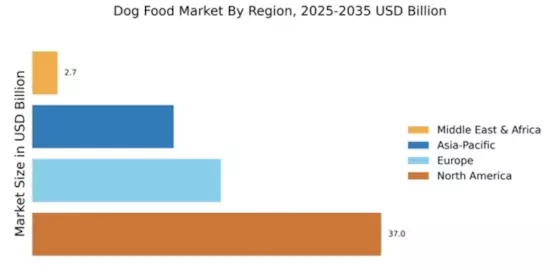
North America continues to lead The Dog Food, holding a significant share of 37.0% in 2024. The growth is driven by increasing pet ownership, a rising trend towards premium and organic pet food, and stringent regulations ensuring product safety and quality. The demand for specialized diets, including grain-free and high-protein options, is also on the rise, reflecting changing consumer preferences and health consciousness among pet owners. The competitive landscape is robust, with key players such as Nestle Purina PetCare, Mars Petcare, and Hill's Pet Nutrition dominating the market. These companies are continuously innovating to meet consumer demands, introducing new flavors and formulations. The presence of established brands and a strong distribution network further solidify North America's position as the largest market for dog food, catering to diverse consumer needs and preferences.
Europe : Emerging Trends in Pet Nutrition
Europe's dog food market is experiencing significant growth, with a market size of €20.0 billion. The increasing trend towards premium and natural pet food products is a key driver, as consumers become more health-conscious about their pets' diets. Regulatory frameworks in the EU are also evolving, focusing on sustainability and transparency in pet food production, which is influencing consumer choices and driving market growth. Leading countries in this region include Germany, France, and the UK, where the demand for high-quality dog food is particularly strong. Major players like Royal Canin and other local brands are adapting to these trends by offering specialized products. The competitive landscape is characterized by innovation and a focus on health benefits, with companies investing in research to develop products that cater to specific dietary needs of dogs.
Asia-Pacific : Rapid Growth in Pet Ownership
The Asia-Pacific region is witnessing rapid growth in the dog food market, with a market size of $15.0 billion. This growth is fueled by rising disposable incomes, urbanization, and an increasing trend of pet ownership, particularly in countries like China and India. Consumers are becoming more aware of pet nutrition, leading to a demand for premium and specialized dog food products. Regulatory bodies are also enhancing food safety standards, which is positively impacting market growth. Countries such as China, Japan, and Australia are leading the market, with a mix of local and international brands competing for market share. Key players like Blue Buffalo and WellPet are expanding their presence in this region, focusing on product innovation and marketing strategies tailored to local preferences. The competitive landscape is dynamic, with companies increasingly investing in e-commerce to reach a broader audience.
Middle East and Africa : Emerging Market Potential
The Middle East and Africa region is emerging as a potential market for dog food, with a market size of $2.67 billion. The growth is driven by increasing pet ownership and a shift towards premium pet food products. Urbanization and changing lifestyles are contributing to the rising demand for high-quality dog food. Regulatory frameworks are gradually improving, focusing on food safety and quality standards, which is essential for market expansion. Countries like South Africa and the UAE are leading the market, with a growing number of local and international brands entering the space. The competitive landscape is evolving, with companies focusing on product differentiation and marketing strategies that resonate with local consumers. As awareness of pet nutrition increases, the market is expected to grow, presenting opportunities for both established and new players.
Key Players and Competitive Insights
In November Mars Petcare (US) announced a significant investment in a new manufacturing facility in the Midwest, aimed at increasing production capacity for its premium product lines. This strategic move is likely to bolster its market share by ensuring a steady supply of high-demand products, while also creating local jobs and enhancing community relations. Such investments reflect a broader trend of companies seeking to enhance operational efficiency and meet rising consumer expectations for quality and availability.
In October Nestle Purina PetCare (US) launched a new line of plant-based dog food, responding to the growing trend of pet owners seeking sustainable and health-conscious options. This initiative not only diversifies its product portfolio but also positions the company as a leader in the emerging market for alternative protein sources in pet food. The introduction of this line may attract a new segment of environmentally conscious consumers, further solidifying its competitive edge.
In September Hill's Pet Nutrition (US) expanded its partnership with veterinary clinics to include a new telehealth service, allowing pet owners to receive nutritional advice remotely. This innovative approach not only enhances customer engagement but also aligns with the increasing digitalization of pet care services. By integrating technology into its service offerings, Hill's Pet Nutrition (US) is likely to strengthen its market position and foster deeper relationships with pet owners.
As of December the Dog Food Market is witnessing a shift towards digitalization, sustainability, and the integration of artificial intelligence in product development and customer engagement. Strategic alliances among key players are increasingly shaping the competitive landscape, as companies collaborate to enhance their technological capabilities and sustainability initiatives. The evolution of competitive differentiation appears to be moving away from price-based competition towards innovation, technology, and supply chain reliability, suggesting that companies that prioritize these areas may be better positioned for future success.
Key Companies in the Dog Food Market include
Industry Developments
August 2022: Indian pet food company Wiggles increased its product line by introducing EveryDwag, a new brand of dog food. EveryDawg is a tasty and wholesome dry dog food suitable for all breeds of dogs, free of sugar and gluten. It comes in three varieties: adult dogs, puppies, and mother and puppy.
January 2022: Oxbow Animal Health, a small animal pet business that sells quality food and nutrients for rabbits, pigs, hamsters, and other pets, was purchased by Manna Pro.
March 2022: The Polish pet food manufacturer Dogs Plate introduced a new line of wet dog food products containing insect protein.
Future Outlook
Dog Food Market Future Outlook
The Dog Food Market is projected to grow at an 8.86% CAGR from 2024 to 2035, driven by increasing pet ownership, premiumization, and health-conscious consumer trends. Many consumers are also actively researching the best dog food on the market right now as awareness of pet nutrition increases.
New opportunities lie in:
- Expansion of subscription-based delivery services for dog food Development of personalized nutrition plans using AI technology Introduction of eco-friendly packaging solutions for dog food products
By 2035, the Dog Food Market is expected to achieve substantial growth and innovation.
Market Segmentation
Dog Food Market Life Stage Outlook
- Puppy
- Adult
- Senior
Dog Food Market Product Type Outlook
- Dry Dog Food
- Wet Dog Food
- Raw Dog Food
- Freeze-Dried Dog Food
Dog Food Market Packaging Type Outlook
- Bags
- Cans
- Pouches
- Bulk
Dog Food Market Ingredient Type Outlook
- Meat-Based
- Vegetarian
- Grain-Free
- Organic
Dog Food Market Distribution Channel Outlook
- Online Retail
- Pet Specialty Stores
- Supermarkets
- Veterinary Clinics
Report Scope
| MARKET SIZE 2024 | 74.67(USD Billion) |
| MARKET SIZE 2025 | 82.15(USD Billion) |
| MARKET SIZE 2035 | 190.79(USD Billion) |
| COMPOUND ANNUAL GROWTH RATE (CAGR) | 8.86% (2025 - 2035) |
| REPORT COVERAGE | Revenue Forecast, Competitive Landscape, Growth Factors, and Trends |
| BASE YEAR | 2024 |
| Market Forecast Period | 2025 - 2035 |
| Historical Data | 2019 - 2024 |
| Market Forecast Units | USD Billion |
| Key Companies Profiled | Nestle Purina PetCare (US), Mars Petcare (US), Hill's Pet Nutrition (US), Diamond Pet Foods (US), Spectrum Brands (US), Blue Buffalo (US), WellPet (US), Merrick Pet Care (US), Royal Canin (FR), Champion Petfoods (CA) |
| Segments Covered | Product Type, Ingredient Type, Life Stage, Packaging Type, Distribution Channel |
| Key Market Opportunities | Growing demand for premium, natural ingredients in the Dog Food Market presents significant opportunities for innovation. |
| Key Market Dynamics | Rising consumer demand for premium and natural dog food drives innovation and competition among manufacturers. |
| Countries Covered | North America, Europe, APAC, South America, MEA |
FAQs
What is the current valuation of the Dog Food Market as of 2024?
What is the projected market valuation for the Dog Food Market in 2035?
What is the expected CAGR for the Dog Food Market during the forecast period 2025 - 2035?
Which product type segment holds the largest market share in the Dog Food Market?
How does the Wet Dog Food segment compare to other product types?
What are the key ingredient types in the Dog Food Market?
What is the significance of the Organic ingredient type in the Dog Food Market?
Which distribution channel is expected to generate the highest revenue in the Dog Food Market?
What role do online retail channels play in the Dog Food Market?
Who are the key players in the Dog Food Market?
Research Approach
Secondary Research
The secondary research process involved comprehensive analysis of regulatory databases, peer-reviewed journals, industry publications, and authoritative agriculture and pet health organizations. Key sources included the US Food & Drug Administration (FDA), European Food Safety Authority (EFSA), Association of American Feed Control Officials (AAFCO), Pet Food Institute (PFI), American Pet Products Association (APPA), National Research Council (NRC), US Department of Agriculture (USDA), Animal and Plant Health Inspection Service (APHIS), European Pet Food Industry Federation (FEDIAF), British Pet Food Manufacturers' Association (PFMA), Canadian Food Inspection Agency (CFIA), World Organization for Animal Health (WOAH), Food and Agriculture Organization of the United Nations (FAO) FAOSTAT Database, US Bureau of Labor Statistics (BLS) Consumer Expenditure Surveys, Euromonitor International, and national agriculture ministry reports from key markets.
For dry food, wet food, treats, organic formulations, and alternative protein sources, market statistics, regulatory approval data, ingredient safety studies, pet ownership demographics, and competitive landscape analysis were gathered from these sources.
Primary Research
In order to gather both qualitative and quantitative insights, supply-side and demand-side stakeholders were interviewed during the primary research process. CEOs, VPs of Product Development, heads of regulatory affairs, and commercial directors from pet food producers, co-packers, and suppliers of ingredients were examples of supply-side sources. Veterinary nutritionists, pet specialty retailers, procurement managers from pet supply chains, and purchasing decision-makers from veterinary clinics, pet specialty stores, and e-commerce platforms were examples of demand-side sources. In addition to gathering information on formulation trends, pricing tactics, and distribution dynamics, primary research verified product pipeline timings and validated market segmentation.
Primary Respondent Breakdown:
By Designation: C-level Primaries (40%), Director Level (32%), Others (28%)
By Region: North America (38%), Europe (25%), Asia-Pacific (28%), Rest of World (9%)
Market Size Estimation
Global market valuation was derived through revenue mapping and consumption volume analysis. The methodology included:
Identification of 50+ key manufacturers across North America, Europe, Asia-Pacific, and Latin America
Product mapping across kibble/dry, wet food, treats & chews, dehydrated/freeze-dried, raw food, and specialty diet categories
Analysis of reported and modeled annual revenues specific to dog food portfolios
Coverage of manufacturers representing 75-80% of global market share in 2024
Extrapolation using bottom-up (consumption volume × ASP by country) and top-down (manufacturer revenue validation) approaches to derive segment-specific valuations
Kindly complete the form below to receive a free sample of this Report
Customer Stories
“This is really good guys. Excellent work on a tight deadline. I will continue to use you going forward and recommend you to others. Nice job”
“Thanks. It’s been a pleasure working with you, please use me as reference with any other Intel employees.”
“Thanks for sending the report it gives us a good global view of the Betaïne market.”
“Thank you, this will be very helpful for OQS.”
“We found the report very insightful! we found your research firm very helpful. I'm sending this email to secure our future business.”
“I am very pleased with how market segments have been defined in a relevant way for my purposes (such as "Portable Freezers & refrigerators" and "last-mile"). In general the report is well structured. Thanks very much for your efforts.”
“I have been reading the first document or the study, ,the Global HVAC and FP market report 2021 till 2026. Must say, good info! I have not gone in depth at all parts, but got a good indication of the data inside!”
“We got the report in time, we really thank you for your support in this process. I also thank to all of your team as they did a great job.”