Germany : Strong Demand and Innovation Hub
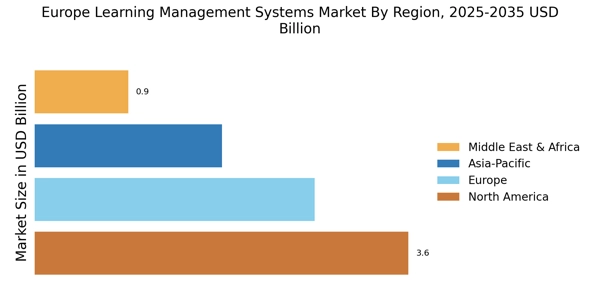
Germany holds a significant market share of 1.5 in the Learning Management System (LMS)sector, driven by a robust economy and a strong emphasis on digital education. Key growth drivers include government initiatives promoting e-learning, increasing adoption of technology in education, and a growing demand for corporate training solutions. The regulatory framework supports digital transformation, enhancing infrastructure and industrial development in the education sector.
UK : Innovative Solutions and Diverse Needs
The UK boasts a market share of 1.2 in the LMS landscape, characterized by a diverse range of educational institutions and corporate training programs. Growth is fueled by the increasing demand for flexible learning solutions and the integration of technology in traditional education. Government policies support digital learning initiatives, while the competitive landscape is marked by both local and international players vying for market share.
France : Focus on Quality and Accessibility
France's LMS market holds a share of 0.8, driven by a strong focus on quality education and accessibility. The growth is supported by government initiatives aimed at enhancing digital literacy and integrating technology in schools. Demand trends indicate a shift towards blendedlearning models, with significant investments in educational technology infrastructure across the country.
Russia : Growing Demand Amid Challenges
With a market share of 0.5, Russia's LMS sector is emerging, driven by increasing digitalization in education and corporate training. Key growth drivers include government support for e-learning initiatives and a rising demand for online educationsolutions. However, challenges such as regulatory hurdles and infrastructure gaps remain. The market is characterized by a mix of local and international LMS providers.
Italy : Focus on Innovation and Collaboration
Italy's LMS market, with a share of 0.4, is developing steadily, driven by a focus on innovation in education and collaboration between institutions and technology providers. Government initiatives promote digital education, while demand for LMS solutions is growing in both academic and corporate sectors. The competitive landscape features local players like Docebo, alongside international firms.
Spain : Emphasis on Digital Transformation
Spain's LMS market, holding a share of 0.3, is witnessing growth driven by a strong emphasis on digital transformationin education. Government policies support the integration of technology in learning environments, fostering demand for LMS solutions. The market is characterized by a competitive landscape with both local and international players, focusing on enhancing educational outcomes.
Rest of Europe : Diverse Needs and Opportunities
The Rest of Europe holds a minimal market share of 0.02 in the LMS sector, yet it presents niche opportunities driven by localized needs. Various countries are adopting LMS solutions tailored to specific educational and corporate training requirements. The competitive landscape is fragmented, with smaller players catering to unique market demands, supported by regional government initiatives.