×
Request Free Sample ×

Kindly complete the form below to receive a free sample of this Report

* Please use a valid business email

Leading companies partner with us for data-driven Insights

clients tt-cursor
Hero Background

Europe Pizza Market

ID: MRFR/FnB/45942-HCR
128 Pages
Snehal Singh
October 2025

Europe Pizza Market Research Report By Pizza Type (Industrial, Artisanal), By Pizza Size (Regular, Medium, Large), By Pizza Nature (Fresh, Frozen/Ready to cook, Crust), and By Pizza Distribution Channel (Food Service, Food Retail) - Forecast to 2035.

Share:
Download PDF ×

We do not share your information with anyone. However, we may send you emails based on your report interest from time to time. You may contact us at any time to opt-out.

Europe Pizza Market Infographic
Purchase Options

Europe Pizza Market Summary

As per MRFR analysis, the Europe pizza market Size was estimated at 35641.97 USD Billion in 2024. The Europe pizza market is projected to grow from 37958.7 USD Billion in 2025 to 71283.95 USD Billion by 2035, exhibiting a compound annual growth rate (CAGR) of 6.5% during the forecast period 2025 - 2035.

Key Market Trends & Highlights

The Europe pizza market is experiencing a dynamic shift towards health-conscious and convenient offerings.

  • Germany remains the largest market for pizza in Europe, driven by a diverse consumer base and strong demand for traditional and innovative options.
  • The UK is currently the fastest-growing region, with a notable increase in gourmet and unique flavor profiles appealing to younger demographics.
  • Health-conscious offerings are becoming increasingly popular, as consumers seek out plant-based and nutritious alternatives to traditional pizza.
  • Key market drivers include the rising demand for plant-based options and the expansion of delivery and takeaway services, which enhance consumer accessibility.

Market Size & Forecast

2024 Market Size 35641.97 (USD Billion)
2035 Market Size 71283.95 (USD Billion)
CAGR (2025 - 2035) 6.5%

Major Players

Domino's Pizza (US), Pizza Hut (US), Papa John's (US), Little Caesars (US), Papa Murphy's (US), Sbarro (US), California Pizza Kitchen (US), Round Table Pizza (US)

Europe Pizza Market Trends

The pizza market in Europe is currently experiencing a dynamic evolution, driven by changing consumer preferences and an increasing demand for diverse offerings. The rise of health-conscious eating habits has led to a notable shift towards organic and gluten-free options, as consumers seek alternatives that align with their dietary needs. Additionally, the growing trend of convenience has prompted an increase in delivery services and ready-to-eat products, catering to busy lifestyles. This transformation is further fueled by technological advancements, which enhance the ordering experience and streamline operations for businesses. Moreover, the pizza market is witnessing a surge in innovative flavors and gourmet toppings, appealing to adventurous eaters. Traditional recipes are being reimagined, incorporating local ingredients and unique culinary influences. This trend not only attracts a broader customer base but also fosters a sense of community and local pride. As the market continues to adapt, it appears poised for sustained growth, with opportunities for both established brands and new entrants to thrive in this competitive landscape.

Health-Conscious Offerings

There is a noticeable shift towards healthier pizza options, including organic and gluten-free varieties. This trend reflects a growing consumer awareness regarding nutrition and dietary restrictions, prompting businesses to innovate their menus accordingly.

Convenience and Delivery Services

The demand for convenience is reshaping the pizza market, with an emphasis on delivery services and ready-to-eat products. This trend caters to the fast-paced lifestyles of consumers, making it easier for them to enjoy their favorite meals.

Gourmet and Innovative Flavors

The introduction of gourmet toppings and unique flavor combinations is gaining traction. This trend not only attracts adventurous eaters but also encourages local sourcing and culinary creativity, enhancing the overall dining experience.

Europe Pizza Market Drivers

Rising Demand for Plant-Based Options

The increasing consumer preference for plant-based diets is reshaping the pizza market in Europe. As more individuals adopt vegetarian and vegan lifestyles, pizzerias are responding by expanding their menus to include plant-based cheese and meat alternatives. This shift is not merely a trend; it reflects a broader societal movement towards healthier eating habits. According to recent data, the plant-based food market in Europe is projected to grow at a CAGR of 10% through 2025. Consequently, the pizza market is likely to see a significant rise in sales of plant-based pizzas, catering to this growing demographic. This demand for plant-based options may also encourage traditional pizza makers to innovate, thereby enhancing their competitive edge in the market.

Cultural Influence on Pizza Preferences

Cultural diversity across Europe significantly impacts the pizza market. Different regions exhibit unique tastes and preferences, leading to a variety of pizza styles and toppings. For instance, in Italy, traditional Neapolitan pizzas remain popular, while in the UK, there is a growing trend for loaded pizzas with diverse toppings. This cultural influence not only drives innovation but also encourages pizzerias to tailor their offerings to local tastes. Market data suggests that regional variations can account for up to 25% of sales in certain areas, indicating the importance of cultural factors in shaping consumer choices within the pizza market.

Sustainability and Eco-Friendly Practices

Sustainability is becoming increasingly important in the pizza market, as consumers are more aware of environmental issues. Many pizzerias are adopting eco-friendly practices, such as sourcing local ingredients and using biodegradable packaging. This shift is not only beneficial for the environment but also appeals to a growing segment of environmentally conscious consumers. Research indicates that around 40% of European consumers are willing to pay a premium for sustainably sourced food. As a result, pizzerias that prioritize sustainability may gain a competitive advantage, potentially increasing their market share in the pizza market.

Expansion of Delivery and Takeaway Services

The expansion of delivery and takeaway services is a key driver in the pizza market. With busy lifestyles, consumers increasingly prefer the convenience of having food delivered to their homes. Data shows that the delivery segment of the pizza market in Europe has grown by approximately 15% in the last year alone. This trend has prompted many pizzerias to partner with third-party delivery services or enhance their in-house delivery capabilities. As this segment continues to grow, it is likely to reshape the competitive landscape, compelling traditional pizzerias to adapt their business models to meet consumer demands.

Technological Advancements in Ordering Systems

Technological innovations are playing a crucial role in transforming the pizza market in Europe. The integration of mobile applications and online ordering systems has streamlined the purchasing process, making it more convenient for consumers. Data indicates that approximately 30% of pizza sales in Europe now occur through digital platforms. This shift not only enhances customer experience but also allows businesses to gather valuable data on consumer preferences. As technology continues to evolve, pizzerias are likely to adopt more sophisticated systems, such as AI-driven recommendations and contactless payment options, further driving growth in the pizza market.

Market Segment Insights

By Type: Regular Pizza (Largest) vs. Frozen Pizza (Fastest-Growing)

In the Europe pizza market, the segment distribution shows Regular Pizza holds the largest share, significantly surpassing others like Frozen, Organic, Gluten-Free, and Vegan Pizza. This dominance is attributed to the traditional consumer preference for classic flavors and recipes that Regular Pizza offers. Meanwhile, Frozen Pizza is gaining traction among busy consumers seeking convenience, allowing it to carve out a notable presence in the market. Growth trends within this segment indicate a rising interest in health-conscious options, with Organic and Gluten-Free pizzas seeing increasing consumer demand. Additionally, the vegan trend is impacting buying decisions, appealing particularly to younger demographics who prioritize sustainable and ethical food choices. The combination of convenience and health-consciousness will continue to drive growth across these segments, especially Frozen Pizza as it evolves to match dietary preferences and lifestyles.

Regular Pizza (Dominant) vs. Vegan Pizza (Emerging)

Regular Pizza remains the dominant segment in the market, characterized by its extensive variety and traditional appeal, catering to consumers' desire for familiar tastes. This segment's strength lies in its broad acceptance, ensuring consistent sales across various demographics. On the other hand, Vegan Pizza is emerging as a significant player, driven by the increasing shift towards plant-based diets and ethical eating practices. As more consumers seek alternatives to meat and dairy, Vegan Pizza is quickly adapting to incorporate diverse flavors and high-quality ingredients, positioning itself as a compelling option for not only vegans but also flexitarians and health-conscious consumers. The evolution of both segments illustrates the dynamic nature of the pizza market.

By Crust Type: Thin Crust (Largest) vs. Stuffed Crust (Fastest-Growing)

In the Europe pizza market, the crust type segment is dominated by thin crust varieties, which are favored for their crispiness and ability to complement various toppings. This segment holds a significant market share, appealing to health-conscious consumers and those seeking traditional pizza experiences. Thick crust and stuffed crust also maintain notable shares, characterized by their hearty nature and indulgent appeal; however, they are gradually facing competition from healthier options. The growth trends in the crust segment indicate a rising preference for innovative alternatives such as cauliflower crust, driven by an increase in the demand for gluten-free and low-carb options. Stuffed crust is identified as the fastest-growing segment, attracting consumers looking for unique dining experiences. The diversification of crust options caters to the evolving tastes of pizza lovers across Europe.

Thin Crust (Dominant) vs. Stuffed Crust (Emerging)

Thin crust pizza serves as the dominant option in the crust segment, appreciated for its versatility and ability to accommodate various toppings. Its popularity is driven by a shift towards lighter, more flavorful offerings, appealing to a broad demographic, including younger consumers and health-conscious individuals. On the other hand, stuffed crust is emerging rapidly due to its indulgent reputation and the novelty it brings to traditional pizza. This segment is gaining traction, particularly among families and individuals looking for a satisfying meal. The balance between these two segments reflects the consumers' desire for both traditional and innovative pizza experiences.

By Toppings: Vegetarian (Largest) vs. Meat Lover's (Fastest-Growing)

In the Europe pizza market, the toppings segment showcases a diverse distribution among various preferences. The Vegetarian topping is currently the largest segment, enjoyed widely by health-conscious consumers. Meanwhile, Meat Lover's toppings are gaining traction, appealing to those seeking more indulgent options. Cheese, Seafood, and Spicy toppings also contribute to the segmentation, though they hold smaller shares in comparison to the Vegetarian and Meat Lover's varieties. Growth trends in the toppings segment are primarily driven by evolving consumer preferences and dietary trends. The rising popularity of vegetarian diets is boosting the Vegetarian segment, while the Meat Lover's variant is expanding rapidly as consumers seek bold flavors and protein-rich options. This dual trend illustrates a dynamic market where health-consciousness and indulgence co-exist, driving innovation in topping offerings and menu diversity.

Vegetarian (Dominant) vs. Cheese (Emerging)

The Vegetarian topping segment holds a dominant position in the Europe pizza market, characterized by its appeal to health-oriented consumers and those seeking plant-based alternatives. This segment typically includes a variety of vegetables, cheeses, and innovative plant-based toppings that cater to a growing trend towards healthier eating. In contrast, the Cheese topping segment is emerging as a flavorful choice, with traditional cheese varieties appealing to a wide audience. The Cheese segment is witnessing innovation with gourmet cheese blends and unique flavor profiles, positioning it well to capitalize on trends favoring artisanal and high-quality ingredients. Together, these segments illustrate a rich tapestry of consumer demands and preferences within the pizza market.

By Sales Channel: Online Delivery (Largest) vs. Supermarkets (Fastest-Growing)

The sales channel landscape in the pizza market reveals a significant distribution of market share among various segments. Online delivery stands out as the most dominant channel, appealing to consumers seeking convenience and quick access to their favorite pizzas. Meanwhile, takeaway and sit-down restaurants also hold considerable shares, but online delivery has increasingly outpaced them, symbolizing a shift in consumer preferences towards technology-driven solutions for dining.

Online Delivery: Dominant vs. Supermarkets: Emerging

Online delivery has become the backbone of the pizza market, characterized by a seamless user experience and extensive menu options appealing to the modern consumer's need for convenience. Brands are investing heavily in robust logistics and user-friendly apps to enhance delivery speed and reliability. In contrast, supermarkets are emerging as a rapidly growing sales channel, capitalizing on the trend of ready-to-eat meals and frozen pizza options. Supermarkets benefit from their established infrastructure and foot traffic, drawing customers who prefer to purchase meals during grocery shopping, thus creating a unique blend of convenience and choice.

Get more detailed insights about Europe Pizza Market

Regional Insights

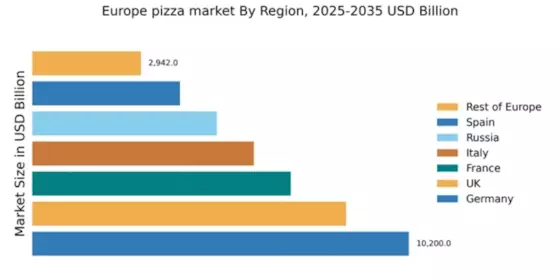
Germany : Leading the European Pizza Scene

Key markets include major cities like Berlin, Munich, and Hamburg, where the competitive landscape is dominated by international players such as Domino's and Pizza Hut. Local chains are also gaining traction by offering unique regional flavors. The business environment is characterized by a strong emphasis on quality and sustainability, with many establishments focusing on organic ingredients. The pizza sector is increasingly integrating technology, with online ordering and delivery apps becoming essential for market players.

UK : Diverse Tastes Drive Demand

Key markets include London, Manchester, and Birmingham, where competition is fierce among major players like Domino's and Papa John's. Local pizzerias are thriving by offering artisanal and gourmet options. The business environment is dynamic, with a strong emphasis on customer experience and digital engagement. The pizza sector is increasingly influenced by health trends, with many consumers opting for gluten-free and vegan alternatives.

France : A Taste for Quality and Variety

Key markets include Paris, Lyon, and Marseille, where competition is marked by both international chains and local artisans. Major players like Domino's and Pizza Hut coexist with numerous independent pizzerias that emphasize traditional recipes. The business environment is characterized by a focus on culinary excellence and innovation, with many establishments experimenting with unique toppings and flavors. The pizza sector is also benefiting from the growing trend of food delivery services.

Russia : Emerging Trends and Opportunities

Key markets include Moscow and St. Petersburg, where competition is intensifying among major players like Domino's and local chains. The business environment is evolving, with a growing emphasis on digital ordering and delivery platforms. Local preferences are influencing menu offerings, with unique toppings and flavors gaining popularity. The pizza sector is also seeing increased interest in health-conscious options, reflecting broader consumer trends.

Italy : Tradition Meets Modern Trends

Key markets include Naples, Rome, and Milan, where the competitive landscape features a mix of traditional pizzerias and modern chains. Major players like Domino's are present, but local establishments dominate with authentic offerings. The business environment is characterized by a focus on culinary heritage and quality, with many pizzerias emphasizing artisanal methods. The pizza sector is also adapting to trends such as online ordering and delivery services.

Spain : Flavorful Innovations and Trends

Key markets include Madrid and Barcelona, where competition is vibrant among major players like Domino's and local pizzerias. The business environment is dynamic, with a strong emphasis on customer engagement and innovative offerings. Local preferences are influencing menu items, with a growing interest in Mediterranean flavors and health-conscious options. The pizza sector is also benefiting from the increasing popularity of food delivery apps.

Rest of Europe : Diverse Opportunities Await

Key markets include cities in Poland, Hungary, and the Czech Republic, where competition is growing among local and international players. Major brands like Domino's are expanding their presence, while local chains are gaining traction by offering unique regional flavors. The business environment is characterized by a focus on quality and affordability, with many establishments adapting to local tastes. The pizza sector is also seeing increased interest in delivery services and online ordering.
Europe Pizza Market Regional Image

Key Players and Competitive Insights

The pizza market exhibits a dynamic competitive landscape characterized by a blend of established players and emerging brands. Key growth drivers include the increasing demand for convenience, the rise of delivery services, and a growing preference for diverse and innovative menu offerings. Major companies such as Domino's Pizza (US), Pizza Hut (US), and Papa John's (US) are strategically positioned to leverage these trends. Domino's Pizza (US) focuses on digital transformation and technological innovation, enhancing its online ordering systems and delivery logistics. Pizza Hut (US) emphasizes menu diversification and partnerships with local suppliers to cater to regional tastes, while Papa John's (US) is investing in sustainability initiatives to appeal to environmentally conscious consumers. Collectively, these strategies shape a competitive environment that is increasingly focused on customer experience and operational efficiency.

In terms of business tactics, companies are localizing their manufacturing processes and optimizing supply chains to enhance responsiveness to market demands. The competitive structure of the pizza market appears moderately fragmented, with a mix of large chains and smaller, regional players. The influence of key players is substantial, as they set trends in product offerings and service delivery, which smaller competitors often follow.

In October 2025, Domino's Pizza (US) announced a partnership with a leading AI technology firm to enhance its predictive analytics capabilities for inventory management. This strategic move is likely to improve operational efficiency and reduce food waste, aligning with the growing emphasis on sustainability in the food industry. By leveraging AI, Domino's aims to optimize its supply chain and ensure that customer demand is met more accurately.

In September 2025, Pizza Hut (US) launched a new line of plant-based pizzas in collaboration with a well-known vegan brand. This initiative reflects a broader trend towards healthier eating and caters to the increasing consumer demand for plant-based options. The introduction of these products not only diversifies Pizza Hut's menu but also positions the brand as a leader in the growing segment of health-conscious consumers.

In August 2025, Papa John's (US) unveiled a new loyalty program that rewards customers with points for every order, which can be redeemed for discounts and exclusive offers. This strategic action is indicative of a shift towards enhancing customer engagement and retention. By fostering loyalty, Papa John's aims to strengthen its market position amidst fierce competition.

As of November 2025, current competitive trends in the pizza market are heavily influenced by digitalization, sustainability, and the integration of AI technologies. Strategic alliances are increasingly shaping the landscape, allowing companies to pool resources and expertise to innovate more effectively. Looking ahead, competitive differentiation is expected to evolve, with a notable shift from price-based competition towards innovation, technology adoption, and supply chain reliability. Companies that can effectively harness these trends are likely to secure a more robust market position.

Key Companies in the Europe Pizza Market market include

Industry Developments

In recent months, the Europe Pizza Market has been witnessing notable developments, with companies like Domino's Pizza and Pizza Hut expanding their footprints through innovative delivery strategies and menu diversification aimed at changing consumer preferences.

In August 2023, Delivery Hero announced its decision to enhance operations in previously underperforming regions, resulting in a notable market share increase. Mergers and acquisitions have also been prominent, with Dunkin' Brands' acquisition of specific regional pizza chains improving its portfolio and enhancing market competitiveness as of July 2023.

The valuation growth of Oven Brothers and Telepizza has been observed, driven by increasing demand for premium and artisanal pizzas within the European market, reflecting a shift towards quality rather than solely price.

Additionally, California Pizza Kitchen stated plans to enter the European market in late 2023, looking to tap into the growing appetite for diverse pizza offerings.

The competitive landscape continues to evolve, with Just Eat Takeaway focusing on technological advancements and research and development to improve customer service and operational efficiency amid rising consumer expectations for seamless delivery experiences.

Future Outlook

Europe Pizza Market Future Outlook

The Pizza Market in Europe is projected to grow at a 6.5% CAGR from 2024 to 2035, driven by evolving consumer preferences, technological advancements, and increased demand for convenience.

New opportunities lie in:

  • Expansion of plant-based pizza offerings to capture health-conscious consumers.
  • Implementation of AI-driven inventory management systems for efficiency.
  • Development of subscription-based pizza delivery services for steady revenue streams.

By 2035, the pizza market is expected to achieve robust growth, reflecting evolving consumer trends and innovative business strategies.

Market Segmentation

Europe Pizza Market Type Outlook

  • Regular Pizza
  • Frozen Pizza
  • Organic Pizza
  • Gluten-Free Pizza
  • Vegan Pizza

Europe Pizza Market Toppings Outlook

  • Vegetarian
  • Meat Lover's
  • Cheese
  • Seafood
  • Spicy

Europe Pizza Market Crust Type Outlook

  • Thin Crust
  • Thick Crust
  • Stuffed Crust
  • Cauliflower Crust

Europe Pizza Market Sales Channel Outlook

  • Online Delivery
  • Takeaway
  • Sit-Down Restaurants
  • Supermarkets

Report Scope

MARKET SIZE 202435641.97(USD Billion)
MARKET SIZE 202537958.7(USD Billion)
MARKET SIZE 203571283.95(USD Billion)
COMPOUND ANNUAL GROWTH RATE (CAGR)6.5% (2024 - 2035)
REPORT COVERAGERevenue Forecast, Competitive Landscape, Growth Factors, and Trends
BASE YEAR2024
Market Forecast Period2025 - 2035
Historical Data2019 - 2024
Market Forecast UnitsUSD Billion
Key Companies Profiled["Domino's Pizza (US)", "Pizza Hut (US)", "Papa John's (US)", "Little Caesars (US)", "Papa Murphy's (US)", "Sbarro (US)", "California Pizza Kitchen (US)", "Round Table Pizza (US)"]
Segments CoveredType, Crust Type, Toppings, Sales Channel
Key Market OpportunitiesAdoption of plant-based ingredients and sustainable packaging in the pizza market.
Key Market DynamicsRising demand for plant-based options drives innovation and competition in the pizza market.
Countries CoveredGermany, UK, France, Russia, Italy, Spain, Rest of Europe

Leave a Comment

FAQs

What was the market size of the Europe Pizza Market in 2024?

In 2024, the Europe Pizza Market was valued at 35.64 USD Billion.

What is the projected market size for the Europe Pizza Market by 2035?

By 2035, the Europe Pizza Market is projected to reach a value of 71.52 USD Billion.

What is the expected compound annual growth rate (CAGR) for the European Pizza Market from 2025 to 2035?

The expected CAGR for the Europe Pizza Market from 2025 to 2035 is 6.537%.

What will be the market value of Industrial pizza type in 2035?

The Industrial pizza type within the Europe Pizza Market is projected to be valued at 43.45 USD Billion in 2035.

How is the Artisanal pizza-type market expected to perform by 2035?

The Artisanal pizza type is anticipated to reach a market value of 28.07 USD Billion by 2035.

What are some of the key players in the Europe Pizza Market?

Major players in the Europe Pizza Market include brands such as Domino's Pizza, Pizza Hut, and Papa John's.

What was the market value of the Europe Pizza Market for Artisanal pizza type in 2024?

In 2024, the market value for the Artisanal pizza type was 14.59 USD Billion.

What is the forecasted growth rate of the Industrial pizza segment between 2025 and 2035?

The Industrial pizza segment is forecasted to grow at a CAGR of 6.537% from 2025 to 2035.

What challenges might impact the growth of the Europe Pizza Market?

Challenges that may affect market growth include changing consumer preferences and increased competition.

Which pizza segment is expected to dominate the market share in 2035?

The Industrial pizza segment is expected to dominate the market share by 2035.

Download Free Sample

Kindly complete the form below to receive a free sample of this Report

Compare Licence

×
Features License Type
Single User Multiuser License Enterprise User
Price $4,950 $5,950 $7,250
Maximum User Access Limit 1 User Upto 10 Users Unrestricted Access Throughout the Organization
Free Customization
Direct Access to Analyst
Deliverable Format
Platform Access
Discount on Next Purchase 10% 15% 15%
Printable Versions