×
Request Free Sample ×

Kindly complete the form below to receive a free sample of this Report

* Please use a valid business email

Leading companies partner with us for data-driven Insights

clients tt-cursor
Hero Background

Pizza Market

ID: MRFR/FnB/10027-CR
200 Pages
Snehal Singh
July 2025

Pizza Market Research Report By Type (Regular Pizza, Frozen Pizza, Organic Pizza, Gluten-Free Pizza, Vegan Pizza), By Crust Type (Thin Crust, Thick Crust, Stuffed Crust, Cauliflower Crust), By Toppings (Vegetarian, Meat Lover's, Cheese, Seafood, Spicy), By Sales Channel (Online Delivery, Takeaway, Sit-Down Restaurants, Supermarkets) and By Regional (North America, Europe, South America, Asia Pacific, Middle East and Africa) - Forecast to 2035

Share:
Download PDF ×

We do not share your information with anyone. However, we may send you emails based on your report interest from time to time. You may contact us at any time to opt-out.

Pizza Market Infographic
Purchase Options

Pizza Market Summary

As per MRFR analysis, the Pizza Market Size was estimated at 142567.9 USD Billion in 2024. The Pizza industry is projected to grow from 151894.73 in 2025 to 286254.38 by 2035, exhibiting a compound annual growth rate (CAGR) of 6.54 during the forecast period 2025 - 2035.

Key Market Trends & Highlights

The pizza market is experiencing a dynamic evolution driven by health trends and technological advancements.

  • Health-conscious offerings are increasingly influencing consumer preferences in North America.
  • Gourmet and artisanal pizzas are gaining traction in the Asia-Pacific region, reflecting a shift towards premium products.
  • Technological integration in ordering systems is enhancing customer convenience and engagement across various segments.
  • Convenience and delivery services, along with diverse flavor profiles and customization, are key drivers propelling growth in both Neapolitan and gluten-free crust segments.

Market Size & Forecast

2024 Market Size 142567.9 (USD Billion)
2035 Market Size 286254.38 (USD Billion)
CAGR (2025 - 2035) 6.54%

Major Players

Domino's Pizza (US), Pizza Hut (US), Papa John's (US), Little Caesars (US), Sbarro (US), California Pizza Kitchen (US), Papa Murphy's (US), Round Table Pizza (US), Blaze Pizza (US)

Pizza Market Trends

The Pizza Market is currently experiencing a dynamic evolution, characterized by shifting consumer preferences and innovative culinary trends. As individuals increasingly seek diverse dining experiences, the demand for gourmet and artisanal pizzas has surged. This trend reflects a broader inclination towards high-quality ingredients and unique flavor combinations, which appeal to a more discerning clientele. Additionally, the rise of health-conscious eating habits has prompted many establishments to offer gluten-free, vegan, and organic options, catering to a wider audience. This diversification not only enhances customer satisfaction but also fosters brand loyalty, as consumers gravitate towards establishments that align with their dietary preferences. Moreover, the Pizza Market is witnessing a significant transformation in distribution channels. The proliferation of online ordering and delivery services has reshaped how consumers access their favorite meals. This shift has led to an increase in partnerships between pizza brands and third-party delivery platforms, enhancing convenience for customers. Furthermore, the integration of technology, such as mobile apps and contactless payment systems, has streamlined the ordering process, making it more efficient. As these trends continue to evolve, the Pizza Market appears poised for sustained growth, driven by innovation and adaptability to changing consumer demands.

Health-Conscious Offerings

The Pizza Market is increasingly catering to health-conscious consumers by introducing gluten-free, vegan, and organic options. This trend reflects a growing awareness of dietary preferences and nutritional needs, allowing brands to attract a broader customer base.

Gourmet and Artisanal Pizzas

There is a notable rise in the popularity of gourmet and artisanal pizzas, characterized by unique toppings and high-quality ingredients. This trend indicates a shift towards more sophisticated dining experiences, appealing to consumers seeking distinct flavors.

Technological Integration in Ordering

The integration of technology in the Pizza Market is transforming the ordering process. Online platforms and mobile applications enhance convenience, while partnerships with delivery services streamline access to products, reflecting changing consumer behaviors.

Pizza Market Drivers

Market Growth Projections

The Global Pizza Market Industry is poised for substantial growth, with projections indicating a market value of 210 USD Billion by 2035. This anticipated growth is underpinned by various factors, including rising consumer demand for convenience foods and the expansion of delivery services. The compound annual growth rate of 2.8% from 2025 to 2035 reflects the industry's resilience and adaptability in meeting consumer preferences. As pizza continues to evolve, incorporating innovative flavors and healthier options, the market is likely to attract a diverse customer base. These growth projections underscore the industry's potential to thrive in an increasingly competitive food landscape.

Expansion of Delivery Services

The Global Pizza Market Industry benefits significantly from the expansion of delivery services, which have become integral to consumer purchasing behavior. The proliferation of online ordering platforms and mobile applications facilitates easy access to pizza, catering to the increasing demand for home delivery. This trend is particularly relevant in urban areas, where convenience is paramount. As a result, pizza chains are investing in technology to enhance their delivery capabilities, ensuring timely service and customer satisfaction. The industry's adaptation to this delivery-centric model is expected to contribute to a compound annual growth rate of 2.8% from 2025 to 2035, reflecting the importance of convenience in driving market growth.

Globalization of Pizza Culture

The Global Pizza Market Industry is significantly influenced by the globalization of pizza culture, which facilitates the exchange of culinary traditions across borders. As pizza becomes a staple in various countries, local adaptations emerge, enriching the overall market landscape. This cultural exchange not only diversifies product offerings but also enhances consumer engagement. For instance, the incorporation of regional ingredients and flavors into pizza recipes can attract a broader audience. The globalization trend suggests a vibrant and evolving market, with the potential for sustained growth as new consumer bases are cultivated. This dynamic environment may contribute to the industry's projected market value of 155.0 USD Billion in 2024.

Innovative Toppings and Flavors

Innovation within the Global Pizza Market Industry plays a crucial role in attracting diverse consumer segments. The introduction of unique toppings and flavors caters to evolving tastes and dietary preferences. For instance, the rise of plant-based and gourmet pizzas has expanded the market's reach, appealing to health-conscious consumers and food enthusiasts alike. This trend not only enhances customer satisfaction but also drives sales growth. As the industry adapts to these culinary trends, it is likely to witness sustained interest, contributing to the projected market value of 210 USD Billion by 2035. The continuous exploration of new flavor profiles indicates a dynamic and responsive market.

Health-Conscious Consumer Trends

The Global Pizza Market Industry is witnessing a shift towards health-conscious consumer trends, prompting pizza manufacturers to innovate healthier options. This includes the introduction of whole grain crusts, reduced-fat cheeses, and organic toppings, catering to consumers who prioritize nutrition without sacrificing taste. As awareness of health issues increases, the demand for pizzas that align with dietary preferences is likely to grow. This trend not only broadens the market's appeal but also positions it favorably in a competitive landscape. The industry's responsiveness to these health trends may play a pivotal role in sustaining its growth, potentially leading to a market value of 210 USD Billion by 2035.

Rising Demand for Convenience Foods

The Global Pizza Market Industry experiences a notable surge in demand for convenience foods, driven by the fast-paced lifestyle of consumers. As individuals increasingly seek quick meal solutions, pizza emerges as a preferred option due to its ready-to-eat nature. In 2024, the market is valued at approximately 155.0 USD Billion, reflecting a growing inclination towards fast food. This trend is particularly pronounced among younger demographics, who prioritize convenience and flavor. The industry's ability to adapt to consumer preferences, such as offering delivery and takeout options, further enhances its appeal, suggesting a robust growth trajectory in the coming years.

Market Segment Insights

By Pizza Type: Neapolitan (Largest) vs. Chicago Style (Fastest-Growing)

In the competitive landscape of the pizza market, Neapolitan pizza holds a substantial market share, celebrated for its traditional preparation and use of high-quality ingredients like San Marzano tomatoes and mozzarella di bufala. This style, rooted in Italian culinary traditions, appeals to a broad demographic, including gourmet enthusiasts and health-conscious consumers seeking authentic flavors. In contrast, the Chicago Style garners increasing attention for its unique thick crust and deep-dish form, capturing the interest of adventurous diners and fast-casual restaurant operators alike, thus solidifying its role in market dynamics.

Neapolitan (Dominant) vs. Chicago Style (Emerging)

Neapolitan pizza is often regarded as the gold standard within the pizza market due to its rich history and adherence to traditional cooking methods. It boasts a thin, soft crust with a charred underbelly and is typically topped with simple yet fresh ingredients, delivering an authentic taste experience. Conversely, Chicago Style pizza, characterized by its thick crust and layered toppings, has emerged strongly over the past few years. This variant is particularly popular among families and group diners, offering a hearty, filling option suitable for sharing. As more restaurants embrace Chicago Style, its popularity continues to rise, appealing to consumers seeking comfort food with a unique twist.

By Crust Type: Thin Crust (Largest) vs. Gluten-Free Crust (Fastest-Growing)

In the Pizza Market, thin crust pizza holds the largest share, appealing widely to consumers who favor a lighter dining option. This segment has created a trend towards healthier eating, aligning with the growing demand for lower-calorie meals. In contrast, gluten-free crust options are carving out their niche, catering to health-conscious consumers and those with dietary restrictions, which is reflected in their rapid growth within the market. The rise in health awareness among consumers continues to drive various trends, including gluten intolerance and the popularity of low-carb diets. As a result, gluten-free crusts are not only gaining traction but are also encouraging traditional brands to innovate and expand their offerings. The adaptability of these crust types serves both broad consumer tastes and specific dietary needs, making them key players in the evolving pizza landscape.

Thin Crust (Dominant) vs. Stuffed Crust (Emerging)

Thin crust remains a dominant force in the Pizza Market, characterized by its crisp texture and versatility. It appeals to a wide demographic, often viewed as a healthier option due to its minimal dough ratio. Conversely, stuffed crust is seen as an emerging choice, featuring a thicker, doughier base that is filled with cheese, appealing to indulgent consumers seeking richer flavors. As tastes evolve, stuffed crust is gaining popularity, particularly among those who enjoy a hearty meal with a satisfying filling. This contrast illustrates how consumer preferences are shaping the pizza market, with thin crust maintaining its lead and stuffed crust finding its place as a strong contender in the indulgent category.

By Topping Preference: Vegetarian (Largest) vs. Meat Lovers (Fastest-Growing)

In the Pizza Market, topping preference plays a significant role in consumer choices. The vegetarian segment dominates with a considerable share among pizza lovers, characterized by a variety of options ranging from classic Margherita to innovative veggie-loaded creations. The meat lovers segment, while smaller in share, shows rapid growth as more consumers seek hearty and protein-rich options. Trends suggest a growing appetite for meat-inclusive pizzas, particularly in regions experiencing increased demand for bold flavors. As health consciousness rises, so does the demand for vegetarian options, fueling its market leading status. Conversely, the meat lovers segment is benefitting from evolving culinary trends, with many consumers drawn to specialty pizzas featuring gourmet meats and fusion flavors. This dual dynamic illustrates distinct consumer preferences shaping the pizza market landscape.

Vegetarian: Dominant vs. Meat Lovers: Emerging

The vegetarian segment in the pizza market stands out as the dominant choice among health-conscious consumers, characterized by its emphasis on fresh and organic ingredients, appealing not only to vegetarians but also to flexitarians. Its wide range of offerings, from traditional vegetable toppings to innovative plant-based substitutes, aligns well with current health and wellness trends. The meat lovers segment, on the other hand, has emerged as a compelling choice, driven by increasing consumer interest in superior meat quality and unique topping combinations. This segment's appeal is amplified by the trend of offering gourmet pizzas that feature artisanal meats, which have become particularly popular in urban areas. As more consumers experiment with diverse flavor profiles, both segments signify a vibrant and competitive landscape in the pizza market.

By Service Type: Delivery (Largest) vs. Takeout (Fastest-Growing)

In the Pizza Market, service types are pivotal in defining consumer preferences and purchasing behaviors. Currently, the Delivery segment holds the largest market share, as it caters to the rising demand for convenience among customers. Meanwhile, Takeout is rapidly gaining traction, ideal for consumers who prefer a quick and easy option without the time commitment of dining in. Other segments like Dine-In, Frozen, and Food Trucks are also essential, but they generally occupy smaller niches within the larger market landscape. Growth trends indicate that the Delivery segment benefits significantly from the proliferation of mobile ordering and delivery apps, which have transformed the consumer experience. Conversely, the Takeout segment is being propelled by changing lifestyle trends, where convenience and speed are prioritized. Additionally, as more people seek options that fit their busy lives, the demand for these service types in the Pizza Market continues to rise, solidifying their importance.

Delivery (Dominant) vs. Food Truck (Emerging)

The Delivery segment stands as the dominant force within the Pizza Market, characterized by its ability to reach a vast audience comforted by convenience. This segment thrives on efficient logistics and customer service, often leveraging technology to streamline orders and enhance user experience. In contrast, the Food Truck segment represents an emerging trend, appealing to adventurous eaters looking for unique and gourmet pizza experiences outside traditional settings. While still niche, Food Trucks are gaining popularity due to their ability to cater to local events and festivals, thus creating a loyal customer base. Both segments reflect diverse consumer preferences, showing the versatility and evolving nature of the Pizza Market.

By Consumer Demographics: Families (Largest) vs. Young Adults (Fastest-Growing)

In the Pizza Market, the consumer demographics segment showcases significant diversity in preferences and consumption patterns. Families represent the largest segment, driven by their need for convenient meal solutions that cater to all age groups. Meanwhile, young adults are emerging as the fastest-growing demographic, increasingly seeking adventurous flavors and unique pizza offerings that resonate with their lifestyle. This shift is indicative of changing market dynamics, where traditional consumption patterns are being challenged by evolving preferences. The growth trends within these demographics reveal several key drivers. Families tend to favor value-oriented, shareable pizza options designed for group dining, while young adults gravitate towards artisanal and health-conscious choices that are reflective of their lifestyles. The growing emphasis on online ordering and delivery services is also influencing consumer behavior, contributing to the rapid expansion of young adult consumers in the market. Understanding these trends helps in tailoring product offerings and marketing strategies that effectively target each customer segment.

Families: Dominant vs. Young Adults: Emerging

Families are a dominant force in the Pizza Market, characterized by their preference for larger, shareable pizzas that cater to diverse tastes and age ranges. They often opt for classic options that appeal to both children and adults, emphasizing convenience and value. On the other hand, young adults represent an emerging segment, known for their adventurous culinary preferences and openness to trying new toppings and specialty pizzas. This group actively influences market trends with their interest in unique flavors, specialty diets, and health-conscious options. The collaboration of these two segments creates a dynamic marketplace, where traditional values meet modern expectations, allowing pizza brands to innovate their offerings and capture a wider audience.

Get more detailed insights about Pizza Market

Regional Insights

North America : Market Leader in Pizza Sales

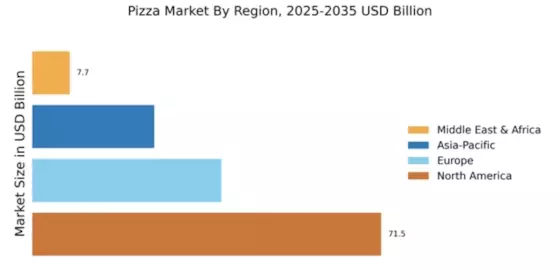
North America continues to lead The Pizza, holding a significant share of 71.54% in 2024. The region's growth is driven by a robust demand for convenience foods, increasing consumer preference for delivery and takeout options, and a diverse range of pizza offerings. Regulatory support for food safety and quality standards further enhances market stability and growth potential. The competitive landscape is characterized by major players such as Domino's Pizza, Pizza Hut, and Papa John's, which dominate the market with innovative menu options and aggressive marketing strategies. The U.S. remains the largest market, with a strong presence of both national chains and local pizzerias, ensuring a vibrant and competitive environment.

Europe : Emerging Trends in Pizza Consumption

Europe's pizza market is experiencing notable growth, with a market size of €38.77 billion. Factors such as increasing urbanization, changing lifestyles, and a growing preference for international cuisines are driving demand. Additionally, health-conscious trends are prompting pizzerias to offer more organic and gluten-free options, aligning with consumer preferences. Regulatory frameworks in the EU promote food safety and quality, further supporting market expansion. Leading countries in this region include Italy, the birthplace of pizza, and the UK, which has seen a surge in pizza consumption. Major players like Domino's and Pizza Hut are expanding their footprint, while local brands are innovating to capture market share. The competitive landscape is vibrant, with a mix of traditional and modern pizzerias catering to diverse consumer tastes.

Asia-Pacific : Rapid Growth in Pizza Demand

The Asia-Pacific pizza market is on an upward trajectory, with a market size of $25.0 billion. This growth is fueled by rising disposable incomes, urbanization, and a growing appetite for Western fast food. The region is witnessing an increase in pizza consumption, particularly among younger demographics who favor convenience and variety. Regulatory initiatives aimed at improving food safety standards are also contributing to market growth. Countries like Japan, Australia, and China are leading the charge, with a mix of international chains and local brands competing for market share. Key players such as Domino's and Pizza Hut are expanding their operations, while local pizzerias are innovating to cater to regional tastes. The competitive landscape is dynamic, with a focus on delivery services and unique flavor offerings.

Middle East and Africa : Emerging Market for Pizza

The Middle East and Africa (MEA) pizza market is gradually emerging, with a market size of $7.68 billion. Factors such as increasing urbanization, a young population, and a growing middle class are driving demand for pizza. The region is witnessing a shift in consumer preferences towards fast food and convenience dining, supported by regulatory frameworks that promote food safety and quality standards. Leading countries in this region include South Africa and the UAE, where international pizza chains are expanding their presence. Key players like Domino's and local brands are competing to capture the growing market. The competitive landscape is evolving, with a focus on delivery services and menu innovation to cater to diverse consumer tastes.

Key Players and Competitive Insights

The Pizza exhibits a dynamic competitive landscape characterized by rapid innovation and evolving consumer preferences. Key players such as Domino's Pizza (US), Pizza Hut (US), and Papa John's (US) are at the forefront, each employing distinct strategies to capture market share. Domino's Pizza (US) emphasizes digital transformation, leveraging advanced technology to enhance customer experience and streamline operations. Pizza Hut (US), on the other hand, focuses on menu diversification and regional expansion, aiming to cater to local tastes while maintaining its global brand identity. Meanwhile, Papa John's (US) is concentrating on sustainability initiatives, which resonate with environmentally conscious consumers, thereby shaping the competitive environment through a blend of innovation and responsiveness to market demands.

In terms of business tactics, companies are increasingly localizing manufacturing and optimizing supply chains to enhance efficiency and reduce costs. The competitive structure of the market appears moderately fragmented, with several players vying for dominance. This fragmentation allows for a diverse range of offerings, yet the collective influence of major players like Domino's Pizza (US) and Pizza Hut (US) remains substantial, as they set trends that smaller competitors often follow.

In November 2025, Domino's Pizza (US) announced the launch of its new AI-driven ordering system, which aims to personalize customer interactions and improve order accuracy. This strategic move is likely to enhance customer satisfaction and operational efficiency, positioning the company favorably against its competitors. The integration of AI technology not only streamlines the ordering process but also provides valuable data insights that can inform future marketing strategies.

In October 2025, Pizza Hut (US) unveiled a new line of plant-based pizzas, responding to the growing demand for vegetarian and vegan options. This initiative reflects a broader trend towards health-conscious eating and aligns with consumer preferences for sustainable food choices. By diversifying its menu, Pizza Hut (US) not only attracts a wider customer base but also strengthens its brand image as a forward-thinking player in the market.

In September 2025, Papa John's (US) entered a partnership with a leading sustainability organization to enhance its supply chain practices. This collaboration aims to reduce the environmental impact of its operations and promote sustainable sourcing of ingredients. Such strategic alliances are increasingly vital in today's market, as consumers prioritize brands that demonstrate a commitment to sustainability and ethical practices.

As of December 2025, the Pizza Market is witnessing significant trends such as digitalization, sustainability, and the integration of AI technologies. These trends are reshaping competitive dynamics, with companies increasingly forming strategic alliances to bolster their market positions. The shift from price-based competition to a focus on innovation, technology, and supply chain reliability is evident. Moving forward, competitive differentiation will likely hinge on the ability to adapt to these trends, with companies that prioritize innovation and sustainability poised to lead the market.

Key Companies in the Pizza Market market include

Industry Developments

The Pizza Market has recently witnessed significant developments, with notable companies like Domino's Pizza Market and Papa John's continuing to expand their market presence through innovative delivery solutions and menu diversification.

In October 2023, Domino's Pizza Market announced a new partnership with a technology provider to enhance its online ordering system, responding to the growing demand for convenient and efficient service.

In September 2023, Pizza Market Hut launched a sustainability initiative aimed at reducing its carbon footprint and introducing more plant-based menu options, aligning with the increasing consumer preference for environmentally friendly dining choices.

Furthermore, in August 2023, Papa Murphy's reported an impressive growth in sales attributed to its focus on fresh and customizable pizzas, which has gained popularity amongst health-conscious consumers.

Mergers and acquisitions remain a topic of interest, with Marco's Pizza Market completing its acquisition of a regional chain, aimed at expanding its market share, which was announced in July 2023.

These developments reflect a dynamic and evolving landscape within the Pizza Market, as companies adapt to changing consumer preferences and competitive pressures.

The overall market is expected to continue growing, driven by innovations and strategic expansions by key players in the industry.


Future Outlook

Pizza Market Future Outlook

The Pizza is projected to grow at a 6.54% CAGR from 2024 to 2035, driven by increasing consumer demand for convenience, diverse flavors, and health-conscious options.

New opportunities lie in:

  • Expansion of plant-based pizza offerings to capture health-conscious consumers.
  • Implementation of AI-driven inventory management systems for efficiency.
  • Development of subscription-based pizza delivery services for consistent revenue streams.

By 2035, the pizza market is expected to thrive, reflecting robust growth and evolving consumer preferences.

Market Segmentation

Pizza Market Crust Type Outlook

  • Thin Crust
  • Thick Crust
  • Stuffed Crust
  • Gluten-Free Crust
  • Cauliflower Crust

Pizza Market Pizza Type Outlook

  • Neapolitan
  • New York Style
  • Chicago Style
  • Sicilian
  • California Style

Pizza Market Service Type Outlook

  • Delivery
  • Takeout
  • Dine-In
  • Frozen
  • Food Truck

Pizza Market Topping Preference Outlook

  • Vegetarian
  • Meat Lovers
  • Seafood
  • Cheese Only
  • Gourmet

Pizza Market Consumer Demographics Outlook

  • Families
  • Young Adults
  • Students
  • Professionals
  • Health-Conscious Consumers

Report Scope

MARKET SIZE 2024 142567.9(USD Billion)
MARKET SIZE 2025 151894.73(USD Billion)
MARKET SIZE 2035 286254.38(USD Billion)
COMPOUND ANNUAL GROWTH RATE (CAGR) 6.54% (2024 - 2035)
REPORT COVERAGE Revenue Forecast, Competitive Landscape, Growth Factors, and Trends
BASE YEAR 2024
Market Forecast Period 2025 - 2035
Historical Data 2019 - 2024
Market Forecast Units USD Billion
Key Companies Profiled Domino's Pizza (US), Pizza Hut (US), Papa John's (US), Little Caesars (US), Sbarro (US), California Pizza Kitchen (US), Papa Murphy's (US), Round Table Pizza (US), Blaze Pizza (US)
Segments Covered Pizza Type, Crust Type, Topping Preference, Service Type, Consumer Demographics
Key Market Opportunities Integration of plant-based ingredients to cater to evolving consumer preferences in the Pizza Market.
Key Market Dynamics Rising consumer preference for plant-based options drives innovation and competition within the pizza market.
Countries Covered North America, Europe, APAC, South America, MEA

Market Highlights

Author
Snehal Singh
Assistant Manager - Research

High acumen in analyzing complex macro & micro markets with more than 6 years of work experience in the field of market research. By implementing her analytical skills in forecasting and estimation into market research reports, she has expertise in Packaging, Construction, and Equipment domains. She handles a team size of 20-25 resources and ensures smooth running of the projects, associated marketing activities, and client servicing.

Leave a Comment

FAQs

What was at a the expected Market Was at a the Pizza Market in 2024?

The Pizza Market was 142567.90 Billion USD by 2024

Download Free Sample

Kindly complete the form below to receive a free sample of this Report

Compare Licence

×
Features License Type
Single User Multiuser License Enterprise User
Price $4,950 $5,950 $7,250
Maximum User Access Limit 1 User Upto 10 Users Unrestricted Access Throughout the Organization
Free Customization
Direct Access to Analyst
Deliverable Format
Platform Access
Discount on Next Purchase 10% 15% 15%
Printable Versions