×
Request Free Sample ×

Kindly complete the form below to receive a free sample of this Report

* Please use a valid business email

Leading companies partner with us for data-driven Insights

clients tt-cursor
Hero Background

GCC Halitosis Treatment Market

ID: MRFR/HC/54792-HCR
200 Pages
Rahul Gotadki
October 2025

GCC Halitosis Treatment Market Research Report By Indication (Respiratory, Liver, Kidney, Gastrointestinal, Systemic, Others), By Diagnostic Tests (Halimeter, Gas Chromatography, BANA Test, -Galactosidase Activity Assay, Others) and By Drug Treatment (Antacids, Antiseptics, Ranitidine, Others)- Forecast to 2035

Share:
Download PDF ×

We do not share your information with anyone. However, we may send you emails based on your report interest from time to time. You may contact us at any time to opt-out.

GCC Halitosis Treatment Market Infographic
Purchase Options

GCC Halitosis Treatment Market Summary

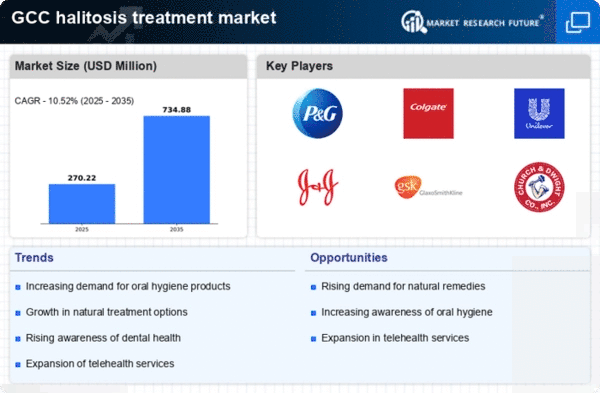
As per MRFR analysis, the GCC halitosis treatment market size was estimated at 244.5 USD Million in 2024. The GCC halitosis treatment market is projected to grow from 270.22 USD Million in 2025 to 734.88 USD Million by 2035, exhibiting a compound annual growth rate (CAGR) of 10.52% during the forecast period 2025 - 2035.

Key Market Trends & Highlights

The GCC halitosis treatment market is experiencing a shift towards natural products and preventive care solutions.

  • The largest segment in the GCC halitosis treatment market is the over-the-counter products, while the fastest-growing segment is the natural remedies.
  • Technological integration in oral care is becoming increasingly prevalent, enhancing the effectiveness of halitosis treatments.
  • There is a rising demand for preventive care solutions, reflecting a broader trend towards health and wellness in the region.
  • Key market drivers include growing awareness of oral hygiene and rising disposable incomes, which are influencing consumer choices.

Market Size & Forecast

2024 Market Size 244.5 (USD Million)
2035 Market Size 734.88 (USD Million)
CAGR (2025 - 2035) 10.52%

Major Players

Procter & Gamble (US), Colgate-Palmolive (US), Unilever (GB), Johnson & Johnson (US), GlaxoSmithKline (GB), Church & Dwight (US), Henkel (DE), Listerine (US)

GCC Halitosis Treatment Market Trends

The halitosis treatment market is experiencing notable growth, driven by increasing awareness of oral hygiene and the rising prevalence of halitosis among various demographics. In the GCC region, cultural factors and social interactions significantly influence the demand for effective treatments. Consumers are becoming more conscious of their breath freshness, leading to a surge in the adoption of specialized oral care products. This trend is further supported by the availability of innovative solutions, including mouthwashes, chewing gums, and breath freshening sprays, which cater to diverse consumer preferences. Moreover, the halitosis treatment market is witnessing advancements in product formulations, with a focus on natural ingredients and holistic approaches. As consumers seek safer and more effective options, manufacturers are responding by developing products that align with these preferences. The integration of technology in oral care, such as mobile applications for tracking oral health, is also emerging as a potential driver for market growth. Overall, the halitosis treatment market is poised for expansion, reflecting changing consumer attitudes and the ongoing evolution of oral care solutions.

Rising Demand for Natural Products

There is a growing preference for natural and organic ingredients in halitosis treatments. Consumers are increasingly aware of the potential side effects of synthetic chemicals, leading to a shift towards products that utilize herbal extracts and essential oils. This trend is particularly pronounced in the GCC region, where traditional remedies often influence consumer choices.

Technological Integration in Oral Care

The incorporation of technology into oral care is becoming more prevalent. Mobile applications that assist users in monitoring their oral hygiene routines and provide personalized recommendations are gaining traction. This trend reflects a broader movement towards digital health solutions, which may enhance consumer engagement and adherence to treatment regimens.

Increased Focus on Preventive Care

There is a noticeable shift towards preventive care in the halitosis treatment market. Consumers are seeking products that not only address existing issues but also prevent future occurrences. This proactive approach is fostering the development of comprehensive oral care solutions that emphasize long-term health benefits.

GCC Halitosis Treatment Market Drivers

Rising Disposable Incomes

The rise in disposable incomes across the GCC countries is significantly impacting the halitosis treatment market. As consumers experience increased financial flexibility, they are more inclined to invest in personal care products, including those targeting oral health. This trend is particularly evident in urban areas where lifestyle changes have led to a greater emphasis on personal grooming and hygiene. Market analysis suggests that the halitosis treatment market could see a revenue increase of up to 15% in the next few years, driven by consumers' willingness to spend on premium oral care products. This shift indicates a growing market potential for innovative solutions that cater to the needs of health-conscious individuals.

Expansion of Retail Channels

The expansion of retail channels in the GCC region is a crucial driver for the halitosis treatment market. With the growth of e-commerce and the establishment of specialized health and wellness stores, consumers now have greater access to a variety of oral care products. This increased availability facilitates consumer choice and encourages the exploration of different treatment options for halitosis. Market trends suggest that online sales of oral care products are expected to grow by 25% over the next few years, further enhancing the reach of halitosis treatment solutions. This trend indicates a promising future for brands that adapt to the evolving retail landscape.

Emphasis on Health and Wellness

The growing emphasis on health and wellness in the GCC region is significantly influencing the halitosis treatment market. As consumers prioritize their overall well-being, there is a heightened focus on maintaining good oral health as a component of holistic wellness. This trend is driving demand for products that not only address halitosis but also contribute to overall oral hygiene. Market data suggests that the halitosis treatment market could experience a growth rate of around 10% annually, as consumers increasingly seek out solutions that align with their health-conscious lifestyles. This shift presents opportunities for brands to innovate and develop products that cater to this evolving consumer mindset.

Growing Awareness of Oral Hygiene

The increasing awareness of oral hygiene among consumers in the GCC region is a pivotal driver for the halitosis treatment market. Educational campaigns and health initiatives have highlighted the importance of maintaining oral health, which directly correlates with the prevalence of halitosis. As individuals become more informed about the causes and effects of bad breath, the demand for effective treatment options rises. This trend is reflected in market data, indicating a projected growth rate of approximately 8% annually in the halitosis treatment market. Consumers are actively seeking products that not only address bad breath but also promote overall oral health, thereby expanding the market for various treatment solutions.

Influence of Social Media and Marketing

The influence of social media and targeted marketing strategies is reshaping consumer perceptions and choices in the halitosis treatment market. With the proliferation of digital platforms, brands are leveraging social media to educate consumers about halitosis and promote their products. This has led to a surge in product visibility and consumer engagement, particularly among younger demographics. As a result, the market is witnessing a shift towards more innovative and appealing treatment options. Data indicates that brands utilizing social media marketing strategies have experienced a sales increase of approximately 20% in the halitosis treatment market, underscoring the effectiveness of these modern marketing approaches.

Market Segment Insights

By Indication: Gastrointestinal (Largest) vs. Respiratory (Fastest-Growing)

In the GCC halitosis treatment market, the indication segment displays a varied market share distribution. The Gastrointestinal category holds a substantial portion of the market, recognized for its significant role in contributing to halitosis. Following this, the Respiratory segment shows a growing presence, although it currently constitutes a smaller share. Other segments like Liver, Kidney, and Systemic provide considerable support, but the dominance of Gastrointestinal remains clear. Growth in the GCC halitosis treatment market is influenced by increasing awareness about the connection between oral health and overall systemic conditions. The Respiratory segment, noted for its rapid development, is fueled by rising incidences of respiratory-related halitosis. Moreover, evolving consumer preferences and advancements in treatment technologies are expected to further elevate the market dynamics, particularly for the Respiratory segment.

Gastrointestinal (Dominant) vs. Respiratory (Emerging)

The Gastrointestinal segment stands as the dominant force within the GCC halitosis treatment market, characterized by a broad range of treatment options targeting digestive health as a primary source of bad breath. It encompasses several therapeutic interventions that resonate well with patient needs, establishing a solid market foundation. Conversely, the Respiratory segment, while currently emerging, is rapidly gaining traction as consumers increasingly recognize the relationship between respiratory health and halitosis. This segment is experiencing strong growth driven by innovative treatments and a rising focus on comprehensive healthcare, positioning it for future expansion. Both segments play integral roles in shaping treatment narratives and catering to the diverse needs of consumers.

By Diagnostic Tests: Halimeter (Largest) vs. Gas Chromatography (Fastest-Growing)

In the GCC halitosis treatment market, the Diagnostic Tests segment is characterized by diverse methodologies, with Halimeter holding a significant market share due to its widespread adoption for breath measurement. The Gas Chromatography method has been gaining traction, particularly among specialized clinics, offering precise quantification of volatile compounds associated with halitosis. Other tests like BANA and Β-Galactosidase Activity Assay also contribute to the segment but with smaller shares, resulting in an overall varied market landscape. Recent trends indicate a robust growth trajectory for the Diagnostic Tests segment within the GCC halitosis treatment market. Innovations in testing technology and increasing consumer awareness about oral health are key drivers, leading to heightened demand for accurate halitosis assessment tools. The rapid development and application of Gas Chromatography are notably appealing to healthcare providers aiming for diagnostic precision, further enhancing its market position as the fastest-growing option in this segment.

BANA Test (Dominant) vs. Β-Galactosidase Activity Assay (Emerging)

The BANA Test has established itself as a dominant player in the Diagnostic Tests sector, providing a reliable method for detecting halitosis-causing bacteria and offering actionable insights for treatment. Its popularity stems from its efficiency and ease of use, making it a preferred choice among dental professionals in the GCC halitosis treatment market. On the other hand, the Β-Galactosidase Activity Assay is an emerging testing method that is gaining attention for its potential to identify specific microbial activities associated with halitosis. While still in the growth phase, it represents an innovative approach that may complement existing methods, portraying a future trend towards more nuanced and targeted testing solutions.

By Drug Treatment: Antacids (Largest) vs. Antiseptics (Fastest-Growing)

In the GCC halitosis treatment market, the drug treatment segment exhibits diverse offerings, with antacids leading the market due to their widespread usage and acceptance. Antacids command a significant share, attributed to their effectiveness in alleviating discomfort and enhancing oral hygiene, essential for managing halitosis. Antiseptics, on the other hand, are gaining traction as more consumers recognize their role in combating bacterial growth, thus driving market interest and sales. Growth trends indicate a noticeable shift towards antiseptics as the fastest-growing category within this segment. The increasing consumer awareness of oral health and the proliferation of preventive healthcare contribute to this trend. Moreover, innovations in antiseptic formulations and the rising demand for natural remedies further bolster their market presence, encouraging manufacturers to invest in this evolving segment.

Antacids: Dominant vs. Antiseptics: Emerging

Antacids are characterized by their ability to neutralize stomach acid, providing relief from digestive issues while simultaneously promoting better oral health. Their extensive availability and established presence in the market make them a go-to choice for consumers dealing with halitosis. Conversely, antiseptics are emerging as a vital segment, leveraging advancements in formulation to enhance efficacy against harmful oral bacteria. As consumers become more health-conscious, the shift towards antiseptics is evident, driven by the demand for products that not only treat symptoms but also address the root causes of halitosis. Together, these segments illustrate the dynamic nature of the drug treatment offerings in the GCC halitosis treatment market.

Get more detailed insights about GCC Halitosis Treatment Market

Key Players and Competitive Insights

The halitosis treatment market exhibits a dynamic competitive landscape characterized by a blend of innovation, strategic partnerships, and regional expansion. Key players such as Procter & Gamble (US), Colgate-Palmolive (US), and Unilever (GB) are actively shaping the market through their diverse product offerings and marketing strategies. Procter & Gamble (US) focuses on leveraging advanced research to enhance product efficacy, while Colgate-Palmolive (US) emphasizes sustainability in its product development. Unilever (GB) is increasingly investing in digital marketing strategies to engage consumers effectively, indicating a shift towards a more consumer-centric approach. Collectively, these strategies contribute to a competitive environment that is both concentrated and moderately fragmented, with each player vying for market share through unique value propositions.

In terms of business tactics, companies are increasingly localizing manufacturing to reduce costs and enhance supply chain efficiency. This approach not only minimizes logistical challenges but also allows for quicker response times to market demands. The competitive structure of the halitosis treatment market appears to be moderately fragmented, with several key players holding substantial market shares. The influence of these companies is significant, as they collectively drive innovation and set industry standards, thereby shaping consumer expectations and preferences.

In October 2025, Procter & Gamble (US) announced a partnership with a leading technology firm to integrate AI-driven analytics into its product development process. This strategic move is poised to enhance the company's ability to tailor products to specific consumer needs, thereby improving customer satisfaction and loyalty. The integration of AI technology signifies a forward-thinking approach that could redefine product innovation in the halitosis treatment sector.

In September 2025, Colgate-Palmolive (US) launched a new line of eco-friendly mouthwashes, reinforcing its commitment to sustainability. This initiative not only aligns with growing consumer demand for environmentally responsible products but also positions the company as a leader in sustainable practices within the oral care market. The launch is expected to attract environmentally conscious consumers, thereby expanding Colgate-Palmolive's market reach.

In August 2025, Unilever (GB) unveiled a digital marketing campaign aimed at promoting its latest halitosis treatment products. This campaign utilizes social media platforms to engage younger demographics, reflecting a strategic pivot towards digital engagement. By harnessing the power of social media, Unilever aims to enhance brand visibility and foster a community around its products, which could lead to increased sales and brand loyalty.

As of November 2025, the halitosis treatment market is witnessing trends such as digitalization, sustainability, and the integration of AI technologies. Strategic alliances among key players are becoming increasingly prevalent, facilitating knowledge sharing and resource optimization. Looking ahead, competitive differentiation is likely to evolve, with a pronounced shift from price-based competition to a focus on innovation, technological advancements, and supply chain reliability. This evolution suggests that companies will need to prioritize not only product quality but also the overall consumer experience to maintain a competitive edge.


Key Companies in the GCC Halitosis Treatment Market market include

Industry Developments

In the GCC Halitosis Treatment Market, recent developments have underscored the growing focus on oral health, with several companies enhancing their product portfolios. GlaxoSmithKline, Colgate-Palmolive, and Procter and Gamble have expanded their offerings to include innovative breath freshening solutions, reflecting an increased consumer demand for effective treatments. 

Notably, in April 2023, Unilever announced a strategic partnership with local distributors to enhance distribution channels for its Oral B range, strengthening market access in the GCC. Furthermore, in September 2023, Church and Dwight reported a significant increase in sales attributed to their newly launched Listerine variants catering specifically to the GCC market’s unique consumer preferences. 

Over the past few years, the region has witnessed a marked increase in awareness regarding oral hygiene, leading to an increase in market valuation as consumers are investing more in oral care products. This surge has positively impacted various companies, including Henkel and Nestlé, as they develop targeted marketing strategies tailored to the GCC population. The competitive landscape continues to evolve, with focused Research and Development efforts aimed at addressing specific regional challenges related to halitosis treatment.

Future Outlook

GCC Halitosis Treatment Market Future Outlook

The Halitosis Treatment Market is projected to grow at a 10.52% CAGR from 2024 to 2035, driven by increasing awareness and demand for oral hygiene solutions.

New opportunities lie in:

  • Development of subscription-based oral care products
  • Expansion of telehealth consultations for halitosis treatment
  • Investment in innovative breath-freshening technologies

By 2035, the market is expected to achieve substantial growth, driven by innovative solutions and increased consumer awareness.

Market Segmentation

GCC Halitosis Treatment Market Indication Outlook

  • Respiratory
  • Liver
  • Kidney
  • Gastrointestinal
  • Systemic
  • Others

GCC Halitosis Treatment Market Drug Treatment Outlook

  • Antacids
  • Antiseptics
  • Ranitidine
  • Others

GCC Halitosis Treatment Market Diagnostic Tests Outlook

  • Halimeter
  • Gas Chromatography
  • BANA Test
  • Β-Galactosidase Activity Assay
  • Others

Report Scope

MARKET SIZE 2024244.5(USD Million)
MARKET SIZE 2025270.22(USD Million)
MARKET SIZE 2035734.88(USD Million)
COMPOUND ANNUAL GROWTH RATE (CAGR)10.52% (2024 - 2035)
REPORT COVERAGERevenue Forecast, Competitive Landscape, Growth Factors, and Trends
BASE YEAR2024
Market Forecast Period2025 - 2035
Historical Data2019 - 2024
Market Forecast UnitsUSD Million
Key Companies Profiled["Procter & Gamble (US)", "Colgate-Palmolive (US)", "Unilever (GB)", "Johnson & Johnson (US)", "GlaxoSmithKline (GB)", "Church & Dwight (US)", "Henkel (DE)", "Listerine (US)"]
Segments CoveredIndication, Diagnostic Tests, Drug Treatment
Key Market OpportunitiesEmerging natural ingredients and innovative delivery systems enhance consumer appeal in the halitosis treatment market.
Key Market DynamicsRising consumer awareness drives demand for innovative halitosis treatments in the GCC market.
Countries CoveredGCC

Leave a Comment

FAQs

What is the expected market size of the GCC Halitosis Treatment Market in 2024?

The GCC Halitosis Treatment Market is expected to be valued at 300.0 USD Million in 2024.

How much is the GCC Halitosis Treatment Market projected to be worth by 2035?

By 2035, the market is projected to reach a value of 1000.0 USD Million.

What is the expected compound annual growth rate (CAGR) for the GCC Halitosis Treatment Market from 2025 to 2035?

The expected CAGR for the market from 2025 to 2035 is 11.567 percent.

Which segment of the GCC Halitosis Treatment Market will have the highest valuation in 2035?

The Respiratory segment is expected to have the highest valuation of 300.0 USD Million in 2035.

What are some of the key players in the GCC Halitosis Treatment Market?

Major players in the market include GlaxoSmithKline, TheraBreath, LISTERINE, and Unilever.

What is the market size for the Gastrointestinal indication in 2024?

The market size for the Gastrointestinal indication is valued at 75.0 USD Million in 2024.

What growth opportunities exist in the GCC Halitosis Treatment Market?

There are significant growth opportunities driven by increasing awareness of oral hygiene and rising prevalence of halitosis.

Which indication is expected to experience the largest growth rate in the GCC Halitosis Treatment Market?

The Liver indication is anticipated to experience substantial growth, with a projected increase to 200.0 USD Million by 2035.

What is the expected market value for the Kidney indication in 2035?

The expected market value for the Kidney indication by 2035 is 150.0 USD Million.

How does the GCC Halitosis Treatment Market respond to regional demands?

The market is adapting to regional demands by innovating and providing targeted treatment solutions based on prevalent local health issues.

Download Free Sample

Kindly complete the form below to receive a free sample of this Report

Compare Licence

×
Features License Type
Single User Multiuser License Enterprise User
Price $4,950 $5,950 $7,250
Maximum User Access Limit 1 User Upto 10 Users Unrestricted Access Throughout the Organization
Free Customization
Direct Access to Analyst
Deliverable Format
Platform Access
Discount on Next Purchase 10% 15% 15%
Printable Versions