Hydrocephalus Market Research Report Information by Type (Congenital Hydrocephalus, Acquired Hydrocephalus, Normal-Pressure Hydrocephalus, Ex-Vacuo Hydrocephalus), Diagnostic (CT scan – head, MRI, Head Ultrasound), Treatment (Surgery – Shunt Insertion, Ventriculostomy, Medication), End User (Hospitals & Clinics, Diagnostic Centres, Academic Institutions and Research Organizations) and Region - Forecast till 2035
Forecast Period
2025 - 2035
CAGR
5.77%
2024 Market Size
$ 0.57 Billion
2035 Market Size
$ 1.06 Billion
Medical Device● Updated July 22, 2026Report ID: MRFR/MED/1187-CR|Pages: 139|Author: Nidhi Mandole, Rahul Gotadki
Hydrocephalus Market Summary
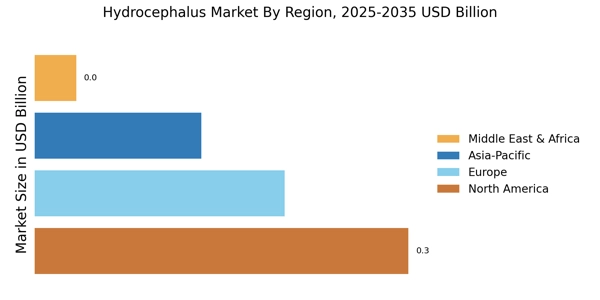
The Global Hydrocephalus Market size was valued at USD 0.5712 Billion in 2024, and the market is projected to grow from USD 0.6041 Billion in 2025 to USD 1.059 Billion by 2035, registering a CAGR of 5.77% during the forecast period 2025–2035. North America led the market in 2024 with over 52.52% share, generating around USD 0.3 Billion in revenue. The increasing incidence of hydrocephalus among newborns, adults, and elderly populations is driving market growth. Improved diagnostic capabilities, rising neurological disorder awareness, and advancements in treatment options are increasing patient identification, creating higher demand for hydrocephalus management devices and therapies. According to IHME data, neurological disorders remain among the leading causes of global disease burden, affecting over 3.4 billion people worldwide in 2021. The rising burden of neurological conditions supports increased healthcare focus on early diagnosis, advanced treatment approaches, and innovative management solutions for disorders such as hydrocephalus. IHME – Global Health Data Exchange
Key Market Trends & Highlights
The Hydrocephalus Market is experiencing notable growth driven by technological advancements and increased awareness.
Congenital Hydrocephalus dominated the type segment with approximately 62% market share in 2024, driven by early diagnosis and treatment demand.
Shunt Insertion Procedure led the surgery segment with around 68% share in 2024, supported by widespread clinical adoption.
North America leads the market, accounting for over 52.52% of global revenue in 2024 with strong healthcare infrastructure.
Europe market was valued at approximately USD 0.17 Billion in 2024, representing the second-largest regional market with around 30% share.
Market Size & Forecast
2024 Market Size
0.5712 (USD Billion)
2035 Market Size
1.059 (USD Billion)
CAGR (2025 - 2035)
5.77%
Major Players
Companies such as Medtronic (US), Johnson & Johnson (US), Stryker (US), Boston Scientific (US), Abbott Laboratories (US), B. Braun Melsungen AG (DE), Integra LifeSciences (US), NeuroPace (US) are some of the major participants in the global market.
Our Impact
Enabled $4.3B Revenue Impact for Fortune 500 and Leading Multinationals
Partnering with 2000+ Global Organizations Each Year
30K+ Citations by Top-Tier Firms in the Industry
Hydrocephalus Market Trends
The Hydrocephalus Market is currently experiencing notable transformations driven by advancements in medical technology and increasing awareness of neurological disorders. The rise in diagnostic capabilities, particularly through imaging techniques, has enhanced the identification of hydrocephalus cases, leading to earlier interventions. Furthermore, the growing prevalence of conditions that contribute to hydrocephalus, such as brain tumors and congenital malformations, underscores the necessity for effective treatment options.
As healthcare systems evolve, there is a concerted effort to improve patient outcomes through innovative therapies and surgical techniques. In addition, the market is influenced by a surge in research initiatives aimed at understanding the underlying mechanisms of the condition. This research is likely to foster the development of novel treatment modalities, including minimally invasive procedures and advanced shunt technologies.
The collaboration between academic institutions and industry stakeholders appears to be pivotal in driving these innovations. Moreover, the increasing focus on patient-centered care suggests a shift towards personalized treatment plans, which may enhance the overall management of hydrocephalus. As the market continues to evolve, stakeholders must remain vigilant to emerging trends and adapt strategies accordingly.
Technological Advancements in Treatment
The market is witnessing a wave of technological innovations that enhance treatment efficacy. New surgical techniques and devices are being developed, which may lead to improved patient outcomes. Minimally invasive procedures are gaining traction, potentially reducing recovery times and complications associated with traditional surgeries.
Medtronic continues to strengthen hydrocephalus treatment through advanced neurosurgical technologies and innovative cerebrospinal fluid management solutions. The company’s Strata adjustable valve technology provides programmable pressure control, supporting personalized treatment approaches. Medtronic’s focus on improving shunt performance and reducing complications highlights ongoing innovation in hydrocephalus care, contributing to enhanced patient outcomes and adoption of advanced treatment devices.
Increased Awareness and Education
There is a growing emphasis on raising awareness about hydrocephalus among healthcare professionals and the general public. Educational campaigns are likely to improve early diagnosis and treatment, which could positively impact patient prognosis. This trend suggests a shift towards proactive management of the condition.
Johnson & Johnson has expanded its healthcare portfolio through strategic acquisitions and advanced medical innovations, strengthening its position in neurological healthcare. The company invests significantly in research-driven solutions, supported by regulatory milestones across its medical technology portfolio. These developments improve access to advanced therapies and contribute to greater awareness, diagnosis, and management of complex neurological conditions, including hydrocephalus.
Research and Development Initiatives
Ongoing research efforts are crucial in the market, focusing on understanding the condition's complexities. Collaborative projects between research institutions and healthcare providers may lead to breakthroughs in treatment options. This trend indicates a commitment to advancing knowledge and improving therapeutic strategies.
Stryker continues advancing neurosurgical care through innovative technologies and clinically supported product development. The company’s neurotechnology portfolio includes advanced surgical instruments and solutions designed to improve precision and patient outcomes. Regulatory clearances for its medical devices support wider clinical adoption, strengthening research-driven approaches and encouraging continued development of improved hydrocephalus treatment solutions.
Hydrocephalus Market Drivers
Rising Incidence of Hydrocephalus
The rising incidence of hydrocephalus is a notable driver in the Hydrocephalus Industry. Recent data indicates that the prevalence of this condition is increasing, particularly among newborns and the elderly. This trend is attributed to factors such as improved diagnostic techniques and greater awareness among healthcare professionals. As more cases are identified, the demand for effective treatment options and management strategies is likely to grow. This surge in incidence not only highlights the need for innovative therapies but also emphasizes the importance of ongoing research and development within the market. Consequently, healthcare providers are compelled to invest in advanced medical technologies and treatment modalities to address this growing patient population.
Research published through PubMed highlights that hydrocephalus affects approximately 0.5–0.8 per 1,000 live births globally, making it one of the most common neurological conditions requiring pediatric neurosurgical intervention. Increasing recognition of congenital and acquired hydrocephalus cases, combined with improved diagnostic practices, is supporting the growing demand for advanced shunt systems, minimally invasive procedures, and long-term disease management solutions.
Advancements in Surgical Techniques
Advancements in surgical techniques represent a critical driver in the Hydrocephalus Industry. Innovations such as minimally invasive procedures and the development of new shunt systems have transformed the landscape of hydrocephalus treatment. These advancements not only enhance patient outcomes but also reduce recovery times, thereby increasing the overall efficiency of healthcare systems. For instance, the introduction of endoscopic third ventriculostomy has shown promising results in managing hydrocephalus, leading to a shift in treatment paradigms. As surgical techniques continue to evolve, the market is likely to witness a surge in demand for these advanced solutions, ultimately improving the quality of care for patients.
World Bank health indicators show continuous improvements in healthcare access, with global current health expenditure reaching approximately 10% of global GDP in recent years. Rising healthcare investments enable hospitals to adopt advanced surgical infrastructure, modern neurosurgical equipment, and improved treatment technologies, supporting wider adoption of innovative hydrocephalus procedures such as minimally invasive techniques and advanced cerebrospinal fluid management systems.
Emerging Technologies in Diagnostics
Emerging technologies in diagnostics are playing a pivotal role in shaping the Hydrocephalus Industry. Innovations such as advanced imaging techniques, including MRI and CT scans, have significantly improved the accuracy of hydrocephalus diagnosis. These technologies enable healthcare providers to identify the condition at earlier stages, which is crucial for effective management. Additionally, the integration of artificial intelligence in diagnostic processes is streamlining patient assessments and enhancing decision-making capabilities. As these technologies become more widely adopted, the market is expected to experience growth driven by the demand for precise diagnostic tools that facilitate timely interventions and improve patient outcomes.
Increased Focus on Pediatric Healthcare
An increased focus on pediatric healthcare is emerging as a vital driver in the Hydrocephalus Industry. With a significant proportion of hydrocephalus cases occurring in children, there is a growing recognition of the need for specialized pediatric care. This focus has led to the establishment of dedicated pediatric neurology departments and specialized clinics, which are better equipped to address the unique challenges associated with treating hydrocephalus in younger populations. Furthermore, initiatives aimed at educating parents and caregivers about the condition are gaining traction, thereby fostering early diagnosis and intervention. As pediatric healthcare continues to evolve, the Hydrocephalus Market is likely to benefit from enhanced treatment options and increased awareness.
Growing Investment in Healthcare Infrastructure
Growing investment in healthcare infrastructure is a significant driver influencing the Hydrocephalus Industry. Governments and private entities are increasingly allocating resources to enhance healthcare facilities, particularly in regions with high incidences of hydrocephalus. This investment is crucial for improving access to diagnostic tools and treatment options, which are essential for effective management of the condition. Enhanced healthcare infrastructure facilitates the implementation of advanced technologies and training for healthcare professionals, thereby fostering a more robust healthcare environment. As a result, the market is poised for growth, as improved infrastructure directly correlates with better patient outcomes and increased demand for hydrocephalus management solutions.
Market Segment Insights
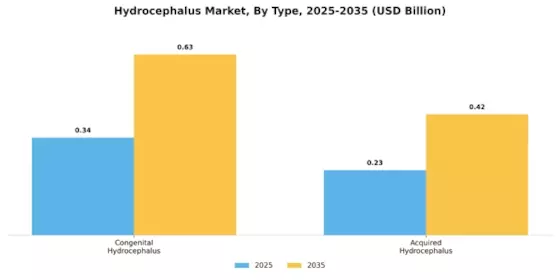
By Type: Congenital Hydrocephalus (Largest) vs. Acquired Hydrocephalus (Fastest-Growing)
In the Hydrocephalus Market, Congenital Hydrocephalus holds the largest market share of 62%, attributed to the early diagnosis and availability of treatment options. This condition, which is present at birth and often associated with genetic factors, has effectively shaped a significant percentage of the market. On the other hand, Acquired Hydrocephalus, while having a smaller share, has been increasing as more cases related to head injuries, infections, or tumors are being diagnosed. The awareness of acquired conditions is driving heightened demand for treatment solutions.
Abbott Laboratories continues supporting neurological care through advanced medical device innovations and global healthcare solutions. The company’s focus on implantable technologies and patient-centric treatment approaches strengthens the availability of advanced management options for congenital hydrocephalus cases, supporting improved clinical outcomes and long-term disease management.
By Diagnostic: MRI (Largest) vs. CT Scan (Fastest-Growing)
In the Hydrocephalus Market, the diagnostic segment is primarily characterized by three key modalities: MRI, CT Scan, and Head Ultrasound. Among these, MRI holds the largest market share of 55% due to its high accuracy and detailed imaging capabilities, making it the preferred choice for diagnosing hydrocephalus. The CT Scan, while not as widely used as MRI, has been gaining traction as a fast-growing alternative due to its speed and accessibility in emergency settings. Head Ultrasound remains a viable option, especially in pediatric cases, but does not command a significant share of the market compared to MRI and CT.
B. Braun Melsungen AG contributes to neurosurgical advancement through innovative medical technologies and healthcare solutions. The company’s continued investment in precision-based treatment systems and clinical applications supports the broader adoption of advanced diagnostic and therapeutic approaches, improving patient care pathways in neurological disorders such as hydrocephalus.
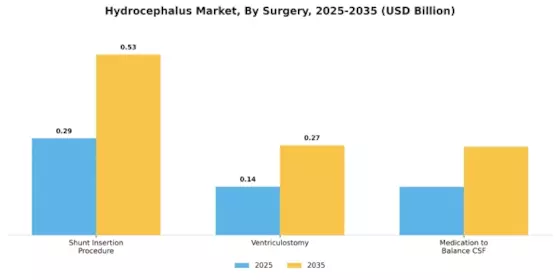
By Surgery: Shunt Insertion Procedure (Largest) vs. Ventriculostomy (Fastest-Growing)
In the Hydrocephalus Market, the Shunt Insertion Procedure holds the largest market share of 68% among the surgical options available. This procedure is widely recognized and utilized due to its effectiveness in managing the condition by directing cerebrospinal fluid (CSF) to an alternative site for absorption. Conversely, Ventriculostomy, while smaller in market share, is witnessing rapidly growing adoption, owing to its minimally invasive nature and ability to treat patients who may not qualify for a shunt. As a result, the competitive landscape is evolving as healthcare providers increasingly integrate both options into their treatment protocols.
Integra LifeSciences strengthens hydrocephalus treatment through specialized neurosurgical products, including cerebrospinal fluid management solutions. The company’s focus on developing advanced surgical technologies and improving implantable device performance supports wider adoption of shunt-based procedures, enhancing treatment reliability and patient outcomes.
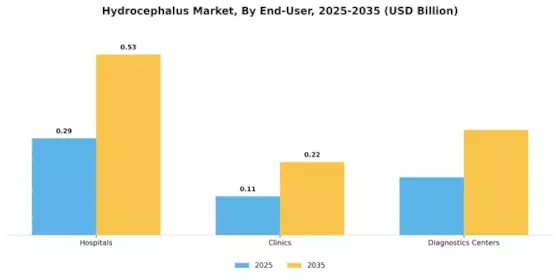
By End-User: Hospitals (Largest) vs. Clinics (Fastest-Growing)
In the Hydrocephalus Market, the distribution of end-users reveals that hospitals hold the largest share of 72% due to their comprehensive facilities and specialist teams. Hospitals are equipped with advanced medical technology for hydrocephalus treatment, positioning them as a primary choice for patients. Clinics, while smaller in comparison, are experiencing significant growth as they provide more accessible care, resulting in an increasing number of patients seeking outpatient services for hydrocephalus management. Growth trends in this segment are driven by the rising prevalence of hydrocephalus, particularly among pediatric populations, leading to increased patient admissions in hospitals. Clinics are emerging rapidly due to the demand for convenient, cost-effective treatment options, with advancements in telemedicine and outpatient procedures further facilitating their growth. This shift indicates a changing landscape where both hospitals and clinics will play crucial roles in managing hydrocephalus patients effectively.
NeuroPace advances neurological healthcare through innovative implantable technologies and clinical solutions. The company’s development of advanced neurotechnology platforms demonstrates the growing role of specialized hospital facilities in managing complex neurological conditions, supporting increased adoption of advanced procedures and improving access to specialized patient care.**
North America is the largest market for hydrocephalus treatment, accounting for approximately 45% of the global market share. The region's growth is driven by advanced healthcare infrastructure, increasing prevalence of neurological disorders, and significant investments in research and development. Regulatory support from agencies like the FDA further catalyzes innovation in treatment options, enhancing patient outcomes and driving demand.
Boston Scientific continues expanding its healthcare technology portfolio through innovation in minimally invasive medical solutions. According to CDC data, neurological conditions contribute significantly to healthcare utilization in the United States, with millions of adults affected by neurological disorders annually. Increasing disease awareness, advanced healthcare infrastructure, and adoption of innovative medical technologies are supporting North America’s strong position in hydrocephalus treatment.
The United States is the primary contributor to this market, with key players such as Medtronic, Johnson & Johnson, and Stryker leading the competitive landscape. The presence of these established companies fosters a robust environment for technological advancements and product launches. Additionally, the focus on minimally invasive procedures and improved shunt technologies is expected to bolster market growth in the coming years.
Europe : Emerging Market with Growth Potential
Europe is the second-largest market for hydrocephalus treatment, holding around 30% of the global market share. The region's growth is propelled by increasing awareness of neurological disorders, advancements in medical technology, and supportive regulatory frameworks. The European Medicines Agency (EMA) plays a crucial role in facilitating the approval of innovative treatments, which enhances market accessibility and drives demand for hydrocephalus solutions.
European Medicines Agency supports healthcare innovation through regulatory frameworks that enable access to advanced medical treatments across Europe. The agency oversees the evaluation of thousands of medicines and medical products, strengthening patient access to improved healthcare solutions. Continuous regulatory advancements and collaboration between healthcare providers and manufacturers are supporting the adoption of innovative hydrocephalus management technologies across European markets.
Leading countries in this region include Germany, France, and the UK, where healthcare systems are increasingly adopting advanced treatment options. Key players like B. Braun Melsungen AG and Integra LifeSciences are actively involved in the market, contributing to a competitive landscape that emphasizes innovation and patient-centric solutions. The collaboration between healthcare providers and manufacturers is expected to further enhance treatment outcomes and market growth.
Asia-Pacific : Rapidly Growing Healthcare Sector
Asia-Pacific is witnessing rapid growth in the market, driven by increasing healthcare expenditure, rising awareness of neurological disorders, and improving healthcare infrastructure. The region is expected to capture around 20% of the global market share, with countries like China and India leading the charge. Government initiatives aimed at enhancing healthcare access and affordability are also significant growth catalysts in this region.
China is emerging as a key player in the market, with a growing number of healthcare facilities adopting advanced treatment options. The competitive landscape is characterized by both local and international players, including Medtronic and Abbott Laboratories, who are expanding their presence in the region. The focus on research and development, along with strategic partnerships, is expected to drive innovation and improve patient outcomes in the coming years.
Middle East and Africa : Untapped Market with Opportunities
The Middle East and Africa region represents an untapped market for hydrocephalus treatment, holding approximately 5% of the global market share. The growth in this region is primarily driven by increasing healthcare investments, rising awareness of neurological conditions, and the establishment of specialized healthcare facilities. Government initiatives aimed at improving healthcare access are also contributing to market expansion, albeit at a slower pace compared to other regions.
Countries like South Africa and the UAE are leading the way in adopting advanced medical technologies. The competitive landscape is still developing, with opportunities for both local and international players to enter the market. Key players such as Boston Scientific and NeuroPace are exploring partnerships to enhance their market presence and improve treatment options for patients suffering from hydrocephalus.
Key Players and Competitive Insights
The Hydrocephalus Market is characterized by a dynamic competitive landscape, driven by advancements in medical technology and an increasing prevalence of neurological disorders. Key players such as Medtronic (US), Johnson & Johnson (US), and Stryker (US) are at the forefront, each adopting distinct strategies to enhance their market presence. Medtronic (US) focuses on innovation through the development of advanced shunt systems, while Johnson & Johnson (US) emphasizes strategic partnerships to expand its product offerings. Stryker (US) is actively pursuing mergers and acquisitions to bolster its portfolio, indicating a trend towards consolidation in the market. Collectively, these strategies contribute to a competitive environment that is increasingly centered on technological advancement and collaborative growth.In terms of business tactics, companies are localizing manufacturing and optimizing supply chains to enhance efficiency and reduce costs. The market appears moderately fragmented, with several key players exerting influence over various segments. This structure allows for a diverse range of products and services, catering to the specific needs of patients and healthcare providers. The collective actions of these companies suggest a concerted effort to establish a robust market presence while addressing the complexities of supply chain management.In August 2025, Medtronic (US) announced the launch of a next-generation programmable shunt system designed to improve patient outcomes through enhanced adjustability. This strategic move not only reinforces Medtronic's commitment to innovation but also positions the company to capture a larger share of the market by addressing the evolving needs of healthcare providers and patients. The introduction of this technology is likely to set a new standard in hydrocephalus treatment, potentially influencing competitors to accelerate their own product development efforts.In September 2025, Johnson & Johnson (US) entered into a partnership with a leading research institution to develop AI-driven diagnostic tools for hydrocephalus. This collaboration underscores the company's focus on integrating cutting-edge technology into its product offerings. By leveraging artificial intelligence, Johnson & Johnson aims to enhance diagnostic accuracy and treatment personalization, which could significantly improve patient care and outcomes. This strategic alliance may also serve to strengthen the company's competitive position in a rapidly evolving market.In July 2025, Stryker (US) completed the acquisition of a smaller medical device company specializing in neurotechnology. This acquisition is indicative of Stryker's strategy to expand its capabilities in the hydrocephalus segment and enhance its product portfolio. By integrating innovative technologies from the acquired company, Stryker is likely to enhance its competitive edge and offer more comprehensive solutions to healthcare providers. This move reflects a broader trend of consolidation within the industry, as companies seek to bolster their market positions through strategic acquisitions.As of October 2025, the market is witnessing trends such as digitalization, sustainability, and the integration of artificial intelligence into medical devices. These trends are reshaping the competitive landscape, with companies increasingly forming strategic alliances to leverage shared expertise and resources. The shift from price-based competition to a focus on innovation, technology, and supply chain reliability is becoming evident. Moving forward, competitive differentiation will likely hinge on the ability to deliver advanced, patient-centric solutions that address the complexities of hydrocephalus treatment.
Key Companies in the Hydrocephalus Market include
Industry Developments
The key competitors of the Market are investing in research and development of new, advanced Hydrocephalus Market treatment approaches. The market forecast also predicts that the key players also take up a lot of mergers, collaborations, and acquisitions to achieve a common goal of supporting the Market of Hydrocephalus Market collectively. The research and development in the area of market treatments will benefit all the major players of the Market.
Future Outlook
Hydrocephalus Market Future Outlook
The Hydrocephalus Market size is projected to reach USD 1.059 Billion by 2035, growing at a CAGR of 5.77%, driven by advancements in treatment technologies and increasing awareness.
New opportunities lie in:
Development of minimally invasive surgical techniques for hydrocephalus treatment.
Investment in innovative shunt technologies to improve patient outcomes.
By 2035, the Hydrocephalus Market is expected to achieve substantial growth and innovation.
Market Segmentation
Hydrocephalus Market Type Outlook
Congenital Hydrocephalus
Acquired Hydrocephalus
Hydrocephalus Market Surgery Outlook
Shunt Insertion Procedure
Ventriculostomy
Medication to Balance CSF
Hydrocephalus Market End-User Outlook
Hospitals
Clinics
Diagnostics Centers
Hydrocephalus Market Diagnostic Outlook
MRI
CT Scan
Head Ultrasound
Report Scope
MARKET SIZE 2024
0.5712(USD Billion)
MARKET SIZE 2025
0.6041(USD Billion)
MARKET SIZE 2035
1.059(USD Billion)
COMPOUND ANNUAL GROWTH RATE (CAGR)
5.77% (2025 - 2035)
REPORT COVERAGE
Revenue Forecast, Competitive Landscape, Growth Factors, and Trends
BASE YEAR
2024
Market Forecast Period
2025 - 2035
Historical Data
2019 - 2024
Market Forecast Units
USD Billion
Key Companies Profiled
Medtronic (US), Johnson & Johnson (US), Stryker (US), Boston Scientific (US), Abbott Laboratories (US), B. Braun Melsungen AG (DE), Integra LifeSciences (US), NeuroPace (US)
Segments Covered
Type
Key Market Opportunities
Advancements in minimally invasive surgical techniques enhance treatment options in the Hydrocephalus Market.
Key Market Dynamics
Rising demand for innovative treatment options drives competitive dynamics in the Hydrocephalus Market.
What is the current valuation of the Hydrocephalus Market as of 2024?
The Hydrocephalus Market was valued at 0.5712 USD Billion in 2024.
What is the projected market size for Hydrocephalus by 2035?
The market is projected to reach 1.059 USD Billion by 2035.
What is the expected CAGR for the Hydrocephalus Market during the forecast period 2025 - 2035?
The expected CAGR for the Hydrocephalus Market during 2025 - 2035 is 5.77%.
Which companies are considered key players in the Hydrocephalus Market?
Key players include Medtronic, Johnson & Johnson, Stryker, Boston Scientific, Abbott Laboratories, B. Braun Melsungen AG, Integra LifeSciences, and NeuroPace.
What are the main types of Hydrocephalus and their market valuations?
Congenital Hydrocephalus was valued at 0.34272 USD Billion, while Acquired Hydrocephalus was valued at 0.22848 USD Billion.
How do diagnostic methods for Hydrocephalus compare in terms of market size?
MRI diagnostics were valued at 0.17136 USD Billion, CT Scans at 0.11424 USD Billion, and Head Ultrasound at 0.2856 USD Billion.
What surgical procedures are included in the Hydrocephalus Market, and what are their valuations?
Shunt Insertion Procedures were valued at 0.2856 USD Billion, Ventriculostomy at 0.143 USD Billion, and Medication to Balance CSF at 0.1426 USD Billion.
What are the primary end-user segments in the Hydrocephalus Market?
The primary end-user segments include Hospitals valued at 0.2856 USD Billion, Clinics at 0.1144 USD Billion, and Diagnostics Centers at 0.1712 USD Billion.
How does the market for Hydrocephalus differ between congenital and acquired types?
The market for Congenital Hydrocephalus appears to be larger at 0.34272 USD Billion compared to Acquired Hydrocephalus at 0.22848 USD Billion.
What trends are anticipated in the Hydrocephalus Market as it approaches 2035?
The Hydrocephalus Market is likely to experience growth driven by advancements in technology and increased awareness, reaching 1.059 USD Billion by 2035.
Author
Author
Nidhi Mandole
Senior Research Analyst
She is an extremely curious individual currently working in Healthcare and Medical Devices Domain. Nidhi is comfortably versed in data centric research backed by healthcare educational background. She leverages extensive data mining and analytics tools such as Primary and Secondary Research, Statistical Analysis, Machine Learning, Data Modelling. Her key role also involves Technical Sales Support, Client Interaction and Project management within the Healthcare team. Lastly, she showcases extensive affinity towards learning new skills and remain fascinated in implementing them.
read more
Co-Author
Rahul Gotadki
Research Manager
He holds an experience of about 9+ years in Market Research and Business Consulting, working under the spectrum of Life Sciences and Healthcare domains. Rahul conceptualizes and implements a scalable business strategy and provides strategic leadership to the clients. His expertise lies in market estimation, competitive intelligence, pipeline analysis, customer assessment, etc.
The secondary research process involved comprehensive analysis of regulatory databases, peer-reviewed medical journals, neurosurgical publications, and authoritative health organizations. Key sources included the US Food & Drug Administration (FDA), European Medicines Agency (EMA), Centers for Medicare & Medicaid Services (CMS), National Institutes of Health (NIH), National Center for Biotechnology Information (NCBI/PubMed), National Institute of Neurological Disorders and Stroke (NINDS), Hydrocephalus Association, World Health Organization (WHO) Global Health Observatory, CDC National Center for Health Statistics, EU Eurostat Health Database, Organization for Economic Co-operation and Development (OECD) Health Statistics, and national health ministry reports from key markets including the United States, Germany, Japan, China, and India. These sources were used to collect hydrocephalus prevalence statistics, shunt implantation procedure volumes, regulatory approval data, clinical safety studies, device failure rates, demographic trends, and market landscape analysis for ventriculoperitoneal shunts, ventriculoatrial shunts, lumboperitoneal shunts, programmable valves, fixed pressure valves, and antimicrobial catheter technologies.
Primary Research
In order to gather both qualitative and quantitative insights, supply-side and demand-side stakeholders were interviewed during the primary research process. CEOs, VPs of Product Development, heads of regulatory affairs, R&D directors, and commercial directors from hydrocephalus shunt makers and OEMs were among the supply-side sources. Board-certified neurosurgeons, pediatric neurologists, medical directors of neurosurgical centers, and procurement leads from hospitals, specialist neurology clinics, and ambulatory surgery centers were among the demand-side sources. Primary study obtained information on clinical adoption patterns, valve adjustment procedures, pricing tactics, and reimbursement dynamics in addition to validating market segmentation and product pipeline deadlines.
Primary Respondent Breakdown:
By Designation: C-level Primaries (32%), Director Level (30%), Others (38%)
By Region: North America (32%), Europe (30%), Asia-Pacific (28%), Rest of World (10%)
Market Size Estimation
Global market valuation was derived through revenue mapping and procedure volume analysis. The methodology included:
Identification of 40+ key manufacturers across North America, Europe, Asia-Pacific, and Latin America
Product mapping across hydrocephalus valves (adjustable/fixed pressure), hydrocephalus catheters (standard/antimicrobial), and shunt systems by procedure type (ventriculoperitoneal, ventriculoatrial, lumboperitoneal, ventriculopleural)
Analysis of reported and modeled annual revenues specific to hydrocephalus shunt portfolios
Coverage of manufacturers representing 75-80% of global market share in 2024
Extrapolation using bottom-up (procedure volume × ASP by country/age group) and top-down (manufacturer revenue validation) approaches to derive segment-specific valuations for pediatric, adult, and geriatric patient populations
“This is really good guys. Excellent work on a tight deadline. I will continue to use you going forward and recommend you to others. Nice job”
Noah MalgeriCo-Founder
“Thanks. It’s been a pleasure working with you, please use me as reference with any other Intel employees.”
Joseph AguayoSales Operations & Pricing Manager
“Thanks for sending the report it gives us a good global view of the Betaïne market.”
Peter Groot koerkampAccount and Business Manager
“Thank you, this will be very helpful for OQS.”
La Terria DoddProgram Support Specialist
“We found the report very insightful! we found your research firm very helpful. I'm sending this email to secure our future business.”
Younghwan ChoiSenior Retail Manager
“I am very pleased with how market segments have been defined in a relevant way for my purposes (such as "Portable Freezers & refrigerators" and "last-mile").
In general the report is well structured. Thanks very much for your efforts.”
Mark IrwinManagement Consultant
“I have been reading the first document or the study, ,the Global HVAC and FP market report 2021 till 2026. Must say, good info! I have not gone in depth at all parts, but got a good indication of the data inside!”
Rob KooikerGroup Product Manager HVAC & Fire Protection GMA
“We got the report in time, we really thank you for your support in this process. I also thank to all of your team as they did a great job.”
Akif MorogluStrategy & Business Development Director
“The Automotive 48V ECU Components Procurement Intelligence Study” was a complex project, but the Market Research Future (MRFR) team handled it with quality, agility, and customer-centricity. They delivered all requested data on time and within the agreed scope. The team, including Shubhendra Anand and Rahul Gotadki, was always readily available to clarify questions and swiftly implement necessary adjustments, driving the project to a successful conclusion within a very demanding timeframe.
I would also like to specifically commend Akshay Agarwal for his responsiveness and support at every stage—from our initial inquiry on May 6th through to final delivery on June 18th. His dedication made the entire process seamless.”
Guilherme Gomes MartinsProduct Management Director