Growing Public Awareness and Support
Public awareness regarding the importance of biobanks is steadily increasing, which serves as a crucial driver for the biobanking market in Italy. Educational campaigns and outreach programs have contributed to a better understanding of how biobanks support medical research and public health initiatives. As a result, more individuals are willing to donate biological samples, which is vital for the sustainability of biobanks. This growing support is reflected in the rising number of biobanking initiatives across the country, with an estimated 20% increase in sample donations over the past year. The biobanking market is likely to benefit from this trend, as enhanced public engagement can lead to a more robust supply of biological materials for research purposes.
Advancements in Biobanking Technologies
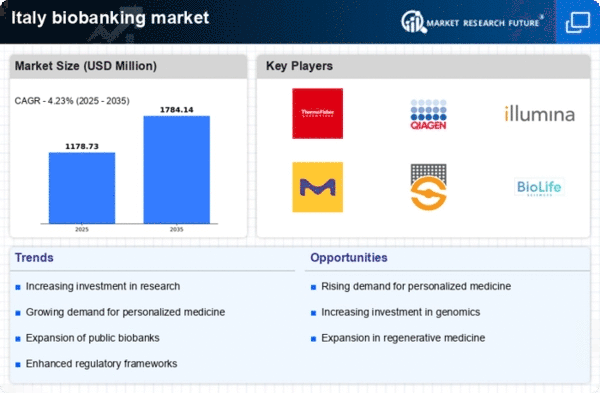
Technological innovations are transforming the biobanking market in Italy, enhancing the efficiency and effectiveness of sample collection, storage, and analysis. The introduction of automated systems and advanced biorepositories is streamlining operations, allowing for better management of biological samples. In 2025, it is projected that investments in biobanking technologies will exceed €500 million, reflecting the industry's commitment to improving sample integrity and accessibility. These advancements not only facilitate compliance with regulatory standards but also enable researchers to conduct more sophisticated analyses. Consequently, the biobanking market is poised for growth as these technologies enhance the overall value proposition of biobanks in supporting scientific research.
Rising Demand for Personalized Medicine
The increasing focus on personalized medicine is a pivotal driver for the biobanking market in Italy. As healthcare shifts towards tailored treatments, the need for biobanks that store diverse biological samples becomes essential. This trend is evidenced by a projected growth rate of approximately 15% annually in the biobanking sector, driven by advancements in genomics and proteomics. The biobanking market is responding to this demand by enhancing sample collection and storage techniques, ensuring high-quality biological materials are available for research and clinical applications. Furthermore, the integration of biobanks into clinical workflows is likely to facilitate the development of targeted therapies, thereby improving patient outcomes and driving further investment in biobanking infrastructure.
Regulatory Support for Biobanking Practices
Regulatory frameworks play a vital role in shaping the biobanking market in Italy. The establishment of clear guidelines and standards for biobanking practices fosters a conducive environment for research and collaboration. Recent initiatives by Italian regulatory bodies aim to streamline the approval processes for biobanking projects, thereby encouraging investment and innovation. This regulatory support is crucial, as it ensures that biobanks operate within ethical and legal boundaries while maintaining high-quality standards. The biobanking market is likely to experience growth as these supportive regulations enhance public trust and facilitate partnerships between biobanks and research institutions, ultimately leading to more robust scientific outcomes.
Increased Investment in Research and Development
Investment in research and development (R&D) is a significant catalyst for the biobanking market in Italy. With the Italian government and private sectors allocating substantial funds towards biomedical research, the demand for biobanks is expected to rise. In 2025, R&D expenditure in the healthcare sector is anticipated to reach €10 billion, reflecting a growing recognition of the importance of biobanks in facilitating innovative research. The biobanking market benefits from this trend as researchers require access to well-characterized biological samples to conduct studies on disease mechanisms and treatment efficacy. This influx of funding not only enhances the capabilities of existing biobanks but also encourages the establishment of new facilities, thereby expanding the overall market.






















Leave a Comment