×
Request Free Sample ×

Kindly complete the form below to receive a free sample of this Report

* Please use a valid business email

Leading companies partner with us for data-driven Insights

clients tt-cursor
Hero Background

Italy Halitosis Treatment Market

ID: MRFR/HC/54793-HCR
200 Pages
Rahul Gotadki
October 2025

Italy Halitosis Treatment Market Research Report By Indication (Respiratory, Liver, Kidney, Gastrointestinal, Systemic, Others), By Diagnostic Tests (Halimeter, Gas Chromatography, BANA Test, -Galactosidase Activity Assay, Others) and By Drug Treatment (Antacids, Antiseptics, Ranitidine, Others)- Forecast to 2035

Share:
Download PDF ×

We do not share your information with anyone. However, we may send you emails based on your report interest from time to time. You may contact us at any time to opt-out.

Italy Halitosis Treatment Market Infographic
Purchase Options

Italy Halitosis Treatment Market Summary

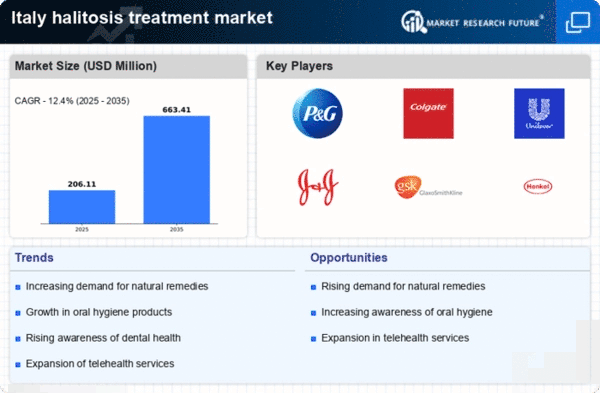
As per MRFR analysis, the halitosis treatment market size was estimated at 183.38 USD Million in 2024. The halitosis treatment market is projected to grow from 206.11 USD Million in 2025 to 663.41 USD Million by 2035, exhibiting a compound annual growth rate (CAGR) of 12.4% during the forecast period 2025 - 2035.

Key Market Trends & Highlights

The Italy halitosis treatment market is experiencing a dynamic shift towards innovative and natural solutions driven by heightened awareness of oral hygiene.

  • The market shows a rising demand for innovative products, particularly in the largest segment of mouthwashes.
  • There is a notable shift towards natural ingredients, which is particularly evident in the fastest-growing segment of chewing gums.
  • An increased focus on oral health education is influencing consumer choices and preferences across various demographics.
  • Key market drivers include the growing awareness of oral hygiene and the rising incidence of halitosis, which are shaping product development strategies.

Market Size & Forecast

2024 Market Size 183.38 (USD Million)
2035 Market Size 663.41 (USD Million)
CAGR (2025 - 2035) 12.4%

Major Players

Procter & Gamble (US), Colgate-Palmolive (US), Unilever (GB), Johnson & Johnson (US), GlaxoSmithKline (GB), Henkel (DE), Church & Dwight (US), Listerine (US)

Italy Halitosis Treatment Market Trends

The halitosis treatment market is currently experiencing notable developments, driven by increasing awareness of oral hygiene and the rising prevalence of halitosis among various demographics. In Italy, the growing emphasis on personal care and health has led to a surge in demand for effective solutions to combat bad breath. This trend is further supported by advancements in dental technology and the introduction of innovative products designed to address the underlying causes of halitosis. As consumers become more informed about the importance of oral health, the market is likely to expand, with a focus on both preventive measures and treatment options. Moreover, the halitosis treatment market is influenced by changing consumer preferences, with a noticeable shift towards natural and organic products. Many individuals are seeking alternatives to traditional treatments, favoring those that are perceived as safer and more environmentally friendly. This inclination towards holistic approaches may reshape product offerings, prompting manufacturers to innovate and adapt to meet the evolving demands of consumers. As the market continues to evolve, it appears that the integration of technology and natural ingredients will play a crucial role in shaping the future landscape of halitosis treatment solutions.

Rising Demand for Innovative Products

The halitosis treatment market is witnessing a surge in demand for innovative products that effectively address bad breath. This trend is driven by consumers seeking solutions that not only mask odors but also target the root causes of halitosis. Manufacturers are responding by developing advanced formulations and delivery systems, enhancing the efficacy of treatments.

Shift Towards Natural Ingredients

There is a growing preference for natural ingredients in the halitosis treatment market. Consumers are increasingly aware of the potential side effects of synthetic additives and are opting for products that utilize organic components. This shift is prompting companies to reformulate existing products and introduce new lines that align with consumer values.

Increased Focus on Oral Health Education

The halitosis treatment market is benefiting from an increased focus on oral health education. Dental professionals and health organizations are actively promoting awareness about the causes and prevention of halitosis. This educational push is likely to lead to higher demand for effective treatments as individuals become more proactive in managing their oral health.

Italy Halitosis Treatment Market Drivers

Rising Incidence of Halitosis

The prevalence of halitosis in Italy appears to be on the rise, contributing to the expansion of the halitosis treatment market. Studies suggest that nearly 30% of the adult population experiences chronic bad breath, prompting a greater need for effective treatments. This growing incidence is likely to drive demand for specialized products, including mouthwashes, chewing gums, and dental sprays. As consumers become more conscious of their oral health, the market is expected to witness a compound annual growth rate (CAGR) of around 7% over the next few years, reflecting the urgency for effective solutions.

Growing Awareness of Oral Hygiene

The increasing awareness of oral hygiene among the Italian population is a significant driver for the halitosis treatment market. As individuals become more informed about the implications of poor oral health, the demand for effective halitosis treatments rises. Educational campaigns by dental associations and health organizations have highlighted the importance of maintaining fresh breath, which has led to a surge in product sales. In 2025, the market is projected to grow by approximately 8% as consumers seek solutions to combat halitosis. This trend indicates a shift towards proactive oral care, thereby enhancing the overall market landscape.

Increased Availability of Products

The accessibility of halitosis treatment products in Italy is improving, which is likely to drive market growth. Retailers are expanding their offerings, with pharmacies and supermarkets increasingly stocking a variety of oral care products specifically designed to combat bad breath. This trend is supported by the rise of e-commerce platforms, which provide consumers with convenient access to a wide range of treatments. As a result, the halitosis treatment market is expected to see a growth of around 6% in 2025, as consumers benefit from greater availability and variety in product choices.

Influence of Social Media and Marketing

The role of social media in shaping consumer behavior cannot be underestimated in the halitosis treatment market. Influencers and health advocates frequently promote oral hygiene products, creating a buzz around effective treatments for bad breath. This digital marketing strategy has proven effective in reaching a younger demographic, who are increasingly concerned about their oral health. As a result, companies are investing heavily in online advertising, which is expected to account for over 40% of marketing budgets in 2025. This trend indicates a shift in how products are marketed, potentially leading to increased sales in the halitosis treatment market.

Technological Advancements in Oral Care

Technological innovations in oral care products are significantly impacting the halitosis treatment market. The introduction of smart toothbrushes and advanced mouth rinses that target bacteria responsible for bad breath is gaining traction among consumers. These products often incorporate cutting-edge technology, such as sensors and app connectivity, to enhance user experience and effectiveness. As the market evolves, it is anticipated that these innovations will contribute to a growth rate of approximately 9% in the halitosis treatment market by 2025, as consumers seek more efficient and effective solutions.


Market Segment Insights

By Indication: Gastrointestinal (Largest) vs. Respiratory (Fastest-Growing)

In the Italy halitosis treatment market, the market share distribution reveals that the Gastrointestinal segment holds the largest share, positioning itself as a primary area of focus for treatment solutions. Conversely, the Respiratory segment is on a rapid upward trajectory, gaining ground due to increasing awareness and innovations in treatment options available for halitosis associated with respiratory issues. Growth trends in the segment are driven by rising healthcare awareness and the growing prevalence of gastrointestinal disorders, which significantly contribute to halitosis. Furthermore, advancements in treatment modalities and patient education have propelled the Respiratory segment into prominence, as more patients seek effective solutions for their condition, making it a key area for future developments in the market.

Gastrointestinal (Dominant) vs. Respiratory (Emerging)

The Gastrointestinal segment is characterized by its strong market presence, driven by the frequent correlation of gastrointestinal health with halitosis occurrences. With an established line of treatment products and a clear demand from patients seeking solutions, this segment continues to thrive. On the other hand, the Respiratory segment, while emerging, is gaining traction rapidly. Increasing recognition of the link between respiratory health and halitosis has opened up new avenues for treatment development. Innovative therapies and improved diagnostic methods are propelling its growth, and as awareness grows, this segment is expected to attract significant attention from both healthcare providers and patients alike, marking it as a critical area for investment and focus.

By Diagnostic Tests: Halimeter (Largest) vs. Gas Chromatography (Fastest-Growing)

The diagnostic tests segment in the Italy halitosis treatment market showcases a diverse range of options, with Halimeter holding the largest market share. This device is widely recognized for its effectiveness in measuring volatile sulfur compounds, making it a preferred choice among healthcare providers. Following Halimeter, Gas Chromatography is rapidly gaining attention due to its accuracy and reliable results, positioning itself as an essential tool in advanced diagnostic settings. Growth trends within the diagnostic tests segment are driven by increasing awareness of halitosis and its underlying causes. As more individuals seek effective solutions, the demand for accurate diagnostic tools rises. Innovations in technology, especially concerning Gas Chromatography, contribute to enhanced analysis efficiency, appealing to dental professionals and enhancing patient care. Furthermore, increased research on the oral microbiome continues to propel the need for advanced diagnostic tests.

Halimeter (Dominant) vs. Gas Chromatography (Emerging)

Halimeter is the dominant player in the diagnostic tests segment, noted for its simplicity and rapid results in halitosis detection. It measures the concentration of sulfur compounds in breath, providing immediate feedback to both patients and practitioners, thereby facilitating timely interventions. On the other hand, Gas Chromatography, though emerging, is becoming increasingly relevant, especially in research-oriented applications. This technology provides precise quantification of multiple volatile compounds, ensuring a comprehensive understanding of oral health dynamics. As the popularity of advanced testing grows, both Halimeter and Gas Chromatography are likely to coexist, catering to different diagnostic needs within the market.

By Drug Treatment: Antiseptics (Largest) vs. Antacids (Fastest-Growing)

In the Italy halitosis treatment market, the drug treatment segment is primarily dominated by antiseptics, which hold a significant market share due to their effectiveness in targeting the root causes of halitosis. Antacids also contribute to the market but at a smaller scale, yet are gaining recognition for their ancillary benefits in addressing symptoms associated with halitosis. Both categories reflect the strategic shifts in treatment preferences among consumers. Growth trends within this segment show an upward trajectory for antiseptics, driven by increasing consumer awareness regarding oral hygiene and persistent research initiatives focusing on halitosis treatments. Antacids, on the other hand, are emerging as a fast-growing alternative, fueled by the rising demand for supportive treatments that complement primary care regimens for individuals suffering from chronic bad breath, particularly those linked to gastrointestinal issues.

Antiseptics (Dominant) vs. Antacids (Emerging)

Antiseptics stand out as the dominant force in the drug treatment segment of the Italy halitosis treatment market, characterized by their proven efficacy in neutralizing bacteria that cause foul breath. Their formulations, ranging from mouthwashes to sprays, are widely accepted among consumers seeking immediate and effective relief. Conversely, antacids are rapidly emerging, known for their ability to mitigate symptoms of halitosis related to stomach acidity and digestive disorders. While still a secondary choice for many, they are gaining traction as consumers explore various aspects of treatment beyond topical solutions. Together, these segments highlight the evolving landscape of halitosis management, showcasing diverse consumer preferences and driving innovation in treatment modalities.

Get more detailed insights about Italy Halitosis Treatment Market

Key Players and Competitive Insights

The halitosis treatment market in Italy exhibits a competitive landscape characterized by a blend of established multinational corporations and emerging local players. Key growth drivers include increasing consumer awareness regarding oral hygiene, the rising prevalence of halitosis, and a growing demand for innovative treatment solutions. Major companies such as Procter & Gamble (US), Colgate-Palmolive (US), and Unilever (GB) are strategically positioned to leverage their extensive distribution networks and brand recognition. Their operational focus appears to be on innovation and product diversification, which collectively shapes a competitive environment that is both dynamic and responsive to consumer needs.

In terms of business tactics, companies are increasingly localizing manufacturing to enhance supply chain efficiency and reduce costs. The market structure is moderately fragmented, with a few dominant players holding substantial market shares while numerous smaller entities cater to niche segments. This fragmentation allows for a variety of product offerings, which can be tailored to specific consumer preferences, thereby enhancing competition among key players.

In October 2025, Procter & Gamble (US) announced the launch of a new line of breath-freshening products that utilize advanced technology to target the bacteria responsible for halitosis. This strategic move not only reinforces their commitment to innovation but also positions them to capture a larger share of the market by addressing specific consumer concerns regarding efficacy and safety. The introduction of this product line is likely to enhance brand loyalty and attract new customers seeking effective solutions.

In September 2025, Colgate-Palmolive (US) expanded its partnership with local dental clinics across Italy to promote oral health awareness and provide free samples of their halitosis treatment products. This initiative underscores the company's focus on community engagement and education, which may foster trust and brand recognition among consumers. By aligning with healthcare professionals, Colgate-Palmolive is likely to enhance its credibility and drive sales through direct consumer interaction.

In August 2025, Unilever (GB) launched a sustainability initiative aimed at reducing plastic waste in its oral care product packaging. This strategic action reflects a growing trend towards environmental responsibility, which resonates with increasingly eco-conscious consumers. By prioritizing sustainability, Unilever not only differentiates itself in a crowded market but also aligns with broader societal values, potentially leading to increased market share and customer loyalty.

As of November 2025, current competitive trends in the halitosis treatment market are heavily influenced by digitalization, sustainability, and the integration of artificial intelligence in product development. Strategic alliances among companies are shaping the landscape, enabling them to pool resources and expertise to innovate more effectively. The competitive differentiation is likely to evolve from traditional price-based competition towards a focus on innovation, technology, and supply chain reliability, suggesting that companies that can adapt to these trends will be better positioned for future success.

Key Companies in the Italy Halitosis Treatment Market market include

Industry Developments

Recent developments in the Italy Halitosis Treatment Market have been indicative of growing consumer awareness and demand for effective oral hygiene products. Colgate-Palmolive and Unilever continue to expand their product lines, catering to changing consumer preferences. In August 2023, a product line enhancement was noted from Listerine, aimed at targeting a broader demographic concerned with halitosis, reinforcing the market's competitive landscape. Current affairs highlight a surge in research investments by Pfizer and GlaxoSmithKline, focusing on innovative formulations that address underlying causes of halitosis. 

Notably, in June 2023, a merger was announced between Haleon and Church and Dwight, which is expected to enhance their market presence in Italy by leveraging each other’s distribution networks. The growth in market valuation is further driven by expanding e-commerce platforms for oral care products, which have gained traction over the past two years due to the COVID-19 pandemic. 

Additionally, an uptick in health consciousness among the Italian population has spurred demand for products from companies like OralB and TheraBreath. These developments collectively signal an upward trend in market dynamics within the Italy Halitosis Treatment Market sector.

Future Outlook

Italy Halitosis Treatment Market Future Outlook

The Halitosis Treatment Market is projected to grow at a 12.4% CAGR from 2024 to 2035, driven by increasing awareness and innovative product development.

New opportunities lie in:

  • Development of subscription-based oral care kits
  • Expansion of telehealth consultations for halitosis
  • Investment in R&D for natural ingredient formulations

By 2035, the market is expected to achieve substantial growth and innovation.

Market Segmentation

Italy Halitosis Treatment Market Indication Outlook

  • Respiratory
  • Liver
  • Kidney
  • Gastrointestinal
  • Systemic
  • Others

Italy Halitosis Treatment Market Drug Treatment Outlook

  • Antacids
  • Antiseptics
  • Ranitidine
  • Others

Italy Halitosis Treatment Market Diagnostic Tests Outlook

  • Halimeter
  • Gas Chromatography
  • BANA Test
  • Β-Galactosidase Activity Assay
  • Others

Report Scope

MARKET SIZE 2024 183.38(USD Million)
MARKET SIZE 2025 206.11(USD Million)
MARKET SIZE 2035 663.41(USD Million)
COMPOUND ANNUAL GROWTH RATE (CAGR) 12.4% (2024 - 2035)
REPORT COVERAGE Revenue Forecast, Competitive Landscape, Growth Factors, and Trends
BASE YEAR 2024
Market Forecast Period 2025 - 2035
Historical Data 2019 - 2024
Market Forecast Units USD Million
Key Companies Profiled Procter & Gamble (US), Colgate-Palmolive (US), Unilever (GB), Johnson & Johnson (US), GlaxoSmithKline (GB), Henkel (DE), Church & Dwight (US), Listerine (US)
Segments Covered Indication, Diagnostic Tests, Drug Treatment
Key Market Opportunities Emerging natural ingredients in halitosis treatments align with consumer demand for organic oral care solutions.
Key Market Dynamics Rising consumer awareness drives demand for innovative halitosis treatments amid evolving regulatory standards in Italy.
Countries Covered Italy

Leave a Comment

FAQs

What is the expected market size of the Italy Halitosis Treatment Market in 2024?

The Italy Halitosis Treatment Market is expected to be valued at 122.25 million USD in 2024.

What will be the market value of the Italy Halitosis Treatment Market by 2035?

By 2035, the Italy Halitosis Treatment Market is expected to reach a value of 367.76 million USD.

What is the expected CAGR for the Italy Halitosis Treatment Market from 2025 to 2035?

The Italy Halitosis Treatment Market is expected to witness a CAGR of 10.531% from 2025 to 2035.

Which segment is projected to have the largest market share in 2035?

The Respiratory indication segment is projected to hold the largest market share, valued at 90.0 million USD in 2035.

Who are the key players in the Italy Halitosis Treatment Market?

Key players in the market include ColgatePalmolive, Pfizer, Listerine, Unilever, and TheraBreath among others.

How is the market for Liver related halitosis treatment projected to grow by 2035?

The Liver related halitosis treatment market is expected to grow to 75.0 million USD by 2035.

What is the expected market size for Gastrointestinal indications in 2024?

The Gastrointestinal indication market is expected to be valued at 25.0 million USD in 2024.

What market trends are expected to influence the Italy Halitosis Treatment Market?

Emerging trends include increasing awareness of oral hygiene and advancements in treatment technologies.

What is the projected market size for the Kidney-related treatment by 2035?

The market size for Kidney-related halitosis treatment is expected to grow to 60.0 million USD by 2035.

What impact will the current market dynamics have on overall growth?

Current market dynamics, including increased health consciousness and product innovations, are expected to positively influence overall growth.

Download Free Sample

Kindly complete the form below to receive a free sample of this Report

Compare Licence

×
Features License Type
Single User Multiuser License Enterprise User
Price $4,950 $5,950 $7,250
Maximum User Access Limit 1 User Upto 10 Users Unrestricted Access Throughout the Organization
Free Customization
Direct Access to Analyst
Deliverable Format
Platform Access
Discount on Next Purchase 10% 15% 15%
Printable Versions