Rising Demand for Biobanking Services
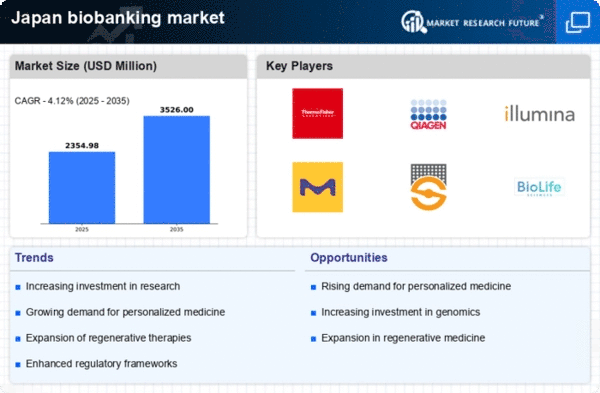
The increasing demand for biobanking services in Japan is driven by the growing need for personalized medicine and advanced research. As healthcare systems evolve, there is a notable shift towards precision medicine, which relies heavily on biobanked samples. The biobanking market in Japan is projected to expand significantly, with estimates suggesting a growth rate of approximately 10% annually. This demand is fueled by both academic institutions and pharmaceutical companies seeking to enhance their research capabilities. Furthermore, the integration of biobanking into clinical trials is becoming more prevalent, as researchers require access to diverse biological samples to validate their findings. Consequently, the rising demand for biobanking services is a critical driver for the biobanking market in Japan.
Technological Integration and Automation
The integration of advanced technologies and automation in biobanking processes is transforming the biobanking market in Japan. Innovations such as automated sample processing, data management systems, and biorepository management software are enhancing operational efficiencies and sample integrity. These technological advancements are not only streamlining workflows but also reducing the risk of human error, which is critical for maintaining the quality of biobanked samples. As a result, biobanks are better equipped to handle larger volumes of samples while ensuring compliance with regulatory standards. The ongoing adoption of these technologies is expected to drive growth in the biobanking market, as institutions seek to optimize their operations and improve research outcomes.
Growing Public Awareness and Participation
Public awareness regarding the importance of biobanking is steadily increasing in Japan, which serves as a crucial driver for the biobanking market. Educational campaigns and outreach programs are effectively informing the population about the benefits of biobanking, including its role in advancing medical research and improving healthcare outcomes. As a result, more individuals are willing to participate in biobanking initiatives, contributing their biological samples for research purposes. This growing participation is essential for the sustainability of biobanks, as diverse and high-quality samples are necessary for comprehensive research. The biobanking market in Japan is likely to see a positive impact from this trend, as increased public engagement can lead to a more robust and diverse biobanking ecosystem.
Regulatory Framework and Ethical Considerations
The regulatory framework surrounding biobanking in Japan plays a significant role in shaping the biobanking market. The government has established guidelines to ensure ethical practices in the collection, storage, and use of biological samples. These regulations are designed to protect the rights of donors while promoting transparency and accountability within biobanks. As the regulatory landscape evolves, biobanks are required to adapt their practices to comply with new standards, which can lead to increased operational costs. However, a robust regulatory framework can also enhance public trust in biobanking initiatives, potentially leading to greater participation and support. Thus, while regulatory considerations may pose challenges, they also serve as a driver for the biobanking market by fostering ethical practices and public confidence.
Increased Investment in Research and Development
Investment in research and development (R&D) is a pivotal driver for the biobanking market in Japan. The government and private sectors are allocating substantial funds to enhance biobanking infrastructure and capabilities. In recent years, R&D expenditure in Japan has reached approximately $170 billion, with a significant portion directed towards life sciences and biobanking initiatives. This financial commitment is likely to foster innovation and improve the quality of biobanked samples, thereby attracting more researchers and institutions to utilize these resources. Additionally, collaborations between universities and biotech firms are becoming more common, further stimulating growth in the biobanking market. As R&D investments continue to rise, the biobanking market is expected to benefit from enhanced technological advancements and operational efficiencies.




















Leave a Comment