Laboratory Equipment Market (2026 - 2035)

Laboratory Equipment Market Research Report Information By Product Type (Incubators, Centrifuges, Spectrometers, Scopes, Sonicators, Autoclaves, and others), By application (Biochemistry, Endocrinology, Microbiology, Genetic Testing, and others), By End Users (Hospitals and Clinics, and Others), And By Region (North America, Europe, Asia-Pacific, And Rest Of The World) - Growth & Industry Forecast 2025 To 2035
ID: MRFR/MED/6893-HCR
111 Pages
Nidhi Mandole, Rahul Gotadki
Last Updated: July 08, 2026
Laboratory Equipment Market
Market Size
Forecast Period2026-2035
CAGR (2026-2035)8.2%
2025 Market SizeUSD 35.20 Billion
2035 Market SizeUSD 77.42 Billion
Key Players
Thermo Fisher Scientific
Danaher Corporation
Agilent Technologies
Merck KGaA
Sartorius AG
Eppendorf SE
Opportunities
  • Point-of-Care Testing Expansion
  • AI-Integrated Instrument Platforms
  • Emerging-Market Infrastructure Build-Out

Laboratory Equipment Market Summary

The Laboratory Equipment Market size was valued at USD 35.20 Billion in 2025, and the market is projected to grow from USD 38.09 Billion in 2026 to USD 77.42 Billion by 2035, registering a CAGR of 8.2% during the forecast period 2026–2035. Two catalysts are anchoring this trajectory: biopharmaceutical R&D spending, which crossed USD 205 Billion globally in 2024 [1], and the rising incidence of non-communicable diseases, responsible for roughly 41 million deaths each year according to the WHO [2]. Together, these forces are compelling hospitals, reference laboratories, and contract research organizations to expand testing infrastructure at an unprecedented pace.

Underneath these demand drivers sits a technology shift that is rewriting procurement cycles. Legacy manual benchtop workflows are giving way to fully integrated platforms that combine sample preparation, analysis, and data management in closed-loop systems. Single-use technologies and modular consumable kits are shortening equipment replacement intervals, while public-sector net-zero mandates are pushing suppliers toward low-carbon manufacturing and take-back programs. The Laboratory Equipment Market is therefore evolving from a capital-heavy, replacement-driven cycle into a consumables-intensive, service-oriented ecosystem.

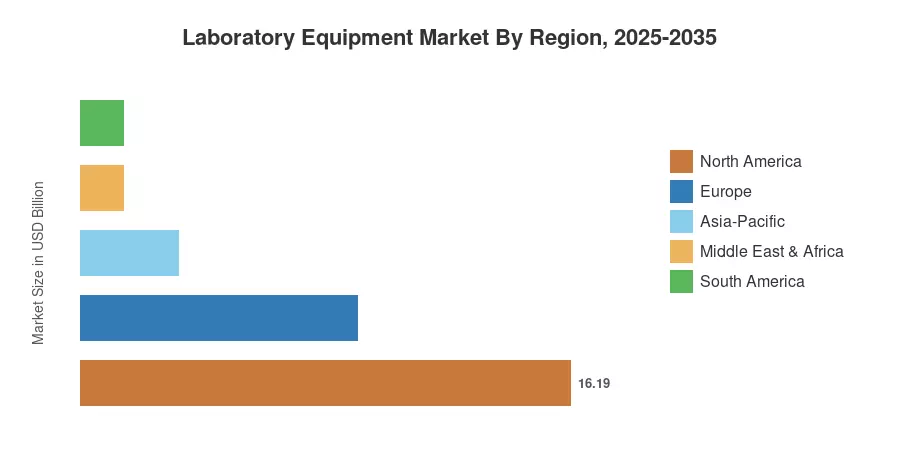
North America commanded a 46% share of the Laboratory Equipment Market in 2025, buoyed by NIH funding levels and a dense network of pharmaceutical headquarters. Asia-Pacific is the fastest-growing region, projected to expand at a 9.2% CAGR through 2035 as China, India, and South Korea ramp up clinical laboratory capacity [4]. Europe holds approximately 26% of spending, anchored by Horizon Europe research grants and IVD Regulation compliance upgrades. The decade ahead will reward vendors that balance instrument innovation with sustainability credentials and service-model flexibility.

Key Report Takeaways

• By Product Type

  • Laboratory equipment captured roughly 51% of the Laboratory Equipment Market revenue in 2025, reflecting sustained capital spending on automated analyzers and imaging platforms.
  • Laboratory disposables are forecast to expand at a 10.3% CAGR through 2035, driven by single-use bioreactor linings and pre-sterilized consumable kits.

• By Application

  • Clinical diagnostics led the Laboratory Equipment Market with approximately 38% of spending in 2025, underpinned by hospital-based chemistry and hematology volumes.
  • Genomics and proteomics applications are set to advance at a 10.5% CAGR, fueled by precision-medicine adoption and next-generation sequencing cost reductions.

• By End User

  • Hospitals and clinics accounted for 43% of the Laboratory Equipment Market in 2025.
  • Contract research organizations are projected to grow at an 11.2% CAGR through 2035, as pharma companies increasingly outsource early-stage assay development.

• By Region

  • North America held a 46% share of the Laboratory Equipment Market in 2025, driven by NIH-funded academic research and large-scale reference laboratory networks.
  • Asia-Pacific is the fastest-growing region with a 9.2% CAGR through 2035.

Market Size and Forecast (2021–2035)

Market Research Future derives historical estimates from company filings, import–export databases, and regulatory device registrations. Forecast projections combine bottom-up end-user demand modeling with top-down macroeconomic adjustment to produce a consistent 2026–2035 outlook for the Laboratory Equipment Market.
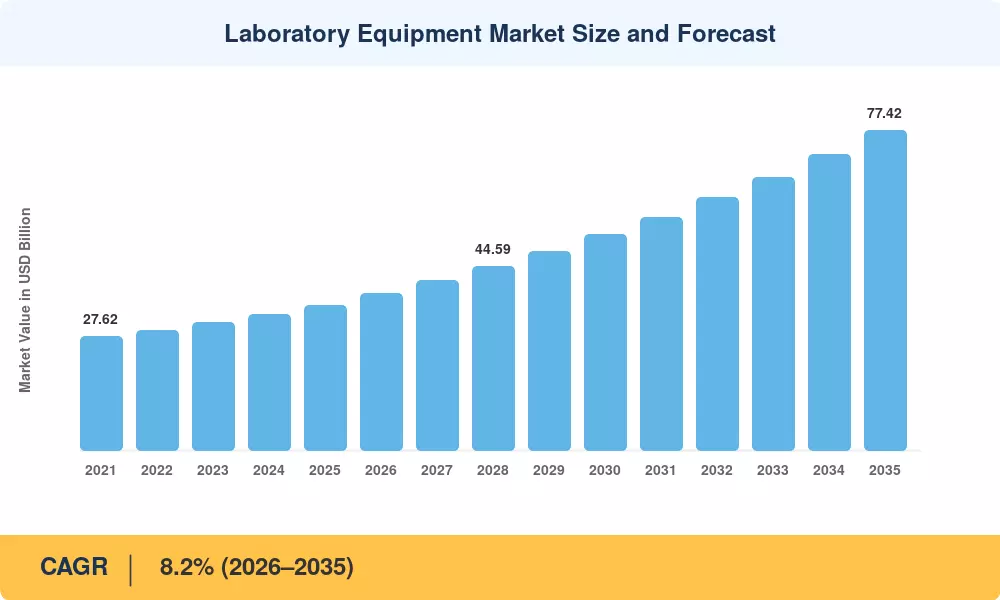
Laboratory Equipment Market Size and Forecast
Our Impact
Enabled $4.3B Revenue Impact for Fortune 500 and Leading Multinationals
Partnering with 2000+ Global Organizations Each Year
30K+ Citations by Top-Tier Firms in the Industry

Driver Impact Analysis

Driver ~% Impact on CAGR Geographic Relevance Impact Timeline
Biopharmaceutical R&D spending growth +1.8% Global Long-term (≥4 yr)
Non-communicable disease burden +1.5% Global Long-term (≥4 yr)
Single-use technology adoption +1.2% North America, Europe Medium-term (2–4 yr)
Laboratory automation mandates +1.0% Asia-Pacific Medium-term (2–4 yr)
Precision-medicine regulatory incentives +0.9% North America Short-term (≤2 yr)
Academic research funding expansion +0.8% Europe, Asia-Pacific Medium-term (2–4 yr)
Environmental compliance and green-lab programs +0.5% Europe Long-term (≥4 yr)


Biopharmaceutical R&D Spending

Global biopharmaceutical R&D investment topped USD 205 billion in 2024, with top-20 corporations growing budgets by an average of 6.8% every year [1]. This expenditure immediately stimulates demand in the Laboratory Equipment Market, as drug developers need high-throughput screening platforms, analytical balances, and liquid chromatography systems to shorten discovery timelines. The United States' 21st Century Cures Act continues to incentivise biomarker-driven trial designs, driving up demand for specialized assay platforms [8].


Non-Communicable Disease Burden

Noncommunicable illnesses are estimated to cause 41 million deaths per year worldwide, accounting for 74% of all fatalities [2]. Hospitals and reference laboratories are reacting by extending their chemistry, hematology, and molecular diagnostic capabilities. In China alone, the National Health Commission has mandated that all county-level hospitals obtain ISO 15189 accreditation by 2027, a rule that is estimated to generate over USD 3.5 billion in new equipment procurement for the Laboratory Equipment Market [4].


Single-Use Technology Adoption

Single-use bioreactor linings, pre-sterilized pipette tips, and disposable filtration assemblies are shortening replacement cycles from five years to under two in biomanufacturing settings. This shift increases consumables revenue density per installed instrument and accelerates overall spending across the Laboratory Equipment Market. North America and Europe are leading adoption, with single-use penetration expected to reach 68% of upstream bioprocess operations by 2030 [11].

Laboratory Automation Mandates

Rising labor costs and skilled-technician shortages in Asia-Pacific are compelling hospital networks to deploy fully automated sample-to-result platforms [7]. Japan's MHLW approved reimbursement code expansions for automated molecular diagnostics in 2024, directly stimulating equipment procurement across mid-tier hospitals. These automation investments serve as a structural tailwind for the Laboratory Equipment Market through the forecast period.

Restraints Impact Analysis

Restraint ~% Impact on CAGR Geographic Relevance Impact Timeline
Extended regulatory timelines for IVD platforms –0.7% Global Long-term (≥4 yr)
Plastics margin compression –0.5% Global Short-term (≤2 yr)
Capital budget constraints in public hospitals –0.6% South America, MEA Medium-term (2–4 yr)
Supply-chain concentration risk for specialty reagents –0.4% Asia-Pacific Medium-term (2–4 yr)
Reimbursement uncertainty for novel diagnostics –0.3% North America Short-term (≤2 yr)


Extended Regulatory Timelines

The EU IVDR transition, which was completely implemented in May 2022, has produced a bottleneck of products awaiting notified-body evaluation, with an estimated 28,000 legacy devices at risk of losing CE marking by 2028 [12]. For manufacturers operating in the Laboratory Equipment Market, the regulatory queue slows new-product revenue recognition and raises compliance costs by 15-20% with every submission.


Capital Budget Constraints in Emerging Economies

Public hospitals in South America, the Middle East, and Africa confront ongoing funding constraints, limiting large-ticket capital acquisitions. Brazil's SUS procurement cycle averages 14 months from tender publication to delivery, which limits the near-term adoption of new platforms in the Laboratory Equipment Market [14]. Reagent rental and pay-per-test methods are helping to alleviate this barrier, although penetration remains low outside of major metropolitan areas.


Laboratory Equipment Market Opportunities

Point-of-Care Testing Expansion

Decentralizing testing from core laboratories to clinics, pharmacies, and ambulances opens a high-growth frontier for the Laboratory Equipment Market. WHO estimates indicate that 60% of primary-care facilities in low- and middle-income countries lack basic diagnostic capacity, representing a multi-billion-dollar addressable gap [2].

AI-Integrated Instrument Platforms

Machine-learning algorithms embedded directly into spectrophotometers, flow cytometers, and mass spectrometers can automate calibration, detect anomalies in real time, and predict maintenance needs. Early adopters report a 25% reduction in unplanned downtime, and this capability is becoming a competitive differentiator across the Laboratory Equipment Market.

Emerging-Market Infrastructure Build-Out

India's National Biopharma Mission allocated USD 250 Million for laboratory modernization across public-sector institutes between 2023 and 2028 [9]. Similar initiatives in Southeast Asia and the Gulf Cooperation Council are creating greenfield demand for the Laboratory Equipment Market that incumbents and regional distributors are well-positioned to capture.

Data Monetization and Connected-Lab Platforms

Cloud-connected instruments generate continuous performance and utilization data that vendors can monetize through subscription-based analytics dashboards. This "equipment-as-a-service" model converts one-time capital sales into recurring revenue streams, reshaping the economic profile of the Laboratory Equipment Market.

Sustainability-Driven Equipment Redesign

Green-lab certification programs such as My Green Lab are pressuring manufacturers to design instruments with lower energy consumption, recyclable components, and chemical-free calibration methods [10]. Vendors that embed sustainability into product roadmaps will gain procurement preference in the Laboratory Equipment Market, especially across European tenders subject to green public procurement directives.

Laboratory Equipment Market Future Outlook

AI-Driven Autonomous Laboratories

By 2030, fully autonomous "self-driving" laboratories are expected to handle up to 40% of routine assay workflows in high-throughput environments [18]. For the Laboratory Equipment Market, this means instrument vendors will compete on embedded intelligence and cloud connectivity rather than raw throughput alone. Partnerships between equipment OEMs and AI software firms will accelerate through the forecast period.

Platform Economics and Equipment-as-a-Service

The shift from capital sales to recurring-revenue service contracts is reshaping vendor business models across the Laboratory Equipment Market. Reagent-rental, pay-per-test, and managed-service agreements are projected to account for 30% of total industry revenue by 2032 [19]. This transition aligns vendor incentives with laboratory uptime, creating stickier customer relationships.

Sustainability and Circular-Economy Integration

Net-zero mandates from the EU Green Deal and the U.S. Federal Sustainability Plan are compelling laboratory suppliers to demonstrate lifecycle carbon reductions [10]. Instrument take-back programs and refurbishment operations will become table-stakes within the Laboratory Equipment Market, with early movers earning procurement preference in public tenders.

Precision Medicine and Companion Diagnostics

The FDA approved 47 companion diagnostics in 2024 alone, each requiring dedicated testing platforms and validated consumable kits [20]. This regulatory trajectory ensures sustained demand within the Laboratory Equipment Market, as oncology, rare-disease, and pharmacogenomics programs mandate instrument-specific assay validation before clinical deployment.

Laboratory Equipment Market Segmentation

By Product Type

Segment Key Metric Primary Demand Driver
Laboratory Equipment 51% share (2025) Automated analyzer replacement cycles
Laboratory Disposables 10.3% CAGR (2026–2035) Single-use bioprocessing adoption


Laboratory equipment remains the dominant revenue contributor to the Laboratory Equipment Market, driven by high-value automated chemistry and immunoassay analyzers installed across hospital networks. Capital refresh cycles typically span five to seven years, creating a predictable replacement demand cadence. Laboratory disposables, while smaller in absolute terms, are the faster-growing segment. The proliferation of single-use bioreactor linings, pre-packed chromatography columns, and sterile filtration assemblies is converting what was historically a one-time hardware sale into a continuous consumables stream.

By Application

Segment Key Metric Primary Demand Driver
Clinical Diagnostics 38% share (2025) Hospital testing volumes
Genomics and Proteomics 10.5% CAGR (2026–2035) Sequencing cost reductions
Drug Discovery and Development USD 5.80 Billion (2025) Biopharma pipeline expansion
Environmental Testing 7.4% CAGR (2026–2035) Regulatory compliance tightening
Food and Beverage Testing USD 2.50 Billion (2025) FSMA implementation


Clinical diagnostics is the largest application within the Laboratory Equipment Market, sustained by high-frequency routine testing in chemistry, hematology, and immunology disciplines. Genomics and proteomics represent the fastest-growing application segment, as next-generation sequencing costs continue to decline below USD 200 per whole genome, widening access to precision-medicine workflows.

By End User

Segment Key Metric Primary Demand Driver
Hospitals and Clinics 43% share (2025) Core-lab consolidation
Pharmaceutical and Biotechnology Companies USD 7.40 Billion (2025) Pipeline R&D intensity
Contract Research Organizations 11.2% CAGR (2026–2035) Outsourcing growth
Academic and Government Laboratories 7.0% CAGR (2026–2035) Grant-funded infrastructure


Hospitals and clinics represent the largest end-user group in the Laboratory Equipment Market, with core-laboratory consolidation programs driving demand for high-throughput, multi-disciplinary analyzers. Contract research organizations are the fastest-growing end-user segment, reflecting the pharmaceutical industry's strategic pivot toward outsourced discovery and preclinical services.

Regional Market Share Analysis

Region Key Metric Primary Investment Themes
North America 46% share (2025) Pharma R&D hubs, NIH/BARDA funding
Europe 26% share (2025) IVDR compliance, Horizon Europe grants
Asia-Pacific 9.2% CAGR (2026–2035) Hospital accreditation, biopharma expansion
South America USD 1.41 Billion (2025) SUS modernization, CRO outsourcing
Middle East & Africa USD 1.41 Billion (2025) Vision 2030 healthcare capex
Total USD 35.20 Billion (2025)

The Laboratory Equipment Market exhibits a North America–centric spending profile, though Asia-Pacific is rapidly closing the gap in absolute terms.


North America

Country Key Metric Key Driver
US 78% of regional share NIH annual budget exceeding USD 47 Billion [8]
Canada 12% of regional share CIHR genomics research programs
Mexico 10% of regional share Nearshoring-driven CRO growth


The United States dominates North America's portion of the Laboratory Equipment Market, supported by the world's largest pharmaceutical R&D base and an extensive network of CLIA-certified clinical laboratories. Canada's contribution is anchored by federal genomics initiatives, while Mexico's laboratory sector benefits from nearshoring trends that position the country as a cost-competitive site for contract research operations.

Europe

Country Key Metric Key Driver
Germany 8.4% CAGR Fraunhofer Institute expansions
UK USD 2.10 Billion (2025) NHS diagnostic reform
France 7.8% CAGR CEA-funded laboratory programs
Italy USD 1.05 Billion (2025) PNRR healthcare investment
Spain 7.6% CAGR Biomedical cluster growth
Nordic Countries USD 0.85 Billion (2025) Life-science innovation hubs
Russia 7.2% CAGR Import-substitution policies
Rest of Europe USD 1.30 Billion (2025) EU Cohesion Fund allocations


Europe's share of the Laboratory Equipment Market is shaped by IVDR compliance spending, which is forcing diagnostic manufacturers to upgrade validation infrastructure. Germany leads on the back of Fraunhofer and Max Planck institutional procurement, while the UK's NHS Long Term Plan has earmarked GBP 2.3 Billion for diagnostic capacity expansion through 2028 [17].

Asia-Pacific

Country Key Metric Key Driver
China 38% of regional share NHC accreditation mandates [4]
India 10.1% CAGR National Biopharma Mission [9]
Japan USD 1.55 Billion (2025) MHLW reimbursement reforms
South Korea 9.5% CAGR K-Bio investment strategy
ASEAN USD 0.80 Billion (2025) Hospital infrastructure buildout
Rest of Asia-Pacific 8.8% CAGR Government laboratory modernization


Asia-Pacific represents the highest-growth opportunity in the Laboratory Equipment Market. China's county-level hospital accreditation mandates alone are projected to generate over USD 3.5 Billion in incremental equipment spending [4]. India's expanding CRO sector and South Korea's K-Bio initiative are compounding regional momentum.

South America

Country Key Metric Key Driver
Brazil 58% of regional share SUS procurement modernization
Argentina 7.5% CAGR University laboratory upgrades
Rest of South America USD 0.25 Billion (2025) Multilateral health grants


Brazil is the primary engine of the Laboratory Equipment Market in South America, though lengthy public procurement cycles continue to slow adoption. Reagent-rental agreements are gaining traction as an alternative to upfront capital expenditure in both public and private laboratories.

Middle East & Africa

Country Key Metric Key Driver
Saudi Arabia 35% of regional share Vision 2030 healthcare megaprojects
UAE 8.9% CAGR Dubai Healthcare City expansion
South Africa USD 0.22 Billion (2025) NHI rollout
Egypt 8.2% CAGR Population-driven testing demand
Rest of MEA USD 0.30 Billion (2025) WHO-supported laboratory networks


Saudi Arabia's Vision 2030 healthcare investment pipeline is the single largest demand driver for the Laboratory Equipment Market in this region, with planned hospital construction programs requiring turnkey laboratory fit-outs. The UAE complements this with specialized free-zone incentives for laboratory services companies.

Laboratory Equipment Market By Region, 2025-2035

Competitive Benchmarking

The Laboratory Equipment Market exhibits medium concentration, with the top five players holding an estimated 38–44% combined revenue share. The Herfindahl-Hirschman Index (HHI) sits in the moderately concentrated range, reflecting a mix of diversified global OEMs and specialized niche players. Competition centers on platform breadth, service-contract economics, and regulatory-clearance velocity.

Company Est. Revenue Share Range Key Offerings for Laboratory Equipment Market Strategic Positioning
Thermo Fisher Scientific ~10–14% Analytical instruments, consumables, LIMS platforms Broadest portfolio; vertical integration
Danaher Corporation ~8–12% Life-science instruments, diagnostics systems Multi-brand operating model
Agilent Technologies ~6–9% Chromatography, spectroscopy, genomics tools Precision measurement leadership
Merck KGaA ~5–8% Lab chemicals, filtration, single-use bioprocess Process-solutions focus
Sartorius AG ~4–6% Bioprocess equipment, lab balances, consumables Bioprocessing specialization
Eppendorf SE ~3–5% Liquid handling, centrifuges, consumables Benchtop-instrument niche
PerkinElmer ~3–5% Detection, imaging, informatics Applied and diagnostic markets
Bio-Rad Laboratories ~2–4% Clinical diagnostics, life-science research Quality-control standards
Becton, Dickinson and Company ~2–4% Flow cytometry, sample collection systems Preanalytical leadership
Shimadzu Corporation ~2–4% Analytical and measuring instruments Asia-Pacific distribution strength
Mettler-Toledo International ~2–3% Precision balances, automated chemistry Metrology expertise


Recent News & Developments

  • April 2025: INTCO Medical, one of the world's leading disposable glove producers, introduces the exclusive proprietary Syntex Synthetic Disposable Latex Gloves product. Syntex pushes the frontiers of natural latex to revolutionize glove quality, safety, and performance.
  • April 2025: Syntegon introduced a new filling machine for ready-to-use (RTU) nested syringes.
  • January 2025: Dynarex Corporation, one of the leading medical supply companies, introduced LabChoice, a dynamic new line of laboratory products designed to meet the changing needs of a variety of industries, including healthcare, education, research, food and beverage, and others that require precision tools.


Laboratory Equipment Market Report Scope

Parameter Detail
Market Scope Global Laboratory Equipment Market covering instruments, consumables, and disposables
Study Period 2021–2035
CAGR (Forecast Period) 8.2% (2026–2035)
Base Year Market Size USD 35.20 Billion (2025)
Forecast Endpoint USD 77.42 Billion (2035)
Fastest Growing Segment Contract Research Organizations (by end user); Laboratory Disposables (by product type)
Companies Profiled 11 major players
Valuation Currency USD Billion


FAQs

How do reagent-rental agreements affect total cost of ownership for hospital laboratories?
Reagent-rental agreements shift upfront capital expenditure into per-test operating costs, typically reducing initial outlay by 60–80% while locking in multi-year consumable commitments [19]. Hospitals gain predictable budgeting but sacrifice vendor flexibility.
What qualification standards should buyers verify before procuring laboratory instruments for regulated environments?
Buyers should confirm IQ/OQ/PQ documentation, 21 CFR Part 11 compliance for data integrity, and ISO 17025 calibration traceability [16]. Vendors that bundle qualification protocols into purchase contracts reduce post-installation delays.
How does the shift to single-use consumables influence instrument design?
Instrument OEMs are redesigning fluid paths and sample-contact surfaces to accept pre-sterilized, disposable cartridges, reducing cross-contamination risk and cleaning validation time [3]. This trend favors modular platform architectures.
What cybersecurity risks do cloud-connected laboratory instruments introduce?
Connected instruments expose laboratories to data exfiltration and ransomware risks, particularly when legacy operating systems lack patch support [18]. Procurement teams should mandate IEC 62443 compliance in vendor contracts.
How do green-lab certification programs impact vendor selection?
Certifications like My Green Lab's ACT label are increasingly used as scored criteria in public-sector tenders across Europe, granting procurement advantages of 5–10% in weighted evaluations [10].
What role do refurbished instruments play in budget-constrained laboratory settings?
Certified pre-owned programs from major OEMs now cover over 200 instrument models, typically priced at 40–60% of new-equipment cost while retaining original warranty terms [14]. Emerging-market laboratories are primary adopters.
How will companion-diagnostic growth change procurement patterns in hospital laboratories?
Each new companion-diagnostic approval requires a platform-specific validated assay, compelling hospitals to maintain multi-vendor analyzer fleets [20]. This fragmentation increases capital complexity but ensures sustained instrument demand.    
What is the current size of the laboratory equipment market?
The laboratory equipment market reached USD 60.94 billion in 2025 and is projected to reach USD 127.50 billion by 2035.
What is the CAGR of the laboratory equipment market?
The laboratory equipment market is projected to grow at a CAGR of 7.66% during the forecast period 2025–2035.
Which region leads the laboratory equipment market?
North America holds the largest share at approximately 40%, while Asia-Pacific is the fastest-growing region.
Author
Author
Author Profile
Nidhi Mandole LinkedIn
Senior Research Analyst
She is an extremely curious individual currently working in Healthcare and Medical Devices Domain. Nidhi is comfortably versed in data centric research backed by healthcare educational background. She leverages extensive data mining and analytics tools such as Primary and Secondary Research, Statistical Analysis, Machine Learning, Data Modelling. Her key role also involves Technical Sales Support, Client Interaction and Project management within the Healthcare team. Lastly, she showcases extensive affinity towards learning new skills and remain fascinated in implementing them.
Co-Author
Co-Author Profile
Rahul Gotadki LinkedIn
Research Manager
He holds an experience of about 9+ years in Market Research and Business Consulting, working under the spectrum of Life Sciences and Healthcare domains. Rahul conceptualizes and implements a scalable business strategy and provides strategic leadership to the clients. His expertise lies in market estimation, competitive intelligence, pipeline analysis, customer assessment, etc.

Research Approach


Secondary Research

The secondary research process involved comprehensive analysis of regulatory databases, peer-reviewed scientific journals, clinical diagnostics publications, and authoritative research & healthcare organizations. Key sources included the US Food & Drug Administration (FDA) 21 CFR Part 820 Quality System Regulation, Environmental Protection Agency (EPA) Laboratory Certification guidelines, Occupational Safety and Health Administration (OSHA) Laboratory Safety Standards, National Institutes of Health (NIH) Research Infrastructure Reports, National Science Foundation (NSF) Science & Engineering Indicators, Centers for Disease Control and Prevention (CDC) Clinical Laboratory Improvement Amendments (CLIA) database, World Health Organization (WHO) Essential Diagnostic List, European Medicines Agency (EMA) Good Laboratory Practice (GLP) guidelines, European Committee for Standardization (CEN) laboratory equipment standards, International Organization for Standardization (ISO) 17025 testing laboratory accreditation reports, National Institute of Standards and Technology (NIST) calibration databases, and national research funding agency reports from key markets. These sources were used to collect equipment installation statistics, regulatory compliance data, laboratory accreditation metrics, research funding trends, and competitive landscape analysis for incubators, centrifuges, spectrometers, scopes, sonicators, autoclaves, and other laboratory equipment categories.


Primary Research

To gather both qualitative and quantitative insights, supply-side and demand-side stakeholders were interviewed during the primary research phase. CEOs, VPs of Product Development, heads of regulatory affairs, and commercial directors from suppliers of analytical instruments, OEMs, and makers of laboratory equipment were examples of supply-side sources. Demand-side sources included procurement leads from university research institutions, pharmaceutical R&D facilities, hospitals, diagnostic centers, biotechnology businesses, and laboratory directors, principal investigators, research scientists, and clinical laboratory managers. Primary research corroborated product development pipelines and launch schedules, validated market segmentation across product kinds and applications, and collected data on service contract dynamics, capital procurement cycles, equipment replacement rates, and technology adoption patterns.

Primary Respondent Breakdown:

By Designation: C-level Primaries (32%), Director Level (30%), Others (38%)

By Region: North America (38%), Europe (25%), Asia-Pacific (28%), Rest of World (9%)


Market Size Estimation

Global market valuation was derived through revenue mapping and equipment installation volume analysis. The methodology included:

Identification of 45+ key manufacturers across North America, Europe, Asia-Pacific, and Latin America

Product mapping across incubators, centrifuges, spectrometers, scopes, sonicators, autoclaves, and other specialized equipment categories

Analysis of reported and modeled annual revenues specific to laboratory equipment portfolios, including instrumentation, consumables, and service contracts

Coverage of manufacturers representing 70-75% of global market share in 2024

Extrapolation using bottom-up (equipment installation volume × ASP by region and end-user segment) and top-down (manufacturer revenue validation across product lines) approaches to derive segment-specific valuations for biochemistry, endocrinology, microbiology, genetic testing, and other application areas

Download Free Sample

Kindly complete the form below to receive a free sample of this Report

Download PDF ×

We do not share your information with anyone. However, we may send you emails based on your report interest from time to time. You may contact us at any time to opt-out.
















