×
Request Free Sample ×

Kindly complete the form below to receive a free sample of this Report

* Please use a valid business email

Leading companies partner with us for data-driven Insights

clients tt-cursor
Hero Background

Occlusion Devices Market

ID: MRFR/MED/4478-HCR
100 Pages
Rahul Gotadki
October 2025

Occlusion Devices Market Research Report Information By Product (Occlusion Removal Devices, Embolization Devices, Tubal Occlusion Devices, and Support Devices), by Application (Neurology and Cardiology), by End-User (Hospitals & Clinics) – Global Forecast till 2035

Share:
Download PDF ×

We do not share your information with anyone. However, we may send you emails based on your report interest from time to time. You may contact us at any time to opt-out.

Occlusion Devices Market Infographic
Purchase Options

Occlusion Devices Market Summary

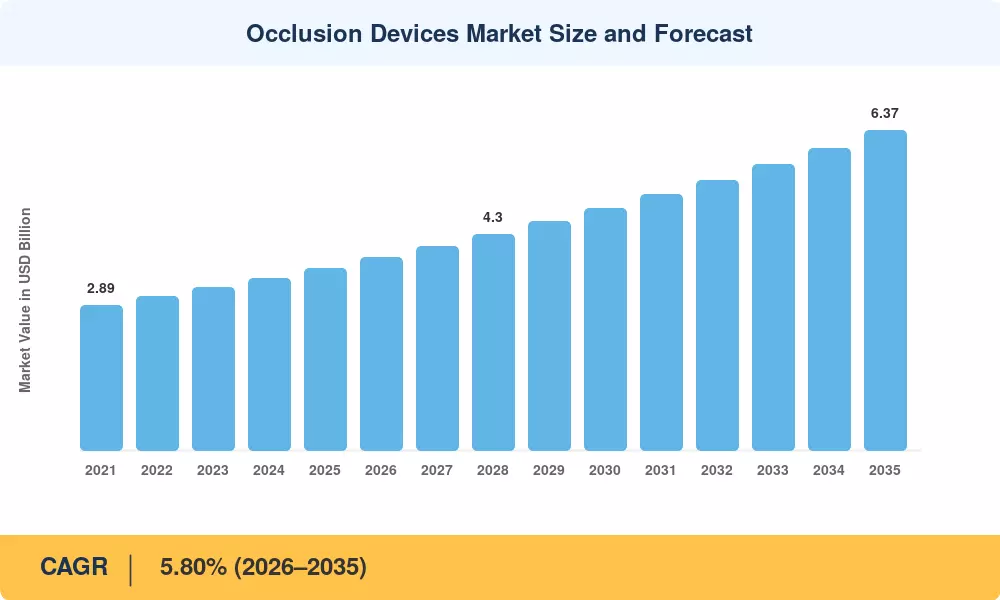
As per MRFR analysis, the Occlusion Devices Market Size was estimated at 3685.59 USD Million in 2024. The Occlusion Devices industry is projected to grow from 3926.48 USD Million in 2025 to 6594.74 USD Million by 2035, exhibiting a compound annual growth rate (CAGR) of 5.39 during the forecast period 2025 - 2035.

Key Market Trends & Highlights

The Occlusion Devices Market is experiencing robust growth driven by technological advancements and increasing demand for minimally invasive procedures.

  • Technological advancements are reshaping the Occlusion Devices Market, enhancing device efficacy and safety.
  • North America remains the largest market, while the Asia-Pacific region is recognized as the fastest-growing area for occlusion devices.
  • In the cardiology segment, balloon occlusion devices dominate, whereas stents are emerging as the fastest-growing category.
  • Key market drivers include the rising prevalence of cardiovascular diseases and increasing awareness of minimally invasive procedures.

Market Size & Forecast

2024 Market Size 3685.59 (USD Million)
2035 Market Size 6594.74 (USD Million)
CAGR (2025 - 2035) 5.39%

Major Players

Medtronic (US), Boston Scientific (US), Abbott Laboratories (US), Terumo Corporation (JP), B. Braun Melsungen AG (DE), Johnson & Johnson (US), Stryker Corporation (US), Cook Medical (US), Cardinal Health (US)

Occlusion Devices Market Trends

The Occlusion Devices Market is currently experiencing a notable evolution, driven by advancements in medical technology and an increasing prevalence of cardiovascular diseases. This market encompasses a variety of devices designed to obstruct blood flow in specific areas, thereby facilitating surgical procedures and improving patient outcomes. The growing awareness of minimally invasive techniques appears to be influencing the demand for occlusion devices, as healthcare providers seek to enhance recovery times and reduce complications associated with traditional surgical methods. Furthermore, the rise in geriatric populations globally is likely to contribute to the expansion of this market, as older individuals are more susceptible to conditions requiring occlusion interventions. In addition, the ongoing research and development efforts in the field of occlusion devices suggest a promising future. Manufacturers are focusing on innovation, creating products that are not only more effective but also safer for patients. Collaborations between medical device companies and healthcare institutions may further accelerate the introduction of advanced occlusion solutions. As the healthcare landscape continues to evolve, the Occlusion Devices Market is poised for growth, driven by technological advancements and an increasing emphasis on patient-centered care. Stakeholders in this sector must remain vigilant to emerging trends and adapt their strategies accordingly to capitalize on the opportunities that lie ahead.

Technological Advancements

The Occlusion Devices Market is witnessing a surge in technological innovations, with manufacturers developing devices that incorporate advanced materials and design features. These enhancements aim to improve the efficacy and safety of occlusion procedures, thereby attracting more healthcare providers to adopt these solutions.

Rising Demand for Minimally Invasive Procedures

There is a growing preference for minimally invasive surgical techniques among both patients and healthcare professionals. This trend is likely to drive the demand for occlusion devices, as they play a crucial role in facilitating such procedures, ultimately leading to shorter recovery times and reduced hospital stays.

Increased Focus on Patient Outcomes

Healthcare providers are increasingly prioritizing patient outcomes, which has led to a heightened interest in occlusion devices. The emphasis on improving recovery rates and minimizing complications is steering investments towards the development of more effective and reliable occlusion solutions.

Occlusion Devices Market Drivers

Market Growth Projections

The Global Occlusion Devices Market Industry is projected to experience substantial growth over the coming years. With an estimated market value of 2.18 USD Billion in 2024, the industry is on track to reach 3.14 USD Billion by 2035. This growth trajectory indicates a compound annual growth rate (CAGR) of 3.37% from 2025 to 2035. Such projections reflect the increasing demand for occlusion devices driven by advancements in technology, rising healthcare expenditures, and a growing emphasis on minimally invasive procedures. The market's expansion is likely to create opportunities for innovation and improved patient outcomes.

Regulatory Support and Approvals

Regulatory support and streamlined approval processes for medical devices are crucial factors influencing the Global Occlusion Devices Market Industry. Regulatory bodies are increasingly recognizing the need for efficient pathways to bring innovative occlusion devices to market. This support fosters an environment conducive to research and development, encouraging manufacturers to invest in new technologies. As a result, the market is expected to experience robust growth, with an emphasis on compliance and safety standards. The proactive stance of regulatory agencies may enhance the overall landscape for occlusion devices, facilitating their integration into clinical practice.

Increasing Healthcare Expenditure

Rising healthcare expenditure across various regions is a pivotal driver for the Global Occlusion Devices Market Industry. Governments and private sectors are investing more in healthcare infrastructure, which includes the procurement of advanced medical devices. This trend is particularly evident in emerging economies, where healthcare budgets are expanding to accommodate new technologies. As a result, the market is anticipated to grow, reaching 3.14 USD Billion by 2035. This increase in funding is likely to facilitate the adoption of occlusion devices, thereby enhancing treatment options for patients.

Rising Prevalence of Cardiovascular Diseases

The increasing incidence of cardiovascular diseases globally drives the demand for occlusion devices. As per recent statistics, cardiovascular diseases remain a leading cause of mortality, prompting healthcare systems to seek effective solutions. The Global Occlusion Devices Market Industry is expected to benefit from this trend, as occlusion devices play a crucial role in managing conditions such as atrial fibrillation and coronary artery disease. With the market projected to reach 2.18 USD Billion in 2024, the focus on innovative occlusion technologies is likely to intensify, addressing the urgent need for improved patient outcomes.

Technological Advancements in Occlusion Devices

Technological innovations are significantly influencing the Global Occlusion Devices Market Industry. The development of advanced materials and minimally invasive techniques enhances the efficacy and safety of occlusion devices. For instance, the introduction of bioresorbable occlusion devices offers promising alternatives to traditional options, potentially reducing complications. As the market evolves, these advancements are expected to contribute to a projected growth rate of 3.37% CAGR from 2025 to 2035. This growth reflects the industry's commitment to improving patient care through cutting-edge technology.

Growing Awareness of Minimally Invasive Procedures

The growing awareness and preference for minimally invasive procedures among patients and healthcare providers significantly impact the Global Occlusion Devices Market Industry. Patients increasingly seek treatments that offer reduced recovery times and lower risks of complications. Consequently, occlusion devices, which are often associated with minimally invasive techniques, are gaining traction. This shift in patient preference is likely to drive market growth, as healthcare providers adapt to meet these demands. The anticipated market expansion underscores the importance of aligning product offerings with evolving patient expectations.

Market Segment Insights

By Application: Cardiology (Largest) vs. Urology (Fastest-Growing)

The Occlusion Devices Market is segmented across various applications, with Cardiology holding the largest share. This segment's dominance is attributed to the increasing prevalence of cardiovascular diseases and the rising preference for minimally invasive procedures. Following closely, Ophthalmology, Neurology, and Gastroenterology also contribute significantly, while Urology is emerging as a critical application due to rising incidences of urological disorders.

Cardiology (Dominant) vs. Urology (Emerging)

In the Occlusion Devices Market, Cardiology is the dominant segment, characterized by advanced device technologies and a wide range of applications such as cardiac surgeries and interventional cardiology. The demand for effective occlusion solutions, like embolic protection devices and occlusion balloons, is driven by the need for improved patient outcomes. In contrast, Urology is an emerging segment, reflecting a growing awareness of urological conditions and advancements in technologies. Urological occlusion devices are gaining traction, primarily due to the increasing incidence of kidney stones and prostate-related conditions, positioning it as a fast-growing area within the market.

By Device Type: Balloon Occlusion Devices (Largest) vs. Stents (Fastest-Growing)

In the Occlusion Devices Market, the distribution of market share among the device types reveals that Balloon Occlusion Devices hold the largest share, dominating due to their widespread application in various medical procedures. Stents, on the other hand, are rapidly gaining traction, showcasing significant growth potential as they become increasingly adopted for innovative therapeutic applications, demonstrating an impressive market shift.

Balloon Occlusion Devices (Dominant) vs. Stents (Emerging)

Balloon Occlusion Devices are characterized by their flexibility and effectiveness in blocking blood flow during surgical procedures. Their established technology and broad utilization in interventions make them the dominant force in the market. In contrast, Stents represent an emerging segment, currently gaining popularity for their role in supporting blood vessels and maintaining vascular integrity. As technology advances, stents are evolving in design and materials, leading to increased acceptance in both surgical and minimally invasive procedures. This evolution positions them as a strong competitor in the market, appealing to a diverse range of medical specialties.

By End User: Hospitals (Largest) vs. Ambulatory Surgical Centers (Fastest-Growing)

In the Occlusion Devices Market, hospitals represent the largest segment, capturing a significant portion of market share due to their extensive use of occlusion devices in various procedures. This dominance is primarily driven by the increased number of surgical interventions and the advanced capabilities of hospital infrastructure to support complex occlusion device technologies. On the other hand, ambulatory surgical centers are rapidly gaining traction, thanks to their focus on outpatient procedures, which require efficient and effective occlusion devices. This segment's growth is fueled by the rising preference for minimally invasive surgeries and cost-efficient healthcare solutions, making them a vital player in the market.

Hospitals (Dominant) vs. Ambulatory Surgical Centers (Emerging)

Hospitals, as the dominant end user in the Occlusion Devices Market, utilize these devices across a wide range of surgical specialties, including cardiology, neurology, and gastroenterology. Their infrastructure allows for advanced training and integration of the latest technologies, leading to high patient turnover and complex cases being handled regularly. Conversely, ambulatory surgical centers represent an emerging segment characterized by their efficiency and convenience, performing minimally invasive surgeries that require specialized occlusion devices. Their growth is propelled by a shift toward outpatient care, as patients seek quicker recovery times and lower costs, positioning them as an important competitor in the market.

Get more detailed insights about Occlusion Devices Market

Regional Insights

North America : Market Leader in Innovation

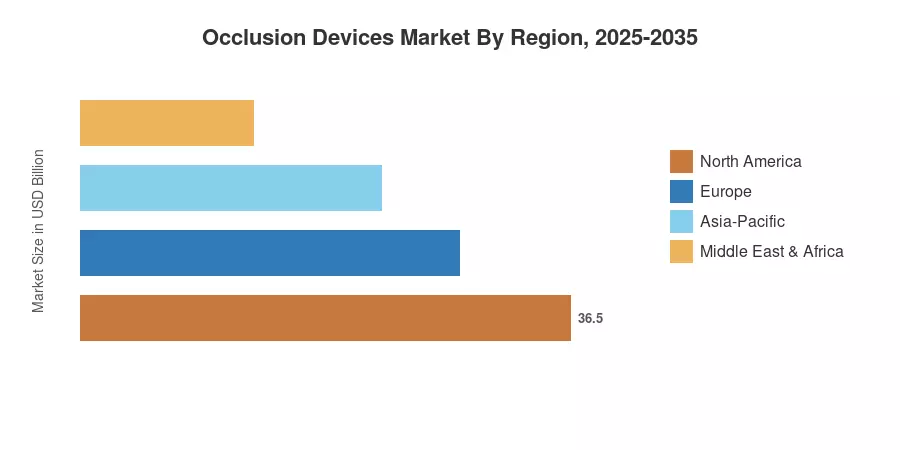
North America continues to lead the Occlusion Devices Market, holding a significant share of 1842.8 million in 2024. The growth is driven by increasing prevalence of chronic diseases, advancements in medical technology, and supportive regulatory frameworks. The demand for minimally invasive procedures is also on the rise, further propelling market expansion. Regulatory bodies are actively promoting innovations, ensuring patient safety while facilitating market entry for new devices. The competitive landscape in North America is robust, featuring key players such as Medtronic, Boston Scientific, and Abbott Laboratories. These companies are investing heavily in R&D to enhance product offerings and maintain market leadership. The U.S. remains the largest market, supported by a well-established healthcare infrastructure and high healthcare expenditure. The presence of major manufacturers ensures a steady supply of advanced occlusion devices, catering to the growing demand across various healthcare settings.

Europe : Emerging Market with Growth Potential

Europe's Occlusion Devices Market is valued at 1101.35 million, reflecting a growing demand driven by an aging population and increasing awareness of chronic diseases. Regulatory bodies in Europe are focusing on enhancing patient safety and efficacy of medical devices, which is expected to boost market growth. The region is witnessing a shift towards innovative solutions, with an emphasis on minimally invasive techniques that align with current healthcare trends. Leading countries in this market include Germany, France, and the UK, where healthcare investments are substantial. The competitive landscape features prominent players like B. Braun Melsungen AG and Terumo Corporation, who are actively expanding their product portfolios. The European market is characterized by stringent regulations, which ensure high-quality standards, thus fostering consumer trust and driving market growth.

Asia-Pacific : Rapidly Growing Market Segment

The Asia-Pacific Occlusion Devices Market, valued at 615.0 million, is experiencing rapid growth due to increasing healthcare investments and rising incidences of cardiovascular diseases. The region is characterized by a growing middle class, which is driving demand for advanced medical technologies. Regulatory bodies are also becoming more supportive, facilitating the introduction of innovative devices to meet the rising healthcare needs of the population. Countries like Japan, China, and India are leading the market, with significant contributions from local manufacturers and global players. The competitive landscape is evolving, with companies like Johnson & Johnson and Stryker Corporation expanding their presence. The focus on improving healthcare infrastructure and access to advanced medical devices is expected to further enhance market growth in this region.

Middle East and Africa : Emerging Market with Challenges

The Middle East and Africa Occlusion Devices Market is valued at 126.44 million, reflecting a nascent but growing sector. The market is driven by increasing healthcare expenditure and a rising prevalence of chronic diseases. However, regulatory challenges and varying healthcare standards across countries pose significant hurdles. Governments are working to improve healthcare access and quality, which is expected to positively impact market growth in the coming years. Leading countries in this region include South Africa and the UAE, where investments in healthcare infrastructure are on the rise. The competitive landscape is marked by the presence of both local and international players, including Cook Medical and Cardinal Health. As the region continues to develop, the demand for advanced occlusion devices is anticipated to grow, supported by ongoing healthcare reforms and increased awareness of medical technologies.

Key Players and Competitive Insights

The Occlusion Devices Market is characterized by a dynamic competitive landscape, driven by technological advancements and an increasing prevalence of chronic diseases necessitating effective treatment options. Key players such as Medtronic (US), Boston Scientific (US), and Abbott Laboratories (US) are at the forefront, each adopting distinct strategies to enhance their market presence. Medtronic (US) focuses on innovation through the development of advanced occlusion devices that integrate digital health technologies, while Boston Scientific (US) emphasizes strategic partnerships to expand its product offerings and market reach. Abbott Laboratories (US) is leveraging its strong research and development capabilities to introduce novel solutions that address unmet medical needs, thereby shaping a competitive environment that prioritizes innovation and patient-centric approaches.

In terms of business tactics, companies are increasingly localizing manufacturing to reduce costs and enhance supply chain efficiency. The market structure appears moderately fragmented, with several players vying for market share, yet the collective influence of major companies like Stryker Corporation (US) and Terumo Corporation (JP) is significant. These companies are optimizing their supply chains and investing in regional expansions to better serve diverse markets, which further intensifies competition.

In November 2025, Stryker Corporation (US) announced the launch of a new line of occlusion devices designed specifically for minimally invasive procedures. This strategic move is likely to enhance Stryker's competitive edge by catering to the growing demand for less invasive treatment options, thereby positioning the company favorably in a market that increasingly values patient comfort and recovery speed. The introduction of these devices may also bolster Stryker's market share as healthcare providers seek innovative solutions.

In October 2025, Terumo Corporation (JP) entered into a collaboration with a leading technology firm to develop AI-driven occlusion devices. This partnership is indicative of a broader trend towards integrating artificial intelligence in medical devices, which could significantly improve diagnostic accuracy and treatment outcomes. By aligning with a technology partner, Terumo is not only enhancing its product portfolio but also positioning itself as a leader in the digital transformation of healthcare.

In September 2025, Boston Scientific (US) expanded its product line through the acquisition of a smaller firm specializing in advanced occlusion technologies. This acquisition is strategically important as it allows Boston Scientific to quickly integrate innovative technologies into its existing offerings, thereby enhancing its competitive position. The move reflects a growing trend of consolidation within the market, as companies seek to bolster their capabilities and expand their technological expertise.

As of December 2025, the competitive trends in the Occlusion Devices Market are increasingly defined by digitalization, sustainability, and the integration of AI technologies. Strategic alliances are becoming more prevalent, enabling companies to pool resources and expertise to drive innovation. The competitive differentiation is likely to evolve from traditional price-based competition towards a focus on technological advancements, supply chain reliability, and the ability to deliver superior patient outcomes. This shift underscores the importance of innovation and adaptability in a rapidly changing healthcare landscape.

Key Companies in the Occlusion Devices Market market include

Industry Developments

  • Q2 2024: Boston Scientific Announces FDA Approval of the EkoSonic Endovascular System for Pulmonary Embolism Boston Scientific received FDA approval for its EkoSonic Endovascular System, designed for the treatment of pulmonary embolism, expanding its portfolio of occlusion and embolization devices.
  • Q1 2024: Penumbra, Inc. Launches New RED Reperfusion Catheters for Occlusion Procedures in the U.S. Penumbra, Inc. announced the commercial launch of its latest RED Reperfusion Catheters in the United States, targeting improved outcomes in occlusion and thrombectomy procedures.
  • Q2 2024: Medtronic Receives CE Mark for Pipeline Vantage Embolization Device with Shield Technology Medtronic announced it has received CE Mark approval for its Pipeline Vantage Embolization Device with Shield Technology, intended for the treatment of brain aneurysms.
  • Q1 2024: Stryker Launches Target Tetra Detachable Coil for Neurovascular Occlusion in Europe Stryker announced the European launch of its Target Tetra Detachable Coil, a device designed for neurovascular occlusion procedures.
  • Q2 2024: Johnson & Johnson MedTech Acquires Laminar, Expanding Structural Heart Occlusion Portfolio Johnson & Johnson MedTech completed the acquisition of Laminar, a company specializing in left atrial appendage occlusion devices, to strengthen its structural heart business.
  • Q1 2024: FDA Approves Abbott’s Amplatzer Talisman PFO Occluder for Stroke Prevention Abbott received FDA approval for its Amplatzer Talisman PFO Occluder, a device indicated for the prevention of recurrent strokes in patients with a patent foramen ovale.
  • Q2 2024: Artio Medical Announces First Patient Treated in U.S. Clinical Study of Amplifi Vein Dilation System Artio Medical announced the first patient has been treated in a U.S. clinical study evaluating the Amplifi Vein Dilation System, an investigational device for vascular occlusion and access.
  • Q1 2024: Terumo Launches AZUR Vascular Plug in Japan for Peripheral Vessel Occlusion Terumo Corporation announced the launch of its AZUR Vascular Plug in Japan, expanding its offerings for peripheral vessel occlusion procedures.
  • Q2 2024: Penumbra Receives FDA Clearance for Indigo Aspiration System with Lightning 12 for Venous Occlusions Penumbra received FDA clearance for its Indigo Aspiration System with Lightning 12, designed for the removal of venous occlusions.
  • Q1 2024: Medtronic Launches Concerto Detachable Coil System for Embolization in the U.S. Medtronic announced the U.S. launch of its Concerto Detachable Coil System, intended for embolization procedures in neurovascular and peripheral vasculature.
  • Q2 2024: Boston Scientific Acquires Obsidio, Inc. to Expand Embolization Portfolio Boston Scientific completed the acquisition of Obsidio, Inc., a company developing novel embolization technology, to enhance its interventional oncology and peripheral interventions business.
  • Q1 2024: Abbott Receives CE Mark for Navitor Transcatheter Aortic Valve Implantation System with Occluder Technology Abbott announced CE Mark approval for its Navitor Transcatheter Aortic Valve Implantation System, which features occluder technology for improved valve sealing.


Future Outlook

Occlusion Devices Market Future Outlook

The Occlusion Devices Market is projected to grow at a 5.39% CAGR from 2024 to 2035, driven by technological advancements, increasing prevalence of chronic diseases, and rising healthcare expenditures.

New opportunities lie in:

  • Expansion into emerging markets with tailored product offerings.
  • Development of innovative occlusion devices utilizing smart technology.
  • Strategic partnerships with healthcare providers for integrated solutions.

By 2035, the Occlusion Devices Market is expected to achieve substantial growth and innovation.

Market Segmentation

Occlusion Devices Market End User Outlook

  • Hospitals
  • Ambulatory Surgical Centers
  • Specialty Clinics
  • Research Institutions

Occlusion Devices Market Application Outlook

  • Cardiology
  • Ophthalmology
  • Neurology
  • Gastroenterology
  • Urology

Occlusion Devices Market Device Type Outlook

  • Balloon Occlusion Devices
  • Stents
  • Clips
  • Sutures
  • Filters

Report Scope

MARKET SIZE 20243685.59(USD Million)
MARKET SIZE 20253926.48(USD Million)
MARKET SIZE 20356594.74(USD Million)
COMPOUND ANNUAL GROWTH RATE (CAGR)5.39% (2024 - 2035)
REPORT COVERAGERevenue Forecast, Competitive Landscape, Growth Factors, and Trends
BASE YEAR2024
Market Forecast Period2025 - 2035
Historical Data2019 - 2024
Market Forecast UnitsUSD Million
Key Companies ProfiledMedtronic (US), Boston Scientific (US), Abbott Laboratories (US), Terumo Corporation (JP), B. Braun Melsungen AG (DE), Johnson & Johnson (US), Stryker Corporation (US), Cook Medical (US), Cardinal Health (US)
Segments CoveredApplication, Device Type, End User
Key Market OpportunitiesAdvancements in minimally invasive techniques drive growth in the Occlusion Devices Market.
Key Market DynamicsRising demand for minimally invasive procedures drives innovation and competition in the occlusion devices market.
Countries CoveredNorth America, Europe, APAC, South America, MEA

Market Highlights

Author
Rahul Gotadki
Assistant Manager

He holds an experience of about 7+ years in Market Research and Business Consulting, working under the spectrum of Life Sciences and Healthcare domains. Rahul conceptualizes and implements a scalable business strategy and provides strategic leadership to the clients. His expertise lies in market estimation, competitive intelligence, pipeline analysis, customer assessment, etc. In addition to the above, his other responsibility includes strategic tracking of high growth markets & advising clients on the potential areas of focus they could direct their business initiatives

Leave a Comment

FAQs

What is the expected growth rate of the global occlusion devices market?

Global occlusion devices market is expected to expand at 8.90% CAGR from 2024 to 2035.

What are the biggest drivers of the global occlusion devices market?

High prevalence of heart diseases and huge demand for its diagnosis are primary drivers of the global occlusion devices market.

What is the restraining factor of the global occlusion devices market?

Alternative treatment methods is the major factor expected to impede the global occlusion devices market growth.

Which region can grow the fastest in the global occlusion devices market?

APAC can showcase a robust CAGR in the global occlusion devices market till 2035 due to increasing focus on early detection of heart diseases.

Who are the prominent players of the global occlusion devices market?

Kyoto Medical Planning Co. Ltd., Translumina GmbH, Elixir Medical Corporation, Abbott Laboratories, Acrostak, Terumo Corporation, Stryker Corporation, Penumbra, Asahi Intecc, Edwards Lifesciences, Biosensors International Group, Ltd., Medtronic plc, Vascular Concepts, B. Braun Melsungen AG, Terumo Corporation, Cardinal Health, Avinger, MicroPort Scientific Corporation, Meril Life Sciences Pvt. Ltd., Boston Scientific Corporation, Cook Group, and Angiodynamics are prominent players of the global occlusion devices market.

Download Free Sample

Kindly complete the form below to receive a free sample of this Report

Compare Licence

×
Features License Type
Single User Multiuser License Enterprise User
Price $4,950 $5,950 $7,250
Maximum User Access Limit 1 User Upto 10 Users Unrestricted Access Throughout the Organization
Free Customization
Direct Access to Analyst
Deliverable Format
Platform Access
Discount on Next Purchase 10% 15% 15%
Printable Versions