Research Methodology on Propylene Oxide Market
1. Introduction
Propylene oxide (PO) is an organic compound that is a colourless and flammable liquid with an aromatic odour. It is usually manufactured from propylene and is used primarily in the production of polyether polyols that are employed in making polyurethane, detergents, and other chemicals. As a result, the increasing demand for polyurethanes in the construction, furniture and automotive industries is projected to drive the propylene oxide market over the assessment period of 2023-2030. According to the Market Research Future (MRFR) report, the global propylene oxide market is poised to expand at a healthy CAGR generating a considerable valuation by the end of the forecast period (2023-2030).
2. Research Methodology
2.1 Research Design
The research methodology adopted in this report is based on a combination of both primary and secondary research sources. The primary research sources consist of interviews with representatives from various commercial and research organizations involved in the production, distribution and utilization of propylene oxide. Secondary research was conducted by analyzing the various secondary sources of information, such as industry magazines, scientific journals, and other relevant sources to identify the market potential, size, and trends. Both types of research have been employed in the course of this study. A qualitative research approach has been adopted, which includes both primary and desktop research.
2.2 Scope of the Study
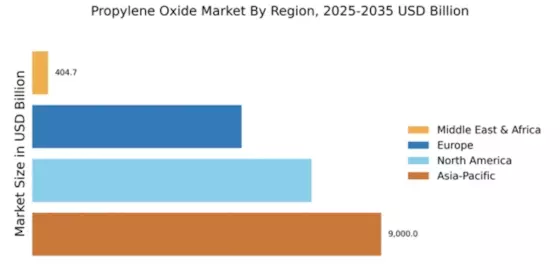
The scope of the study covers a detailed analysis of the global propylene oxide market, including market dynamics and segmentation by type, application and region. The market is segmented based on type into Propylene Oxide (PO) and Cumene Oxide (CO). Based on application, the market is segmented into Polyether Polyols, Antifreeze, Solvents, Surfactants, Additives, and Others. The geographic segmentation of the market is done into North America, Europe, Asia Pacific and the rest of the world.
3. Secondary Data Analysis
For the study, comprehensive secondary research was undertaken to collect information on the market and its different sub-segments. Multiple sources such as World Bank, Facts & Figures, magazines, journals, annual reports, etc. were referred to for identifying and collecting information for accurately analyzing the propylene oxide market. Also included were the overall industry structure, government policies and regulations, past market trends, current market trends, and technological advances related to the market.
4. Primary Research
In order to gain a better understanding of the current market scenario and market trends, primary interviews with key industry experts were conducted. This is composed of a batch of interviews with companies, associations, and industry experts. Relevant Companies and Organizations interviewed include Arkema, Dow, LyondellBasell Industries N.V., Mitsui Chemicals, SABIC, Sinopec, Sud-Chemie, Sumitomo Chemical Co., Ltd. and SK CHEMICALS
The qualitative analysis includes in-depth interviews and discussions with various key opinion leaders, industry experts, and professionals. The primary research conducted ensured credibility and enhanced the accuracy of the secondary research.
5. Analysis Methodology
The resulting data were studied, collated, filtered and organized into summaries. Other reports and publications available in the public domain were also leveraged to gain a full understanding of the market. Subsequently, data is applied to arrive at a forecast and conclusive estimations based on assumptions and fundamental parameters. Additionally, a quantitative analysis of the recent industry developments and trends was included in the report. The report's estimates were tested and verified by expert panels and the ensuing results were validated by the research panel.
6. Market Estimation
The primary and secondary data sources were assessed and the total market size was calculated. Both top-down and bottom-up approaches were considered. The report forecasts for 2023-2030 were determined by evaluating the data gathered from third-party data sources and by analyzing the industry manufacturers’ revenues. Using multiple sources of estimation of the global propylene oxide demand, the overall market size was determined.