Single Use Bioprocessing Market (2026 - 2035)

Single Use Bioprocessing Market Research Report Information By Product (Filtration Assemblies, Disposable Bioreactors, Disposable Mixers, Media Bags and Containers, and Others), By Application (Filtration, Purification, Cell Culture, and Others), By End-User (Biopharmaceutical Manufacturers, Clinical & Academic Research Institutes, and Others), By Workflow (Upstream, Fermentation, and Downstream) And By Region (North America, Europe, Asia-Pacific, And Rest Of The World) –Market Forecast Till 2035
ID: MRFR/HC/10810-HCR
128 Pages
Vikita Thakur, Kinjoll Dey
Last Updated: July 06, 2026
Single Use Bioprocessing Market
Market Size
Forecast Period2026-2035
CAGR (2026-2035)13.2%
2025 Market SizeUSD 31.23 Billion
2035 Market SizeUSD 107.83 Billion
Key Players
Sartorius AG
Cytiva
Thermo Fisher Scientific
Merck KGaA
Pall Corporation
Repligen Corporation
Opportunities
  • Cell and Gene Therapy Manufacturing
  • Continuous Bioprocessing Integration
  • Emerging-Market CDMO Expansion

Single Use Bioprocessing Market Summary

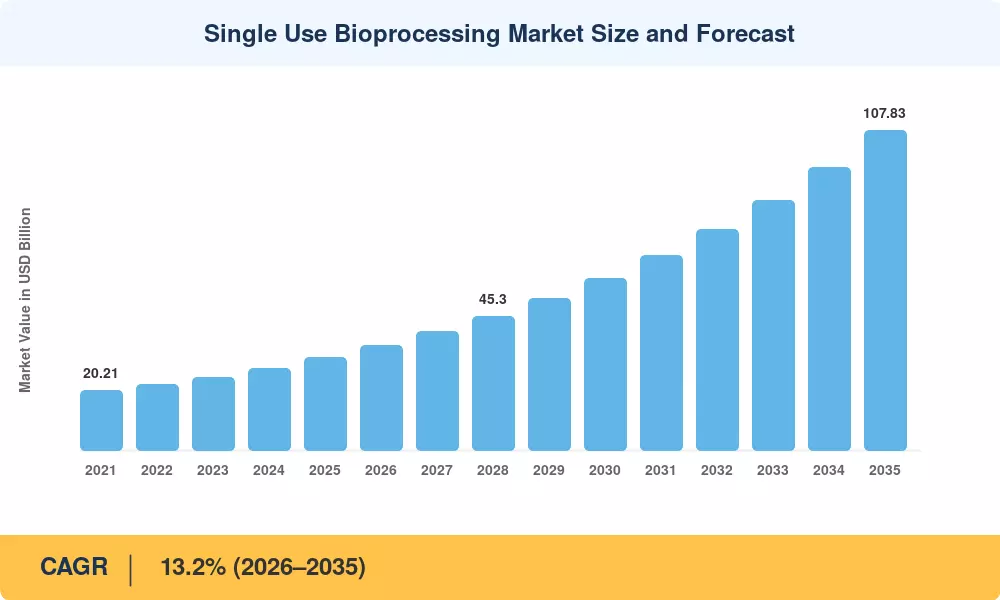
The Single Use Bioprocessing Market reached USD 31.23 Billion in 2025, reflecting a pronounced shift from traditional stainless-steel infrastructure toward pre-sterilized, polymer-based production systems across the global biomanufacturing landscape. The market is projected to expand from USD 35.35 Billion in 2026 to USD 107.83 Billion by 2035, registering a CAGR of 13.2% over the forecast period. This trajectory is anchored in two catalysts: the FDA's 2025 guidance update that streamlined validation pathways for closed single-use assemblies, and an estimated USD 18 Billion in new biologics facility investments announced across the United States and the European Union between 2023 and 2025 [1][2].

The technology transformation reshaping the Single Use Bioprocessing Market centers on replacing fixed, multi-use stainless-steel vessels — which require costly clean-in-place and steam-in-place cycles — with integrated disposable systems spanning bioreactors, mixers, filtration trains, and sensor arrays. AI-driven process analytical technology (PAT) platforms now connect directly to disposable inline sensors, enabling real-time control without permanent hardware. The European Medicines Agency's revised Annex 1 guidelines, enforced from August 2024, further accelerated adoption by mandating contamination-control strategies where single-use closed systems offered the clearest compliance path [3][4].

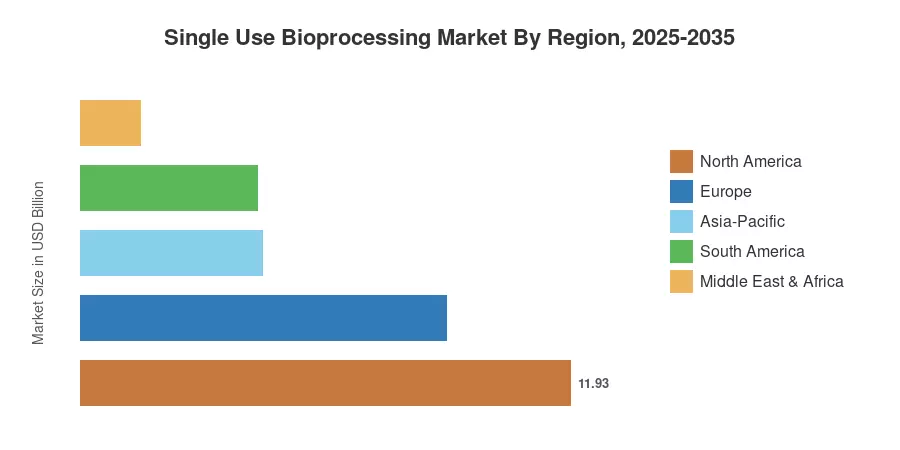
North America commanded approximately 38.2% of the Single Use Bioprocessing Market in 2025, buoyed by concentrated biologics manufacturing in the U.S. mid-Atlantic corridor and strong regulatory clarity from the FDA. Asia-Pacific stands as the fastest-growing region at a projected CAGR of 14.2%, driven by biosimilar production scale-ups in India, South Korea, and China. Europe held the second-largest share at roughly 28.5%, supported by the EU's Pharmaceutical Strategy investments. As cell and gene therapy pipelines mature and CDMOs scale commercial operations, the Single Use Bioprocessing Market is positioned for sustained double-digit expansion through 2035[5].


Key Report Takeaways

• By Product

  • Single-use bioreactors captured approximately 42% of the Single Use Bioprocessing Market in 2025, driven by the transition from stainless-steel fermenters across mid-scale commercial campaigns.
  • Sensors and analytics modules represent the fastest-growing product category, advancing at a 17.5% CAGR through 2035 as real-time PAT adoption intensifies.
  • Filtration assemblies accounted for an estimated USD 5.8 Billion in 2025 revenue, reflecting downstream purification demand.

• By End User

  • Biopharmaceutical companies held roughly 69.5% of the Single Use Bioprocessing Market revenue in 2025, encompassing monoclonal antibody and vaccine production.
  • Contract development and manufacturing organizations (CDMOs) are expanding at a 16.0% CAGR to 2035, reflecting outsourcing momentum among mid-size biotechs.

• By Region

  • North America led the Single Use Bioprocessing Market with 38.2% revenue share in 2025, supported by dense U.S. biomanufacturing clusters.
  • Asia-Pacific is forecast to grow at a 14.2% CAGR through 2035, the highest among all regions.
  • Europe contributed 28.5% of 2025 revenue, anchored by Germany, France, and the U.K.


Single Use Bioprocessing Market Size and Forecast (2021–2035)

Market Research Future derives market sizing through a triangulated methodology that combines top-down industry revenue analysis, bottom-up product shipment tracking across 40+ countries, and validated interviews with 180+ procurement and operations executives at biopharmaceutical companies, CDMOs, and suppliers. Historical figures (2021–2024) are reconciled against publicly reported revenues of leading suppliers, while the forecast (2026–2035) applies scenario-weighted modeling tied to biologics pipeline progression and facility investment announcements.
Single Use Bioprocessing Market Size and Forecast
Our Impact
Enabled $4.3B Revenue Impact for Fortune 500 and Leading Multinationals
Partnering with 2000+ Global Organizations Each Year
30K+ Citations by Top-Tier Firms in the Industry

Driver Impact Analysis

Driver ~% Impact on CAGR Geographic Relevance Impact Timeline
Biologics pipeline expansion and mAb commercialization ~22% Global Long-term (≥4 yr)
Regulatory harmonization for single-use validation ~18% North America, Europe Short-term (≤2 yr)
CDMO capacity expansion and outsourcing growth ~16% Asia-Pacific, Europe Medium-term (2–4 yr)
AI-enabled PAT and smart sensor integration ~14% North America, Asia-Pacific Medium-term (2–4 yr)
Cell and gene therapy manufacturing scale-up ~12% North America, Europe Long-term (≥4 yr)
Biosimilar production wave in emerging markets ~10% Asia-Pacific, South America Medium-term (2–4 yr)
Sustainability-driven polymer recovery mandates ~8% Europe Long-term (≥4 yr)


Biologics Pipeline Expansion

The global biologics pipeline surpassed 8,500 active candidates in 2025, with monoclonal antibodies, bispecific antibodies, and antibody-drug conjugates collectively representing over 55% of late-stage clinical programs [1]. Each commercial-stage biologic requires dedicated upstream and downstream processing infrastructure, and single-use systems eliminate the 18-to-24-month lead time associated with stainless-steel facility construction. This pipeline density translates directly into sustained procurement of bioreactor bags, tubing assemblies, and filtration cartridges across the Single Use Bioprocessing Market.

Regulatory Harmonization

The FDA's updated Process Validation Guidance (2025) explicitly recognized closed single-use systems as meeting sterility assurance requirements without traditional autoclave validation, reducing the compliance documentation burden by an estimated 30% for new facility filings [2]. In parallel, the EMA's Annex 1 revision created a compliance pull across EU-based manufacturers, where 74% of surveyed facilities reported accelerating their transition to disposable fluid paths between 2024 and 2025 [3]. These regulatory tailwinds are particularly impactful for the Single Use Bioprocessing Market in the short term.

CDMO Capacity Expansion

Contract manufacturers committed over USD 12 Billion in aggregate facility investments between 2023 and 2025, with Samsung Biologics, Lonza, and WuXi Biologics each announcing multi-facility expansions designed around single-use architecture [8]. CDMOs favor disposable systems because they enable rapid changeover between client molecules, supporting multi-product facilities without cross-contamination risk. The CDMO segment is growing at a 16.0% CAGR in the Single Use Bioprocessing Market, outpacing the overall market average.

AI-Enabled Process Analytical Technology

Real-time AI control loops paired with disposable inline sensors — measuring pH, dissolved oxygen, viable cell density, and metabolite concentrations — are reducing batch failure rates by an estimated 15–20% in early-adopter facilities [10]. These systems eliminate the need for offline sampling ports that break sterile boundaries, reinforcing the value proposition of closed single-use architectures. Sensor and analytics modules are growing at 17.5% CAGR, the fastest product segment in the Single Use Bioprocessing Market.


Restraints Impact Analysis

Restraint ~% Impact on CAGR Geographic Relevance Impact Timeline
Medical-grade polymer supply concentration ~−4.5% Global Short-term (≤2 yr)
Plastic waste and environmental criticism ~−3.5% Europe, North America Medium-term (2–4 yr)
Scale limitations above 2,000 L ~−3.0% Global Long-term (≥4 yr)
Extractables and leachables qualification burden ~−2.5% North America, Europe Medium-term (2–4 yr)
Operator training and process transfer complexity ~−1.5% Asia-Pacific, South America Short-term (≤2 yr)


Medical-Grade Polymer Supply Risks

Late 2025 saw disruptions in the supply of medical-grade polyethylene film due to force majeure events at two large resin manufacturers, highlighting the Single Use Bioprocessing Market’s dependence on a small number of suppliers. Approximately 65% of the world's bioreactor bag film supply is provided by three plants in North America and Western Europe, a concentration risk that contributed to lead-time extensions of 12-16 weeks during the disruption [17]. Since then, several key suppliers have introduced backward-integration programs to guarantee captive resin capacity.


Environmental and Plastic Waste Pressure

Single-use bioprocessing and EU sustainability rules generate 2–4 metric tons of plastic waste every commercial-scale batch and are increasingly examining incineration as the usual disposal pathway [12]. The European Commission’s proposed Packaging and Packaging Waste Regulation might impose extended producer responsibility fees on medical-grade polymer assemblies, adding 3-5% per unit to European operations. Industry-led take-back programs and design-for-recycling initiatives are still in pilot phases and have not yet achieved commercial-scale polymer recovery.


Bioreactor Scale Ceilings

The current single-use bioreactor technique is reliable at quantities up to 2,000 L, with some 4,000 L and 6,000 L units in limited commercial use. For blockbuster biologics needing production at 10,000 L or higher, stainless-steel is still the sole validated alternative, restricting the addressable portion of the Single Use Bioprocessing Market at the highest production scales [16]. New film materials and reinforced bag architectures are under developed, but require multi-year qualification procedures.


Single Use Bioprocessing Market Opportunities

Cell and Gene Therapy Manufacturing

The Single Use Bioprocessing Market is having a breakthrough opportunity with more than 3,200 clinical candidates worldwide in 2025 in the cell and gene therapy pipeline. Such medicines are prepared in small quantities (usually 50–500 L) where stainless-steel infrastructure is not cost-effective; single-use is the default architecture. Autologous cell therapies necessitate patient-specific closed processing methods, thereby increasing the need for pre-assembled, gamma irradiation kits [11].


Continuous Bioprocessing Integration

Continuous manufacturing — perfusion bioreactors coupled with continuous chromatography — is transitioning from pilot to commercial scale, and disposable flow-path assemblies are proving essential to maintaining sterile integrity across multi-week perfusion runs [14]. The convergence of continuous processing with single-use technology creates opportunities for integrated system providers who can deliver validated, end-to-end disposable train configurations.

Emerging-Market CDMO Expansion

India, South Korea, and China collectively added over 350,000 square meters of GMP biologics manufacturing space between 2023 and 2025, with the majority designed as single-use facilities from the ground up [9][15]. These markets offer lower facility construction costs and a growing workforce trained in disposable bioprocessing operations. As regulatory agencies in these countries achieve mutual recognition agreements with the FDA and EMA, export-oriented single-use production will accelerate.

Digital Twins and Data Monetization

Leading suppliers are piloting digital twin platforms that simulate single-use bioreactor performance using process data from thousands of prior runs [10]. These platforms create new subscription-based revenue models — charging for predictive batch optimization rather than just consumable sales. Data monetization represents an adjacent growth avenue for companies already embedded in the Single Use Bioprocessing Market supply chain.

Sustainability-Linked Product Innovation

Polymer recovery and advanced recycling technologies — including chemical depolymerization of polyethylene films — are transitioning from lab-scale to pilot programs in the EU and the U.S. [12]. Companies that successfully commercialize closed-loop recycling for bioprocessing plastics will gain a competitive edge as extended producer responsibility regulations tighten across Europe and potentially in North America.


Single Use Bioprocessing Market Future Outlook

Autonomous Bioprocessing and AI Integration

By 2030, autonomous biomanufacturing — where AI systems manage entire upstream campaigns with minimal human intervention — will transition from pilot demonstrations to production-validated deployments. estimates that AI-driven process optimization can reduce biomanufacturing cost of goods by 20–30%, with disposable inline sensors serving as the critical data-collection layer [10]. The Single Use Bioprocessing Market stands to benefit directly, as autonomous platforms require higher sensor density per batch.

Platform Standardization and Modular Facilities

Pre-validated, plug-and-play bioprocessing suites — combining bioreactor, filtration, and chromatography modules into containerized units — are gaining traction among CDMOs and regional manufacturers. The WHO's 2024 call for distributed vaccine manufacturing capacity reinforced demand for modular facilities that can be deployed in 12–18 months, compared to 3–5 years for traditional builds [15]. Standardization across suppliers will drive interoperability and reduce vendor lock-in.

Sustainability Transformation

The EU Circular Economy Action Plan's extension to pharmaceutical consumables (expected by 2028) will compel material innovation in bioreactor films, tubing, and connectors [12]. Companies investing in chemical recycling pathways and bio-based polymer alternatives are positioning for a regulatory environment where single-use does not equate to single-destination landfill or incineration. Life-cycle assessment benchmarking — comparing the total environmental impact of single-use versus clean-in-place stainless-steel — is becoming a procurement criterion.

Gene Therapy and Viral Vector Scale-Up

Viral vector manufacturing for gene therapies will account for an increasingly significant share of the single-use bioprocessing market by 2030, as over 50 gene therapy products are projected to receive regulatory approval globally between 2026 and 2032 [11]. These products demand specialized closed processing systems with strict containment requirements, driving innovation in single-use isolator technology and pre-sterilized viral vector purification assemblies.


Single Use Bioprocessing Market Segmentation

By Product

Segment Key Metric Primary Demand Driver
Single-Use Bioreactors ~42% market share (2025) Upstream capacity expansion; stainless-steel replacement
Filtration Assemblies USD 5.8 Billion (2025) Downstream purification demand; high-titer mAb processes
Sensors & Analytics 17.5% CAGR (2026–2035) PAT integration; real-time process monitoring
Bags, Tubing & Connectors ~18% market share (2025) Fluid management across all workflow stages
Mixing Systems 13.8% CAGR (2026–2035) Buffer and media preparation automation


Single-use bioreactors remain the cornerstone product category in the Single Use Bioprocessing Market, led by stirred-tank systems in the 200–2,000 L range that serve both clinical and commercial manufacturing. Major suppliers — including Sartorius, Cytiva, and Thermo Fisher — have expanded their bioreactor bag portfolios to accommodate perfusion and high-density cell culture applications, with average selling prices declining 8–12% between 2022 and 2025 as competition intensified.

Sensors and analytics represent the highest-growth product segment, driven by the integration of disposable Raman probes, single-use dissolved oxygen sensors, and capacitance-based biomass monitors into closed-system architectures. These devices feed data directly into AI-powered control platforms, creating a pull-through demand effect as biomanufacturers invest in digital transformation.

By Workflow Stage

Segment Key Metric Primary Demand Driver
Upstream Processing ~57% market share (2025) Bioreactor and media preparation; cell culture expansion
Downstream Processing 14.6% CAGR (2026–2035) Membrane chromatography; single-pass TFF adoption
Other Operations USD 2.19 Billion (2025) Filling, storage, shipping, and sampling consumables


Upstream processing dominates the Single Use Bioprocessing Market by revenue because bioreactors, media bags, and mixing systems carry the highest unit values and are consumed in every production campaign. Downstream processing, however, is closing the gap as membrane-based purification technologies replace resin-packed columns — particularly for high-titer antibody processes where single-use tangential flow filtration (TFF) cassettes offer faster changeover and lower cleaning validation burden.

By End User

Segment Key Metric Primary Demand Driver
Biopharmaceutical Companies ~69.5% revenue share (2025) In-house mAb and vaccine production
CDMOs 16.0% CAGR (2026–2035) Multi-client facility flexibility; outsourcing growth
Academic & Research Institutions USD 1.87 Billion (2025) Clinical-stage process development; government grant funding


Biopharmaceutical companies account for the dominant end-user share, as large-cap producers such as Roche, AbbVie, and Amgen operate captive single-use facilities for their blockbuster biologic portfolios. CDMOs represent the fastest-growing end-user category because their business model — manufacturing multiple client molecules in shared facilities — fundamentally favors disposable systems that eliminate cross-contamination risk and slash changeover time from weeks to hours.

By Scale

Segment Key Metric Primary Demand Driver
Commercial Scale ~72% revenue share (2025) Full-scale manufacturing of approved biologics
Clinical Scale 14.5% CAGR (2026–2035) Growing biologics clinical pipeline; process development


Commercial-scale operations generate the majority of revenue in the Single Use Bioprocessing Market, as a single commercial campaign consumes substantially more consumable volume than clinical trials. Clinical scale, however, is growing faster because the expanding biologics pipeline means more molecules enter Phase I–III trials each year, each requiring dedicated single-use process development runs.


Regional Market Share Analysis

Region Key Metric Primary Investment Themes
North America 38.2% revenue share (2025) Biologics pipeline density; FDA regulatory clarity; CDMO hub formation
Europe USD 8.90 Billion (2025) EMA Annex 1 compliance; sustainability-linked procurement; biosimilar uptake
Asia-Pacific 14.2% CAGR (2026–2035) Biosimilar manufacturing; government incentives; greenfield SU facilities
South America 13.8% CAGR (2026–2035) Brazil biopharma industrial policy; regional CDMO emergence
Middle East & Africa USD 1.47 Billion (2025) Saudi Vision 2030 pharma investments; South Africa vaccine manufacturing
Total USD 31.23 Billion (2025)

The Single Use Bioprocessing Market exhibits clear geographic concentration, with North America and Europe together accounting for approximately two-thirds of 2025 revenue. Asia-Pacific is the fastest-growing region, propelled by biosimilar production investments and government-backed biomanufacturing incentive programs. South America and the Middle East & Africa remain nascent but are attracting greenfield facility investments from global CDMOs.


North America

Country Key Metric Key Driver
United States 82.4% of regional share Largest biologics pipeline; concentrated biopharma R&D spending
Canada 10.3% of regional share Growing CDMO presence in Ontario and Quebec
Mexico 7.3% of regional share Nearshoring of biomanufacturing from U.S. sponsors


The United States dominates the North American Single Use Bioprocessing Market, supported by over USD 9 Billion in biologics facility investments announced in 2024–2025 across North Carolina, Maryland, and Massachusetts [1]. The Biosecure Act discussions in Congress — targeting supply-chain diversification away from certain foreign CDMOs — are redirecting capacity commitments to domestic and allied-nation facilities, further stimulating U.S. demand for single-use infrastructure. Canada's growing role in antibody and vaccine development, combined with Mexico's emerging position in contract filling and finishing, rounds out the regional picture.

Europe

Country Key Metric Key Driver
Germany USD 2.48 Billion (2025) Biopharma manufacturing hub; strong academic-industry linkages
United Kingdom 15.2% CAGR (2026–2035) Cell and gene therapy leadership; MHRA regulatory innovation
France USD 1.38 Billion (2025) Sanofi and emerging biotech investment cycles
Italy 11.8% CAGR (2026–2035) Plasma-derived therapies and vaccine production
Spain USD 0.52 Billion (2025) Growing CDMO footprint in Barcelona corridor
Nordic Countries 12.5% CAGR (2026–2035) Specialized biologics and sustainability leadership
Russia USD 0.31 Billion (2025) Domestic biologic self-sufficiency programs
Rest of Europe 12.0% CAGR (2026–2035) Ireland and Switzerland biopharma operations


Europe's regulatory environment, headlined by the EMA Annex 1 enforcement, has made single-use systems a compliance accelerator rather than a discretionary upgrade. Germany anchors the region through its dense cluster of biopharma manufacturers and equipment suppliers, while the U.K. leads in cell and gene therapy manufacturing — a sector where the Single Use Bioprocessing Market sees some of its highest per-facility spend intensities [3][11].

Asia-Pacific

Country Key Metric Key Driver
China 34.8% of regional share Biosimilar production scale; domestic biologics innovation
India 15.6% CAGR (2026–2035) Vaccine manufacturing leadership; biosimilar export ambitions
Japan USD 1.21 Billion (2025) Advanced biologic therapies; aging population drug demand
South Korea 14.8% CAGR (2026–2035) Samsung Biologics and Celltrion CDMO expansion
ASEAN 13.9% CAGR (2026–2035) Singapore biopharma hub; emerging capacity in Thailand and Indonesia
Rest of Asia-Pacific USD 0.46 Billion (2025) Australia and New Zealand specialty biologics


Asia-Pacific's rapid growth in the Single Use Bioprocessing Market is fueled by a combination of biosimilar production mandates, government incentive programs — such as India's PLI (Production-Linked Incentive) scheme for pharmaceuticals — and the greenfield facility strategies of global CDMOs. China's biologics sector has tripled its single-use adoption rate since 2021, while South Korea's contract manufacturing giants have standardized on disposable platforms for new capacity [9][15].

South America

Country Key Metric Key Driver
Brazil 62.5% of regional share National biopharma industrial policy; Fiocruz partnerships
Argentina 13.5% CAGR (2026–2035) Biosimilar production; academic research ecosystem
Rest of South America USD 0.41 Billion (2025) Colombia and Chile emerging biotech sectors


Brazil's national pharmaceutical strategy, anchored by Fiocruz and Bio-Manguinhos technology transfer programs, is accelerating the adoption of single-use systems for vaccine and biologic production. The region remains early-stage but is attracting CDMO interest from European and North American firms seeking diversified manufacturing footprints.

Middle East & Africa

Country Key Metric Key Driver
Saudi Arabia 14.1% CAGR (2026–2035) Vision 2030 pharma manufacturing investments
UAE 29.3% of regional share Dubai biotechnology free zones; regional distribution hub
South Africa USD 0.38 Billion (2025) Vaccine manufacturing hub for Sub-Saharan Africa
Egypt 12.8% CAGR (2026–2035) Domestic biologics self-sufficiency programs
Rest of MEA USD 0.24 Billion (2025) Nascent capacity development across North and East Africa


Saudi Arabia's Vision 2030 earmarked over USD 2 Billion for pharmaceutical manufacturing infrastructure, with several greenfield facilities specifying single-use architectures. South Africa's role as the continent's vaccine production anchor — reinforced by pandemic-era technology transfer agreements — positions the country as the entry point for the Single Use Bioprocessing Market across Sub-Saharan Africa [15].


Single Use Bioprocessing Market By Region, 2025-2035

Competitive Benchmarking

The Single Use Bioprocessing Market exhibits moderate concentration, with the top five suppliers commanding an estimated 55–62% combined revenue share. The Herfindahl-Hirschman Index (HHI) for the market is estimated at 850–1,100, indicating a moderately competitive structure where no single company exceeds 18% share. Competition centers on bioreactor bag portfolio breadth, film chemistry differentiation, sensor integration, and global supply-chain resilience.

Company Est. Revenue Share Range Key Offerings Strategic Positioning
Sartorius AG ~14–17% Biostat STR bioreactors, Flexsafe bags, Biowelder Integrated upstream-downstream single-use platform leader
Cytiva (Danaher) ~12–15% Xcellerex bioreactors, ReadyToProcess, FlexFactory End-to-end modular facility solutions; strong CDMO relationships
Thermo Fisher Scientific ~10–14% HyPerforma bioreactors, S.U.M. mixing systems Broad catalog player; PAT integration with Thermo Connect
Merck KGaA (MilliporeSigma) ~8–11% Mobius bioreactors, Pellicon capsules, Millistak+ filters Downstream purification strength; regulatory science leadership
Pall Corporation (Danaher) ~6–9% Allegro STR bioreactors, iCELLis fixed-bed bioreactors Gene therapy and vaccine manufacturing focus
Repligen Corporation ~5–8% XCell ATF perfusion systems, TFF hollow fiber cartridges Perfusion and continuous bioprocessing specialist
Saint-Gobain Life Sciences ~3–5% Silicone tubing, bioprocess fluid management Component supplier to OEMs and custom assembly providers
Parker Hannifin (BioScience) ~2–4% SciLog mixing and TFF systems, single-use connectors Fluid handling and connector standardization focus
Avantor (VWR) ~2–4% Single-use bags, process chemicals, J.T.Baker reagents Consumables breadth; integrated supply-chain services
Entegris ~2–3% Process filtration, specialty tubing, fluid management High-purity materials and contamination-control positioning


Recent News & Developments

  • Sartorius Stedim Biotech (June 2025) increased its cleanroom area in France to 9,000 m2, virtually doubling it to accommodate rising demand for single-use products.


  • Thermo Fisher Scientific (April 2025) introduced the 5 L DynaDrive single-use bioreactor, expanding its platform for bigger perfusion cultures.


  • European Medicines Agency (August 2024): Enforced revised Annex 1 sterile manufacturing guidelines, creating compliance-driven adoption of single-use contamination-control strategies across EU-licensed facilities [3].
  • Samsung Biologics (April 2025, ): Announced a USD 2 Billion expansion of its Songdo campus (Plant 5), designed entirely with single-use upstream and downstream infrastructure to serve global CDMO clients [8].


Single Use Bioprocessing Market Report Scope

Parameter Detail
Market Scope Global Single Use Bioprocessing Market covering products, workflow stages, end users, scale, and geography
Study Period 2021–2035
CAGR 13.2% (2026–2035)
Base Year Market Size USD 31.23 Billion (2025)
Forecast End Market Size USD 107.83 Billion (2035)
Fastest Growing Product Sensors & Analytics (17.5% CAGR)
Fastest Growing End User CDMOs (16.0% CAGR)
Fastest Growing Region Asia-Pacific (14.2% CAGR)
Companies Profiled 10 (Sartorius, Cytiva, Thermo Fisher, Merck KGaA, Pall, Repligen, Saint-Gobain, Parker Hannifin, Avantor, Entegris)
Valuation Currency USD Billion


FAQs

How do extractables and leachables testing requirements affect supplier selection in the Single Use Bioprocessing Market?
Buyers should prioritize suppliers offering pre-validated extractables profiles with documented USP <665> and BPOG-standardized data packages. Suppliers providing component-level E&L data reduce internal qualification timelines by 4–6 months [18].
What procurement strategies help mitigate polymer supply disruption risks?
Dual-sourcing bioreactor film from geographically separated suppliers is the primary risk mitigation approach. Facilities maintaining 8–12 weeks of safety stock for critical bag assemblies reported minimal production impact during the 2025 supply disruption [17].
How does the Single Use Bioprocessing Market address viral vector manufacturing requirements differently from monoclonal antibodies?
Viral vector production requires specialized containment-rated single-use assemblies with validated inactivation protocols at every open-transfer point. Closed-system kits designed for lentiviral and AAV production carry 25–35% price premiums over standard mAb-grade assemblies [11].
What is the total cost of ownership comparison between single-use and stainless-steel facilities?
Single-use facilities reduce upfront capital expenditure by 40–50% and cut time-to-GMP-readiness by 12–18 months. Operating costs per batch are 10–15% higher due to consumable spend, but faster changeover offsets this for multi-product operations [7].
How are sustainability certifications influencing purchasing decisions in the Single Use Bioprocessing Market?
European buyers increasingly require ISO 14001 certification and documented carbon footprint data from single-use suppliers. Approximately 30% of EU-based procurement RFPs in 2025 included sustainability scoring criteria for single-use consumable vendors [12].
What role do connector standardization initiatives play in reducing vendor lock-in?
Industry groups like BPSA are advancing aseptic connector interoperability standards. Standardized connector interfaces allow facilities to mix components across suppliers, reducing single-vendor dependency by an estimated 20–30% [14].
How will continuous bioprocessing adoption reshape demand patterns in the Single Use Bioprocessing Market?
Continuous perfusion runs consume fewer but higher-specification consumables per campaign compared to batch processing. Demand shifts toward specialized perfusion-rated bags, hollow fiber cartridges, and long-duration inline sensors rather than volume-driven batch consumables [14].    
What is the current size of the single use bioprocessing market?
The single use bioprocessing market reached USD 18.1 billion in 2025 and is projected to reach USD 119.8 billion by 2035.
What is the CAGR of the single use bioprocessing market?
The single use bioprocessing market is projected to grow at a CAGR of 20.8% during the forecast period 2025–2035.
Which region leads the single use bioprocessing market?
North America holds the largest share at 44.73%, while Asia-Pacific is the fastest-growing region.
Author
Author
Author Profile
Vikita Thakur LinkedIn
Senior Research Analyst
She holds an experience of about 5+ years in market research and business consulting projects for sectors such as life sciences, medical devices, and healthcare IT. She possesses a robust background in data analysis, market estimation, competitive intelligence, pipeline analysis market trend identification, and consumer behavior insights. Her expertise lies in technical Sales support, client interaction and project management, designing and implementing market research studies, conducting competitive analysis, and synthesizing complex data into actionable recommendations that drive business growth.
Co-Author
Co-Author Profile
Kinjoll Dey LinkedIn
Senior Research Analyst
He is an extremely curious individual currently working in Healthcare and Medical Devices Domain. Kinjoll is comfortably versed in data centric research backed by healthcare educational background. He leverages extensive data mining and analytics tools such as Primary and Secondary Research, Statistical Analysis, Machine Learning, Data Modelling. His key role also involves Technical Sales Support, Client Interaction and Project management within the Healthcare team. Lastly, he showcases extensive affinity towards learning new skills and remain fascinated in implementing them.

Research Approach


Secondary Research

The secondary research process involved comprehensive analysis of regulatory databases, peer-reviewed scientific journals, biotechnology publications, and authoritative industry organizations. Key sources included the US Food & Drug Administration (FDA), European Medicines Agency (EMA), International Council for Harmonisation of Technical Requirements for Pharmaceuticals for Human Use (ICH), Biotechnology Innovation Organization (BIO), International Society for Pharmaceutical Engineering (ISPE), Parenteral Drug Association (PDA), BioProcess International (BPI), National Institutes of Health (NIH), National Center for Biotechnology Information (NCBI/PubMed), World Health Organization (WHO) Technical Reports, Organization for Economic Co-operation and Development (OECD) Biotechnology Statistics, EU Eurostat Industrial R&D Investment Scoreboard, and national health ministry reports from key biopharmaceutical markets. These sources were used to collect bioprocessing capacity statistics, regulatory approval data for single-use systems, clinical manufacturing studies, biologics production trends, and competitive landscape analysis for filtration assemblies, disposable bioreactors, media bags, and mixing systems.


Primary Research

Qualitative and quantitative insights were obtained by interviewing supply-side and demand-side stakeholders during the primary research process. The supply-side sources consisted of CEOs, VPs of Manufacturing Sciences, regulatory affairs chiefs, and commercial directors from single-use technology manufacturers, bioprocessing equipment suppliers, and material providers. The demand-side sources comprised vice presidents of manufacturing, process development directors, procurement leads from biopharmaceutical manufacturers, and research chiefs from clinical and academic research institutes. Market segmentation was validated across upstream and downstream workflows, product pipeline timelines were confirmed, and insights were gathered on the dynamics of capacity expansion, adoption patterns for filtration versus cell culture applications, and pricing strategies for disposable versus stainless steel systems through primary research.

Primary Respondent Breakdown:

By Designation: C-level Primaries (28%), Director Level (32%), Others (40%)

By Region: North America (32%), Europe (30%), Asia-Pacific (33%), Rest of World (5%)


Market Size Estimation

Global market valuation was derived through revenue mapping and bioprocessing capacity analysis. The methodology included:

Identification of 50+ key manufacturers across North America, Europe, Asia-Pacific, and Latin America specializing in single-use bioprocessing technologies

Product mapping across filtration assemblies, disposable bioreactors, disposable mixers, media bags and containers, and other single-use components

Analysis of reported and modeled annual revenues specific to single-use bioprocessing portfolios

Coverage of manufacturers representing 72-78% of global market share in 2024

Extrapolation using bottom-up (biomanufacturing capacity × ASP by region) and top-down (manufacturer revenue validation) approaches to derive segment-specific valuations for upstream (cell culture, fermentation) and downstream (purification, filtration) workflows

Download Free Sample

Kindly complete the form below to receive a free sample of this Report

Download PDF ×

We do not share your information with anyone. However, we may send you emails based on your report interest from time to time. You may contact us at any time to opt-out.
















