Download Free Sample
Kindly complete the form below to receive a free sample of this Report
South America Insulin Biosimilars Market Research Report: Size, Share, Trend Analysis By Types (Rapid-acting biosimilars, Long-acting biosimilars, Premixed biosimilars), By Indication (TYPE I DIABETES, TYPE II DIABETES) andBy Region (Brazil, Mexico, Argentina, Rest of South America) - Growth Outlook & Industry Forecast 2025 To 2035
As per Market Research Future analysis, the South America insulin biosimilars market size was estimated at 0.554 USD Million in 2024. The South America insulin biosimilars market is projected to grow from 0.595 USD Million in 2025 to 1.2 USD Million by 2035, exhibiting a compound annual growth rate (CAGR) of 7.3% during the forecast period 2025 - 2035
The South America insulin biosimilars market is poised for substantial growth driven by regulatory support and rising diabetes prevalence.
| 2024 Market Size | 0.554 (USD Million) |
| 2035 Market Size | 1.2 (USD Million) |
| CAGR (2025 - 2035) | 7.31% |
Sanofi (FR), Boehringer Ingelheim (DE), Mylan (US), Sandoz (CH), Teva (IL), Fresenius Kabi (DE), Celltrion (KR), Amgen (US), Eli Lilly (US)
Our Impact
Enabled $4.3B Revenue Impact for Fortune 500 and Leading Multinationals
Partnering with 2000+ Global Organizations Each Year
30K+ Citations by Top-Tier Firms in the Industry
The insulin biosimilars market in South America is currently experiencing notable growth, driven by increasing diabetes prevalence and rising healthcare costs. The region's healthcare systems are gradually adopting biosimilars as a cost-effective alternative to traditional insulin therapies. This shift is influenced by government initiatives aimed at improving access to essential medications, which may enhance patient outcomes. Furthermore, the regulatory landscape is evolving, with several countries in South America implementing frameworks to facilitate the approval and commercialization of biosimilars. This regulatory support appears to foster innovation and competition within the market, potentially leading to more affordable treatment options for patients. In addition, the insulin biosimilars market is likely to benefit from heightened awareness among healthcare professionals and patients regarding the advantages of biosimilars. Educational campaigns and training programs are being introduced to inform stakeholders about the safety and efficacy of these products. As a result, the acceptance of biosimilars is expected to increase, contributing to market expansion. Overall, the insulin biosimilars market in South America seems poised for continued growth, driven by a combination of regulatory support, cost considerations, and increased awareness among healthcare providers and patients.
Countries in South America are enhancing their regulatory frameworks to promote the approval of insulin biosimilars. This support is crucial for ensuring that these products can enter the market efficiently, thereby increasing competition and potentially lowering prices for consumers.
The increasing incidence of diabetes in South America is driving demand for insulin therapies. As more patients require insulin treatment, the insulin biosimilars market is likely to expand, offering more affordable options to manage this chronic condition.
Insulin biosimilars are emerging as a cost-effective alternative to traditional insulin products. This aspect is particularly relevant in South America, where healthcare budgets are often constrained, making the affordability of medications a critical factor in treatment accessibility.
There is a growing awareness among healthcare professionals and patients regarding the benefits of biosimilars in South America. Educational initiatives and outreach programs are helping to dispel misconceptions about the safety and efficacy of these products. As knowledge increases, the insulin biosimilars market is likely to experience a shift in perception, leading to higher acceptance and utilization of biosimilars. This increased awareness could potentially drive market growth, with projections indicating a rise of approximately 12% in the adoption of insulin biosimilars over the next few years. The proactive engagement of healthcare providers in educating patients about biosimilars is crucial for fostering trust and encouraging their use.
Technological advancements in the production and formulation of biologics are playing a crucial role in the insulin biosimilars market. Innovations in manufacturing processes, such as improved cell culture techniques and purification methods, are enhancing the quality and efficacy of biosimilars. These advancements not only ensure that biosimilars meet regulatory standards but also contribute to cost reductions in production. As a result, the insulin biosimilars market is likely to see an influx of new products that are both effective and affordable. The introduction of advanced biosimilars could potentially capture a larger market share, with estimates suggesting that the market could grow by 18% in the coming years due to these technological improvements. This trend indicates a promising future for the industry.
The rising cost of healthcare in South America has led to an increasing demand for affordable medications, particularly in the insulin biosimilars market. Patients and healthcare providers are seeking cost-effective alternatives to branded insulin products. The insulin biosimilars market is expected to benefit from this trend, as these products typically offer lower prices compared to their reference biologics. In South America, where healthcare budgets are often constrained, the adoption of biosimilars could potentially reduce overall healthcare expenditures. Reports indicate that the market for insulin biosimilars could grow by approximately 15% annually, driven by this demand for affordability. As more patients gain access to these alternatives, the insulin biosimilars market is likely to expand significantly.
Governments across South America are increasingly recognizing the need for effective diabetes management strategies. This has led to the implementation of various initiatives aimed at improving access to diabetes medications, including insulin biosimilars. The insulin biosimilars market is poised to benefit from these government efforts, which may include subsidies, public health campaigns, and educational programs. For instance, some countries have introduced policies to promote the use of biosimilars in public health systems, thereby enhancing patient access. Such initiatives could potentially increase the market penetration of insulin biosimilars, contributing to a projected market growth of around 20% over the next few years. This proactive approach by governments underscores the importance of addressing diabetes as a public health priority.
The competitive landscape of the insulin biosimilars market in South America is evolving, with new players entering the market. This influx of competition is likely to drive innovation and lower prices, benefiting consumers. Established pharmaceutical companies are increasingly investing in the development of biosimilars, while smaller biotech firms are also emerging with novel products. The presence of multiple players in the market could lead to a more dynamic environment, fostering collaboration and partnerships that enhance product offerings. Analysts suggest that this competitive environment may result in a market growth rate of around 16% as new entrants challenge existing products and stimulate demand for insulin biosimilars. The potential for increased competition is a key driver for the industry.
In the South America insulin biosimilars market, rapid-acting biosimilars dominate the segment, capturing a significant share due to their widespread acceptance and effectiveness in managing blood sugar levels. Meanwhile, long-acting biosimilars are quickly gaining traction, appealing to a growing patient base in need of more flexible dosing schedules. Premixed biosimilars also hold a notable position, but their market penetration is currently overshadowed by the prominence of the other two types. The growth trends in this segment are driven largely by an increasing prevalence of diabetes and a rising demand for cost-effective treatment alternatives. Regulatory support and advancements in biosimilar technology are enhancing the availability of rapid-acting and long-acting options. The trend toward personalized medicine is propelling innovations within the premixed category, potentially expanding their usage as patient needs evolve.
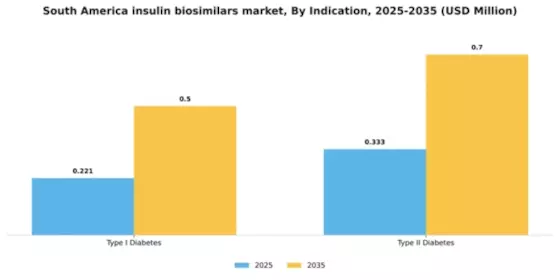
Rapid-acting (Dominant) vs. Long-acting (Emerging)
Rapid-acting biosimilars are characterized by their quick onset of action, making them essential for immediate blood glucose control. This dominance is reflected in their substantial market presence throughout various healthcare settings, driven by patient and physician preferences. In contrast, long-acting biosimilars are emerging as a vital option for patients seeking less frequent dosing schedules while still effectively managing their diabetes. This segment's growth is prompted by its appeal to a demographic that prefers convenience alongside efficacy. As awareness increases and healthcare professionals become more familiar with these biosimilars, the acceptance of long-acting formulations is expected to rise, potentially reshaping the competitive landscape.
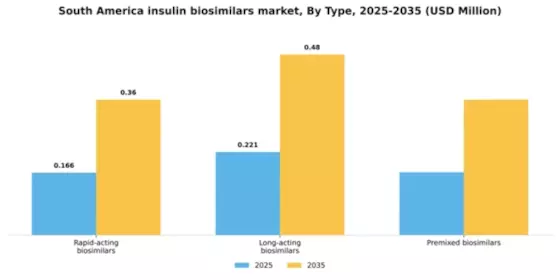
In the South America insulin biosimilars market, Type I Diabetes holds the largest portion of the market share. This segment has consistently demonstrated strong demand due to the critical nature of insulin therapy for patients. Conversely, Type II Diabetes is gaining traction as more individuals are diagnosed and treated, contributing to a burgeoning segment that is positioning itself for rapid growth. Growth trends indicate a significant increase in Type II Diabetes cases across the region, driven by lifestyle changes, obesity prevalence, and an aging population. The rise in awareness and accessibility of biosimilars is propelling this segment forward, while Type I Diabetes remains stable, benefiting from established treatment protocols. As healthcare systems adapt, both segments will likely see investments aimed at improving patient outcomes and expanding treatment options.
Type I Diabetes (Dominant) vs. Type II Diabetes (Emerging)
Type I Diabetes is characterized by the autoimmune destruction of insulin-producing beta cells, necessitating lifelong insulin treatment, Solid growth in biosimilars for this segment is supported by a loyal patient base and advancements in drug formulations. In contrast, Type II Diabetes, which often stems from lifestyle factors and genetics, is emerging as a significant market driver, with newer treatment paradigms encouraging insulin use among previously untreated patients. The expansion in Type II treatment options reflects a growing focus on preventive care and early intervention, making it a dynamic segment in the market.
Get more detailed insights about South America Insulin Biosimilars Market Request Free Sample
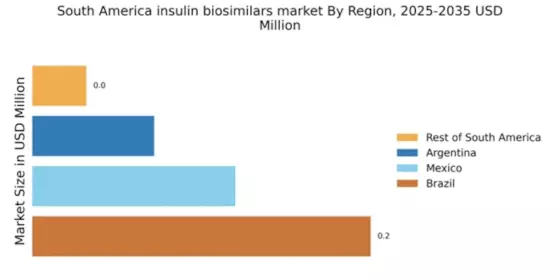
Brazil holds a significant 25% market share in the South American insulin biosimilars market, driven by increasing diabetes prevalence and government initiatives promoting biosimilar adoption. The country's regulatory framework, led by ANVISA, has streamlined the approval process for biosimilars, enhancing market access. Additionally, the growing healthcare infrastructure and investment in biotechnology are pivotal in meeting rising demand for affordable insulin alternatives.
With a 15% market share, Mexico is rapidly expanding its insulin biosimilars market, fueled by rising healthcare costs and a push for cost-effective treatments. The government has implemented policies to encourage biosimilar use, including price controls and incentives for manufacturers. The demand for insulin is increasing, particularly in urban areas, as diabetes rates rise among the population, leading to a shift towards biosimilars.
Argentina accounts for 9% of the South American insulin biosimilars market, with growth driven by regulatory reforms aimed at enhancing biosimilar accessibility. The government has introduced measures to support local production and reduce costs, which is crucial given the high diabetes prevalence. The market is characterized by increasing consumer awareness and demand for affordable insulin options, particularly in Buenos Aires and Córdoba.
The Rest of South America holds a modest 4% market share in insulin biosimilars, with significant potential for growth. Countries like Chile and Colombia are beginning to recognize the benefits of biosimilars, supported by government initiatives aimed at improving healthcare access. However, challenges such as regulatory hurdles and limited infrastructure hinder rapid market development. Increased investment and awareness are essential for unlocking this potential.
The insulin biosimilars market in South America is characterized by a dynamic competitive landscape, driven by increasing demand for affordable diabetes management solutions and the growing prevalence of diabetes across the region. Key players such as Sanofi (FR), Boehringer Ingelheim (DE), and Mylan (US) are strategically positioned to leverage their extensive portfolios and established market presence. Sanofi (FR) focuses on innovation and expanding its biosimilar offerings, while Boehringer Ingelheim (DE) emphasizes partnerships to enhance its research capabilities. Mylan (US) is actively pursuing regional expansion to capture emerging market opportunities, collectively shaping a competitive environment that is increasingly focused on accessibility and patient-centric solutions. The business tactics employed by these companies include localizing manufacturing and optimizing supply chains to enhance efficiency and reduce costs. The market structure appears moderately fragmented, with several players vying for market share. However, the collective influence of major companies is significant, as they drive advancements in product development and regulatory compliance, thereby influencing market dynamics. In October 2025, Sanofi (FR) announced a strategic partnership with a local biotechnology firm to enhance its biosimilar production capabilities in Brazil. This move is likely to bolster Sanofi's position in the region by improving access to its products and aligning with local regulatory requirements, thereby enhancing its competitive edge. In September 2025, Boehringer Ingelheim (DE) launched a new biosimilar insulin product in Argentina, aimed at providing a cost-effective alternative for patients. This introduction not only reflects the company's commitment to addressing local healthcare needs but also signifies its strategy to expand its footprint in the South American market, potentially increasing its market share. In August 2025, Mylan (US) completed the acquisition of a local pharmaceutical company specializing in diabetes care, which is expected to enhance its distribution network and product offerings in the region. This acquisition may allow Mylan to leverage existing relationships and infrastructure, thereby accelerating its growth trajectory in the competitive landscape. As of November 2025, current trends in the insulin biosimilars market include a strong emphasis on digitalization, sustainability, and the integration of artificial intelligence in product development and patient management. Strategic alliances are increasingly shaping the landscape, enabling companies to pool resources and expertise. Looking ahead, competitive differentiation is likely to evolve from traditional price-based competition to a focus on innovation, technological advancements, and supply chain reliability, as companies seek to meet the growing demands of patients and healthcare providers.


The South America Insulin Biosimilars Market has witnessed significant developments recently, particularly with several key players focusing on expanding their market presence. Companies such as Celltrion, Teva Pharmaceuticals, and Fresenius Kabi have ramped up efforts to introduce more affordable insulin biosimilars, addressing the growing diabetes prevalence in the region. In November 2022, Novartis announced a partnership with local firms to enhance distribution capabilities across Brazil and Argentina, further boosting their market reach.
Meanwhile, Samsung Bioepis has been investing in Research and Development to innovate their product line, adapting to specific local patient needs. Current affairs indicate a push for regulatory improvements to facilitate quicker market entry for biosimilars, with governments recognizing the economic burden of diabetes management. Notably, in January 2023, Merck KGaA outlined a strategic plan to collaborate with health organizations in South America to promote diabetes awareness and enhance access to biosimilars.
Over the past two years, the market has shown a trend towards consolidation, exemplified by ongoing discussions surrounding potential mergers between smaller firms and larger entities like Roche and Eli Lilly to streamline processes and reduce costs.
The Insulin Biosimilars Market is projected to grow at a 7.31% CAGR from 2025 to 2035, driven by increasing diabetes prevalence and cost-effective treatment options.
New opportunities lie in:
By 2035, the market is expected to achieve substantial growth and increased accessibility.
| MARKET SIZE 2024 | 0.554(USD Million) |
| MARKET SIZE 2025 | 0.595(USD Million) |
| MARKET SIZE 2035 | 1.2(USD Million) |
| COMPOUND ANNUAL GROWTH RATE (CAGR) | 7.31% (2025 - 2035) |
| REPORT COVERAGE | Revenue Forecast, Competitive Landscape, Growth Factors, and Trends |
| BASE YEAR | 2024 |
| Market Forecast Period | 2025 - 2035 |
| Historical Data | 2019 - 2024 |
| Market Forecast Units | USD Million |
| Key Companies Profiled | Sanofi (FR), Boehringer Ingelheim (DE), Mylan (US), Sandoz (CH), Teva (IL), Fresenius Kabi (DE), Celltrion (KR), Amgen (US), Eli Lilly (US) |
| Segments Covered | Type, Indication |
| Key Market Opportunities | Growing demand for affordable diabetes treatment drives innovation in the insulin biosimilars market. |
| Key Market Dynamics | Regulatory changes and competitive pricing drive growth in the insulin biosimilars market across South America. |
| Countries Covered | Brazil, Mexico, Argentina, Rest of South America |
The overall market valuation for insulin biosimilars was $0.554 Million in 2024.
The projected market valuation for insulin biosimilars is $1.2 Million by 2035.
The expected CAGR for the South America insulin biosimilars market during the forecast period 2025 - 2035 is 7.31%.
Key players in the insulin biosimilars market include Sanofi, Boehringer Ingelheim, Mylan, Sandoz, Teva, Fresenius Kabi, Celltrion, Amgen, and Eli Lilly.
The segment valuation for rapid-acting biosimilars was $0.166 Million in 2024 and is projected to reach $0.36 Million.
The long-acting biosimilars segment was valued at $0.221 Million in 2024, with a projection of $0.48 Million.
The premixed biosimilars segment had a valuation of $0.167 Million in 2024, expected to grow to $0.36 Million.
In 2024, Type I diabetes biosimilars were valued at $0.221 Million, while Type II diabetes biosimilars were valued at $0.333 Million.
The projected valuation for Type I diabetes biosimilars is $0.5 Million by 2035.
The expected valuation for Type II diabetes biosimilars is $0.7 Million by 2035.


Kindly complete the form below to receive a free sample of this Report

“This is really good guys. Excellent work on a tight deadline. I will continue to use you going forward and recommend you to others. Nice job”


“Thanks. It’s been a pleasure working with you, please use me as reference with any other Intel employees.”


“Thanks for sending the report it gives us a good global view of the Betaïne market.”


“Thank you, this will be very helpful for OQS.”


“We found the report very insightful! we found your research firm very helpful. I'm sending this email to secure our future business.”


“I am very pleased with how market segments have been defined in a relevant way for my purposes (such as "Portable Freezers & refrigerators" and "last-mile"). In general the report is well structured. Thanks very much for your efforts.”


“I have been reading the first document or the study, ,the Global HVAC and FP market report 2021 till 2026. Must say, good info! I have not gone in depth at all parts, but got a good indication of the data inside!”


“We got the report in time, we really thank you for your support in this process. I also thank to all of your team as they did a great job.”


“The Automotive 48V ECU Components Procurement Intelligence Study” was a complex project, but the Market Research Future (MRFR) team handled it with quality, agility, and customer-centricity. They delivered all requested data on time and within the agreed scope. The team, including Shubhendra Anand and Rahul Gotadki, was always readily available to clarify questions and swiftly implement necessary adjustments, driving the project to a successful conclusion within a very demanding timeframe.
I would also like to specifically commend Akshay Agarwal for his responsiveness and support at every stage—from our initial inquiry on May 6th through to final delivery on June 18th. His dedication made the entire process seamless.”



