Cost Efficiency and Waste Reduction
Cost efficiency remains a critical driver for the linerless labels market. By eliminating the backing paper, companies can significantly reduce material costs and waste. This aspect is particularly appealing to manufacturers and retailers looking to optimize their supply chain and reduce operational expenses. The linerless labels market is witnessing a shift as businesses recognize the potential for cost savings. Reports indicate that companies can save up to 20% on labeling costs by switching to linerless labels. This financial incentive, combined with the environmental benefits, positions linerless labels as a viable alternative to traditional labeling solutions. As more companies adopt these practices, the market is expected to expand, driven by the dual benefits of cost reduction and sustainability.
Consumer Preference for Customization
The growing consumer preference for personalized products is driving the demand for customizable labeling solutions, including linerless labels. As brands seek to differentiate themselves in a competitive market, the ability to offer unique and tailored labels becomes crucial. The linerless labels market is adapting to this trend by providing options for customization, such as variable data printing and unique designs. This flexibility allows businesses to cater to specific consumer needs and preferences, enhancing brand loyalty. Reports suggest that the demand for customized labels is increasing, with a notable rise in the food and beverage sector. As companies continue to focus on personalization, the linerless labels market is expected to expand, driven by this consumer trend.
Technological Innovations in Labeling
Technological advancements in printing and labeling technologies are significantly influencing the linerless labels market. Innovations such as digital printing and advanced adhesive technologies are enhancing the efficiency and quality of linerless labels. These developments allow for high-resolution printing and better adhesion, which are crucial for various applications. The linerless labels market is benefiting from these innovations, as they enable businesses to produce labels that are not only cost-effective but also visually appealing. Furthermore, the integration of smart technologies, such as QR codes and RFID, into linerless labels is expected to enhance their functionality. This trend indicates a growing interest in utilizing technology to improve labeling solutions, thereby driving market growth.
Rising Demand for Eco-Friendly Solutions
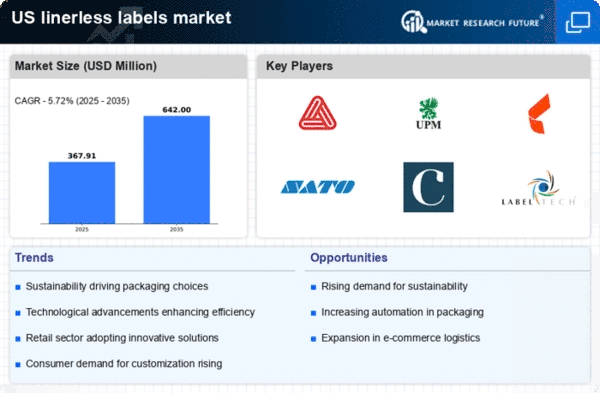
The increasing consumer awareness regarding environmental sustainability is driving the demand for eco-friendly packaging solutions, including linerless labels. As businesses strive to reduce their carbon footprint, the linerless labels market is experiencing growth. These labels eliminate the need for a backing liner, thereby reducing waste. In the US, the market for linerless labels is projected to grow at a CAGR of approximately 5.5% over the next few years. This shift towards sustainable practices is not only beneficial for the environment but also aligns with consumer preferences, as many are willing to pay a premium for products that are environmentally friendly. Consequently, the linerless labels market is likely to see an increase in adoption across various sectors, including food and beverage, retail, and logistics.
Regulatory Support for Sustainable Practices
Regulatory frameworks in the US are increasingly supporting sustainable practices, which is positively impacting the linerless labels market. Government initiatives aimed at reducing waste and promoting eco-friendly materials are encouraging businesses to adopt linerless labeling solutions. The linerless labels market is likely to benefit from these regulations, as they create a conducive environment for the adoption of sustainable packaging solutions. For instance, policies that incentivize the use of recyclable materials and penalize excessive waste are pushing companies towards more sustainable practices. As compliance with these regulations becomes essential, the demand for linerless labels is expected to rise, further propelling market growth.




















Leave a Comment