×
Request Free Sample ×

Kindly complete the form below to receive a free sample of this Report

* Please use a valid business email

Leading companies partner with us for data-driven Insights

clients tt-cursor
Hero Background

ADME Toxicology Testing Market

ID: MRFR/LS/5480-HCR
90 Pages
Rahul Gotadki
October 2025

ADME Toxicology Testing Market Research Report, by Method (Cellular Assay, Ex-vivo), Technology (Cell Culture, Biochemical Assay, Molecular Imaging), Application (Systemic, Renal), End-User (Hospital & Clinic, Diagnostic Centre)- Forecast Till 2035

Share:
Download PDF ×

We do not share your information with anyone. However, we may send you emails based on your report interest from time to time. You may contact us at any time to opt-out.

ADME Toxicology Testing Market Infographic
Purchase Options

ADME Toxicology Testing Market Summary

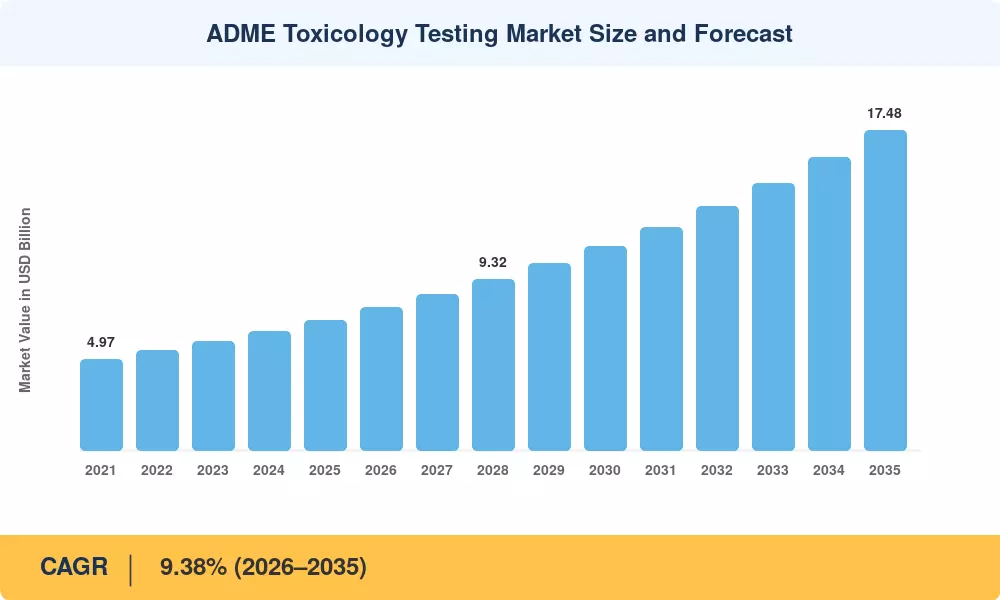
As per MRFR analysis, the ADME Toxicology Testing Market was estimated at 6.08 USD Billion in 2024. The ADME Toxicology Testing industry is projected to grow from 6.6 USD Billion in 2025 to 13.67 USD Billion by 2035, exhibiting a compound annual growth rate (CAGR) of 7.61% during the forecast period 2025 - 2035.

Key Market Trends & Highlights

The ADME Toxicology Testing Market is poised for substantial growth driven by technological advancements and evolving regulatory landscapes.

  • The integration of advanced technologies is transforming the ADME Toxicology Testing Market, enhancing accuracy and efficiency.
  • There is a notable shift towards in silico methods, which are becoming increasingly prevalent in drug discovery processes.
  • Personalized medicine is gaining traction, influencing testing protocols and methodologies across the industry.
  • Rising demand for drug development and stringent regulatory compliance are key drivers propelling market expansion, particularly in North America and the Asia-Pacific region.

Market Size & Forecast

2024 Market Size 6.08 (USD Billion)
2035 Market Size 13.67 (USD Billion)
CAGR (2025 - 2035) 7.61%

Major Players

Charles River Laboratories (US), Covance (US), Eurofins Scientific (LU), Sygnature Discovery (GB), Wuxi AppTec (CN), Inotiv (US), Kymab (GB), Pharmaron (CN), Medpace (US)

ADME Toxicology Testing Market Trends

The ADME Toxicology Testing Market is currently experiencing a notable evolution, driven by the increasing demand for drug development and safety assessment. This market encompasses a range of testing methodologies that evaluate the absorption, distribution, metabolism, and excretion of compounds, which are critical in understanding their potential toxicity. As regulatory frameworks become more stringent, the need for reliable and efficient testing solutions has intensified. Consequently, stakeholders are investing in advanced technologies and innovative approaches to enhance the accuracy and speed of toxicological assessments. Furthermore, the integration of in silico models and high-throughput screening techniques appears to be reshaping the landscape of this market, offering promising alternatives to traditional methods. In addition, the growing emphasis on personalized medicine and the rise of biopharmaceuticals are likely to influence the ADME Toxicology Testing Market significantly. As researchers strive to develop targeted therapies, the necessity for tailored toxicological evaluations becomes paramount. This shift may lead to an increased focus on specific population subsets and their unique responses to drugs. Moreover, collaborations between academic institutions and industry players are expected to foster innovation and drive the development of novel testing platforms. Overall, the ADME Toxicology Testing Market is poised for substantial growth, reflecting the evolving needs of the pharmaceutical and biotechnology sectors.

Integration of Advanced Technologies

The ADME Toxicology Testing Market is witnessing a trend towards the incorporation of cutting-edge technologies. Innovations such as artificial intelligence and machine learning are being utilized to enhance predictive modeling and data analysis. This integration not only streamlines the testing process but also improves the reliability of results, thereby facilitating more informed decision-making in drug development.

Shift Towards In Silico Methods

There is a growing inclination towards in silico methods within the ADME Toxicology Testing Market. These computational approaches offer a cost-effective and efficient alternative to traditional laboratory testing. By simulating biological processes, in silico models can predict toxicological outcomes, which may reduce the reliance on animal testing and accelerate the overall research timeline.

Focus on Personalized Medicine

The increasing emphasis on personalized medicine is shaping the ADME Toxicology Testing Market. As therapies become more targeted, there is a corresponding need for tailored toxicological assessments that consider individual variability. This trend is likely to drive the development of specialized testing protocols that account for genetic, environmental, and lifestyle factors influencing drug response.

ADME Toxicology Testing Market Drivers

Market Growth Projections

The Global ADME Toxicology Testing Market Industry is projected to experience substantial growth over the coming years. The market is expected to expand from 0.48 USD Billion in 2024 to an impressive 4.25 USD Billion by 2035, reflecting a compound annual growth rate (CAGR) of 21.96% from 2025 to 2035. This growth trajectory is indicative of the increasing importance of ADME testing in drug development and regulatory compliance. As the pharmaceutical landscape evolves, the demand for reliable toxicology testing solutions is likely to intensify, further driving market expansion. Stakeholders are advised to remain vigilant and responsive to these trends to capitalize on emerging opportunities.

Rising Demand for Drug Development

The Global ADME Toxicology Testing Market Industry experiences heightened demand due to the increasing need for efficient drug development processes. Pharmaceutical companies are under pressure to expedite the development of new therapeutics while ensuring safety and efficacy. This demand is reflected in the projected market growth from 0.48 USD Billion in 2024 to an anticipated 4.25 USD Billion by 2035, indicating a robust compound annual growth rate (CAGR) of 21.96% from 2025 to 2035. As regulatory agencies emphasize the importance of ADME testing in drug approval processes, the industry is poised for substantial expansion.

Emerging Markets and Global Expansion

Emerging markets are becoming increasingly important in the Global ADME Toxicology Testing Market Industry. Countries in Asia-Pacific and Latin America are witnessing a surge in pharmaceutical research and development activities, driven by growing investments in healthcare infrastructure and increasing access to advanced technologies. This trend is expected to contribute to the overall market growth, as companies seek to establish a presence in these regions. The expansion into emerging markets not only provides access to new customer bases but also offers opportunities for collaboration with local research institutions. As these markets continue to evolve, they are likely to play a crucial role in shaping the future of ADME toxicology testing.

Increasing Focus on Personalized Medicine

The shift towards personalized medicine is reshaping the Global ADME Toxicology Testing Market Industry. As healthcare moves towards tailored therapies, understanding individual variations in drug metabolism and toxicity becomes crucial. ADME testing provides essential insights into how different populations respond to medications, enabling the development of safer and more effective treatments. This trend is particularly relevant as the market is projected to grow significantly, with estimates suggesting a rise from 0.48 USD Billion in 2024 to 4.25 USD Billion by 2035. The increasing emphasis on personalized approaches in drug development is likely to drive demand for advanced ADME testing solutions.

Regulatory Compliance and Safety Standards

The Global ADME Toxicology Testing Market Industry is significantly influenced by stringent regulatory compliance and safety standards imposed by health authorities worldwide. Regulatory agencies, such as the FDA and EMA, require comprehensive toxicological data to ensure the safety of new drugs before they reach the market. This necessity drives pharmaceutical companies to invest in ADME testing to meet these regulatory demands. As the landscape of drug approval becomes increasingly complex, the emphasis on thorough toxicological evaluations is expected to bolster the market. Companies that prioritize compliance are likely to gain a competitive edge, further propelling the industry's growth.

Technological Advancements in Testing Methods

Technological innovations play a pivotal role in shaping the Global ADME Toxicology Testing Market Industry. The integration of high-throughput screening, in silico modeling, and advanced bioanalytical techniques enhances the accuracy and efficiency of toxicology assessments. These advancements not only reduce the time required for testing but also improve the predictive capabilities of ADME studies. As a result, pharmaceutical companies are increasingly adopting these technologies to streamline their drug development pipelines. The ongoing evolution of testing methodologies is likely to contribute significantly to market growth, as stakeholders seek to leverage cutting-edge solutions for regulatory compliance and risk assessment.

Market Segment Insights

By Application: Drug Discovery (Largest) vs. Preclinical Testing (Fastest-Growing)

In the ADME Toxicology Testing market, the application segment is dominated by Drug Discovery, representing a significant share due to its critical role in identifying potential drug candidates. Preclinical Testing follows, experiencing notable growth as companies focus on advancing candidates through rigorous testing phases. The importance of verifying safety and efficacy before clinical trials has propelled Preclinical Testing as an essential component of the drug development lifecycle, accounting for a substantial market presence. Growth within these segments is driven by increased investment in pharmaceutical research and the necessity for comprehensive toxicology assessments. The rise of biopharmaceuticals also contributes to the expansion of both Drug Discovery and Preclinical Testing, as innovative therapies demand advanced testing methodologies to ensure safety. Regulatory pressures and an evolving landscape necessitate rigorous preclinical evaluation, positioning Preclinical Testing as the fastest-growing area, while Drug Discovery remains foundational to the entire process.

Drug Discovery (Dominant) vs. Clinical Trials (Emerging)

In the ADME Toxicology Testing Market, Drug Discovery is recognized as the dominant segment, as it encompasses early-stage research, where potential therapeutic agents are assessed for their efficacy and safety profiles. It drives innovations in toxicological assessments through sophisticated methodologies, including in vitro and in vivo testing. Conversely, Clinical Trials, while currently considered an emerging segment, are crucial as they transition drug candidates from preclinical to human testing. This segment is experiencing growth due to the increasing need for more complex testing environments and stringent regulatory requirements. The advancement of technology and automation within Clinical Trials enhances data reliability and efficiency, paving the way for more rigorous toxicology assessments. As a result, while Drug Discovery remains vital, Clinical Trials are gaining significance rapidly as they become integral to the drug development landscape.

By Test Type: Absorption Testing (Largest) vs. Metabolism Testing (Fastest-Growing)

In the ADME Toxicology Testing Market, Absorption Testing holds the largest market share among test types, reflecting its essential role in evaluating how substances are absorbed in biological systems. This segment benefits significantly from ongoing research and regulatory compliance ensuring that absorption profiles of new compounds meet industry standards. On the other hand, Metabolism Testing is emerging as the fastest-growing segment, driven by increasing drug development efforts prioritizing metabolic pathways to optimize efficacy and reduce adverse effects.

Absorption Testing (Dominant) vs. Metabolism Testing (Emerging)

Absorption Testing is a dominant segment within the ADME Toxicology Testing Market, focusing on how drugs are absorbed into the bloodstream after administration. Its established methodologies and vital role in preclinical studies contribute to its strong position in the market. Conversely, Metabolism Testing is an emerging segment gaining traction due to the rising importance of understanding drug metabolism. This segment is notable for its innovation, with advanced techniques being developed to closely analyze metabolic processes and predict individual responses to pharmaceuticals. The growing need for personalized medicine fuels demand in this area, making it a focal point for research and development.

By End User: Pharmaceutical Companies (Largest) vs. Biotechnology Firms (Fastest-Growing)

In the ADME Toxicology Testing Market, the largest share is held by Pharmaceutical Companies, reflecting their significant investment in research and development to ensure the safety and efficacy of their drug discoveries. This dominant segment is followed by Biotechnology Firms, which are rapidly gaining traction due to their innovative approaches and advancements in genetic research that are increasingly applicable to toxicology testing. The reliance on these segments underscores the critical role they play in the broader pharmaceutical ecosystem.

Pharmaceutical Companies (Dominant) vs. Biotechnology Firms (Emerging)

Pharmaceutical Companies remain the dominant players in the ADME Toxicology Testing Market, driven by their extensive resources and established workflows for drug development. Their historical reliance on rigorous testing protocols ensures high standards in toxicology assessments, catering to regulatory requirements. On the other hand, Biotechnology Firms are emerging rapidly, capitalizing on cutting-edge technologies such as CRISPR and bioinformatics to enhance testing efficiencies. These firms are increasingly adopting personalized medicine approaches, distinguishing themselves in the market and attracting investment, positioning them well for future growth.

By Technology: In Vitro Testing (Largest) vs. In Vivo Testing (Fastest-Growing)

In the ADME Toxicology Testing Market, the segment of In Vitro Testing holds the largest market share, driven by its efficiency, cost-effectiveness, and ethical advantages over animal testing. As regulatory agencies increasingly mandate the use of in vitro methods, this segment is set to expand significantly in the foreseeable future. In contrast, In Vivo Testing, although currently a smaller segment, is experiencing the highest growth rates. Innovations in this area, especially regarding enhanced predictive models and improved technology for animal testing, are driving its surge.

Technology: In Vitro Testing (Dominant) vs. In Vivo Testing (Emerging)

The In Vitro Testing segment dominates the ADME Toxicology Testing Market due to its capacity to provide rapid results without the ethical concerns associated with animal testing. This method allows for the analysis of the effects of drugs and chemicals on human cells and tissues, yielding crucial data that informs decision-making. On the other hand, In Vivo Testing is an emerging segment characterized by its necessary role in providing comprehensive safety and efficacy data through biological models. With advancements in technologies that enhance the accuracy and reproducibility of in vivo tests, this segment is expected to grow rapidly as it complements in vitro methodologies, ensuring a thorough understanding of potential toxicological effects.

Get more detailed insights about ADME Toxicology Testing Market

Regional Insights

North America : Market Leader in Toxicology Testing

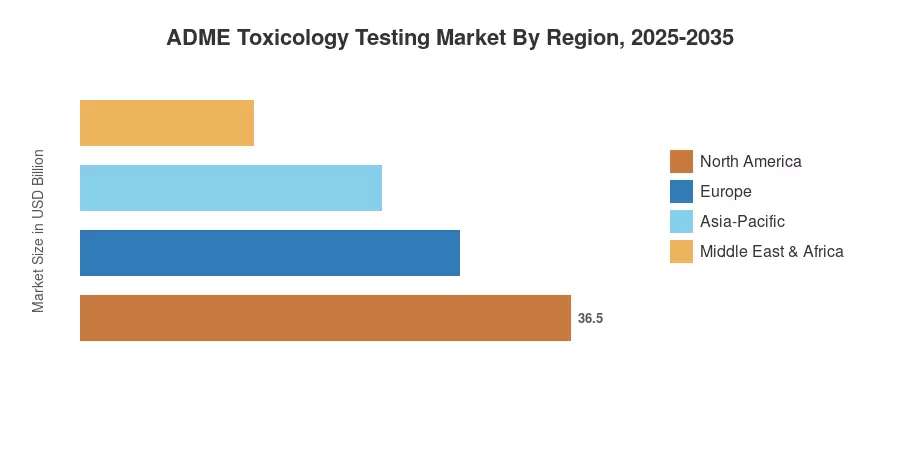
North America is poised to maintain its leadership in the ADME Toxicology Testing market, holding a significant market share of $3.0 billion in 2025. The region's growth is driven by increasing R&D investments, stringent regulatory requirements, and a rising demand for innovative drug development solutions. The presence of advanced technologies and a robust healthcare infrastructure further catalyze market expansion. The United States stands out as the leading country, hosting major players like Charles River Laboratories and Covance. The competitive landscape is characterized by a mix of established firms and emerging biotech companies, all striving to enhance their service offerings. This dynamic environment fosters innovation and collaboration, ensuring that North America remains at the forefront of ADME Toxicology Testing.

Europe : Emerging Hub for Innovation

Europe is witnessing a notable increase in the ADME Toxicology Testing market, projected to reach $1.8 billion by 2025. Key growth drivers include stringent EU regulations, a focus on patient safety, and advancements in biopharmaceutical research. The region's commitment to innovation and sustainability in drug development is further supported by government initiatives and funding programs aimed at enhancing research capabilities. Leading countries such as Germany, France, and the UK are at the forefront of this growth, with a strong presence of key players like Eurofins Scientific and Sygnature Discovery. The competitive landscape is marked by collaborations between academia and industry, fostering a rich ecosystem for research and development. This synergy is crucial for addressing the evolving challenges in toxicology testing, ensuring compliance with regulatory standards.

Asia-Pacific : Rapidly Growing Market Potential

The Asia-Pacific region is emerging as a significant player in the ADME Toxicology Testing market, with a projected size of $1.5 billion by 2025. This growth is fueled by increasing investments in pharmaceutical R&D, a growing patient population, and rising awareness of drug safety. Additionally, supportive government policies and initiatives aimed at enhancing healthcare infrastructure are driving demand for toxicology testing services. China and India are leading the charge, with a burgeoning number of biotech firms and research institutions. The competitive landscape is evolving, with key players like Wuxi AppTec and Pharmaron expanding their service offerings. This region's unique blend of rapid technological advancements and a focus on cost-effective solutions positions it as a vital hub for ADME Toxicology Testing in the coming years.

Middle East and Africa : Emerging Market with Challenges

The Middle East and Africa (MEA) region is gradually developing its ADME Toxicology Testing market, projected to reach $0.78 billion by 2025. The growth is driven by increasing healthcare investments, a rising prevalence of chronic diseases, and a growing emphasis on drug safety. However, challenges such as regulatory hurdles and limited infrastructure may impede rapid growth. Nonetheless, the region's potential for expansion remains significant. Countries like South Africa and the UAE are leading the market, with a growing number of local and international players entering the space. The competitive landscape is characterized by partnerships and collaborations aimed at enhancing service delivery. As the region continues to invest in healthcare and research, the ADME Toxicology Testing market is expected to gain momentum, addressing the needs of a diverse patient population.

Key Players and Competitive Insights

The ADME Toxicology Testing Market is currently characterized by a dynamic competitive landscape, driven by increasing regulatory scrutiny and the growing demand for safer pharmaceuticals. Key players such as Charles River Laboratories (US), Covance (US), and Eurofins Scientific (LU) are strategically positioned to leverage their extensive service offerings and technological advancements. Charles River Laboratories (US) focuses on enhancing its drug development services through innovative testing solutions, while Covance (US) emphasizes its global reach and comprehensive data analytics capabilities. Eurofins Scientific (LU) appears to be investing heavily in expanding its laboratory network, which may enhance its operational efficiency and market penetration. Collectively, these strategies contribute to a moderately fragmented market structure, where competition is intensifying as companies seek to differentiate themselves through innovation and service quality.

In terms of business tactics, companies are increasingly localizing manufacturing and optimizing supply chains to enhance responsiveness to client needs. The competitive structure of the market is moderately fragmented, with several players vying for market share. This fragmentation suggests that while no single entity dominates, the collective influence of key players is significant, as they continuously innovate and adapt to changing market demands.

In November 2025, Charles River Laboratories (US) announced the launch of a new suite of in vitro ADME assays designed to accelerate drug discovery processes. This strategic move is likely to enhance their service portfolio, allowing clients to make more informed decisions earlier in the development pipeline. The introduction of these assays may position Charles River as a leader in providing cutting-edge solutions that align with the industry's shift towards more efficient drug development methodologies.

In October 2025, Covance (US) expanded its partnership with a leading biopharmaceutical company to provide integrated toxicology testing services. This collaboration is indicative of Covance's strategy to deepen its relationships with key clients, thereby enhancing its service offerings and reinforcing its market position. Such partnerships may facilitate the sharing of resources and expertise, ultimately leading to improved outcomes for drug development projects.

In September 2025, Eurofins Scientific (LU) acquired a regional laboratory specializing in ADME testing, which is expected to bolster its capabilities in this domain. This acquisition reflects Eurofins' commitment to expanding its geographical footprint and enhancing its service capabilities. By integrating this laboratory into its existing operations, Eurofins may achieve greater operational synergies and improve its competitive edge in the market.

As of December 2025, current trends in the ADME Toxicology Testing Market are increasingly defined by digitalization, sustainability, and the integration of artificial intelligence (AI) into testing protocols. Strategic alliances among companies are shaping the landscape, fostering innovation and collaboration. The competitive differentiation is likely to evolve from traditional price-based competition towards a focus on technological advancements, innovative solutions, and reliable supply chains. This shift suggests that companies that prioritize R&D and strategic partnerships will be better positioned to thrive in the evolving market.

Key Companies in the ADME Toxicology Testing Market market include

Industry Developments

Machine learning operations platform Chief will be launched in July 2021. The first no-code, pay-as-you-go artificial intelligence (AI) platform for drug development has been established by AI in collaboration with the Medicines Discovery Catapult increasing the stake of the ADME Toxicology Testing Market. Mydecine Innovations Group, an emerging biopharma and life sciences company dedicated to the research, development, and acceptance of alternative nature-sourced medicine for mainstream use, announced the launch of its in-silico drug discovery program in collaboration with University of Alberta researchers in June 2021.

Intended Audience:

      • Pharmaceutical companies
      • Biotechnological institutes
      • Diagnostics Laboratories
      • Pathological Institutes
      • Government and private laboratories
      • Research and Development (R&D) companies
      • Medical research laboratories
      • Market research and consulting service providers

ADME Toxicology Testing Market Industry Developments

  • Q2 2024: Thermo Fisher Scientific Launches New High-Throughput ADME Toxicology Testing Market Platform Thermo Fisher Scientific announced the launch of a new high-throughput platform designed to accelerate ADME toxicology testing for pharmaceutical and biotech companies, aiming to improve drug safety assessment and reduce development timelines.
  • Q2 2024: BioIVT Expands ADME-Tox Testing Capabilities with New Facility in North Carolina BioIVT opened a new state-of-the-art facility in Durham, North Carolina, dedicated to expanding its ADME and toxicology testing services, supporting increased demand from drug development clients.
  • Q2 2024: Charles River Laboratories Acquires Samdi Tech to Enhance ADME-Tox Screening Portfolio Charles River Laboratories completed the acquisition of Samdi Tech, a provider of high-throughput screening technology, to strengthen its ADME and toxicology testing offerings for pharmaceutical clients.
  • Q3 2024: Evotec and Sandoz Announce Strategic Partnership for Preclinical ADME-Tox Services Evotec SE and Sandoz entered a multi-year partnership to provide integrated ADME and toxicology testing services for Sandoz’s biosimilar and generic drug pipeline.
  • Q3 2024: Eurofins Scientific Launches AI-Driven ADME Toxicology Data Analytics Platform Eurofins Scientific introduced a new artificial intelligence-powered analytics platform to enhance the predictive accuracy of its ADME toxicology testing services.
  • Q3 2024: WuXi AppTec Opens Expanded ADME-Tox Testing Facility in Shanghai WuXi AppTec inaugurated a major expansion of its Shanghai facility, increasing capacity for ADME and toxicology testing to meet growing demand from global pharmaceutical clients.
  • Q4 2024: Thermo Fisher Scientific Acquires Small Molecule ADME-Tox Specialist, Cyprotex Thermo Fisher Scientific announced the acquisition of Cyprotex, a leading provider of in vitro ADME and toxicology services, to broaden its drug discovery solutions portfolio.
  • Q4 2024: BioIVT Secures Major Contract with Top 10 Pharma for ADME-Tox Testing Services BioIVT signed a multi-year contract with a top 10 global pharmaceutical company to provide comprehensive ADME and toxicology testing services for its drug development programs.
  • Q1 2025: Evotec Raises €150 Million to Expand ADME-Tox and Preclinical Testing Capabilities Evotec SE completed a €150 million funding round to support the expansion of its ADME and toxicology testing infrastructure and invest in new technology platforms.
  • Q1 2025: Charles River Laboratories Appoints New Head of ADME-Tox Services Charles River Laboratories announced the appointment of Dr. Maria Jensen as the new global head of its ADME and toxicology testing division, aiming to drive innovation and growth in the sector.
  • Q2 2025: Eurofins Scientific Acquires UK-Based ADME-Tox CRO, XenoTech Eurofins Scientific completed the acquisition of XenoTech, a UK-based contract research organization specializing in ADME and toxicology testing, to expand its European service offerings.
  • Q2 2025: WuXi AppTec Launches Next-Generation In Vitro ADME-Tox Testing Platform WuXi AppTec unveiled a next-generation in vitro ADME and toxicology testing platform, featuring advanced automation and data analytics to accelerate drug safety assessments.

Future Outlook

ADME Toxicology Testing Market Future Outlook

The ADME Toxicology Testing Market is projected to grow at a 7.61% CAGR from 2024 to 2035, driven by advancements in technology, regulatory demands, and increasing drug development costs.

New opportunities lie in:

  • Integration of AI-driven predictive models for enhanced testing accuracy.
  • Development of portable testing devices for on-site toxicology assessments.
  • Expansion of partnerships with biotech firms for innovative testing solutions.

By 2035, the ADME Toxicology Testing Market is expected to be robust, reflecting substantial growth and innovation.

Market Segmentation

ADME Toxicology Testing Market End User Outlook

  • Pharmaceutical Companies
  • Biotechnology Firms
  • Contract Research Organizations
  • Academic Institutions

ADME Toxicology Testing Market Test Type Outlook

  • Absorption Testing
  • Distribution Testing
  • Metabolism Testing
  • Excretion Testing

ADME Toxicology Testing Market Technology Outlook

  • In Vitro Testing
  • In Vivo Testing
  • Computational Modeling
  • High-Throughput Screening

ADME Toxicology Testing Market Application Outlook

  • Drug Discovery
  • Preclinical Testing
  • Clinical Trials
  • Regulatory Compliance

Report Scope

MARKET SIZE 2024 6.08(USD Billion)
MARKET SIZE 2025 6.6(USD Billion)
MARKET SIZE 2035 13.67(USD Billion)
COMPOUND ANNUAL GROWTH RATE (CAGR) 7.61% (2024 - 2035)
REPORT COVERAGE Revenue Forecast, Competitive Landscape, Growth Factors, and Trends
BASE YEAR 2024
Market Forecast Period 2025 - 2035
Historical Data 2019 - 2024
Market Forecast Units USD Billion
Key Companies Profiled Charles River Laboratories (US), Covance (US), Eurofins Scientific (LU), Sygnature Discovery (GB), Wuxi AppTec (CN), Inotiv (US), Kymab (GB), Pharmaron (CN), Medpace (US)
Segments Covered Application, Test Type, End User, Technology
Key Market Opportunities Integration of advanced in vitro models enhances predictive accuracy in the ADME Toxicology Testing Market.
Key Market Dynamics Rising regulatory scrutiny drives demand for advanced ADME toxicology testing solutions in pharmaceutical development.
Countries Covered North America, Europe, APAC, South America, MEA

Market Highlights

Author
Rahul Gotadki
Assistant Manager

He holds an experience of about 7+ years in Market Research and Business Consulting, working under the spectrum of Life Sciences and Healthcare domains. Rahul conceptualizes and implements a scalable business strategy and provides strategic leadership to the clients. His expertise lies in market estimation, competitive intelligence, pipeline analysis, customer assessment, etc. In addition to the above, his other responsibility includes strategic tracking of high growth markets & advising clients on the potential areas of focus they could direct their business initiatives

Leave a Comment

FAQs

At what CAGR is the ADME Toxicology Testing Market projected to grow in the forecast period?

The ADME Toxicology Testing Market is expected to register a CAGR of 12.1% during forecast period upto 2032.

What is the Major factor driving the ADME Toxicology Testing Market?

The Growing concerns over application of animals in clinical trials is the major driving factor of ADME Toxicology Testing Market.

Who are the major players in ADME Toxicology Testing Market?

Promega Corporation, Agilent Technologies, Inc., Thermo Fisher Scientific, Inc., Bio-Rad Laboratories, Inc., Beckman Coulter, Inc., Cellartis AB, Cyprotex PLC., Life Technologies Corporation, Optivia Biotechnology, Inc., Accelrys, Inc., Molecular Discovery Ltd., Cyprotex PLC, MultiCASE, Inc., Caliper Life Sciences, Inc., Xceleron, Inc., ACEA Biosciences, Inc., Albany Molecular Research, Inc., CeeTox, Inc., and others.

Download Free Sample

Kindly complete the form below to receive a free sample of this Report

Compare Licence

×
Features License Type
Single User Multiuser License Enterprise User
Price $4,950 $5,950 $7,250
Maximum User Access Limit 1 User Upto 10 Users Unrestricted Access Throughout the Organization
Free Customization
Direct Access to Analyst
Deliverable Format
Platform Access
Discount on Next Purchase 10% 15% 15%
Printable Versions