×
Request Free Sample ×

Kindly complete the form below to receive a free sample of this Report

* Please use a valid business email

Leading companies partner with us for data-driven Insights

clients tt-cursor
Hero Background

Aerostructures Market

ID: MRFR/AD/6297-HCR
133 Pages
Swapnil Palwe
October 2025

Aerostructures Market Research Report Information by Component (Fuselage, Flight Control Surfaces, Wings, Nose, Nacelle and Pylon, and Others), Material (Composite, Alloys, and Metals), End-Use (OEM and Aftermarket), Platform (Fixed Wing and Rotary Wing), and Region (North America, Europe, Asia-Pacific, Middle East Africa, and Latin America) - Forecast till 2032

Share:
Download PDF ×

We do not share your information with anyone. However, we may send you emails based on your report interest from time to time. You may contact us at any time to opt-out.

Aerostructures Market Infographic
Purchase Options

Aerostructures Market Summary

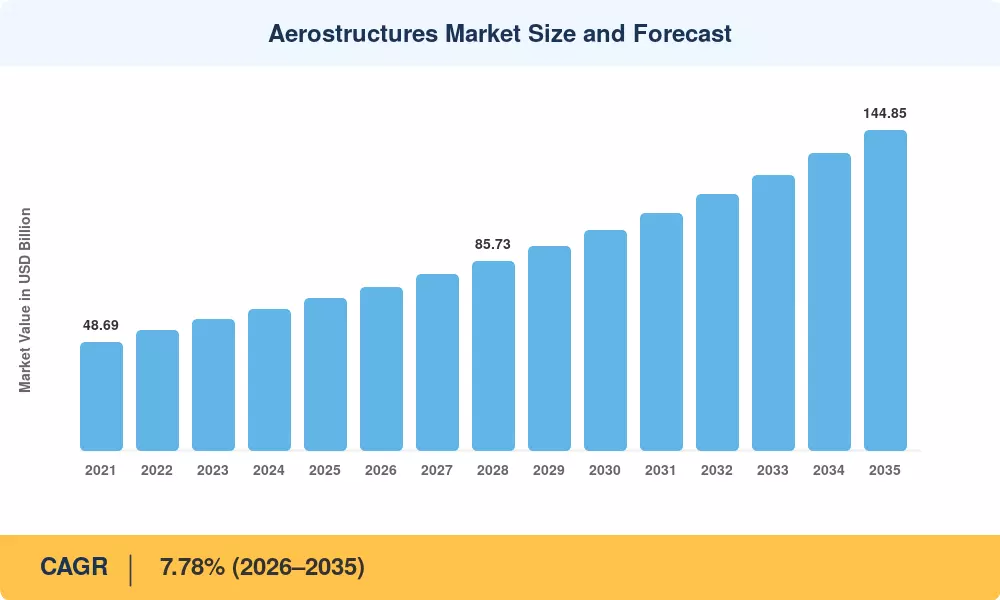
As per MRFR analysis, the Aerostructures Market Size was estimated at 1900.0 USD Million in 2024. The Aerostructures industry is projected to grow from 2000.0 in 2025 to 4500.0 by 2035, exhibiting a compound annual growth rate (CAGR) of 8.45 during the forecast period 2025 - 2035.

Key Market Trends & Highlights

The Aerostructures Market is poised for robust growth driven by sustainability and technological advancements.

  • North America remains the largest market for aerostructures, driven by its established aerospace manufacturing base.
  • The Asia-Pacific region is emerging as the fastest-growing market, fueled by increasing investments in aviation infrastructure.
  • Commercial aviation continues to dominate the market, while military aviation is experiencing rapid growth due to rising defense expenditures.
  • Key market drivers include the increasing demand for fuel-efficient aircraft and technological innovations in aerostructures.

Market Size & Forecast

2024 Market Size 1900.0 (USD Million)
2035 Market Size 4500.0 (USD Million)
CAGR (2025 - 2035) 8.45%

Major Players

Boeing (US), Airbus (FR), Lockheed Martin (US), Northrop Grumman (US), Raytheon Technologies (US), Safran (FR), Leonardo (IT), Thales (FR), Mitsubishi Heavy Industries (JP)

Aerostructures Market Trends

The Aerostructures Market is currently experiencing a dynamic evolution, driven by advancements in technology and increasing demand for lightweight materials. Manufacturers are focusing on enhancing production efficiency while ensuring compliance with stringent regulatory standards. This sector encompasses a wide range of components, including wings, fuselage, and tail assemblies, which are integral to aircraft performance and safety. As the aerospace industry continues to expand, the Aerostructures Market is poised for growth, with innovations in design and manufacturing processes playing a crucial role in shaping its future. Moreover, the emphasis on sustainability is becoming increasingly prominent within the Aerostructures Market. Companies are exploring eco-friendly materials and production methods to reduce their carbon footprint. This shift not only aligns with global environmental goals but also meets the expectations of consumers and stakeholders who prioritize sustainability. The integration of advanced technologies, such as automation and digitalization, further enhances operational capabilities, allowing for more precise and efficient manufacturing. As these trends unfold, the Aerostructures Market is likely to witness transformative changes that will redefine its landscape in the coming years.

Sustainability Initiatives

The Aerostructures Market is witnessing a notable shift towards sustainability, with manufacturers increasingly adopting eco-friendly materials and processes. This trend reflects a broader commitment to reducing environmental impact and aligns with global efforts to promote greener practices in the aerospace sector.

Technological Advancements

Innovations in technology are significantly influencing the Aerostructures Market. The integration of automation, digitalization, and advanced manufacturing techniques is enhancing production efficiency and precision, enabling companies to meet the evolving demands of the aerospace industry.

Customization and Flexibility

There is a growing trend towards customization within the Aerostructures Market, as manufacturers seek to provide tailored solutions that meet specific client requirements. This flexibility allows for the development of unique designs and configurations, catering to diverse aerospace applications.

Aerostructures Market Drivers

Growth in Defense Spending

The Global Aerostructures Industry benefits from an uptick in defense spending across various nations. Governments are prioritizing modernization of their military fleets, leading to increased procurement of advanced aircraft and associated aerostructures. For instance, the U.S. Department of Defense has proposed a budget that emphasizes modernization and readiness, which directly impacts the demand for military aerostructures. This trend is expected to persist, as geopolitical tensions drive nations to enhance their defense capabilities. Consequently, the defense sector's growth is anticipated to contribute significantly to the overall market, supporting the projected growth trajectory.

Emerging Markets and Regional Expansion

Emerging markets play a pivotal role in the Global Aerostructures Industry, as countries in Asia-Pacific and Latin America experience rapid economic growth and increased air travel. The expansion of regional airlines and the establishment of new airports are fostering demand for aerostructures. For example, the Asia-Pacific region is expected to witness substantial growth, with a projected market value of 113.9 USD Billion by 2035. This regional expansion is likely to attract investments and partnerships, further enhancing the market landscape. As these markets develop, the demand for advanced aerostructures is expected to rise, contributing to the industry's overall growth.

Technological Advancements in Materials

Innovations in materials science significantly influence the Global Aerostructures Industry. The introduction of lightweight composite materials enhances fuel efficiency and performance in aircraft design. For instance, carbon-fiber-reinforced polymers are increasingly utilized in aerostructures, reducing weight while maintaining structural integrity. This shift towards advanced materials is likely to drive market growth, as manufacturers seek to meet stringent environmental regulations and improve aircraft performance. As the industry evolves, the demand for these innovative materials is expected to rise, contributing to the projected CAGR of 8.99% from 2025 to 2035.

Increasing Demand for Commercial Aircraft

The Global Aerostructures Industry experiences a robust demand for commercial aircraft, driven by the rising air travel rates and the expansion of low-cost carriers. In 2024, the market is valued at approximately 44.2 USD Billion, reflecting the industry's response to the growing passenger numbers. Airlines are increasingly investing in new aircraft to enhance operational efficiency and reduce emissions, which propels the need for advanced aerostructures. This trend is expected to continue, as the International Air Transport Association projects that global passenger numbers could reach 8.2 billion by 2037, further stimulating the aerostructures market.

Focus on Sustainability and Environmental Regulations

The Global Aerostructures Industry is increasingly shaped by a focus on sustainability and compliance with environmental regulations. Governments worldwide are implementing stricter emissions standards, prompting manufacturers to develop greener technologies. This shift is evident in the growing investment in sustainable aviation fuels and energy-efficient aircraft designs. The industry's commitment to reducing its carbon footprint aligns with global sustainability goals, potentially enhancing market growth. As companies innovate to meet these regulations, the demand for advanced aerostructures that support eco-friendly initiatives is likely to increase, further driving market expansion.

Market Segment Insights

By Application: Commercial Aviation (Largest) vs. Military Aviation (Fastest-Growing)

In the Aerostructures Market, the application segment is primarily dominated by Commercial Aviation, which consumes a significant portion of the market share due to the increasing demand for air travel and advancements in aircraft technologies. Following closely is Military Aviation, recognized as the fastest-growing segment, driven by global defense spending and modernization of military fleets. Additionally, Space Exploration, Unmanned Aerial Vehicles, and Helicopters contribute to the overall market, each capturing specific niches within the broad spectrum of aerostructure applications.

Military Aviation: Dominant vs. Space Exploration: Emerging

Military Aviation stands out as a dominant force in the Aerostructures Market, driven by ongoing investments in defense capabilities and the necessity for advanced technologies. The segment benefits from a robust demand for fighter jets, transport aircraft, and surveillance systems, which require specialized aerostructures to enhance operational efficiency. On the other hand, the Space Exploration segment is emerging rapidly, fueled by governmental and private sector funding, increasing interest in satellite launches, and innovations in lightweight materials. This burgeoning interest is prompting manufacturers to focus on developing aerostructures that can withstand extreme conditions, thereby opening new opportunities for growth in this innovative segment.

By Material Type: Aluminum (Largest) vs. Composite Materials (Fastest-Growing)

In the Aerostructures Market, the distribution of material types reflects distinct preferences and technological capabilities. Aluminum dominates the segment due to its favorable attributes such as high strength-to-weight ratio, corrosion resistance, and ease of fabrication, making it ideal for various aircraft structures. Composite materials are also gaining traction, drawing attention for their lightweight characteristics and potential to enhance fuel efficiency in modern aircraft designs. Growth trends indicate a promising shift towards composite materials as the aerospace industry increasingly prioritizes fuel efficiency and reduced emissions. Advances in composite technology and manufacturing methods are propelling this segment forward, with significant investments in research and development. Furthermore, regulatory pressures to lower environmental impact are driving aerospace manufacturers to adopt lighter, more sustainable materials, ultimately contributing to the swift growth of composite materials in the Aerostructures Market.

Aluminum (Dominant) vs. Titanium (Emerging)

Aluminum remains the dominant material in the Aerostructures Market, renowned for its lightweight properties, resistance to corrosion, and cost-effectiveness for building various aircraft components. It is extensively utilized in structures like wing frames, fuselages, and other critical parts. On the other hand, titanium is emerging as an important alternative, particularly in high-stress applications where strength and extreme temperature performance are crucial. Although titanium is more expensive and difficult to machine than aluminum, its superior strength and ability to withstand harsh operating conditions position it as a growing choice among manufacturers of advanced aircraft, fostering a trend towards more innovative applications in aerostructure components.

By Manufacturing Process: Additive Manufacturing (Largest) vs. Subtractive Manufacturing (Fastest-Growing)

The Aerostructures Market showcases a diverse range of manufacturing processes, with Additive Manufacturing leading in market share due to its ability to produce complex components with reduced material waste. Following closely are Subtractive Manufacturing and Machining, reflecting significant contributions as traditional methods remain vital for precision manufacturing. The Assembly and Forming processes are critical but represent smaller segments within this broader landscape, focusing on integration and shaping respectively, ensuring optimal performance in aerostructures.

Additive Manufacturing (Dominant) vs. Forming (Emerging)

Additive Manufacturing has emerged as the dominant force in the Aerostructures Market, renowned for its innovative approach allowing custom designs and enhanced efficiency. This method utilizes 3D printing technologies to reduce material waste while enabling the rapid prototyping of complex geometries. Conversely, Forming is an emerging segment that emphasizes shaping materials through techniques like forging and stamping. Although currently less dominant, its role is crucial as manufacturers seek to optimize material properties and ensure structural integrity in aerostructures. As both segments evolve, their interaction will likely yield advancements in efficiency and functionality.

By End Use: Airframes (Largest) vs. Wings (Fastest-Growing)

In the Aerostructures Market, the share distribution among end-use segments is notably varied, with airframes maintaining the largest share due to their critical role in aircraft structure. The wings segment, however, is gaining significant traction, driven by advancements in aerodynamic technology and design improvements that enhance fuel efficiency and performance. This trend shows a shifting focus towards optimizing wing designs in newer aircraft models, indicating a transition in market priorities towards innovative solutions. Growth trends in the Aerostructures Market are primarily influenced by the increasing demand for fuel-efficient aircraft. The aviation industry's recovery post-pandemic and the surge in air travel is propelling the demand for new airframes and wings. Additionally, as airlines and manufacturers invest in new technologies, the wings segment is emerging as a focal point for growth. This shift is anticipated to further propel innovation and competition among key players in the aviation sector.

Airframes (Dominant) vs. Wings (Emerging)

Airframes are the backbone of the Aerostructures Market, providing essential structural support for aircraft and ensuring safety and reliability in flight. Dominating the segment, airframes benefit from consistent demand driven by both commercial and military aviation requirements. Innovations in materials and design continue to enhance their performance and reduce overall weight, which is crucial for improving fuel efficiency. Meanwhile, wings, classified as emerging within this context, are experiencing rapid advancements, especially with the push for more aerodynamic designs. As the aviation industry gravitates towards sustainability, the demand for specialized wing structures that facilitate better performance and reduced drag is on the rise. This emerging focus on wings indicates a significant transition towards enhancing aircraft efficiency and performance.

Get more detailed insights about Aerostructures Market

Regional Insights

North America : Aerospace Innovation Leader

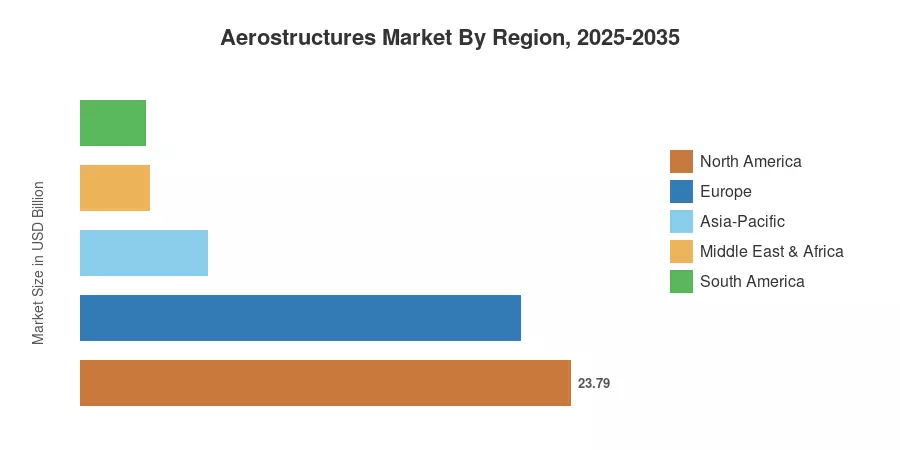
North America continues to lead The Aerostructures, holding a significant share of 950.0 million in 2024. The region's growth is driven by robust demand for commercial and military aircraft, supported by substantial investments in aerospace technology and infrastructure. Regulatory support from agencies like the FAA enhances safety and innovation, further propelling market expansion. The increasing focus on sustainable aviation fuels and advanced manufacturing techniques also contributes to this growth. The competitive landscape in North America is characterized by the presence of major players such as Boeing, Lockheed Martin, and Raytheon Technologies. These companies are at the forefront of technological advancements, ensuring high-quality production and innovation in aerostructures. The U.S. remains the leading country, with Canada also playing a significant role in the aerospace supply chain. The collaboration between government and industry fosters a favorable environment for growth and development in this sector.

Europe : Emerging Aerospace Hub

Europe's aerostructures market is poised for growth, with a market size of 600.0 million in 2024. The region benefits from a strong aerospace manufacturing base, driven by increasing demand for commercial aircraft and military upgrades. Regulatory frameworks from the European Union Aviation Safety Agency (EASA) promote safety and innovation, facilitating market expansion. The push for environmentally friendly technologies and compliance with stringent regulations also fuels demand for advanced aerostructures. Leading countries in Europe include France, Germany, and the UK, with key players like Airbus and Safran dominating the market. The competitive landscape is marked by collaborations and partnerships among manufacturers, suppliers, and research institutions. This synergy enhances innovation and efficiency in production processes, positioning Europe as a significant player in The Aerostructures. The region's commitment to sustainability and technological advancement further strengthens its market position.

Asia-Pacific : Rapidly Growing Market

The Asia-Pacific aerostructures market is experiencing rapid growth, with a market size of 300.0 million in 2024. This growth is driven by increasing air travel demand, rising defense budgets, and the expansion of local manufacturing capabilities. Countries in the region are investing heavily in aerospace infrastructure and technology, supported by favorable government policies aimed at boosting domestic production and reducing reliance on imports. The focus on modernization of fleets and the introduction of new aircraft models also contribute to market expansion. Key players in the Asia-Pacific region include Mitsubishi Heavy Industries and various emerging local manufacturers. Countries like Japan, China, and India are leading the charge, with significant investments in research and development. The competitive landscape is evolving, with collaborations between international and local firms enhancing capabilities and market reach. This dynamic environment positions the Asia-Pacific region as a vital player in The Aerostructures.

Middle East and Africa : Untapped Market Potential

The Middle East and Africa aerostructures market, valued at 50.0 million in 2024, presents significant growth opportunities. The region is witnessing an increase in air travel and investment in aviation infrastructure, driven by economic diversification efforts and tourism initiatives. Governments are focusing on enhancing their aerospace capabilities, supported by regulatory frameworks that encourage foreign investment and technology transfer. This strategic focus is expected to stimulate demand for aerostructures in the coming years. Leading countries in this region include the UAE and South Africa, with a growing number of local manufacturers entering the market. The competitive landscape is characterized by partnerships between international firms and regional players, fostering knowledge transfer and innovation. As the region continues to develop its aerospace sector, the potential for growth in aerostructures is substantial, making it an attractive market for investment.

Key Players and Competitive Insights

The Aerostructures Market is currently characterized by a dynamic competitive landscape, driven by technological advancements, increasing demand for fuel-efficient aircraft, and a growing emphasis on sustainability. Major players such as Boeing (US), Airbus (FR), and Lockheed Martin (US) are strategically positioned to leverage their extensive experience and innovation capabilities. Boeing (US) focuses on enhancing its supply chain resilience and digital transformation initiatives, while Airbus (FR) emphasizes partnerships and regional expansion to bolster its market presence. Lockheed Martin (US) is increasingly investing in advanced manufacturing technologies, which collectively shape a competitive environment that is both concentrated and moderately fragmented, with key players exerting substantial influence over market trends.

In terms of business tactics, companies are increasingly localizing manufacturing to reduce lead times and optimize supply chains. The market structure appears to be moderately fragmented, with a mix of large corporations and smaller specialized firms. This fragmentation allows for a diverse range of offerings, yet the collective influence of major players like Boeing (US) and Airbus (FR) remains significant, as they set industry standards and drive innovation.

In November 2025, Boeing (US) announced a strategic partnership with a leading technology firm to develop advanced AI-driven manufacturing processes. This move is expected to enhance production efficiency and reduce costs, positioning Boeing (US) to better compete in an increasingly technology-driven market. The integration of AI into manufacturing processes could potentially revolutionize operational capabilities, allowing for more agile responses to market demands.

In October 2025, Airbus (FR) unveiled its new sustainability initiative aimed at reducing carbon emissions across its supply chain. This initiative includes investments in green technologies and partnerships with suppliers to promote sustainable practices. The strategic importance of this initiative lies in its alignment with global sustainability goals, which are becoming increasingly critical for securing contracts and maintaining a competitive edge in the market.

In September 2025, Lockheed Martin (US) expanded its production capabilities by acquiring a state-of-the-art facility focused on composite materials. This acquisition is strategically significant as it enhances Lockheed Martin's (US) ability to produce lightweight, durable components, which are essential for next-generation aircraft. The move not only strengthens its manufacturing capabilities but also positions the company favorably in the competitive landscape, where material innovation is key.

As of December 2025, current competitive trends in the Aerostructures Market are heavily influenced by digitalization, sustainability, and AI integration. Strategic alliances are increasingly shaping the landscape, as companies recognize the need for collaboration to drive innovation and meet evolving customer demands. Looking ahead, competitive differentiation is likely to evolve from traditional price-based competition to a focus on innovation, technology, and supply chain reliability. This shift underscores the importance of adapting to market changes and leveraging technological advancements to maintain a competitive advantage.

Key Companies in the Aerostructures Market market include

Industry Developments

The Covid outbreak has impacted the aviation and protection area also. In the main quarter of 2002, the Boeing organisation and the Airbus SE just enlisted conveyance of 70 and 196 aeroplanes. However, in the year 2019, during a similar measure of time, both organisations conveyed around 389 planes.

Due to the Coronavirus pandemic, the public authority all over the planet chose to force lockdown and gave social removal rules, and it profoundly impacted numerous business associations, including aviation.

In August 2019, the US airforce granted the Boeing organisation a $999 million agreement for A-10 wing substitution.

Future Outlook

Aerostructures Market Future Outlook

The Aerostructures Market is projected to grow at an 8.45% CAGR from 2024 to 2035, driven by advancements in materials, increasing aircraft production, and rising demand for fuel efficiency.

New opportunities lie in:

  • Development of lightweight composite materials for enhanced performance
  • Integration of advanced manufacturing technologies like 3D printing
  • Expansion into emerging markets with tailored aerostructure solutions

By 2035, the Aerostructures Market is expected to achieve robust growth and innovation.

Market Segmentation

Aerostructures Market End Use Outlook

  • Airframes
  • Wings
  • Fuselages
  • Empennages
  • Control Surfaces

Aerostructures Market Application Outlook

  • Commercial Aviation
  • Military Aviation
  • Space Exploration
  • Unmanned Aerial Vehicles
  • Helicopters

Aerostructures Market Material Type Outlook

  • Aluminum
  • Composite Materials
  • Titanium
  • Steel
  • Magnesium

Aerostructures Market Manufacturing Process Outlook

  • Additive Manufacturing
  • Subtractive Manufacturing
  • Forming
  • Machining
  • Assembly

Report Scope

MARKET SIZE 20241900.0(USD Million)
MARKET SIZE 20252000.0(USD Million)
MARKET SIZE 20354500.0(USD Million)
COMPOUND ANNUAL GROWTH RATE (CAGR)8.45% (2024 - 2035)
REPORT COVERAGERevenue Forecast, Competitive Landscape, Growth Factors, and Trends
BASE YEAR2024
Market Forecast Period2025 - 2035
Historical Data2019 - 2024
Market Forecast UnitsUSD Million
Key Companies ProfiledBoeing (US), Airbus (FR), Lockheed Martin (US), Northrop Grumman (US), Raytheon Technologies (US), Safran (FR), Leonardo (IT), Thales (FR), Mitsubishi Heavy Industries (JP)
Segments CoveredApplication, Material Type, Manufacturing Process, End Use
Key Market OpportunitiesIntegration of advanced materials and automation technologies enhances efficiency in the Aerostructures Market.
Key Market DynamicsTechnological advancements and regulatory changes drive innovation and competition in the Aerostructures Market.
Countries CoveredNorth America, Europe, APAC, South America, MEA

Market Highlights

Author
Swapnil Palwe
Team Lead - Research

With a technical background as Bachelor's in Mechanical Engineering, with MBA in Operations Management , Swapnil has 6+ years of experience in market research, consulting and analytics with the tasks of data mining, analysis, and project execution. He is the POC for our clients, for their consulting projects running under the Automotive/A&D domain. Swapnil has worked on major projects in verticals such as Aerospace & Defense, Automotive and many other domain projects. He has worked on projects for fortune 500 companies' syndicate and consulting projects along with several government projects.

Leave a Comment

FAQs

What is the CAGR for Global market?

Aerostructures Market growing at a CAGR of 9% by 2024-2032

What is the valuation of the aerostructures market?

By 2032, the Aerostructures market can generate USD 74.0 Billion

Who are key players of the aerostructures market?

Cyient Ltd (India), GKN Aerospace (UK), and Elbit Systems Ltd (Israel) are some reputed names in the aerostructures market.

What is the Global market driver?

The availability of top notch OEMs can promote aerostructures market.

What is the Global market restrain?

Price fluctuations can hinder the aerostructures market growth.

Download Free Sample

Kindly complete the form below to receive a free sample of this Report

Compare Licence

×
Features License Type
Single User Multiuser License Enterprise User
Price $4,950 $5,950 $7,250
Maximum User Access Limit 1 User Upto 10 Users Unrestricted Access Throughout the Organization
Free Customization
Direct Access to Analyst
Deliverable Format
Platform Access
Discount on Next Purchase 10% 15% 15%
Printable Versions