Download Free Sample
Kindly complete the form below to receive a free sample of this Report
Canned Beverages Market Size, Share, Industry Trend & Analysis Research Report Information by Type (Alcoholic Beverages, Non-alcoholic Beverages), Distribution Channel (Store-Based, Non-Store Based), Region (North America, Europe, Asia-Pacific, Rest of the World) -Global Forecast till 2032
As per MRFR analysis, the Canned Beverages Market Size was estimated at 44.09 USD Billion in 2024. The Canned Beverages industry is projected to grow from 46.91 USD Billion in 2025 to 77.59 USD Billion by 2035, exhibiting a compound annual growth rate (CAGR) of 5.23% during the forecast period 2025 - 2035.
The Canned Beverages Market is experiencing a dynamic shift towards health-conscious and sustainable offerings, driven by evolving consumer preferences.
| 2024 Market Size | 44.09 (USD Billion) |
| 2035 Market Size | 77.59 (USD Billion) |
| CAGR (2025 - 2035) | 5.23% |
The Canned Beverages Market is currently experiencing a dynamic evolution, characterized by shifting consumer preferences and innovative product offerings. As health consciousness rises among consumers, there is a noticeable trend towards beverages that are perceived as healthier alternatives. This includes options that are low in sugar, organic, or fortified with vitamins and minerals. Additionally, the market is witnessing a surge in demand for functional beverages, which are designed to provide specific health benefits, such as enhanced hydration or energy boosts. This shift in consumer behavior appears to be influencing manufacturers to adapt their product lines accordingly, leading to a broader array of choices available in the market. Moreover, sustainability has emerged as a pivotal factor in the Canned Beverages Market. Consumers increasingly favor brands that prioritize eco-friendly practices, such as using recyclable materials and reducing carbon footprints. This trend is prompting companies to rethink their packaging strategies and supply chain processes. Furthermore, the rise of e-commerce platforms is reshaping distribution channels, allowing consumers to access a wider variety of canned beverages conveniently. As these trends continue to develop, the market landscape is likely to transform, presenting both challenges and opportunities for stakeholders involved in the Canned Beverages Market.
The Canned Beverages Market is witnessing a shift towards products that cater to health-conscious consumers. This trend encompasses beverages that are low in sugar, organic, or enriched with essential nutrients, reflecting a growing demand for healthier choices.
Sustainability is becoming increasingly important in the Canned Beverages Market. Brands are focusing on eco-friendly packaging and sustainable sourcing practices, as consumers show a preference for environmentally responsible products.
The rise of e-commerce is significantly impacting the Canned Beverages Market. Online platforms are providing consumers with greater access to diverse product offerings, thereby reshaping traditional distribution channels.
The Global Canned Beverages Industry is poised for substantial growth, with projections indicating a market value of 27.9 USD Billion in 2024 and an anticipated increase to 62.4 USD Billion by 2035. This growth trajectory suggests a compound annual growth rate (CAGR) of 7.61% from 2025 to 2035. Factors contributing to this expansion include rising consumer demand for convenience, health-conscious choices, and innovative product offerings. As the market evolves, it is essential to monitor these trends and their implications for future growth.
The Global Canned Beverages Industry is witnessing a shift towards health-conscious choices among consumers. An increasing awareness of health and wellness has led to a demand for beverages that offer functional benefits, such as low-calorie options, natural ingredients, and added vitamins. This trend is particularly evident in the rise of canned beverages that promote hydration and energy without excessive sugar content. Brands are responding by innovating their product lines to include healthier alternatives, which could potentially enhance market growth. As the market adapts to these health trends, it is anticipated that the Global Canned Beverages Industry will continue to evolve and thrive.
The Global Canned Beverages Industry experiences a notable surge in consumer demand for convenience-oriented products. As lifestyles become increasingly fast-paced, consumers gravitate towards ready-to-drink options that require minimal preparation. Canned beverages, including soft drinks, juices, and energy drinks, cater to this need effectively. The convenience factor is particularly appealing to younger demographics, who often prioritize on-the-go consumption. This trend is expected to bolster the market, contributing to a projected market value of 27.9 USD Billion in 2024. As convenience continues to drive purchasing decisions, the Global Canned Beverages Industry is likely to expand significantly.
Technological advancements in production processes are significantly influencing the Global Canned Beverages Industry. Innovations such as automated filling and sealing technologies enhance efficiency and reduce production costs. Moreover, advancements in preservation techniques allow for longer shelf life without compromising taste or quality. These improvements not only streamline operations but also enable manufacturers to respond swiftly to changing consumer preferences. As technology continues to evolve, it is likely that the Global Canned Beverages Industry will benefit from increased productivity and enhanced product offerings, further driving market growth.
Sustainability has emerged as a pivotal driver in the Global Canned Beverages Industry. Consumers are increasingly concerned about environmental impact, prompting brands to adopt eco-friendly packaging solutions. Canned beverages, being recyclable and often made from sustainable materials, align well with these consumer preferences. Companies are investing in sustainable practices, such as reducing carbon footprints and utilizing renewable resources, to appeal to environmentally conscious consumers. This commitment to sustainability not only enhances brand loyalty but also positions the Global Canned Beverages Industry favorably in a competitive landscape. As sustainability becomes integral to consumer choices, the market is likely to benefit from this trend.
Innovation in flavor profiles and product diversification plays a crucial role in the Global Canned Beverages Industry. Manufacturers are increasingly experimenting with unique and exotic flavors to attract a broader consumer base. This trend is particularly pronounced in the craft beverage segment, where small producers are gaining traction by offering distinctive taste experiences. Additionally, the introduction of limited-edition flavors and seasonal offerings keeps the market dynamic and engaging for consumers. As brands continue to innovate, the Global Canned Beverages Industry is expected to see sustained growth, with projections indicating a market value of 62.4 USD Billion by 2035.
In the Canned Beverages Market, the distribution of market share is primarily dominated by carbonated drinks, recognized for their popularity and widespread consumer appeal. Carbonated drinks hold a significant portion of the market, driven by established brands and strong consumer loyalty. Juice drinks, on the other hand, while smaller in share, have gained momentum among health-conscious consumers, leading to their rapid growth in recent years.
Carbonated Drinks (Dominant) vs. Juice Drinks (Emerging)
Carbonated drinks remain the dominant force in the Canned Beverages Market, characterized by their fizzy appeal and variety of flavors. Brands like cola and lemon-lime have historically attracted a wide audience, making them a staple on shelves. Conversely, juice drinks are emerging rapidly, reflecting a shift towards healthier options and natural ingredients. These drinks are favored for their perceived health benefits and unique flavors. As brands innovate with mixed flavors and organic ingredients, juice drinks are attracting a younger demographic seeking refreshment without synthetic additives.
The Canned Beverages Market demonstrates a diverse packaging type landscape, with Aluminum Cans leading the segment significantly. These cans are favored for their lightweight and recyclable properties, contributing to their dominance in the market. Also noteworthy are Steel Cans and Glass Bottles, which maintain respectable shares due to their sturdy characteristics and premium appeal, respectively. In contrast, Plastic Bottles and Tetra Packs are gaining presence but do not yet rival the established players in overall share.
Aluminum Cans (Dominant) vs. Plastic Bottles (Emerging)
Aluminum Cans are considered the dominant players in the packaging segment of the Canned Beverages Market, prized for their lightweight, recyclability, and excellent barrier properties that preserve product quality. They are also environmentally friendly, which resonates well with eco-conscious consumers. On the other hand, Plastic Bottles are emerging as a preferred choice for some beverage categories, benefiting from their convenience and portability. They appeal to younger demographics seeking flexibility. However, their environmental implications pose challenges. The competition between these two packaging types shapes consumer preferences and influences the energy and material values within the market.
The canned beverages market shows a diversified distribution channel landscape, with supermarkets leading in market share due to their extensive reach and high consumer footfall. Convenience stores and specialty stores also contribute significantly, catering to impulse purchases and niche consumer preferences. Online retail, although smaller in current share, is gaining traction as consumers increasingly shift towards e-commerce for purchasing everyday goods, including canned beverages.
Supermarkets: (Dominant) vs. Online Retail: (Emerging)
Supermarkets dominate the distribution channel for canned beverages, providing a reliable and accessible platform for a wide range of products. Their ability to stock various brands and facilitate bulk purchases appeals to traditional consumers. In contrast, online retail is emerging as a significant player, driven by the convenience of home delivery and the growing trend of online shopping. The ease of comparing products and accessing a broader selection enhances consumer engagement. As digital platforms continue to evolve, online retail may challenge traditional channels, particularly among younger consumers who prioritize convenience and variety.
In the canned beverages market, age group plays a significant role in shaping consumer preferences. The largest portion of the market is dominated by younger consumers aged 18-34, who are drawn to innovative flavors and convenience. Conversely, older adults, while a smaller segment, still maintain consistent purchasing patterns, focusing more on traditional flavors and health benefits. This demographic distribution underscores the importance of targeting the right age group for effective marketing strategies.
Health consciousness is emerging as the fastest-growing segment, with increasing awareness about health and wellness driving consumer choices. Younger consumers are opting for low-calorie, nutrient-enriched beverages, while older adults are increasingly seeking out products that offer health benefits. This trend is reshaping the market dynamics, forcing brands to adapt their strategies to cater to health-oriented preferences across all age groups.
Age Group: 18-34 (Dominant) vs. Health Consciousness: Organic Options (Emerging)
The 18-34 age group is the dominant force within the canned beverages market, comprising a significant share of total consumption. These consumers are characterized by their desire for variety and novelty, often gravitating towards products that offer unique flavors or innovative packaging. This demographic is not only tech-savvy but also heavily influenced by social media trends, which drive their purchasing decisions. On the other hand, health consciousness, particularly the demand for organic and functional beverages, is emerging as a critical market driver. This trend reflects a broader consumer shift towards healthier lifestyles, with many opting for beverages fortified with vitamins, electrolytes, or plant-based ingredients. Brands are increasingly reformulating their products to align with these health trends while still appealing to the adventurous tastes of younger consumers.
In the Canned Beverages Market, flavor profiles play a crucial role in consumer preferences. Among them, the Sweet flavor profile holds the largest market share, appealing to a broad audience with its familiar and enjoyable taste. Conversely, the Sour flavor profile has emerged as the fastest-growing segment, attracting adventurous consumers keen to explore tangy and zesty options. Growth trends indicate that the demand for Sweet canned beverages remains consistent, driven by classic flavors and nostalgia. Meanwhile, the increase in health-conscious consumer behavior has fueled interest in Sour flavors, as they often correspond with natural ingredients and innovative recipes, further enhancing their market presence.
Sweet (Dominant) vs. Sour (Emerging)
The Sweet flavor profile represents the dominant segment in the Canned Beverages Market, characterized by its variety of flavors ranging from traditional sugary sodas to fruit-flavored beverages. This profile captivates consumers with its sweet taste, often evoking feelings of comfort and indulgence. Brands leverage this dominance with innovative ingredient formulations that maintain sweetness while reducing artificial additives, catering to health-conscious individuals. In contrast, the Sour flavor profile is emerging rapidly due to the growing trend of unique and bold taste experiences among consumers. Sour beverages, often incorporating natural sources like citrus and fermented elements, attract health-conscious shoppers looking for refreshing options. The dynamic exchange between Sweet and Sour flavors indicates a healthy competition within the segment, intriguing consumers and driving innovation.
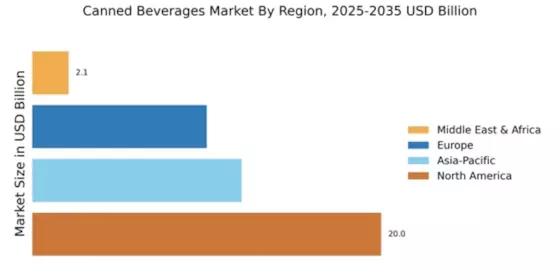
North America continues to lead the canned beverages market, holding a significant share of 20.0 in 2025. The growth is driven by increasing consumer demand for convenient and portable beverage options, alongside a rising trend towards healthier choices. Regulatory support for sustainable packaging and recycling initiatives further catalyzes market expansion, aligning with consumer preferences for eco-friendly products. The competitive landscape is robust, with key players like Coca-Cola, PepsiCo, and Monster Beverage Corporation dominating the market. The U.S. remains the largest contributor, supported by innovative product launches and aggressive marketing strategies. The presence of established brands ensures a diverse product range, catering to various consumer tastes and preferences, solidifying North America's position as a market leader.
Europe's canned beverages market is projected to reach 10.0 by 2025, driven by a shift towards health-conscious consumption and innovative flavors. Regulatory frameworks promoting reduced sugar content and sustainable packaging are influencing consumer choices, leading to increased demand for organic and low-calorie options. The market is also benefiting from a rise in on-the-go consumption patterns, particularly among younger demographics. Leading countries such as Germany, France, and the UK are at the forefront of this trend, with brands like Nestle and Britvic actively expanding their product lines. The competitive landscape is characterized by a mix of local and international players, fostering innovation and variety. The presence of stringent regulations ensures that companies prioritize quality and sustainability, enhancing consumer trust and market growth.
The Asia-Pacific region is witnessing rapid growth in the canned beverages market, projected to reach 12.0 by 2025. This growth is fueled by urbanization, rising disposable incomes, and changing lifestyles that favor convenience. Additionally, the increasing popularity of ready-to-drink beverages among younger consumers is a significant driver. Regulatory support for food safety and quality standards is also enhancing market dynamics, ensuring consumer confidence. Countries like China, Japan, and India are leading the charge, with major players such as Coca-Cola and PepsiCo expanding their operations. The competitive landscape is vibrant, with local brands emerging alongside global giants, creating a diverse market. Innovations in flavors and packaging are key strategies employed by companies to capture the growing consumer base, making Asia-Pacific a vital region for future growth.
The Middle East and Africa region represents an untapped market for canned beverages, with a projected size of 2.09 by 2025. The growth is driven by increasing urbanization, a young population, and rising disposable incomes. Additionally, the demand for convenient beverage options is on the rise, supported by changing consumer lifestyles. Regulatory initiatives aimed at improving food safety and quality standards are also contributing to market growth. Countries like South Africa and the UAE are leading the market, with local and international brands vying for consumer attention. The competitive landscape is evolving, with companies focusing on innovative marketing strategies and product diversification to cater to local tastes. As the region continues to develop, the canned beverages market is poised for significant growth, presenting opportunities for both established and new players.
The Canned Beverages Market is currently characterized by a dynamic competitive landscape, driven by evolving consumer preferences and a growing emphasis on sustainability. Major players such as Coca-Cola (US), PepsiCo (US), and Nestle (CH) are actively reshaping their strategies to maintain market relevance. Coca-Cola (US) has been focusing on diversifying its product portfolio, particularly in the health-conscious segment, while PepsiCo (US) emphasizes innovation through the introduction of new flavors and healthier options. Nestle (CH) appears to be concentrating on sustainability initiatives, aiming to reduce its carbon footprint and enhance packaging recyclability, which collectively influences the competitive environment by pushing other players to adopt similar practices.In terms of business tactics, companies are increasingly localizing manufacturing to reduce costs and improve supply chain efficiency. The market structure is moderately fragmented, with a mix of large multinational corporations and smaller regional players. This fragmentation allows for a variety of product offerings, yet the collective influence of key players like Dr Pepper Snapple Group (US) and Monster Beverage Corporation (US) remains significant, as they leverage their extensive distribution networks to capture market share.
In November Coca-Cola (US) announced a partnership with a leading technology firm to enhance its digital marketing capabilities. This strategic move is likely to bolster its engagement with consumers through personalized marketing campaigns, thereby increasing brand loyalty and sales. The integration of advanced analytics into their marketing strategy may also provide insights into consumer behavior, allowing for more targeted product development.
In October PepsiCo (US) launched a new line of organic canned beverages, responding to the rising demand for healthier options. This initiative not only aligns with current consumer trends but also positions PepsiCo (US) as a leader in the organic segment of the market. The introduction of these products could potentially attract a new demographic of health-conscious consumers, further solidifying its market position.
In September Nestle (CH) unveiled its commitment to achieving net-zero emissions by 2030, which includes a significant investment in sustainable packaging solutions. This ambitious goal reflects a broader trend within the industry towards environmental responsibility. By prioritizing sustainability, Nestle (CH) may enhance its brand image and appeal to environmentally conscious consumers, thereby gaining a competitive edge.
As of December the Canned Beverages Market is witnessing a shift towards digitalization, sustainability, and the integration of AI technologies. Strategic alliances are becoming increasingly prevalent, as companies recognize the need to collaborate in order to innovate and meet consumer demands. The competitive differentiation is likely to evolve from traditional price-based competition to a focus on innovation, technology, and supply chain reliability, suggesting that companies that invest in these areas will be better positioned for future success.
The Canned Beverages Market is projected to grow at a 5.23% CAGR from 2025 to 2035, driven by increasing consumer demand for convenience and sustainability.
New opportunities lie in:
By 2035, the market is expected to solidify its position as a leader in the beverage industry.
| MARKET SIZE 2024 | 44.09(USD Billion) |
| MARKET SIZE 2025 | 46.91(USD Billion) |
| MARKET SIZE 2035 | 77.59(USD Billion) |
| COMPOUND ANNUAL GROWTH RATE (CAGR) | 5.23% (2025 - 2035) |
| REPORT COVERAGE | Revenue Forecast, Competitive Landscape, Growth Factors, and Trends |
| BASE YEAR | 2024 |
| Market Forecast Period | 2025 - 2035 |
| Historical Data | 2019 - 2024 |
| Market Forecast Units | USD Billion |
| Key Companies Profiled | Coca-Cola (US), PepsiCo (US), Nestle (CH), Dr Pepper Snapple Group (US), Monster Beverage Corporation (US), Red Bull GmbH (AT), Keurig Dr Pepper (US), Britvic (GB), Cott Corporation (CA) |
| Segments Covered | Product Type, Packaging Type, Distribution Channel, Consumer Demographics, Flavor Profile |
| Key Market Opportunities | Growing consumer preference for sustainable packaging in the Canned Beverages Market presents significant opportunities. |
| Key Market Dynamics | Rising consumer preference for sustainable packaging drives innovation and competition in the canned beverages market. |
| Countries Covered | North America, Europe, APAC, South America, MEA |
The Canned Beverages Market is projected to reach a valuation of 77.59 USD Billion by 2035.
In 2024, the Canned Beverages Market was valued at 44.09 USD Billion.
The expected CAGR for the Canned Beverages Market during the forecast period 2025 - 2035 is 5.23%.
The Carbonated Drinks segment is projected to reach a valuation of 26.0 USD Billion by 2035.
Key players in the Canned Beverages Market include Coca-Cola, PepsiCo, Nestle, and Monster Beverage Corporation.



Kindly complete the form below to receive a free sample of this Report

“This is really good guys. Excellent work on a tight deadline. I will continue to use you going forward and recommend you to others. Nice job”


“Thanks. It’s been a pleasure working with you, please use me as reference with any other Intel employees.”


“Thanks for sending the report it gives us a good global view of the Betaïne market.”


“Thank you, this will be very helpful for OQS.”


“We found the report very insightful! we found your research firm very helpful. I'm sending this email to secure our future business.”


“I am very pleased with how market segments have been defined in a relevant way for my purposes (such as "Portable Freezers & refrigerators" and "last-mile"). In general the report is well structured. Thanks very much for your efforts.”


“I have been reading the first document or the study, ,the Global HVAC and FP market report 2021 till 2026. Must say, good info! I have not gone in depth at all parts, but got a good indication of the data inside!”


“We got the report in time, we really thank you for your support in this process. I also thank to all of your team as they did a great job.”


“The Automotive 48V ECU Components Procurement Intelligence Study” was a complex project, but the Market Research Future (MRFR) team handled it with quality, agility, and customer-centricity. They delivered all requested data on time and within the agreed scope. The team, including Shubhendra Anand and Rahul Gotadki, was always readily available to clarify questions and swiftly implement necessary adjustments, driving the project to a successful conclusion within a very demanding timeframe.
I would also like to specifically commend Akshay Agarwal for his responsiveness and support at every stage—from our initial inquiry on May 6th through to final delivery on June 18th. His dedication made the entire process seamless.”



