Drug Discovery Services Market (2021 - 2023)

Drug Discovery Services Market Research Report Information By Drug Type (Small Molecule Drug, Biologics), By Type (DMPK, Pharmaceutical Services, Others), By Therapeutic Area (Oncology, Others), And By Region (North America, Europe, Asia-Pacific, And Rest Of The World) - Growth & Industry Forecast 2025 To 2035
ID: MRFR/Pharma/4414-CR
110 Pages
Vikita Thakur, Rahul Gotadki
Last Updated: July 22, 2026
Drug Discovery Services Market
Market Size
Forecast Period2021-2023
CAGR (2021-2023)6.50%
2021 Market Size115.08 USD Billion
2023 Market Size122.56 USD Billion
Key Players
Charles River Laboratories
Thermo Fisher Scientific
WuXi AppTec
Eurofins Scientific
Evotec SE
LabCorp
Opportunities
  • AI-Native Integrated Discovery Platforms
  • Emerging-Market Capacity Expansion in Asia-Pacific
  • Data Monetization and Predictive-Analytics Services

Drug Discovery Services Market Summary

The Drug Discovery Services Market reached an estimated USD 115.08 Billion in 2025 and is projected to grow from USD 122.56 Billion in 2026 to USD 216.04 Billion by 2035, registering a compound annual growth rate of 6.50% during the forecast period. Large venture infusions—headlined by a USD 1 Billion Series A raised by Xaira Therapeutics in 2024—signal that investors see outsourced discovery and generative-AI platforms as the fastest path to validated drug candidates [1]. The U.S. FDA granted 45 fast-track designations for rare-disease assets in 2024, up from 37 in the prior year, incentivizing sponsors to identify superior candidates earlier in the pipeline [2].

A technology transformation is reshaping how compounds move from targets to clinical contenders. Legacy manual screening and iterative medicinal-chemistry cycles are giving way to AI-augmented platforms that compress cycle times by 30% to 50%, as demonstrated by Eli Lilly's TuneLab initiative [3]. DNA-encoded library technology and automated compound-management systems have further accelerated hit-to-lead optimization timelines, drawing an estimated USD 4.2 Billion in platform-level investments between 2023 and 2025 [4].

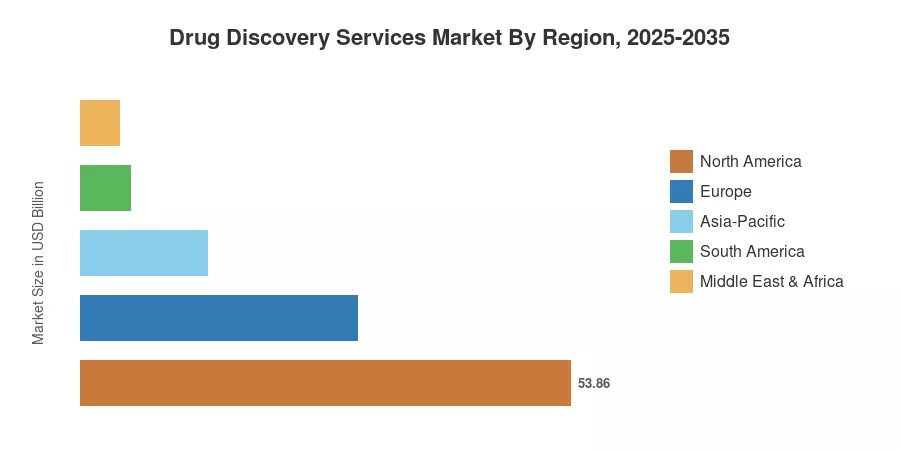
North America commanded roughly 46.8% of Drug Discovery Services Market revenue in 2025, anchored by the depth of U.S. venture funding and the FDA's accelerated regulatory pathways. Europe held the second-largest share at approximately 26.5%, driven by the European Medicines Agency's adaptive-pathway framework. Asia-Pacific is the fastest-growing region, projected to expand at a 12.10% CAGR through 2035 as China and India scale contract-research capacity and governments invest in biotech infrastructure [5]. The Drug Discovery Services Market is poised to benefit from these converging forces well into the next decade.


Key Report Takeaways

• By Process Phase

  • Hit generation and screening accounted for 38.5% of Drug Discovery Services Market share in 2025, driven by automation-led throughput gains and combinatorial chemistry libraries.
  • Pre-clinical candidate selection is forecast to expand at a 7.55% CAGR through 2035, the fastest among all process phases, as sponsors prioritize translational readiness earlier in the funnel.

• By Technology

  • AI and machine-learning platforms are projected to grow at a 10.30% CAGR during 2026–2035, reflecting industry-wide adoption of generative models for target validation and molecular design.


• By Drug Type

  • Small-molecule programs represented 57.3% of Drug Discovery Services Market revenue in 2025, though biologic and large-molecule pipelines are expanding at a faster pace.

• By Region

  • North America generated 46.8% of 2025 revenue, supported by the concentration of pharma headquarters and CRO infrastructure along the U.S. East Coast corridor.
  • Asia-Pacific is forecast to register a 12.10% CAGR, with China and India capturing the bulk of capacity expansion investments.


Drug Discovery Services Market Size and Forecast (2021–2035)

Market Research Future's estimates combine bottom-up revenue modeling across process phases, technology platforms, and end-user categories with top-down cross-validation against published pharma R&D expenditure data from IQVIA, EvaluatePharma, and PhRMA [6][7]. Historical figures draw on company filings and regulatory databases; forecast values apply the calibrated 6.50% CAGR uniformly across the projection window.
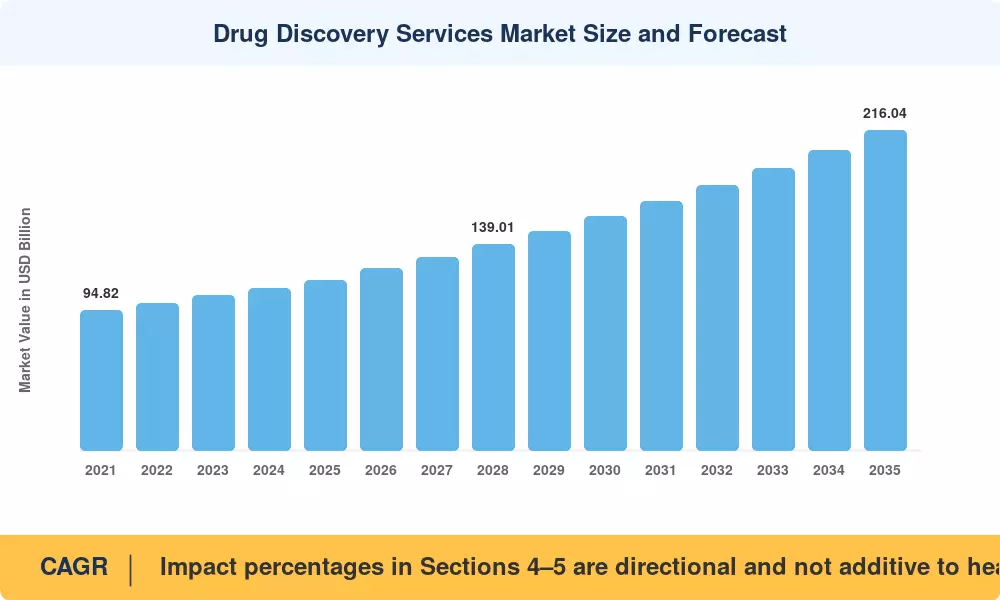
Drug Discovery Services Market Size and Forecast
Our Impact
Enabled $4.3B Revenue Impact for Fortune 500 and Leading Multinationals
Partnering with 2000+ Global Organizations Each Year
30K+ Citations by Top-Tier Firms in the Industry

Driver Impact Analysis

Driver ~% Impact on CAGR Geographic Relevance Impact Timeline
AI/ML platform adoption in target validation +1.4% Global Medium-term (2–4 yr)
FDA & EMA accelerated regulatory pathways +1.1% North America, Europe Short-term (≤2 yr)
Biologics and ADC pipeline expansion +0.9% Global Long-term (≥4 yr)
Venture and PE capital inflows into CROs +0.8% North America, Asia-Pacific Short-term (≤2 yr)
DNA-encoded library and fragment-based screening +0.7% Global Medium-term (2–4 yr)
Rare-disease and orphan-drug incentive programs +0.6% North America, Europe Medium-term (2–4 yr)
Government biotech industrialization in APAC +0.5% Asia-Pacific Long-term (≥4 yr)


AI and Machine-Learning Platform Adoption

In drug discovery, generative AI is now an operational tool rather than a proof-of-concept exercise. Between 2023 and 2025, three treatment initiatives showed 30%–50% reductions in hit-to-lead cycle time using Eli Lilly's TuneLab platform [3]. A standard for AI-native discovery timelines was established by Insilico Medicine's nomination of ISM001-055 for idiopathic pulmonary fibrosis, which was completed in less than 18 months from target identification to IND filing [11]. The Drug Discovery Services Market's addressable base is growing as a result of these gains, which are attracting mid-tier sponsors to integrated AI-CRO partnerships.


Accelerated Regulatory Pathways

Rare-disease and oncology assets accounted for more than 70% of the FDA's 45 fast-track designations in 2024, a 22% year-over-year increase [2]. During the same time span, 18 medications for unmet medical needs were expedited under the EMA's PRIME program [12]. The Drug Discovery Services Market is driven by the need for outsourced candidate profiling, ADMET studies, and pharmacokinetic modeling services since sponsors pursuing these designations want strong preclinical data packages earlier.


Biologics and ADC Pipeline Expansion

Antibody–drug conjugates generated over USD 12 Billion in global sales in 2024, and the pipeline has swelled to more than 300 active clinical programs [9]. Each ADC requires specialized linker-payload screening, conjugation optimization, and immunogenicity testing—services that most mid-size biotechs lack in-house. The Drug Discovery Services Market is capturing a growing share of this outsourced workflow, with Charles River Laboratories and WuXi AppTec both reporting double-digit growth in their biologics discovery divisions during 2024 [13][14].

Venture and Private-Equity Capital Inflows

Global venture investment in drug-discovery-focused startups reached USD 18.5 Billion in 2024, up from USD 14.8 Billion in 2023 [1]. Xaira Therapeutics' USD 1 Billion Series A was the largest single round, but dozens of smaller rounds between USD 50 Million and USD 200 Million funded AI-chemistry hybrid platforms. These capital flows directly expand the Drug Discovery Services Market because newly funded biotechs typically outsource 60%–80% of their early discovery work to CROs [15].


Restraints Impact Analysis

Restraint ~% Impact on CAGR Geographic Relevance Impact Timeline
Rising discovery-stage R&D costs and inflation –0.6% Global Short-term (≤2 yr)
Data-security and cyber-biosecurity risks –0.5% Global Medium-term (2–4 yr)
Regulatory fragmentation across jurisdictions –0.4% Global Long-term (≥4 yr)
IP leakage concerns in outsourced models –0.3% Asia-Pacific, Global Medium-term (2–4 yr)
Skilled-talent shortage in computational chemistry –0.3% North America, Europe Short-term (≤2 yr)


Rising Discovery-Stage R&D Costs

Drug discovery operational costs increased by a projected 12% between 2023 and 2025 due to macro-inflation and supply-chain disruptions [16]. CRO margins were compressed and pricing renegotiations were required as a result of rising reagent prices, specialized chemical procurement, and vivarium per-diem fees. According to estimates from the Tufts Center for the Study of medicine Development, the fully capitalized cost per authorized medicine exceeded USD 2.8 billion in 2024, with preclinical and discovery phases accounting for about 35% of this total [20]. In the Drug Discovery Services Market, these cost concerns can postpone project launches and impede budget approvals.


Cyber-Biosecurity and Data-Integrity Risks

Vulnerabilities in cloud-based discovery platforms and electronic lab notebooks were revealed by high-profile cyber-biosecurity events in 2023 and 2024 [17]. Pharmaceutical sponsors are now requiring their CRO partners to have SOC 2 Type II certifications and zero-trust security architectures, which adds compliance expenses that are difficult for smaller service providers to cover. The Drug Discovery Services Market's onboarding of new platforms is slowed down and entry hurdles are created by these criteria.


Drug Discovery Services Market Opportunities

AI-Native Integrated Discovery Platforms

CROs that embed proprietary AI engines into their service stack—spanning target validation, virtual screening, and ADMET prediction—can command premium pricing and reduce client cycle times by 30%–50% [3]. The shift from fee-for-service to outcome-based milestone contracts rewards platform depth and positions AI-native CROs for outsized growth within the Drug Discovery Services Market.

Emerging-Market Capacity Expansion in Asia-Pacific

India's Department of Biotechnology committed INR 9,197 Crore (approximately USD 1.1 Billion) to biotech R&D infrastructure under its 2024–2029 strategic plan [5]. China's NMPA has streamlined IND filing timelines, reducing average approval windows from 60 to 30 working days for innovative biologics. These policy catalysts are opening new capacity corridors for the Drug Discovery Services Market in Asia-Pacific.

Data Monetization and Predictive-Analytics Services

CROs that accumulate large, curated datasets across hundreds of discovery programs sit on a latent asset. Anonymized structure–activity relationship databases, ADMET benchmarking repositories, and cross-program target-tractability indices can be monetized through subscription analytics platforms. Evotec's PanOmics initiative and WuXi's DELT-based compound libraries illustrate how data-as-a-service can diversify revenue within the Drug Discovery Services Market.

Cell and Gene Therapy Discovery Services

The global cell and gene therapy pipeline surpassed 3,700 active programs in 2024, yet fewer than 15% of sponsors have in-house vector screening and potency-assay capabilities [21]. This gap creates a high-growth niche for the Drug Discovery Services Market, particularly for CROs that can offer viral-vector optimization, guide-RNA screening, and in-vivo efficacy modeling as bundled discovery packages.

Rare-Disease and Orphan-Drug Discovery

Orphan-drug designations by the FDA reached a record 571 in 2024, reflecting sustained industry appetite for high-margin rare-disease franchises [10]. Discovery-stage service demand for ultra-rare indications typically requires bespoke assay development, patient-derived cell models, and specialized pharmacology studies—services with limited in-house capacity. The Drug Discovery Services Market is well positioned to capture this demand wave as regulatory incentives expand globally.


Drug Discovery Services Market Future Outlook

Autonomous AI-Driven Discovery Laboratories

By 2030, fully autonomous "self-driving" laboratories—integrating robotic synthesis, real-time analytics, and closed-loop AI optimization—could handle up to 40% of early-stage screening campaigns without human intervention [3]. The Drug Discovery Services Market stands to benefit as CROs invest in these turnkey autonomous facilities to attract sponsors seeking faster turnaround and reproducibility.

Platform Economics and Federated Data Models

The Drug Discovery Services Market is shifting toward platform economics, where CROs aggregate anonymized datasets across hundreds of programs and offer predictive-analytics subscriptions. Federated-learning frameworks allow sponsors to train shared AI models on distributed datasets without exposing proprietary compound structures, addressing the IP-leakage concern that has historically constrained outsourced discovery [18].

Precision-Medicine and Multi-Omic Integration

Multi-omic profiling—combining genomics, proteomics, metabolomics, and single-cell transcriptomics—will become standard in target-identification workflows by 2028 [11]. CROs that build vertically integrated multi-omic platforms will capture premium engagements in the Drug Discovery Services Market, particularly for oncology and neurodegenerative-disease programs where biomarker stratification drives candidate selection.

ESG Reporting and Green Chemistry in Discovery

Pharmaceutical companies are embedding environmental-sustainability metrics into their supplier scorecards. The American Chemical Society's Green Chemistry Institute reported that 38% of top-20 pharma companies required green-chemistry compliance from discovery vendors by 2025 [28]. CROs in the Drug Discovery Services Market that adopt solvent-reduction protocols, catalytic synthesis routes, and waste-minimization programs will gain preferential vendor status.


Drug Discovery Services Market Segmentation

By Process Phase

Segment Key Metric Primary Demand Driver
Target Identification 18.2% of 2025 revenue Multi-omic and CRISPR-based functional genomics
Hit Generation & Screening 38.5% of 2025 revenue Automated combinatorial libraries and DEL technology
Lead Optimization USD 28.42 Billion (2025) Medicinal chemistry and ADMET profiling
Pre-Clinical Candidate Selection 7.55% CAGR (2026–2035) Translational readiness and IND-enabling studies


Hit generation and screening anchored the Drug Discovery Services Market in 2025, reflecting the enormous compound volumes processed through automated screening cascades. Large pharma sponsors increasingly bundle target identification with hit generation in integrated service contracts, compressing project handoff timelines and reducing attrition at stage gates. Pre-clinical candidate selection is growing fastest because sponsors now demand IND-ready data packages from CROs rather than handling translational studies internally.

By Technology

Segment Key Metric Primary Demand Driver
High-Throughput Screening 36.7% of 2025 revenue Miniaturized assay platforms and ultra-HTS automation
Bioinformatics USD 22.18 Billion (2025) Sequence-based target mining and pathway analysis
AI and Machine Learning 10.30% CAGR (2026–2035) Generative molecular design and virtual screening
Other Technologies 5.80% CAGR (2026–2035) Fragment-based drug design, NMR, cryo-EM


Screening technologies remain the largest revenue contributor to the Drug Discovery Services Market, with CROs operating assay libraries exceeding 10 million compounds. AI and machine-learning platforms are the fastest-growing segment, propelled by demonstrated cycle-time reductions and the ability to pre-filter compound libraries before physical screening.

By Drug Type

Segment Key Metric Primary Demand Driver
Small Molecules 57.3% of 2025 revenue Established medicinal-chemistry infrastructure
Biologics & Large Molecules 8.80% CAGR (2026–2035) ADCs, bispecifics, mRNA-based therapeutics


Small-molecule programs continue to dominate the Drug Discovery Services Market by revenue because the global medicinal-chemistry workforce and screening infrastructure are built around small-molecule paradigms. Biologics, however, are gaining share rapidly as antibody–drug conjugates, bispecific antibodies, and mRNA therapeutics create entirely new categories of outsourced discovery work.

By Therapeutic Area

Segment Key Metric Primary Demand Driver
Oncology 29.7% of 2025 revenue Immuno-oncology, ADCs, and targeted degraders
Central Nervous System USD 19.35 Billion (2025) Alzheimer's and neuropsychiatric pipeline resurgence
Metabolic Disorders 9.05% CAGR (2026–2035) GLP-1 receptor agonist class expansion
Infectious Diseases 6.20% CAGR (2026–2035) Antimicrobial resistance and pandemic preparedness
Other Therapeutic Areas 5.50% CAGR (2026–2035) Autoimmune, rare disease, ophthalmology


Oncology leads therapeutic-area spend in the Drug Discovery Services Market, reflecting the sheer volume of immuno-oncology and targeted-degrader programs moving through CRO pipelines. Metabolic disorders represent the fastest-growing therapeutic segment, driven by the explosive commercial success of GLP-1 receptor agonists and the race to develop next-generation oral formulations [9].

By End User

Segment Key Metric Primary Demand Driver
Pharmaceutical & Biotechnology Companies 60.4% of 2025 revenue Pipeline externalization and capital efficiency
Contract Research Organizations 9.15% CAGR (2026–2035) Sub-contracting and specialized niche services
Academic & Research Institutions USD 9.21 Billion (2025) Government grants and translational-research mandates


Pharmaceutical and biotechnology companies remain the largest end-user segment in the Drug Discovery Services Market, outsourcing an estimated 60%–80% of discovery-stage work at emerging biotechs. CROs are the fastest-growing end-user category because tier-one CROs increasingly sub-contract specialized assays and computational work to niche providers.


Regional Market Share Analysis

Region Key Metric Primary Investment Themes
North America 46.8% of 2025 revenue Venture-backed AI-CRO platforms; FDA accelerated pathways
Europe 26.5% of 2025 revenue EMA adaptive licensing; academic–industry translational hubs
Asia-Pacific 12.10% CAGR (2026–2035) Government biotech industrialization; CRO capacity buildout
South America USD 5.52 Billion (2025) Clinical infrastructure modernization; regional CRO growth
Middle East & Africa 3.7% of 2025 revenue Healthcare diversification; genomics research programs
Total USD 115.08 Billion (2025)

The Drug Discovery Services Market exhibits a concentrated geographic footprint, with three regions—North America, Europe, and Asia-Pacific—accounting for over 91% of global revenue. Regional growth trajectories diverge based on regulatory maturity, CRO infrastructure density, and government biotech investment programs.


North America

Country Key Metric Key Driver
United States 82.3% of regional revenue NIH funding; VC concentration; FDA fast-track incentives
Canada 10.8% of regional revenue National Genomics Strategy; CRO cluster in Montréal–Toronto corridor
Mexico 6.40% CAGR (2026–2035) Nearshoring of early-stage discovery; COFEPRIS regulatory alignment


The United States dominates the North American Drug Discovery Services Market, with the NIH allocating over USD 48 Billion to biomedical research in fiscal 2024 and the BARDA pipeline funneling contracts to discovery-stage CROs [22]. Canada's BioTalent program addressed a critical 12,000-person skills gap in computational biology between 2023 and 2025, while Mexico's nearshoring trend attracted three new CRO facility announcements in Guadalajara and Monterrey during 2024 [23].

Europe

Country Key Metric Key Driver
Germany 24.1% of regional revenue Strong pharma headquarters; Fraunhofer translational research
United Kingdom 21.5% of regional revenue Biomedical Catalyst Fund; Cambridge–Oxford Arc
France 6.20% CAGR (2026–2035) Health Innovation 2030 plan; Sanofi in-licensing programs
Italy 9.8% of regional revenue Specialty pharma clusters in Lombardy
Spain 5.90% CAGR (2026–2035) EU Horizon Europe grants for academic CROs
Nordic Countries 8.4% of regional revenue Precision-medicine initiatives in Sweden and Denmark
Russia 3.2% of regional revenue Pharma self-sufficiency mandate driving domestic discovery
Rest of Europe 6.30% CAGR (2026–2035) Emerging biotech ecosystems in Poland and Czech Republic


Europe's Drug Discovery Services Market benefits from the EUR 95.5 Billion Horizon Europe program, which channels grants into translational discovery and academic-CRO partnerships [24]. The UK's Biomedical Catalyst Fund committed GBP 360 Million between 2023 and 2025 to bridge the gap between university research and industry-sponsored lead optimization [25].

Asia-Pacific

Country Key Metric Key Driver
China 38.6% of regional revenue NMPA reform; WuXi and Pharmaron capacity expansion
India 11.40% CAGR (2026–2035) DBT biotechnology investment; low-cost chemistry services
Japan 22.1% of regional revenue AMED translational grants; aging-population pipeline demand
South Korea 8.7% of regional revenue K-Bio investment strategy; Samsung Biologics infrastructure
ASEAN 10.90% CAGR (2026–2035) Singapore Biomedical Sciences Initiative; Thai FDA harmonization
Rest of Asia-Pacific 7.60% CAGR (2026–2035) Australia's MRFF grants; New Zealand biologics capacity


Asia-Pacific's Drug Discovery Services Market growth is anchored by China and India, which together accounted for over 55% of regional revenue in 2025. China's NMPA reduced IND filing timelines to 30 working days for innovative molecules, triggering a wave of multinational sponsor engagements with Shanghai- and Suzhou-based CROs [5].

South America

Country Key Metric Key Driver
Brazil 58.3% of regional revenue ANVISA regulatory modernization; Fiocruz–industry collaborations
Argentina 6.80% CAGR (2026–2035) University-driven medicinal chemistry talent pool
Rest of South America 5.90% CAGR (2026–2035) Colombia and Chile clinical-infrastructure improvements


Brazil leads the South American Drug Discovery Services Market, with ANVISA's 2024 regulatory reforms reducing preclinical submission review timelines by approximately 25% [26]. Fiocruz's partnership network with five multinational CROs expanded access to screening libraries for neglected tropical disease programs.

Middle East & Africa

Country Key Metric Key Driver
Saudi Arabia 31.4% of regional revenue Vision 2030 health-sector diversification
UAE 27.2% of regional revenue Dubai Science Park biotech cluster
South Africa 7.10% CAGR (2026–2035) Genomics research; infectious-disease pipeline
Egypt 6.50% CAGR (2026–2035) Pharmaceutical manufacturing incentives extending to discovery
Rest of MEA 5.80% CAGR (2026–2035) Israel biotech innovation; Jordanian API manufacturing


Saudi Arabia's National Biotechnology Strategy, launched in 2024 under Vision 2030, allocated SAR 2.4 Billion to establish three genomics-and-discovery research centers in Riyadh and Jeddah, marking the kingdom's first major push into the Drug Discovery Services Market [27].


Drug Discovery Services Market By Region, 2025-2035

Competitive Benchmarking

The Drug Discovery Services Market exhibits medium concentration, with the top five players accounting for an estimated 30%–38% of global revenue. The Herfindahl–Hirschman Index sits in the 600–900 range, reflecting a fragmented mid-tier segment alongside a handful of integrated leaders. Competition centers on platform breadth, therapeutic-area expertise, AI capabilities, and geographic coverage.

Company Est. Revenue Share Range Key Offerings for Drug Discovery Services Market Strategic Positioning
Charles River Laboratories ~8–11% Integrated discovery from target to IND; in-vivo pharmacology Full-spectrum CRO with biologics and safety assessment
Thermo Fisher Scientific (PPD) ~7–10% Compound management; bioanalytical services; clinical bridging End-to-end pharma services leveraging PPD integration
WuXi AppTec ~6–9% Chemistry, DELT, biologics discovery; CDMO bridging Asia-based cost advantage with global delivery
Eurofins Scientific ~5–8% Discovery biology; ADME/DMPK; genomics services Decentralized laboratory network across 60+ countries
Evotec SE ~4–6% PanOmics-driven multi-target partnerships; iPSC platforms Co-ownership deal structures with milestone sharing
LabCorp (Covance) ~4–6% Nonclinical safety; translational medicine; biomarkers Large-scale nonclinical bridging to Phase I
GenScript Biotech ~3–5% Gene synthesis; antibody discovery; enzyme engineering Synthetic-biology backbone with rapid turnaround
Revvity (formerly PerkinElmer) ~2–4% Screening instruments; reagents; informatics platforms Technology-provider positioning with service overlay
Jubilant Biosys (Jubilant Pharmova) ~2–3% Integrated medicinal chemistry; computational chemistry India-based cost structure with U.S. client base
Agilent Technologies ~2–4% Cell-analysis instruments; genomics; companion diagnostics Instrument-and-consumable ecosystem for discovery labs


Recent News & Developments

  • Xaira Therapeutics (May 2024): Raised USD 1 Billion in a Series A to build an AI-driven drug discovery platform focused on protein engineering and large-molecule design, the largest single discovery-stage financing round on record [1].
  • Charles River Laboratories (Jun 2024): Acquired a CRISPR-based functional-genomics firm to strengthen target-validation capabilities and expand the company's integrated discovery offering in the Drug Discovery Services Market [13].
  • Evotec SE (Nov 2023): Signed a multi-target discovery alliance with Bristol-Myers Squibb valued at up to USD 500 Million in milestones, covering neuroscience and immunology programs [14].
  • U.S. FDA (Feb 2024): Granted 45 fast-track designations for rare-disease candidates, a 22% increase over 2023, intensifying sponsor demand for accelerated preclinical services [2].
  • Thermo Fisher Scientific (Jan 2025): Launched an automated compound-management and library-curation platform designed to reduce sample-handling turnaround by 40% for Drug Discovery Services Market clients [4].
  • GenScript Biotech (Sep 2024): Opened a biologics discovery center in the Netherlands to serve European pharma clients, adding antibody-engineering and enzyme-optimization capacity [15].
  • WuXi AppTec (Mar 2024): Expanded its integrated discovery campus in Wuxi, China, adding 250,000 sq. ft. of chemistry and biology laboratory space to meet growing Drug Discovery Services Market demand [14].


Drug Discovery Services Market Report Scope

Parameter Detail
Market Scope Global Drug Discovery Services Market
Study Period 2021–2035
CAGR (2026–2035) 6.50%
Base Year 2025 — USD 115.08 Billion
Forecast End Point 2035 — USD 216.04 Billion
Fastest Growing Segment AI & Machine Learning (by technology); Asia-Pacific (by region)
Companies Profiled 10
Valuation Currency USD Billion
CAGR Driver Disclaimer Impact percentages in Sections 4–5 are directional and not additive to headline CAGR


FAQs

How do milestone-based pricing models affect CRO contract structures in discovery?
Milestone pricing shifts financial risk to CROs and rewards speed-to-candidate delivery. Roughly 35% of new discovery contracts in 2024 incorporated outcome-based milestones rather than traditional fee-for-service terms [16].
What role do DNA-encoded libraries play relative to fragment-based screening?
DNA-encoded libraries interrogate billions of compounds in a single experiment, while fragment-based methods explore smaller sets with higher structural resolution. Most sponsors now use both approaches in parallel to maximize chemical diversity [4].
How do sponsors evaluate CRO data-security readiness before outsourcing?
Sponsors typically require SOC 2 Type II certification, ISO 27001 compliance, and zero-trust network architecture. An estimated 60% of RFPs in 2024 included mandatory cybersecurity audits [17].
What distinguishes the Drug Discovery Services Market from clinical-stage CRO services?
Discovery services cover target identification through IND-enabling studies, while clinical CROs manage trial execution. Discovery engagements demand deep scientific expertise, whereas clinical services emphasize regulatory operations [8].
How are patent-cliff dynamics shaping the Drug Discovery Services Market?
Over USD 200 Billion in branded-drug revenue faces patent expiry by 2030, forcing originators to replenish pipelines rapidly. This urgency accelerates outsourced discovery spending [7].
What integration challenges arise when combining AI platforms with legacy laboratory workflows?
Data-format incompatibility between electronic laboratory notebooks and AI inference engines remains the primary bottleneck. Standardization initiatives like FAIR data principles are closing this gap gradually [3].
How does the Drug Discovery Services Market address rare-disease programs with limited patient biology?
CROs deploy patient-derived iPSC models and organ-on-chip platforms to generate disease-relevant pharmacology data when clinical samples are scarce. These tools reduce translational failure rates significantly [21].    
Author
Author
Author Profile
Vikita Thakur LinkedIn
Senior Research Analyst
She holds an experience of about 5+ years in market research and business consulting projects for sectors such as life sciences, medical devices, and healthcare IT. She possesses a robust background in data analysis, market estimation, competitive intelligence, pipeline analysis market trend identification, and consumer behavior insights. Her expertise lies in technical Sales support, client interaction and project management, designing and implementing market research studies, conducting competitive analysis, and synthesizing complex data into actionable recommendations that drive business growth.
Co-Author
Co-Author Profile
Rahul Gotadki LinkedIn
Research Manager
He holds an experience of about 9+ years in Market Research and Business Consulting, working under the spectrum of Life Sciences and Healthcare domains. Rahul conceptualizes and implements a scalable business strategy and provides strategic leadership to the clients. His expertise lies in market estimation, competitive intelligence, pipeline analysis, customer assessment, etc.

Research Approach


Secondary Research

The secondary research process involved comprehensive analysis of regulatory databases, peer-reviewed scientific journals, clinical trial registries, and authoritative pharmaceutical industry organizations. Key sources included the US Food & Drug Administration (FDA) Center for Drug Evaluation and Research (CDER), European Medicines Agency (EMA), International Council for Harmonisation of Technical Requirements for Pharmaceuticals for Human Use (ICH), Pharmaceutical Research and Manufacturers of America (PhRMA), Biotechnology Innovation Organization (BIO), International Federation of Pharmaceutical Manufacturers Associations (IFPMA), National Institutes of Health (NIH), National Center for Biotechnology Information (NCBI/PubMed), ClinicalTrials.gov, EU Clinical Trials Register, WHO International Clinical Trials Registry Platform (ICTRP), National Science Foundation (NSF), UK Medicines and Healthcare products Regulatory Agency (MHRA), and national pharmaceutical agency reports from key markets. These sources were used to collect pipeline statistics, regulatory approval data, clinical trial success rates, R&D expenditure trends, and competitive landscape analysis for small molecule drug discovery, biologics development, DMPK services, and pharmaceutical outsourcing.


Primary Research

Qualitative and quantitative insights were obtained by interviewing supply-side and demand-side stakeholders during the primary research process. CEOs, Chief Scientific Officers (CSOs), Vice Presidents of Discovery Services, heads of medicinal chemistry, biology, and DMPK, and business development directors from contract research organizations (CROs), contract development and manufacturing organizations (CDMOs), and integrated drug discovery service providers comprised supply-side sources. Demand-side sources included Global Heads of External Innovation, Chief Medical Officers, Heads of R&D, procurement leaders from large pharmaceutical companies and emerging biotechnology firms, and portfolio managers from venture capital firms that invest in drug development. Market segmentation was validated across preclinical and clinical service types, therapeutic area prioritization (oncology, neurology, rare diseases) was confirmed, and insights on outsourcing trends, AI/ML adoption in discovery, platform licensing strategies, and competitive dynamics between captive R&D and outsourced services were gathered based on primary research.

Primary Respondent Breakdown:

By Designation: C-level Primaries (32%), Director Level (30%), Others (38%)

By Region: North America (38%), Europe (30%), Asia-Pacific (25%), Rest of World (7%)


Market Size Estimation

Global market valuation was derived through revenue mapping and pipeline analysis. The methodology included:

Identification of 50+ key drug discovery service providers across North America, Europe, Asia-Pacific, and Latin America

Service mapping across medicinal chemistry, biology, DMPK/ADME, safety assessment, and integrated drug discovery platforms

Analysis of reported and modeled annual revenues specific to drug discovery service portfolios (excluding manufacturing and commercialization services)

Coverage of service providers representing 70-75% of global market share in 2024

Extrapolation using bottom-up (number of active discovery programs × average service spend per phase by therapeutic area) and top-down (CRO revenue validation against total pharmaceutical R&D outsourcing budgets) approaches to derive segment-specific valuations for small molecule discovery, biologics, and emerging modalities (RNA, gene therapy, cell therapy)

Download Free Sample

Kindly complete the form below to receive a free sample of this Report

Download PDF ×

We do not share your information with anyone. However, we may send you emails based on your report interest from time to time. You may contact us at any time to opt-out.
















