Download Free Sample
Kindly complete the form below to receive a free sample of this Report
GCC Artificial Tears Market Research Report: Size, Share, Trend Analysis By Types (Polyethylene Glycol, Propylene Glycol, Cellulose, Glycerin, Others), By Delivery Mode (Eye Drops, Ointments, Sprays), By Applications (Dry Eye Syndrome, Allergies, Infections, Others), and By Distribution Channel (Hospital Pharmacies, Drug Stores, Retail Pharmacies, Online Pharmacies) - Growth Outlook & Industry Forecast 2025 To 2035
As per analysis, the Gcc artificial tears market is projected to grow from USD 210.18 Million in 2024 to USD 393.6 Million by 2035, exhibiting a compound annual growth rate (CAGR) of 5.87% during the forecast period (2025 - 2035).
The GCC artificial tears market is experiencing a notable shift towards preservative-free formulations and innovative solutions for eye care.
| 2024 Market Size | 210.18 (USD Million) |
| 2035 Market Size | 393.6 (USD Million) |
| CAGR (2025 - 2035) | 5.87% |
Alcon (CH), Bausch + Lomb (US), Santen Pharmaceutical (JP), Johnson & Johnson (US), Novartis(CH), AbbVie (US), Otsuka Pharmaceutical (JP), Hyaluronic Acid (DE)
Our Impact
Enabled $4.3B Revenue Impact for Fortune 500 and Leading Multinationals
Partnering with 2000+ Global Organizations Each Year
30K+ Citations by Top-Tier Firms in the Industry
The GCC artificial tears market is currently experiencing a notable transformation, driven by a combination of increasing awareness regarding eye health and the rising prevalence of dry eye conditions among the population. This shift appears to be influenced by various factors, including lifestyle changes, environmental conditions, and the growing use of digital devices, which contribute to eye strain and discomfort. As a result, consumers are becoming more proactive in seeking solutions to alleviate these symptoms, leading to a heightened demand for artificial tears. Furthermore, the market is witnessing a diversification of product offerings, with manufacturers introducing innovative formulations that cater to specific needs, such as preservative-free options and enhanced moisture retention. This trend suggests a potential for growth as consumers seek tailored solutions for their eye care needs. In addition to product innovation, the GCC artificial tears market is also seeing an increase in distribution channels, with pharmacies, online platforms, and healthcare facilities playing a crucial role in making these products more accessible. The emphasis on education and awareness campaigns by healthcare professionals and organizations further supports this trend, as they aim to inform the public about the importance of eye care and the benefits of using artificial tears. Overall, the GCC artificial tears market appears poised for continued expansion, driven by evolving consumer preferences and a commitment to improving eye health across the region.
There is a growing preference among consumers for preservative-free artificial tears, as these products are perceived to be gentler on the eyes and reduce the risk of irritation. This trend is likely to encourage manufacturers to focus on developing and marketing preservative-free options, thereby enhancing their appeal to health-conscious consumers.
With the proliferation of digital devices, there is an observable increase in awareness regarding digital eye strain. This has led to a surge in demand for artificial tears specifically designed to combat the discomfort associated with prolonged screen time, prompting companies to innovate and tailor their products accordingly.
The GCC artificial tears market is witnessing an expansion in distribution channels, including online platforms and pharmacies. This trend enhances product accessibility for consumers, allowing them to easily obtain artificial tears and fostering a more competitive market environment.
There is a notable increase in awareness regarding eye health among consumers in the GCC region, which is positively impacting the artificial tears market. Educational campaigns and health seminars are being conducted to inform the public about the importance of maintaining eye health and the role of artificial tears in managing dry eyes. This heightened awareness is likely to lead to increased product adoption, as consumers become more proactive in seeking solutions for their eye care needs. Moreover, the influence of social media and digital marketing strategies is amplifying the reach of these educational efforts, further driving demand for artificial tears.
The GCC artificial tears market is experiencing growth due to the increasing prevalence of eye disorders such as dry eye syndrome and allergies. According to regional health statistics, the incidence of dry eye syndrome is projected to rise, particularly among the aging population. This demographic shift is likely to drive demand for artificial tears, as older individuals are more susceptible to ocular surface diseases. Furthermore, environmental factors, including high temperatures and dust storms prevalent in the GCC region, exacerbate eye discomfort, leading to a greater reliance on artificial tears. The market is expected to expand as healthcare providers increasingly recommend these products as part of comprehensive eye care solutions.
Innovations in product formulations are significantly influencing the GCC artificial tears market. Manufacturers are focusing on developing advanced formulations that offer longer-lasting relief and improved comfort. For instance, the introduction of hyaluronic acid-based artificial tears has gained traction due to their superior moisturizing properties. This trend is supported by consumer preferences for preservative-free options, which are perceived as safer and more effective. As a result, the market is witnessing a shift towards premium products that cater to discerning consumers. The growth of e-commerce platforms further facilitates access to these innovative products, enhancing market penetration.
Government initiatives aimed at improving eye health are playing a crucial role in the GCC artificial tears market. Various health ministries across the region are implementing awareness campaigns to educate the public about eye health and the importance of using artificial tears. Additionally, regulatory bodies are streamlining the approval processes for new products, encouraging innovation and competition among manufacturers. This supportive regulatory environment is likely to foster the introduction of new artificial tear products, thereby expanding the market. Furthermore, partnerships between government entities and private companies may lead to enhanced distribution networks, making these products more accessible to consumers.
The GCC artificial tears market is benefiting from the expansion of both retail and online distribution channels. Traditional pharmacies and health stores are increasingly stocking a wider variety of artificial tear products, catering to diverse consumer preferences. Simultaneously, the growth of e-commerce platforms is revolutionizing how consumers access these products, providing convenience and competitive pricing. This dual-channel approach is likely to enhance market visibility and accessibility, encouraging more consumers to purchase artificial tears. As online shopping continues to gain popularity, manufacturers are expected to invest in digital marketing strategies to capture this growing segment of the market.
In the GCC artificial tears market, Dry Eye Syndrome is the largest segment, commanding a significant portion of the overall market share. This segment is predominantly driven by the increasing prevalence of dry eye conditions among the aging population and growing awareness regarding eye health. Other segments, such as Post-Surgery Care, also contribute to the market but are smaller in size compared to the Dry Eye Syndrome segment. Allergic Conjunctivitis and Contact Lens Wear follow, emphasizing a diverse range of applications in the market.
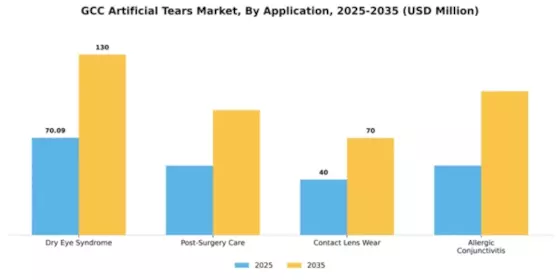
Dry Eye Syndrome (Dominant) vs. Post-Surgery Care (Emerging)
The Dry Eye Syndrome segment remains dominant in the GCC artificial tears market, primarily due to an increasing number of individuals suffering from chronic dry eye conditions. This segment benefits from enhanced product availability, including preservative-free formulations and advanced moisture retention technologies. Conversely, Post-Surgery Care is emerging as a significant segment, driven by a spike in eye surgeries, including refractive surgeries and cataract procedures. As more individuals undergo such surgeries, the need for artificial tears to aid recovery and maintain ocular comfort is expected to rise. These dynamics illustrate a shift in focus towards comprehensive eye care post-surgery, providing opportunities for market growth.
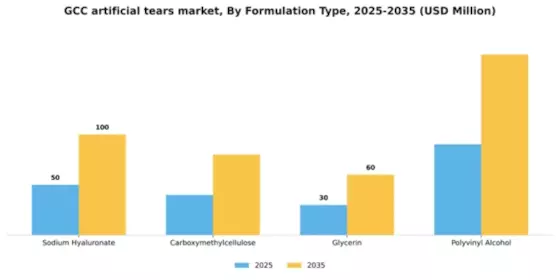
In the GCC artificial tears market, the formulation type segment is characterized by diverse preferences, primarily split between preservative-free and those with preservatives. Preservative-free solutions hold the largest market share, driven by increasing consumer awareness regarding the side effects of preservatives. Gel-based formulations are emerging rapidly, appealing to consumers seeking longer-lasting relief, contributing to their significant growth in recent years. This segment witnesses a steady demand as consumers increasingly opt for more efficient, comfortable options to address dry eye symptoms.
Ointment-Based (Dominant) vs. With Preservatives (Emerging)
Ointment-based artificial tears currently dominate the GCC market, primarily due to their effectiveness in providing prolonged moisture, particularly for severe dry eye conditions. They are favored in nighttime use, creating strong brand loyalty among users. However, products with preservatives are emerging steadily, catering to budget-conscious consumers despite recent shifts toward preservative-free options. Although they are traditionally linked to irritation, advancements in formulation technology are improving their usability. The challenge remains in balancing cost and performance, a key factor influencing consumer choice in this evolution.
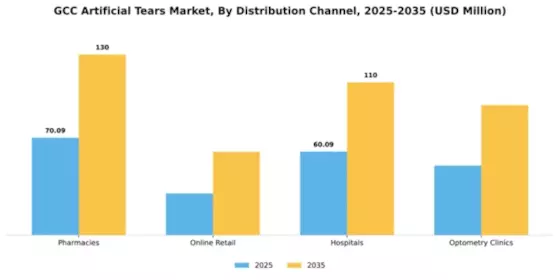
In the GCC artificial tears market, pharmacies hold the largest share of the distribution channel segment, serving as the primary point of purchase for consumers seeking over-the-counter eye care solutions. Their established trust and accessibility make them a preferred choice for customers. Meanwhile, online retail has emerged as the fastest-growing channel, with more consumers turning to e-commerce for the convenience and availability of various products. This rise in online shopping is reshaping the dynamics of distribution in the GCC region. The growth trends within this segment are driven by increasing awareness about eye care and the growing prevalence of dry eye conditions, leading to a higher demand for artificial tears. Additionally, the shift towards digitalization in retail is fostering the growth of online platforms, allowing for wider reach and easier access for consumers. This evolving landscape highlights the necessity for traditional retailers to adapt and incorporate online strategies to remain competitive in the market.
Pharmacies: Dominant vs. Online Retail: Emerging
Pharmacies are the dominant distribution channel for artificial tears in the GCC, characterized by a wide range of options available for consumers, along with the assurance of professional guidance. Their physical presence ensures customers can seek immediate solutions for their eye care needs. On the other hand, online retail is emerging rapidly, offering consumers the comfort of shopping from home, which has become increasingly influential in today's fast-paced environment. With an extensive range of products and easy comparisons, online platforms attract a tech-savvy demographic looking for convenience. Both channels are essential; however, the potential growth in online retail could reshape consumer purchasing behaviors, forcing traditional pharmacies to enhance their digital strategies.
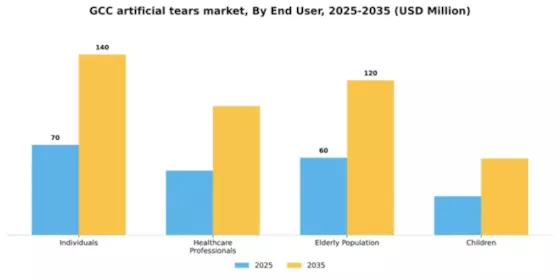
In the GCC artificial tears market, the distribution of end users indicates that individuals represent the largest segment, significantly contributing to market demand due to increasing prevalence of dry eye conditions among the general population. Healthcare professionals, comprising a subset of this market, are experiencing a rapid growth trend as they increasingly incorporate artificial tears into treatment protocols for various eye conditions. The rise of awareness regarding eye health has led to a steady influx of individuals seeking over-the-counter artificial tear solutions for relief from symptoms.
Individuals (Dominant) vs. Healthcare Professionals (Emerging)
The individuals segment remains dominant in the GCC artificial tears market, attributed to the growing awareness and self-diagnosis of dry eye issues among consumers. This segment primarily consists of patients seeking relief from daily discomfort due to environmental factors and screen-related strain. In contrast, healthcare professionals represent an emerging segment, characterized by their role in prescribing and educating patients about artificial tears. This group is pivotal in driving innovation and introducing new formulations, making it faster-growing. The collaboration between manufacturers and healthcare providers enhances patient access to effective treatments, positioning healthcare professionals as crucial influencers in this evolving market.
Get more detailed insights about GCC Artificial Tears Market Request Free Sample
The GCC artificial tears market is characterized by a dynamic competitive landscape, driven by increasing awareness of eye health and a growing prevalence of dry eye syndrome. Key players such as Alcon (CH), Bausch + Lomb (US), and Santen Pharmaceutical (JP) are strategically positioned to leverage innovation and regional expansion. Alcon (CH) focuses on enhancing its product portfolio through advanced formulations, while Bausch + Lomb (US) emphasizes partnerships with local distributors to strengthen its market presence. Santen Pharmaceutical (JP) appears to be concentrating on digital transformation initiatives to improve customer engagement and streamline operations. Collectively, these strategies contribute to a competitive environment that is increasingly focused on innovation and customer-centric solutions.In terms of business tactics, companies are localizing manufacturing and optimizing supply chains to enhance efficiency and reduce costs. The market structure is moderately fragmented, with several players vying for market share. The collective influence of these key players shapes the competitive dynamics, as they engage in strategic collaborations and product differentiation to capture consumer attention.In December 2025, Alcon (CH) announced the launch of a new line of preservative-free artificial tears, aimed at addressing the needs of consumers seeking safer alternatives. This strategic move is likely to enhance Alcon's market share by appealing to health-conscious consumers and differentiating its offerings in a crowded marketplace. The introduction of preservative-free options may also align with broader trends towards sustainability and consumer health.In November 2025, Bausch + Lomb (US) entered into a partnership with a regional healthcare provider to expand its distribution network across the GCC. This collaboration is expected to facilitate greater access to its artificial tears products, thereby enhancing brand visibility and consumer reach. Such strategic alliances may prove crucial in navigating the competitive landscape, as they allow for localized marketing efforts and tailored product offerings.In October 2025, Santen Pharmaceutical (JP) unveiled a digital platform designed to educate consumers about dry eye conditions and the benefits of its artificial tears products. This initiative not only positions Santen as a thought leader in the market but also reflects a growing trend towards digital engagement in the healthcare sector. By leveraging technology to connect with consumers, Santen may enhance brand loyalty and drive sales.As of January 2026, current competitive trends in the GCC artificial tears market include a pronounced shift towards digitalization, sustainability, and the integration of artificial intelligence in product development. Strategic alliances are increasingly shaping the landscape, enabling companies to pool resources and expertise. Looking ahead, competitive differentiation is likely to evolve from traditional price-based competition to a focus on innovation, technology, and supply chain reliability. Companies that can effectively harness these trends may secure a competitive edge in an ever-evolving market.


Recent developments in the GCC Artificial Tears Market have shown significant growth through various advancements and increasing demand for dry eye syndrome treatments. Companies such as Bausch Health and Alcon have noted substantial expansion in their product offerings, catering to a rising population suffering from ocular surface diseases.
In September 2023, Allergan launched a new formulation in the region that has been positively received, further emphasizing the need for innovative eye care solutions. Notably, in August 2023, Roche announced collaborations with local distributors to enhance accessibility to their eye care products, reflecting a growing competitive landscape.
In terms of mergers and acquisitions, no major news was reported within the specified companies in the GCC recently. However, the market valuation has been impacted positively, with several players like Johnson and Johnson and TheraTears focusing on Research and Development, highlighting an upward trend in investments directed toward novel treatments.
Historical data shows that from 2021 to 2022, the GCC region experienced a surge in product launches by Santen Pharmaceutical and Ocular Therapeutix, further accelerating market growth and increasing consumer awareness regarding dry eye treatments.
The GCC artificial tears market is projected to grow at a 5.87% CAGR from 2025 to 2035, driven by increasing prevalence of dry eye conditions and rising awareness.
New opportunities lie in:
By 2035, the market is expected to achieve substantial growth, positioning itself as a leader in eye care solutions.
| MARKET SIZE 2024 | 210.18(USD Million) |
| MARKET SIZE 2025 | 223.8(USD Million) |
| MARKET SIZE 2035 | 393.6(USD Million) |
| COMPOUND ANNUAL GROWTH RATE (CAGR) | 5.87% (2024 - 2035) |
| REPORT COVERAGE | Revenue Forecast, Competitive Landscape, Growth Factors, and Trends |
| BASE YEAR | 2024 |
| Market Forecast Period | 2025 - 2035 |
| Historical Data | 2019 - 2024 |
| Market Forecast Units | USD Million |
| Key Companies Profiled | Alcon (CH), Bausch + Lomb (US), Santen Pharmaceutical (JP), Johnson & Johnson (US), Novartis (CH), AbbVie (US), Otsuka Pharmaceutical (JP), Hyaluronic Acid (DE) |
| Segments Covered | Application, Formulation Type, Distribution Channel, End User |
| Key Market Opportunities | Growing demand for preservative-free formulations in the gcc artificial tears market presents significant opportunities. |
| Key Market Dynamics | Rising demand for artificial tears in the GCC driven by increasing prevalence of dry eye conditions and lifestyle changes. |
| Countries Covered | GCC |
As of 2024, the GCC artificial tears market was valued at 210.18 USD Million.
The market is projected to reach 393.6 USD Million by 2035.
The expected CAGR for the GCC artificial tears market from 2025 to 2035 is 5.87%.
Key players include Alcon, Bausch + Lomb, Santen Pharmaceutical, Johnson & Johnson, Novartis, AbbVie, Otsuka Pharmaceutical, and Hyaluronic Acid.
The main application segments include Dry Eye Syndrome, Post-Surgery Care, Contact Lens Wear, and Allergic Conjunctivitis.
The Dry Eye Syndrome segment had a valuation range of 70.09 to 130.0 USD Million.
Formulation types include Preservative-Free, With Preservatives, Gel-Based, and Ointment-Based.
The Gel-Based formulation type is valued between 70.0 and 130.0 USD Million.
Distribution channels include Pharmacies, Online Retail, Hospitals, and Optometry Clinics.
Primary end users include Individuals, Healthcare Professionals, Optometrists, and Ophthalmologists.


Kindly complete the form below to receive a free sample of this Report

“This is really good guys. Excellent work on a tight deadline. I will continue to use you going forward and recommend you to others. Nice job”


“Thanks. It’s been a pleasure working with you, please use me as reference with any other Intel employees.”


“Thanks for sending the report it gives us a good global view of the Betaïne market.”


“Thank you, this will be very helpful for OQS.”


“We found the report very insightful! we found your research firm very helpful. I'm sending this email to secure our future business.”


“I am very pleased with how market segments have been defined in a relevant way for my purposes (such as "Portable Freezers & refrigerators" and "last-mile"). In general the report is well structured. Thanks very much for your efforts.”


“I have been reading the first document or the study, ,the Global HVAC and FP market report 2021 till 2026. Must say, good info! I have not gone in depth at all parts, but got a good indication of the data inside!”


“We got the report in time, we really thank you for your support in this process. I also thank to all of your team as they did a great job.”


“The Automotive 48V ECU Components Procurement Intelligence Study” was a complex project, but the Market Research Future (MRFR) team handled it with quality, agility, and customer-centricity. They delivered all requested data on time and within the agreed scope. The team, including Shubhendra Anand and Rahul Gotadki, was always readily available to clarify questions and swiftly implement necessary adjustments, driving the project to a successful conclusion within a very demanding timeframe.
I would also like to specifically commend Akshay Agarwal for his responsiveness and support at every stage—from our initial inquiry on May 6th through to final delivery on June 18th. His dedication made the entire process seamless.”



