Download Free Sample
Kindly complete the form below to receive a free sample of this Report
US Artificial Tears Market Research Report By Type (Polyethylene Glycol, Propylene Glycol, Cellulose, Glycerin, Others), By Delivery Mode (Eye Drops, Ointments, Sprays), By Application (Dry Eye Syndrome, Allergies, Infections, Others) and By Distribution Channel (Hospital Pharmacies, Drug Stores, Retail Pharmacies, Online Pharmacies) - Growth & Industry Forecast 2025 To 2035
As per Market Research Future analysis, the US artificial tears market Size was estimated at 919.61 USD Million in 2024. The US artificial tears market is projected to grow from 979.2 USD Million in 2025 to 1835.02 USD Million by 2035, exhibiting a compound annual growth rate (CAGR) of 6.4% during the forecast period 2025 - 2035
The US artificial tears market is experiencing a notable shift towards more specialized and preservative-free formulations.
| 2024 Market Size | 919.61 (USD Million) |
| 2035 Market Size | 1835.02 (USD Million) |
| CAGR (2025 - 2035) | 6.48% |
Allergan (US), Santen Pharmaceutical (JP), Bausch Health (CA), Novartis (CH), Johnson & Johnson (US), Alcon (CH), Ocular Therapeutix (US), Eyevance Pharmaceuticals (US)
Our Impact
Enabled $4.3B Revenue Impact for Fortune 500 and Leading Multinationals
Partnering with 2000+ Global Organizations Each Year
30K+ Citations by Top-Tier Firms in the Industry
The artificial tears market is currently experiencing notable growth, driven by an increasing prevalence of dry eye conditions among the population. Factors such as environmental changes, prolonged screen time, and aging demographics contribute to the rising demand for these products. As individuals seek relief from discomfort, the market is witnessing a shift towards more innovative formulations that offer enhanced efficacy and longer-lasting hydration. Additionally, the growing awareness of eye health and the importance of maintaining moisture in the eyes further propels the market forward. Manufacturers are responding to these trends by developing products that cater to specific needs, such as preservative-free options and those designed for contact lens wearers. Moreover, the regulatory landscape plays a crucial role in shaping the artificial tears market. The U.S. Food and Drug Administration (FDA) continues to oversee the approval and safety of these products, ensuring that consumers have access to safe and effective solutions. This regulatory scrutiny, while stringent, ultimately fosters consumer trust and encourages innovation within the industry. As the market evolves, it appears that the focus will remain on creating products that not only alleviate symptoms but also promote overall eye health. The future of the artificial tears market seems promising, with ongoing research and development likely to yield new advancements in formulation and delivery methods.
There is a noticeable trend towards the development of preservative-free artificial tears. This shift is largely driven by consumer preferences for products that minimize irritation and enhance comfort. As awareness of the potential adverse effects of preservatives grows, manufacturers are increasingly focusing on creating formulations that cater to sensitive eyes.
The artificial tears market is witnessing a rise in demand for specialized products tailored to specific user needs. This includes formulations designed for contact lens wearers and those with particular eye conditions. Such targeted offerings are likely to enhance user satisfaction and drive market growth.
A growing trend within the artificial tears market is the emphasis on natural ingredients. Consumers are becoming more health-conscious and are seeking products that contain fewer synthetic components. This inclination towards natural formulations may lead to the introduction of innovative products that align with consumer preferences.
There is a notable increase in awareness regarding eye health among the US population, which is positively impacting the artificial tears market. Educational campaigns and initiatives by healthcare professionals are emphasizing the importance of maintaining eye moisture and preventing dry eye symptoms. This heightened awareness is leading to more individuals seeking preventive measures, including the use of artificial tears. Furthermore, the rise of telemedicine has made it easier for patients to consult with eye care specialists, thereby increasing the likelihood of receiving recommendations for artificial tears. As a result, the artificial tears market is expected to benefit from this trend, with an anticipated growth rate of approximately 6% over the next few years as more consumers prioritize eye care.
The aging population in the US is a significant driver for the artificial tears market. As individuals age, they are more susceptible to dry eye conditions due to decreased tear production and other age-related factors. The US Census Bureau projects that by 2030, nearly 20% of the population will be 65 years or older, creating a larger demographic that may require artificial tears for relief. This demographic shift is prompting healthcare providers to recommend artificial tears more frequently, thereby increasing market demand. The artificial tears market is likely to see a substantial rise in sales as manufacturers tailor their products to meet the specific needs of older adults, potentially leading to a market growth of around 7% annually.
The expansion of distribution channels is playing a crucial role in the growth of the artificial tears market. With the rise of e-commerce and online pharmacies, consumers have greater access to a variety of artificial tear products. This shift in purchasing behavior is making it easier for individuals to find and purchase their preferred brands without the need for a prescription. Additionally, traditional retail outlets are also expanding their offerings, providing consumers with more options. This increased accessibility is likely to drive sales and enhance market penetration. The artificial tears market is expected to benefit from this trend, with estimates suggesting that online sales could account for over 30% of total market revenue by 2026.
The increasing prevalence of dry eye conditions in the US is a primary driver for the artificial tears market. Factors such as prolonged screen time, environmental pollutants, and aging populations contribute to this trend. According to recent studies, approximately 16 million adults in the US are diagnosed with dry eye disease, which has led to a growing demand for effective treatment options. This surge in cases is prompting healthcare providers to recommend artificial tears as a first-line therapy. As a result, the artificial tears market is projected to expand significantly, with estimates suggesting a growth rate of around 5.5% annually over the next few years. This trend indicates a robust market potential for manufacturers and suppliers in the artificial tears market.
Innovations in product formulation are transforming the artificial tears market. Advances in technology have led to the development of more effective and longer-lasting artificial tears, which cater to diverse consumer needs. For instance, the introduction of novel delivery systems and enhanced viscosity agents has improved the performance of these products. The market is witnessing a shift towards formulations that provide sustained relief and comfort, which is particularly appealing to consumers with chronic dry eye symptoms. As a result, the artificial tears market is experiencing a notable increase in product launches, with companies investing heavily in research and development. This focus on innovation is expected to drive market growth, with projections indicating a potential increase in market value by over $1 billion by 2027.
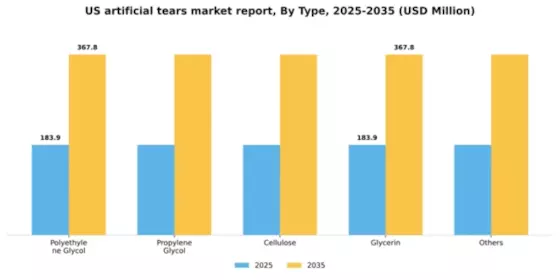
The US artificial tears market demonstrates a varied distribution of market share among the key type segments. Polyethylene Glycol leads as the largest component, driven by its effectiveness in alleviating dry eye symptoms and its widespread acceptance. Following this, Propylene Glycol and Cellulose maintain significant roles, while Glycerin is making notable strides in market infiltration due to its unique properties and consumer preferences. Other alternatives also exist but command a smaller share in comparison. Recent trends indicate a robust growth trajectory for the artificial tears type segment, primarily fueled by increasing awareness of dry eye health and a growing aging population susceptible to this condition. The fastest-growing segment, Glycerin, is gaining traction due to its moisturizing properties and formulation compatibility. Moreover, advancements in formulation technologies and a focus on comfort and efficacy are expected to further enhance growth across all types, promoting a competitive landscape.
Polyethylene Glycol (Dominant) vs. Glycerin (Emerging)
Polyethylene Glycol stands as the dominant ingredient in the US artificial tears market, recognized for its versatile hydrating properties and ability to provide effective relief for dry eyes. Its longstanding presence and extensive research backing ensure its popularity among both consumers and healthcare providers. Meanwhile, Glycerin is emerging as a significant player due to its superior moisture retention capabilities and effectiveness in more concentrated formulations. As consumer preferences shift towards products that not only soothe but also nurture the ocular surface, Glycerin is poised for rapid adoption, highlighting a trend towards innovative, impactful solutions in eye care.
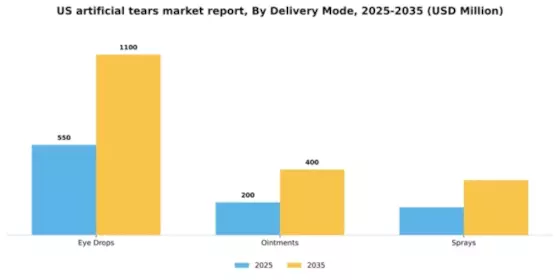
In the US artificial tears market, the delivery mode segment showcases eye drops as the largest category, significantly dominating the market share. Ointments and sprays contribute to a smaller portion of the market, with sprays being less preferred due to their comparative inconvenience. The distribution reflects consumer preferences for easy-to-use, effective products in managing dry eye symptoms, leading eye drops to secure the top position in market share among delivery modes. Growth trends within the delivery mode segment reveal a rising interest in ointments, which are increasingly recognized for their prolonged moisturization benefits. Consumer awareness about dry eye conditions and the effectiveness of specific treatment forms is driving this interest. Moreover, the convenience of eye drops continues to bolster their popularity, while innovations in delivery methods for ointments and sprays are expected to encourage new market growth as consumers seek diverse treatment options.
Eye Drops (Dominant) vs. Ointments (Emerging)
Eye drops hold the dominant position in the US artificial tears market, largely due to their widespread availability and ease of use. They are the preferred choice for consumers seeking immediate relief from dry eye symptoms, thanks to their quick absorption and effectiveness. On the other hand, ointments are becoming an emerging choice as they offer longer-lasting relief and are particularly beneficial for nighttime use. This segment benefits from innovations in formulation that enhance comfort and usability. As consumers become more informed about their options, the inclination toward ointments is reflected in their growing market presence, while eye drops maintain a stronghold as the primary delivery method.
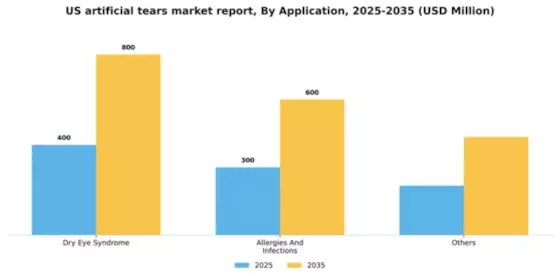
The application segment of the US artificial tears market is predominantly driven by Dry Eye Syndrome, which captures a significant market share. This condition has increasingly affected a larger population, leading to higher demand for artificial tears. Allergies and infections follow as a notable segment, gaining traction due to rising allergic reactions and eye infections among consumers, which necessitates increased product availability and awareness. The growth trends for these segments indicate a sustained rise in the popularity of artificial tears among users suffering from Dry Eye Syndrome, while the Allergies and Infections segment is witnessing rapid expansion. Factors driving this growth include the increasing prevalence of environment-induced eye issues, advancements in product formulations, and heightened consumer awareness about eye health, positioning the market for continued evolution.
Dry Eye Syndrome (Dominant) vs. Allergies And Infections (Emerging)
Dry Eye Syndrome remains the dominant segment in the US artificial tears market, characterized by a significant consumer base seeking relief from chronic dryness and related discomfort. The product offerings in this segment are diverse, catering to varying severity and causes. On the other hand, Allergies and Infections emerge as a growing segment, fueled by a rise in hay fever cases and environmental factors leading to eye irritations. This part of the market is integrating innovative formulations that address not just dryness, but also provide anti-allergic properties, enhancing their appeal to a broader audience. This dynamic creates a competitive landscape as companies strive to meet the dual needs of hydration and protection.
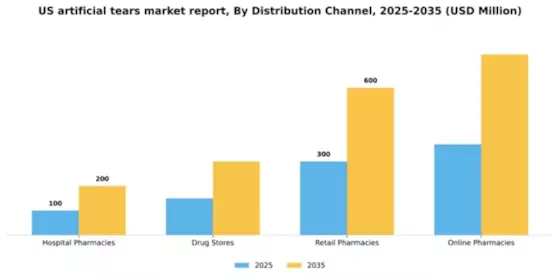
In the US artificial tears market, the distribution of market share among various channels reveals that Hospital Pharmacies hold the largest stake, benefiting from prescriptive sales and an established customer base. Drug Stores and Retail Pharmacies also contribute significantly but lag behind in overall market share. Online Pharmacies, while a smaller segment currently, are rapidly gaining ground due to increasing consumer preference for convenient purchasing options and the rise of e-commerce. The growth trends for distribution channels in the US artificial tears market indicate a shift towards the online segment, which is reportedly the fastest-growing area. Factors contributing to this growth include the convenience of online shopping, competitive pricing, and the ability to provide detailed product information and customer reviews. Meanwhile, traditional channels like Hospital Pharmacies continue to dominate, relying on established relationships with healthcare professionals to maintain their stronghold.
Hospital Pharmacies (Dominant) vs. Online Pharmacies (Emerging)
Hospital Pharmacies are viewed as the dominant force in the US artificial tears market due to their extensive connections with healthcare providers and their capability to offer a range of specialized products directly to patients. These pharmacies often serve as key distribution points for prescription-based artificial tears, ensuring that patients receive their medications in a timely manner. In contrast, Online Pharmacies are emerging as strong contenders, capitalizing on the growing trend of online shopping where consumers seek convenience and discretion in purchasing health-related products. The flexibility and accessibility of Online Pharmacies appeal to a broader audience, potentially altering market dynamics as more consumers turn to digital solutions for their healthcare needs.
Get more detailed insights about US Artificial Tears Market Request Free Sample
The artificial tears market is characterized by a competitive landscape that is increasingly shaped by innovation, strategic partnerships, and a focus on consumer needs. Key players such as Allergan (US), Santen Pharmaceutical (JP), and Bausch Health (CA) are actively engaged in enhancing their product offerings and expanding their market presence. Allergan (US) has positioned itself as a leader through continuous innovation in its product line, particularly with its flagship product, Restasis, which has seen recent enhancements aimed at improving patient compliance. Meanwhile, Santen Pharmaceutical (JP) emphasizes its commitment to research and development, focusing on novel formulations that cater to specific ocular conditions, thereby differentiating itself in a crowded marketplace. Bausch Health (CA) has adopted a strategy of strategic acquisitions to bolster its portfolio, which has allowed it to diversify its offerings and strengthen its market position.The business tactics employed by these companies reflect a concerted effort to optimize supply chains and localize manufacturing processes. The market structure appears moderately fragmented, with a mix of established players and emerging companies vying for market share. This fragmentation is indicative of a dynamic environment where innovation and strategic collaborations play a crucial role in shaping competitive dynamics. The collective influence of these key players fosters a competitive atmosphere that encourages continuous improvement and responsiveness to consumer demands.In October Allergan (US) announced a partnership with a leading telehealth provider to enhance patient access to its artificial tears products. This strategic move is likely to facilitate greater consumer engagement and streamline the prescription process, thereby potentially increasing market penetration. The integration of telehealth services aligns with current trends towards digitalization in healthcare, suggesting a forward-thinking approach to consumer accessibility.In September Santen Pharmaceutical (JP) launched a new line of preservative-free artificial tears, targeting patients with sensitive eyes. This product introduction not only reflects the company's commitment to addressing specific consumer needs but also positions Santen as a responsive player in the market. The emphasis on preservative-free formulations may resonate well with health-conscious consumers, potentially enhancing brand loyalty and market share.In August Bausch Health (CA) completed the acquisition of a smaller competitor specializing in innovative ocular therapies. This acquisition is indicative of Bausch's strategy to expand its product portfolio and leverage synergies in research and development. By integrating new technologies and expertise, Bausch is likely to enhance its competitive edge and respond more effectively to evolving market demands.As of November the artificial tears market is witnessing trends that emphasize digitalization, sustainability, and the integration of artificial intelligence in product development. Strategic alliances are increasingly shaping the competitive landscape, allowing companies to pool resources and expertise. The shift from price-based competition to a focus on innovation and technology is evident, as companies strive to differentiate themselves through superior product offerings and reliable supply chains. Looking ahead, competitive differentiation will likely hinge on the ability to innovate and adapt to changing consumer preferences, underscoring the importance of agility in a rapidly evolving market.

The US Artificial Tears Market is experiencing significant developments, particularly with companies like Ocusoft, Novartis, and Alcon leading innovations. In recent months, a surge in demand due to rising cases of dry eye syndrome has prompted these companies to enhance their product lines. For instance, in November 2022, Bausch Health launched an advanced formulation of its Systane product line, which has received positive feedback.
Additionally, mergers and acquisitions remain a strategic focus; in July 2023, Eton Pharmaceuticals announced the acquisition of Lifecore Biomedical, consolidating their position in the market and expanding their portfolio of eye care products. This activity reflects a broader trend of consolidation in the industry aimed at improving product offerings and market reach.
Furthermore, notable growth in the US Artificial Tears market has been attributed to increased awareness regarding eye health and advancements in technology. As of October 2023, the market valuation for key players has significantly improved, showcasing the potential for future growth and expansion. These changes highlight the dynamic nature of the US Artificial Tears Market, which continues to evolve in response to both consumer needs and industry innovations.
The Artificial Tears Market is projected to grow at a 6.48% CAGR from 2025 to 2035, driven by increasing prevalence of dry eye conditions and advancements in product formulations.
New opportunities lie in:
By 2035, the artificial tears market is expected to achieve substantial growth and innovation.
| MARKET SIZE 2024 | 919.61(USD Million) |
| MARKET SIZE 2025 | 979.2(USD Million) |
| MARKET SIZE 2035 | 1835.02(USD Million) |
| COMPOUND ANNUAL GROWTH RATE (CAGR) | 6.48% (2025 - 2035) |
| REPORT COVERAGE | Revenue Forecast, Competitive Landscape, Growth Factors, and Trends |
| BASE YEAR | 2024 |
| Market Forecast Period | 2025 - 2035 |
| Historical Data | 2019 - 2024 |
| Market Forecast Units | USD Million |
| Key Companies Profiled | Allergan (US), Santen Pharmaceutical (JP), Bausch Health (CA), Novartis (CH), Johnson & Johnson (US), Alcon (CH), Ocular Therapeutix (US), Eyevance Pharmaceuticals (US) |
| Segments Covered | Type, Delivery Mode, Application, Distribution Channel |
| Key Market Opportunities | Growing demand for preservative-free formulations in the artificial tears market presents significant growth opportunities. |
| Key Market Dynamics | Rising consumer demand for preservative-free formulations drives innovation in the artificial tears market. |
| Countries Covered | US |
The market valuation of the US artificial tears market was $919.61 Million in 2024.
The projected market valuation for the US artificial tears market is $1835.02 Million by 2035.
The expected CAGR for the US artificial tears market during the forecast period 2025 - 2035 is 6.48%.
In 2024, the Eye Drops segment had the highest valuation at $550.0 Million.
The projected valuation for the Propylene Glycol segment is expected to reach $367.84 Million by 2035.
The Online Pharmacies distribution channel is anticipated to grow the most, with a projected valuation of $735.02 Million by 2035.
The valuation of the Dry Eye Syndrome application segment was $400.0 Million in 2024.
Allergan, based in the US, is a key player and leader in the artificial tears market.
The valuation range for the Ointments delivery mode segment is projected to be between $200.0 Million and $400.0 Million by 2035.
In 2024, the Allergies and Infections application segment had a valuation of $300.0 Million, making it the second largest after Dry Eye Syndrome.


Kindly complete the form below to receive a free sample of this Report

“This is really good guys. Excellent work on a tight deadline. I will continue to use you going forward and recommend you to others. Nice job”


“Thanks. It’s been a pleasure working with you, please use me as reference with any other Intel employees.”


“Thanks for sending the report it gives us a good global view of the Betaïne market.”


“Thank you, this will be very helpful for OQS.”


“We found the report very insightful! we found your research firm very helpful. I'm sending this email to secure our future business.”


“I am very pleased with how market segments have been defined in a relevant way for my purposes (such as "Portable Freezers & refrigerators" and "last-mile"). In general the report is well structured. Thanks very much for your efforts.”


“I have been reading the first document or the study, ,the Global HVAC and FP market report 2021 till 2026. Must say, good info! I have not gone in depth at all parts, but got a good indication of the data inside!”


“We got the report in time, we really thank you for your support in this process. I also thank to all of your team as they did a great job.”


“The Automotive 48V ECU Components Procurement Intelligence Study” was a complex project, but the Market Research Future (MRFR) team handled it with quality, agility, and customer-centricity. They delivered all requested data on time and within the agreed scope. The team, including Shubhendra Anand and Rahul Gotadki, was always readily available to clarify questions and swiftly implement necessary adjustments, driving the project to a successful conclusion within a very demanding timeframe.
I would also like to specifically commend Akshay Agarwal for his responsiveness and support at every stage—from our initial inquiry on May 6th through to final delivery on June 18th. His dedication made the entire process seamless.”



