×
Request Free Sample ×

Kindly complete the form below to receive a free sample of this Report

* Please use a valid business email

Leading companies partner with us for data-driven Insights

clients tt-cursor
Hero Background

Glucose Syrup Market

ID: MRFR/FnB/1726-CR
125 Pages
Harshita Gorade
February 2021

Glucose Syrup Market Research Report Information- by Source (Corn, Wheat, Barley, Potatoes, Rice, Cassava and others), by Grade (Food, Pharma, Industrial and others), by Form (Liquid, Granular and others), by Application (Food, Beverage, Confectionery, Pharmaceuticals and others) and Region - Forecast to 2030

Share:
Download PDF ×

We do not share your information with anyone. However, we may send you emails based on your report interest from time to time. You may contact us at any time to opt-out.

Glucose Syrup Market Infographic
Purchase Options

Glucose Syrup Market Summary

As per MRFR analysis, the Glucose Syrup Market Size was estimated at 4922.49 USD Million in 2024. The glucose syrup industry is projected to grow from 5315.1 USD Million in 2025 to 10225.47 USD Million by 2035, exhibiting a compound annual growth rate (CAGR) of 6.83 during the forecast period 2025 - 2035.

Key Market Trends & Highlights

The Glucose Syrup Market is experiencing a dynamic shift towards health-conscious and sustainable products.

  • The market is witnessing a notable shift towards natural sweeteners as consumers become more health-conscious.
  • In North America, the demand for glucose syrup in the food and beverage sector remains robust, driven by its versatility.
  • Asia-Pacific is emerging as the fastest-growing region, particularly in the confectionery segment, where glucose syrup is increasingly utilized.
  • Key market drivers include the rising popularity of health-conscious products and the expansion of the pharmaceutical industry.

Market Size & Forecast

2024 Market Size 4922.49 (USD Million)
2035 Market Size 10225.47 (USD Million)
CAGR (2025 - 2035) 6.83%

Major Players

Cargill (US), Archer Daniels Midland (US), Tate & Lyle (GB), Ingredion (US), Roquette Freres (FR), MGP Ingredients (US), Grain Processing Corporation (US), Kraft Heinz (US), Südzucker AG (DE)
Glucose Syrup Market Trends

The Glucose Syrup Market is currently experiencing notable transformations driven by various factors. The increasing demand for natural sweeteners in food and beverage applications appears to be a primary catalyst for growth. As consumers become more health-conscious, manufacturers are adapting their product lines to include glucose syrup derived from natural sources. This shift not only aligns with consumer preferences but also enhances the appeal of products in a competitive landscape. Furthermore, the versatility of glucose syrup in various industries, including confectionery, bakery, and pharmaceuticals, suggests a broadening scope of applications that could further stimulate market expansion. In addition, the rising trend of clean label products is influencing the Glucose Syrup Market. Consumers are increasingly seeking transparency in ingredient sourcing and production processes. This trend may compel manufacturers to innovate and reformulate their offerings to meet these expectations. As sustainability becomes a focal point for many brands, the integration of eco-friendly practices in glucose syrup production could also play a pivotal role in shaping future market dynamics. Overall, the Glucose Syrup Market appears poised for growth, driven by evolving consumer preferences and industry adaptations.

Shift Towards Natural Sweeteners

The Glucose Syrup Market is witnessing a shift towards natural sweeteners as consumers increasingly prioritize health and wellness. This trend is prompting manufacturers to explore glucose syrup options derived from natural sources, enhancing product appeal.

Rise of Clean Label Products

The demand for clean label products is gaining momentum within the Glucose Syrup Market. Consumers are seeking transparency in ingredient sourcing, which encourages manufacturers to innovate and reformulate their offerings.

Sustainability Initiatives

Sustainability initiatives are becoming integral to the Glucose Syrup Market. As brands focus on eco-friendly practices, the production of glucose syrup may evolve to incorporate more sustainable methods, aligning with consumer values.

Glucose Syrup Market Drivers

Rising Demand in Food and Beverage Sector

The Global Glucose Syrup Industry experiences a notable surge in demand driven by the food and beverage sector. Glucose syrup serves as a versatile sweetener and thickening agent, utilized in various products such as candies, baked goods, and beverages. As consumer preferences shift towards convenience foods and sweetened beverages, the market is projected to reach 3.68 USD Billion in 2024. This growth is indicative of the increasing reliance on glucose syrup as a key ingredient, suggesting a robust trajectory for the industry in the coming years.

Market Segment Insights

By Application: Food and Beverage (Largest) vs. Confectionery (Fastest-Growing)

In the Glucose Syrup Market, the Food and Beverage segment holds the largest market share, driven by the increasing demand for sweeteners in various food applications. The versatility of glucose syrup in enhancing flavor, moisture retention, and texture significantly contributes to its widespread use in the food industry. Meanwhile, the Confectionery segment is emerging as the fastest-growing sector, fueled by a rise in artisanal and gourmet confectionery products that seek to leverage the unique properties of glucose syrup.

Food and Beverage (Dominant) vs. Confectionery (Emerging)

The Food and Beverage segment remains dominant in the glucose syrup market, characterized by its extensive use in soft drinks, sauces, and processed foods, where it enhances sweetness and contributes to overall product stability. This segment benefits from the continuous innovation in food products, driving the demand for high-quality sweeteners. In contrast, the Confectionery segment is rapidly evolving, focusing on unique flavor combinations and high-quality ingredients, making glucose syrup a preferred choice for manufacturers seeking to create high-quality candies and chocolates. The rising health consciousness among consumers also pushes confectioners to explore alternative sweetening solutions, solidifying glucose syrup's place in this thriving, dynamic market.

By End Use: Food Industry (Largest) vs. Beverage Industry (Fastest-Growing)

The glucose syrup market is predominantly driven by the food industry, which accounts for a significant share due to its diverse applications in products such as candies, baked goods, and sauces. This segment benefits from a growing demand for convenience foods and an increasing number of health-conscious offerings that utilize glucose syrup as a sweetener. In comparison, the beverage industry is emerging as a fast-growing segment, fueled by the rising trend of ready-to-drink beverages and flavored drinks that leverage glucose syrup for sweetness and mouthfeel.

Food Industry: Dominant vs. Beverage Industry: Emerging

The food industry stands as the dominant segment in the glucose syrup market, characterized by its extensive use in various food products. This segment's strength lies in its ability to formulate products that cater to consumer demands for sweetness, texture, and preservation. On the other hand, the beverage industry is identified as an emerging segment, rapidly gaining traction as healthier and innovative beverage options proliferate. Producers are increasingly incorporating glucose syrup to enhance flavor profiles while maintaining product clarity. This dynamic interplay between the food and beverage industries is expected to shape the future direction of the glucose syrup market.

By Type: Liquid Glucose (Largest) vs. High Fructose Corn Syrup (Fastest-Growing)

In the glucose syrup market, the distribution of market share among segment values reveals that Liquid Glucose holds the largest portion. This dominance is primarily due to its wide applications in food and beverage industries, where its smooth texture and easy solubility make it a preferred choice. Following closely is High Fructose Corn Syrup, which, while smaller in market share, has gained significant traction in recent years due to its cost-effectiveness and sweetness, making it a popular substitute for sugar in many formulations. The growth trends in this segment are influenced by evolving consumer preferences and the increasing shift towards processed foods. Liquid Glucose continues to thrive owing to its versatile use in various products, while High Fructose Corn Syrup is experiencing robust expansion, driven by demand in soft drinks and processed foods. The ongoing research into healthier and lower-calorie alternatives may also impact the growth trajectory of these segments as manufacturers adapt to market trends.

Liquid Glucose (Dominant) vs. High Fructose Corn Syrup (Emerging)

Liquid Glucose is a significant player in the glucose syrup market, recognized for its stability and functionality in a broad range of applications. Its properties make it an ideal ingredient in confectionery, baking, and dairy industries, where it enhances texture and flavor. The market maintains a strong demand for Liquid Glucose due to its established presence and reliability. On the other hand, High Fructose Corn Syrup is emerging rapidly as a preferred sweetener, particularly in North America. Its high sweetness and cost efficiency make it attractive to food manufacturers looking to reduce expenses while appealing to consumer preferences for sweeter products. As health considerations grow, both segments are expected to adapt, with High Fructose Corn Syrup likely innovating to meet changing dietary demands.

By Source: Corn (Largest) vs. Wheat (Fastest-Growing)

In the Glucose Syrup Market, Corn remains the largest source, primarily due to its high glucose yield and cost-effectiveness in processing. It accounts for a significant portion of the market share, making it the preferred choice for many manufacturers. Wheat, on the other hand, is rapidly gaining traction as an alternative source, driven by its availability and the rise in demand for wheat-based products. The growth trends for the Source segment are shaped by various factors, including increasing consumer preference for organic and non-GMO products, which influence production methods. Innovations in processing technology are also bolstering wheat's appeal, allowing for enhanced glucose extraction that meets quality standards. As health consciousness rises, both segments are expected to evolve continuously, posing new challenges and opportunities for suppliers.

Corn (Dominant) vs. Potato (Emerging)

Corn, being the dominant source for glucose syrup production, offers a favorable profile in terms of yield and economic efficiency, which facilitates its extensive incorporation in food and beverage applications. Its established supply chain and processing technologies grant it a competitive edge. Conversely, potato is slowly emerging as an alternative source. Although traditionally overshadowed by corn, advancements in processing techniques and a rising demand for potato-based glucose syrups, known for their unique taste and nutritional profile, are beginning to shift market dynamics. The distinct characteristics of potato glucose syrup, including a different flavor profile and potential application in niche markets, are expected to enhance its market position, fostering growth as consumer preferences diversify.

By Form: Liquid (Largest) vs. Powder (Fastest-Growing)

In the Glucose Syrup Market, the form segment reveals a competitive landscape with Liquid, Powder, and Granular varieties. Liquid glucose syrup holds the largest market share, primarily due to its widespread application in food and beverage industries. Its versatility in various formulations has secured its leading position. Powder glucose syrup, while smaller in share, is rapidly gaining traction, driven by rising demand for convenience and shelf-stable products. Granular glucose syrup, although a significant player, has seen comparatively stagnant growth, often overshadowed by the more adaptable liquid and powdered forms. The growth trends within the Glucose Syrup Market are shifting towards powdered forms, influenced by changing consumer preferences for health-oriented products and easy handling. The increasing use of powdered glucose syrup in baking, confectionery, and functional foods is spurring its expansion. Additionally, as gluten-free and alternative diet trends gain popularity, powdered glucose syrup is emerging as a viable choice, catering to niche markets. As a result, the demand for liquid glucose remains robust, yet powdered variants are poised for notable growth in the foreseeable future.

Liquid: Dominant vs. Powder: Emerging

Liquid glucose syrup continues to dominate the market primarily due to its extensive use in various food applications, including candies, beverages, and sauces. Its fluid nature allows for easy incorporation into numerous recipes, making it a staple for manufacturers. The broad acceptance and versatility in product formulation further solidify its market leadership position. In contrast, powdered glucose syrup is an emerging segment that offers several advantages, including extended shelf life and ease of storage. It is increasingly preferred by health-conscious consumers and businesses seeking non-perishable options, especially in baking and food production. As manufacturers innovate around powdered glucose syrup, its market presence is expected to grow significantly, supported by an inclination toward ready-to-use solutions.

Get more detailed insights about Glucose Syrup Market

Regional Insights

North America : Market Leader in Glucose Syrup

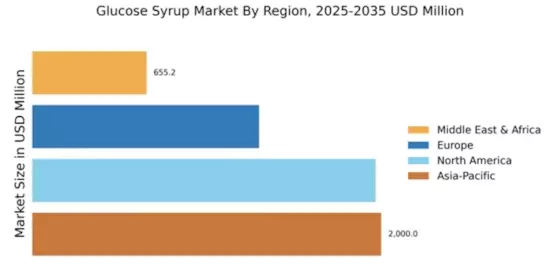
North America is poised to maintain its leadership in the glucose syrup market, holding a significant share of 1967.25 million in 2024. The region's growth is driven by increasing demand in the food and beverage sector, particularly for sweeteners and thickening agents. Regulatory support for food safety and quality standards further catalyzes market expansion, ensuring compliance and fostering innovation. The United States stands as the primary contributor, with key players like Cargill, Archer Daniels Midland, and Ingredion leading the competitive landscape. The presence of advanced manufacturing facilities and a robust distribution network enhances market accessibility. As consumer preferences shift towards natural and organic products, companies are adapting their offerings to meet these demands, ensuring sustained growth in this lucrative market.

Europe : Emerging Market with Growth Potential

Europe, with a market size of 1347.74 million, is witnessing a steady rise in glucose syrup consumption, driven by the growing demand for processed foods and beverages. Regulatory frameworks, such as the EU's Food Information Regulation, are shaping market dynamics by emphasizing transparency and quality. This regulatory environment encourages innovation and the development of healthier alternatives, aligning with consumer trends towards wellness. Leading countries like Germany, France, and the UK are at the forefront of this market, with significant contributions from companies like Tate & Lyle and Roquette Freres. The competitive landscape is characterized by a mix of established players and emerging startups, fostering a dynamic environment. As sustainability becomes a priority, many companies are investing in eco-friendly production methods to capture the evolving consumer base.

Asia-Pacific : Rapid Growth in Emerging Economies

The Asia-Pacific region, also valued at 1347.74 million, is experiencing rapid growth in the glucose syrup market, driven by urbanization and rising disposable incomes. The increasing consumption of processed foods and beverages is a key demand driver, supported by favorable government policies promoting food safety and quality standards. This region's diverse culinary landscape further fuels the need for glucose syrup in various applications. Countries like China, India, and Japan are leading the charge, with significant investments from major players such as MGP Ingredients and Grain Processing Corporation. The competitive landscape is evolving, with both local and international companies vying for market share. As health consciousness rises, manufacturers are focusing on developing low-calorie and organic glucose syrup options to cater to changing consumer preferences.

Middle East and Africa : Emerging Market with Untapped Potential

The Middle East and Africa (MEA) region, with a market size of 260.76 million, presents significant growth opportunities in the glucose syrup market. The increasing demand for sweeteners in the food and beverage industry, coupled with rising urbanization, is driving market expansion. Regulatory initiatives aimed at improving food safety standards are also contributing to a more structured market environment, encouraging investment and innovation. Countries like South Africa and the UAE are emerging as key players in this market, with local manufacturers and international companies exploring opportunities. The competitive landscape is characterized by a mix of established firms and new entrants, creating a dynamic market. As the region continues to develop, the glucose syrup market is expected to grow, driven by evolving consumer preferences and increased production capabilities.

Key Players and Competitive Insights

The Glucose Syrup Market is currently characterized by a competitive landscape that is both dynamic and multifaceted. Key growth drivers include the increasing demand for sweeteners in the food and beverage sector, alongside the rising trend towards healthier alternatives. Major players such as Cargill (US), Archer Daniels Midland (US), and Tate & Lyle (GB) are strategically positioned to leverage these trends. Cargill (US) focuses on innovation in product development, particularly in creating glucose syrups with lower glycemic indices, which aligns with consumer preferences for healthier options. Meanwhile, Archer Daniels Midland (US) emphasizes regional expansion, particularly in emerging markets, to capture a broader customer base. Tate & Lyle (GB) is investing in digital transformation initiatives to enhance operational efficiency and customer engagement, thereby shaping a competitive environment that is increasingly reliant on technological advancements.

In terms of business tactics, companies are localizing manufacturing to reduce transportation costs and optimize supply chains. The market structure appears moderately fragmented, with a mix of large multinational corporations and smaller regional players. This fragmentation allows for diverse product offerings and competitive pricing strategies, although the collective influence of key players like Cargill (US) and Archer Daniels Midland (US) tends to dominate market dynamics.

In November 2025, Cargill (US) announced a partnership with a leading health food brand to develop a new line of organic glucose syrups. This strategic move is significant as it not only expands Cargill's product portfolio but also aligns with the growing consumer demand for organic and natural ingredients. Such collaborations may enhance brand loyalty and market penetration in health-conscious segments.

In October 2025, Archer Daniels Midland (US) completed the acquisition of a regional glucose syrup manufacturer in Southeast Asia. This acquisition is pivotal as it allows Archer Daniels Midland (US) to strengthen its foothold in a rapidly growing market, thereby enhancing its supply chain capabilities and distribution networks. The strategic importance of this move lies in the potential for increased market share and improved access to local consumers.

In September 2025, Tate & Lyle (GB) launched a new digital platform aimed at streamlining customer interactions and order processing. This initiative reflects a broader trend towards digitalization within the industry, enhancing customer experience and operational efficiency. The strategic importance of this platform lies in its potential to foster stronger customer relationships and drive sales growth through improved service delivery.

As of December 2025, current competitive trends in the Glucose Syrup Market are increasingly defined by digitalization, sustainability, and the integration of artificial intelligence (AI) in production processes. Strategic alliances are becoming more prevalent, as companies seek to enhance their competitive edge through collaborative innovation. Looking ahead, it is likely that competitive differentiation will evolve from traditional price-based competition to a focus on innovation, technology, and supply chain reliability. This shift suggests that companies that prioritize sustainable practices and technological advancements will be better positioned to thrive in an increasingly competitive landscape.

Key Companies in the Glucose Syrup Market market include

Future Outlook

Glucose Syrup Market Future Outlook

The Glucose Syrup Market is projected to grow at a 6.83% CAGR from 2024 to 2035, driven by rising demand in food and beverage applications, and expanding pharmaceutical uses.

New opportunities lie in:

  • Development of customized glucose syrup formulations for niche markets.
  • Expansion into emerging markets with tailored distribution strategies.
  • Investment in sustainable production technologies to enhance brand value.

By 2035, the market is expected to solidify its position as a key ingredient supplier across various industries.

Market Segmentation

Glucose Syrup Market Form Outlook

  • Liquid
  • Powder
  • Granular

Glucose Syrup Market Type Outlook

  • Liquid Glucose
  • High Fructose Corn Syrup
  • Dextrose Syrup
  • Corn Syrup

Glucose Syrup Market Source Outlook

  • Corn
  • Wheat
  • Potato
  • Cassava

Glucose Syrup Market End Use Outlook

  • Food Industry
  • Beverage Industry
  • Pharmaceutical Industry
  • Cosmetic Industry

Glucose Syrup Market Application Outlook

  • Food and Beverage
  • Confectionery
  • Bakery
  • Pharmaceutical
  • Cosmetics

Report Scope

MARKET SIZE 20244922.49(USD Million)
MARKET SIZE 20255315.1(USD Million)
MARKET SIZE 203510225.47(USD Million)
COMPOUND ANNUAL GROWTH RATE (CAGR)6.83% (2024 - 2035)
REPORT COVERAGERevenue Forecast, Competitive Landscape, Growth Factors, and Trends
BASE YEAR2024
Market Forecast Period2025 - 2035
Historical Data2019 - 2024
Market Forecast UnitsUSD Million
Key Companies ProfiledCargill (US), Archer Daniels Midland (US), Tate & Lyle (GB), Ingredion (US), Roquette Freres (FR), MGP Ingredients (US), Grain Processing Corporation (US), Kraft Heinz (US), Südzucker AG (DE)
Segments CoveredApplication, End Use, Type, Source, Form
Key Market OpportunitiesGrowing demand for natural sweeteners drives innovation in the Glucose Syrup Market.
Key Market DynamicsRising demand for natural sweeteners drives innovation and competition in the glucose syrup market.
Countries CoveredNorth America, Europe, APAC, South America, MEA

Market Highlights

Author
Harshita Gorade
Research Analyst

Harshita Post graduate MBA in Business Administration from Welingkar Institute, Mumbai and 5 years of experience in the field of product market research. As a Research Analyst, I have cross-domain experience in packaging, and industrial Automation & Equipment. I am currently looking after the research process of packaging, logistics & transportation, and industrial automation & equipment at Market Research Future Reports. My responsibilities at the organization involve handling syndicate and custom reports as well as responding to client inquiries, and organize, co-ordinate with a group of 5 to 6 persons to manage all workflows.

Leave a Comment

FAQs

What is the study period of the glucose syrup market report?

The glucose syrup market forecast period is 2022 - 2030

What is the glucose syrup Market Growth rate?

The market is expected to register a CAGR of ~5.45% over the next ten years, according to glucose syrup market research

Which region has the highest market growth rate?

Asia-Pacific is expected to register the highest CAGR during 2022 - 2030

Which region has the largest share of the market?

Europe held the largest share in 2021

What is the expected glucose syrup market size by 2030?

The market size is expected to be USD 5.2 billion by 2030.

Who are the key players in the market?

Cargill, Archer Daniels Midland Company, Tate & Lyle, and Others are the major companies operating in the market.

Download Free Sample

Kindly complete the form below to receive a free sample of this Report

Compare Licence

×
Features License Type
Single User Multiuser License Enterprise User
Price $4,950 $5,950 $7,250
Maximum User Access Limit 1 User Upto 10 Users Unrestricted Access Throughout the Organization
Free Customization
Direct Access to Analyst
Deliverable Format
Platform Access
Discount on Next Purchase 10% 15% 15%
Printable Versions