×
Request Free Sample ×

Kindly complete the form below to receive a free sample of this Report

* Please use a valid business email

Leading companies partner with us for data-driven Insights

clients tt-cursor
Hero Background

Hair Care Products Market

ID: MRFR/CG/6934-HCR
90 Pages
Snehal Singh
October 2025

Hair Care Products Market Research Report Information By Type (Shampoo, Conditioner and Hair Oil), By Distribution Channel (Store-Based and Non-Store-Based), And By Region (North America, Europe, Asia-Pacific, And Rest Of The World) – Market Forecast Till 2035

Share:
Download PDF ×

We do not share your information with anyone. However, we may send you emails based on your report interest from time to time. You may contact us at any time to opt-out.

Hair Care Products Market Infographic
Purchase Options

Hair Care Products Market Summary

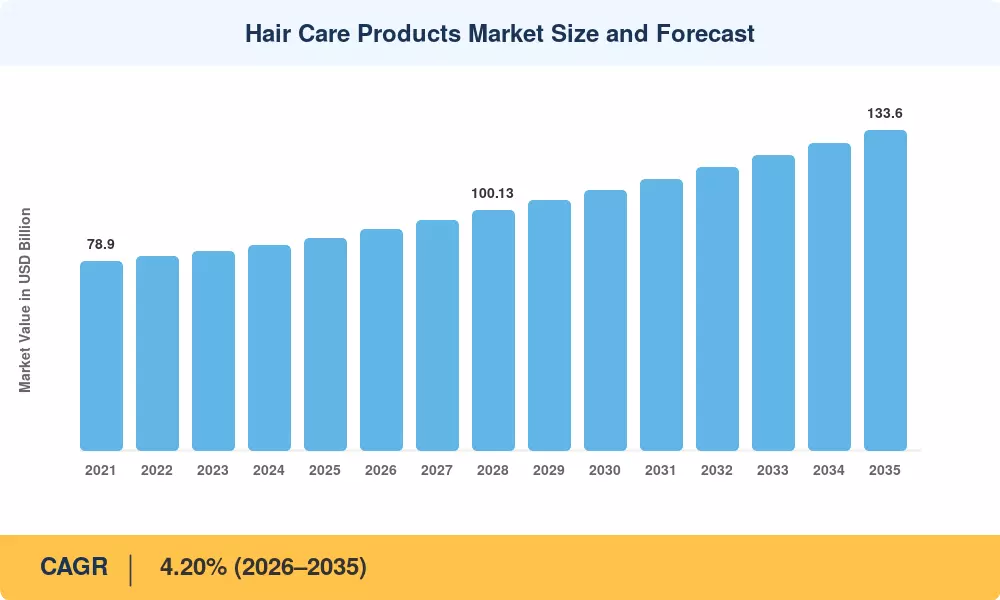
As per MRFR analysis, the Hair Care Products Market Size was estimated at 79469.15 USD Million in 2024. The Hair Care Products industry is projected to grow from 83444.21 in 2025 to 135948.03 by 2035, exhibiting a compound annual growth rate (CAGR) of 5.0 during the forecast period 2025 - 2035.

Key Market Trends & Highlights

The Hair Care Products Market is experiencing a dynamic shift towards sustainability and personalization, driven by evolving consumer preferences.

  • The North American market remains the largest, characterized by a strong demand for innovative hair styling products.
  • Asia-Pacific emerges as the fastest-growing region, with increasing interest in hair treatment solutions among consumers.
  • Hair styling products dominate the market, while hair masks are rapidly gaining traction as a preferred choice for consumers seeking intensive care.
  • Rising demand for natural products and the influence of social media are key drivers propelling market growth.

Market Size & Forecast

2024 Market Size 79469.15 (USD Million)
2035 Market Size 135948.03 (USD Million)
CAGR (2025 - 2035) 5.0%

Major Players

Procter & Gamble (US), L'Oreal (FR), Unilever (GB), Estée Lauder (US), Henkel (DE), Coty (US), Shiseido (JP), Revlon (US), Kao Corporation (JP), Amway (US)

Hair Care Products Market Trends

The Hair Care Products Market is currently experiencing a dynamic evolution, driven by shifting consumer preferences and an increasing emphasis on sustainability. As individuals become more conscious of the ingredients in their hair care products, there is a noticeable shift towards natural and organic formulations. This trend reflects a broader societal movement towards health and wellness, where consumers seek products that not only enhance their appearance but also align with their values. Furthermore, the rise of social media influencers and beauty bloggers has significantly impacted purchasing decisions, as consumers often turn to these platforms for recommendations and reviews. In addition to the focus on natural ingredients, the Hair Care Products Market is witnessing a surge in personalized solutions. Brands are increasingly offering customized products tailored to individual hair types and concerns, which appears to resonate well with consumers seeking unique solutions. This trend suggests a potential shift away from one-size-fits-all products towards more specialized offerings. Moreover, the integration of technology in product development and marketing strategies is likely to play a crucial role in shaping the future landscape of this market, as companies strive to engage consumers in innovative ways. Overall, the Hair Care Products Market is poised for continued growth, driven by evolving consumer demands and a commitment to sustainability and personalization.

Sustainable Ingredients

There is a growing preference for hair care products that utilize eco-friendly and natural ingredients. Consumers are increasingly aware of the environmental impact of their purchases, leading to a demand for formulations that are both effective and sustainable.

Personalization Trends

The market is seeing a rise in personalized hair care solutions, where products are tailored to meet the specific needs of individual consumers. This trend indicates a shift towards customized offerings that address unique hair types and concerns.

Technological Integration

The incorporation of technology in product development and marketing is becoming more prevalent. Brands are leveraging digital platforms to engage consumers, enhance their shopping experience, and provide innovative solutions.

Hair Care Products Market Drivers

Market Growth Projections

The Global Hair Care Products Market Industry is projected to experience substantial growth over the coming years. The market is expected to reach a valuation of 79.5 USD Billion in 2024 and is anticipated to grow to 129.4 USD Billion by 2035. This growth trajectory suggests a compound annual growth rate of 4.54% from 2025 to 2035. Such projections indicate a robust demand for hair care products, driven by evolving consumer preferences, technological advancements, and the increasing importance of hair health in personal grooming.

Rising Awareness of Hair Health

The Global Hair Care Products Market Industry is experiencing heightened awareness regarding hair health among consumers. Factors such as environmental stressors, pollution, and lifestyle choices have led individuals to seek products that not only enhance appearance but also promote scalp and hair health. This awareness is driving the demand for specialized products, including those targeting hair loss, dandruff, and damage repair. Brands are responding by developing innovative solutions that cater to these concerns, thus expanding their market reach. The increasing focus on holistic hair care is anticipated to play a pivotal role in the market's growth trajectory, contributing to the expected market size of 129.4 USD Billion by 2035.

Expansion of E-commerce Channels

The Global Hair Care Products Market Industry is benefiting from the rapid expansion of e-commerce channels. Online retail platforms provide consumers with convenient access to a wide range of hair care products, often at competitive prices. This shift towards online shopping is particularly pronounced among younger demographics, who prefer the convenience and variety offered by e-commerce. Brands are investing in digital marketing strategies to enhance their online presence and reach a broader audience. The growth of e-commerce is expected to contribute to the overall market expansion, aligning with the projected compound annual growth rate of 4.54% from 2025 to 2035.

Growing Demand for Natural Ingredients

The Global Hair Care Products Market Industry is witnessing a pronounced shift towards natural and organic ingredients. Consumers increasingly prioritize products free from harmful chemicals, leading to a surge in demand for formulations that incorporate botanical extracts and essential oils. This trend is particularly evident in regions such as North America and Europe, where regulatory frameworks promote transparency in ingredient sourcing. As a result, brands are reformulating existing products and launching new lines that emphasize sustainability and eco-friendliness. This growing preference for natural ingredients is expected to contribute significantly to the market's expansion, aligning with the projected market value of 79.5 USD Billion in 2024.

Emergence of Customized Hair Care Solutions

The Global Hair Care Products Market Industry is witnessing a trend towards personalized hair care solutions. Consumers are increasingly seeking products tailored to their specific hair types, concerns, and preferences. This demand for customization is prompting brands to develop innovative formulations that cater to individual needs, such as color-treated hair, curly hair, or scalp issues. Companies are utilizing technology, such as AI and data analytics, to create personalized recommendations and enhance customer experiences. This shift towards customization is likely to drive market growth, as consumers are willing to invest in products that address their unique hair care challenges.

Influence of Social Media and Beauty Trends

The Global Hair Care Products Market Industry is significantly influenced by social media platforms and evolving beauty trends. Influencers and beauty gurus play a crucial role in shaping consumer preferences, often promoting specific products and techniques that gain rapid popularity. This phenomenon has led to a surge in demand for products that align with trending hairstyles and treatments. Brands are leveraging social media marketing strategies to engage with consumers, showcasing their offerings through visually appealing content. As a result, the market is likely to witness accelerated growth, driven by the continuous evolution of beauty standards and the increasing reliance on digital platforms for product discovery.

Market Segment Insights

By Application: Hair Styling (Largest) vs. Hair Treatment (Fastest-Growing)

The Hair Care Products Market showcases a diverse distribution of segments, with Hair Styling leading the way as the largest segment. This dominance is attributed to the increasing global demand for innovative hairstyling products that cater to a variety of hair types and styling preferences. Hair Treatment follows closely, gaining popularity as consumers become more aware of the importance of hair health and maintenance. Additionally, Hair Coloring and Hair Cleansing segments constitute crucial components of the market but hold smaller shares compared to the aforementioned categories.

Hair Styling (Dominant) vs. Hair Treatment (Emerging)

Hair Styling products have established themselves as the dominant force in the market, driven by continuous innovation and the burgeoning trends in hairstyling. This category includes a wide variety of gels, sprays, and mousses that allow consumers to express their personal styles. On the other hand, Hair Treatment is an emerging segment that focuses on repairing and nurturing hair, tapping into the growing trend of self-care. As consumers increasingly seek solutions for damaged hair, the demand for treatment products is rising rapidly, showcasing significant growth potential for new entrants and established brands alike.

By Product Type: Shampoos (Largest) vs. Hair Masks (Fastest-Growing)

In the Hair Care Products Market, shampoos dominate the segment with the largest market share, owing to their essential role in daily hair care routines. Conditioners and hair oils follow, each holding significant positions, while hair masks are rapidly gaining traction among consumers seeking intensive hair treatment solutions. The market dynamics exhibit a clear preference for products that cater to diverse hair types and concerns, reflecting evolving consumer trends toward personalized hair care.

Conditioners (Dominant) vs. Hair Oils (Emerging)

Conditioners represent a dominant value in the hair care segment, reinforcing their significance in maintaining hair health and manageability. They are often formulated to cater to various hair types and needs, offering targeted solutions that appeal to a broad range of consumers. In contrast, hair oils are emerging as a popular choice for those looking for versatile and natural treatments. This segment is driven by the increasing consumer inclination towards natural ingredients and oil-based solutions that promote nourishment and shine, reflecting a shift in consumer preferences towards holistic hair care.

By End User: Women (Largest) vs. Men (Fastest-Growing)

The hair care products market is predominantly led by women, who account for a significant share of the market due to their diverse hair care needs and preferences. Hair care products for women encompass a wide range of items such as shampoos, conditioners, styling products, and treatments suited to various hair types and concerns. Women's hair care routines have become increasingly intricate and personalized, leading to a substantial demand for premium products and specialized formulations. In comparison, men represent a rapidly growing segment in the hair care landscape, driven by changing societal norms and increased grooming awareness among men.

Women: Dominant vs. Men: Emerging

Women's hair care products dominate the market, as they are often more invested in hair health and styles, leading to a broader array of product choices that cater to specific hair conditions and trends. They seek nourishing treatments, color protection products, and styling aids that provide both function and fashion. On the other hand, men are emerging as a crucial part of the hair care market, increasingly interested in grooming products that enhance their appearance. As more brands introduce formulations tailored specifically for men, including anti-dandruff shampoos, styling gels, and treatment serums, men’s hair care is projected to grow significantly, benefiting from innovative marketing strategies and the evolving perceptions of male grooming.

By Formulation: Organic (Largest) vs. Synthetic (Fastest-Growing)

In the Hair Care Products Market, the formulation segment is diversified into Organic, Synthetic, and Natural products. Organic hair care products lead this segment, capturing significant market share due to the rising consumer demand for safe and eco-friendly options. On the other hand, Synthetic formulations, while traditionally popular for their effectiveness and affordability, face rising competition from organic alternatives, yet they still maintain a sizable following among consumers seeking specific benefits and performance.

Organic (Dominant) vs. Synthetic (Emerging)

Organic hair care products are recognized for their environmentally friendly ingredients, appealing to increasingly health-conscious consumers. They often contain natural extracts, free from harsh chemicals, and contribute to sustainability efforts, making them a preferred choice for a segment of the market. In contrast, Synthetic products have gained traction as innovative formulations continue to emerge, providing tailored solutions for various hair types and conditions. This growth in synthetic offerings highlights an emerging trend where consumers are often balancing effectiveness with the desire for safer ingredients, fostering a dynamic growth scenario in this segment.

Get more detailed insights about Hair Care Products Market

Regional Insights

North America : Market Leader in Hair Care

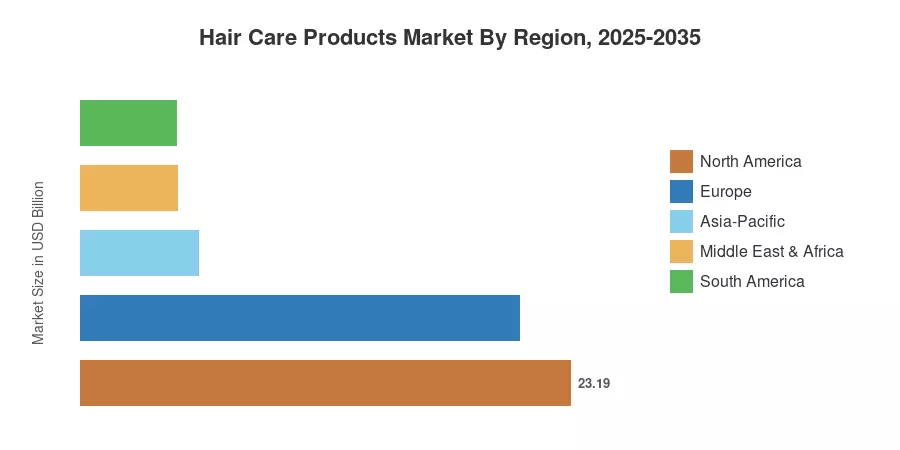
North America continues to lead The Hair Care Products, holding a significant share of approximately 39,784.58 million. The growth is driven by increasing consumer awareness regarding personal grooming and the rising demand for premium hair care products. Regulatory support for product safety and innovation further fuels market expansion, with a focus on sustainable and organic ingredients. The competitive landscape is characterized by major players such as Procter & Gamble, Estée Lauder, and Unilever, who dominate the market with innovative product offerings. The U.S. remains the largest market, supported by a robust retail infrastructure and a growing trend towards personalized hair care solutions. This region's focus on research and development ensures a steady pipeline of new products catering to diverse consumer needs.

Europe : Emerging Trends in Hair Care

Europe's hair care products market is valued at approximately 23,847.49 million, reflecting a strong demand for innovative and high-quality products. The region is witnessing a shift towards natural and organic formulations, driven by consumer preferences for sustainability. Regulatory frameworks in the EU promote safety and efficacy, encouraging brands to invest in research and development for cleaner products. Leading countries like Germany, France, and the UK are at the forefront of this market, with key players such as L'Oreal and Henkel driving growth through innovative marketing strategies. The competitive landscape is vibrant, with a mix of established brands and emerging startups focusing on niche markets. The emphasis on eco-friendly packaging and ethical sourcing is reshaping the market dynamics, appealing to environmentally conscious consumers.

Asia-Pacific : Rapid Growth and Expansion

The Asia-Pacific hair care products market is valued at around 13,478.07 million, showcasing rapid growth driven by urbanization and rising disposable incomes. Consumers in this region are increasingly investing in premium hair care products, influenced by social media trends and celebrity endorsements. Regulatory bodies are also promoting product safety, which enhances consumer trust and market growth. Countries like China, Japan, and India are leading the market, with significant contributions from local and international brands. Key players such as Shiseido and Kao Corporation are expanding their product lines to cater to diverse consumer preferences. The competitive landscape is marked by innovation, with brands focusing on personalized solutions and advanced formulations to meet the evolving demands of consumers in this dynamic market.

Middle East and Africa : Niche Market Opportunities

The Middle East and Africa hair care products market is valued at approximately 358.01 million, reflecting niche opportunities for growth. The market is driven by increasing consumer awareness of personal grooming and the influence of social media on beauty standards. Regulatory frameworks are gradually evolving to ensure product safety and quality, which is essential for market expansion. Countries like South Africa and the UAE are emerging as key players in this market, with a growing presence of both local and international brands. The competitive landscape is characterized by a mix of traditional and modern retail channels, with brands focusing on culturally relevant products. The demand for specialized hair care solutions tailored to diverse hair types is shaping the market dynamics in this region.

Key Players and Competitive Insights

The Hair Care Products Market is characterized by a dynamic competitive landscape, driven by innovation, sustainability, and digital transformation. Major players such as Procter & Gamble (US), L'Oreal (FR), and Unilever (GB) are at the forefront, each adopting distinct strategies to enhance their market positioning. Procter & Gamble (US) emphasizes product innovation and sustainability, focusing on eco-friendly formulations and packaging. L'Oreal (FR) leverages its strong R&D capabilities to introduce cutting-edge products, while Unilever (GB) prioritizes regional expansion and digital marketing to engage consumers effectively. Collectively, these strategies contribute to a competitive environment that is increasingly focused on meeting consumer demands for quality and sustainability.

Key business tactics within the Hair Care Products Market include localizing manufacturing and optimizing supply chains to enhance efficiency and responsiveness. The market structure appears moderately fragmented, with a mix of established brands and emerging players. The collective influence of key players shapes competitive dynamics, as they strive to differentiate themselves through innovation and consumer engagement.

In November 2025, L'Oreal (FR) announced a partnership with a leading tech firm to integrate AI-driven personalization into its product offerings. This strategic move is likely to enhance customer experience by providing tailored recommendations, thereby increasing brand loyalty and sales. The integration of AI into product development and marketing strategies may position L'Oreal as a leader in personalized hair care solutions.

In October 2025, Unilever (GB) launched a new line of sustainable hair care products, utilizing biodegradable packaging and natural ingredients. This initiative aligns with the growing consumer preference for environmentally friendly products and reflects Unilever's commitment to sustainability. The launch not only strengthens Unilever's product portfolio but also enhances its brand image in a market increasingly focused on eco-consciousness.

In September 2025, Procter & Gamble (US) expanded its manufacturing capabilities in Asia, aiming to meet the rising demand for premium hair care products in the region. This expansion is strategically significant as it allows Procter & Gamble to reduce lead times and improve supply chain efficiency, ultimately enhancing its competitive edge in a rapidly growing market.

As of December 2025, current competitive trends in the Hair Care Products Market include a pronounced shift towards digitalization, sustainability, and the integration of advanced technologies such as AI. Strategic alliances are increasingly shaping the landscape, enabling companies to leverage complementary strengths and enhance innovation. Looking ahead, competitive differentiation is expected to evolve, with a notable shift from price-based competition to a focus on innovation, technology, and supply chain reliability. This transition underscores the importance of adapting to consumer preferences and market demands in a rapidly changing environment.

Key Companies in the Hair Care Products Market market include

Industry Developments

  • Q2 2024: Unilever appoints Hein Schumacher as new CEO Unilever, a major player in the hair care sector, announced the appointment of Hein Schumacher as its new Chief Executive Officer, effective July 2024, signaling a leadership change that could impact its global hair care strategy.
  • Q2 2024: L'Oréal acquires Australian hair care brand Aesop for $2.5 billion L'Oréal completed the acquisition of Aesop, a premium hair and skin care brand, expanding its luxury portfolio and strengthening its presence in the Asia-Pacific region.
  • Q2 2024: P&G launches new plant-based Head & Shoulders shampoo line Procter & Gamble introduced a new Head & Shoulders shampoo line formulated with plant-based ingredients, targeting eco-conscious consumers and expanding its sustainable product offerings.
  • Q3 2024: Henkel opens new hair care R&D center in Düsseldorf Henkel inaugurated a state-of-the-art research and development facility dedicated to hair care innovation in Düsseldorf, Germany, aiming to accelerate product development and sustainability initiatives.
  • Q3 2024: Estée Lauder Companies announces partnership with Ulta Beauty for exclusive hair care launches Estée Lauder Companies entered a strategic partnership with Ulta Beauty to launch exclusive hair care products in Ulta stores across the United States, enhancing its retail distribution.
  • Q3 2024: Unilever invests $100 million in new hair care manufacturing facility in India Unilever announced a $100 million investment to build a new manufacturing plant in India focused on hair care products, aiming to meet growing demand in the South Asian market.
  • Q4 2024: L'Oréal launches AI-powered personalized hair care diagnostic tool L'Oréal unveiled an artificial intelligence-based diagnostic tool for personalized hair care recommendations, integrating advanced technology into its consumer experience.
  • Q4 2024: Olaplex Holdings appoints new Chief Marketing Officer Olaplex Holdings announced the appointment of a new Chief Marketing Officer to drive global brand growth and product innovation in the hair care segment.
  • Q1 2025: Procter & Gamble acquires indie hair care brand Pattern Beauty Procter & Gamble acquired Pattern Beauty, a brand specializing in textured hair products, to expand its portfolio and strengthen its position in the multicultural hair care market.
  • Q1 2025: Shiseido launches new premium hair care line in Europe Shiseido introduced a new premium hair care product line in European markets, targeting luxury consumers and expanding its international presence.
  • Q2 2025: Unilever partners with biotech firm Ginkgo Bioworks for sustainable hair care ingredients Unilever announced a partnership with Ginkgo Bioworks to develop sustainable, bioengineered ingredients for its hair care products, aiming to reduce environmental impact and enhance product efficacy.
  • Q2 2025: Estée Lauder Companies opens new hair care innovation hub in New York Estée Lauder Companies opened a dedicated innovation hub in New York focused on developing next-generation hair care products and technologies.

.webp

Future Outlook

Hair Care Products Market Future Outlook

The Hair Care Products Market is projected to grow at a 5.0% CAGR from 2024 to 2035, driven by increasing consumer awareness and demand for natural ingredients.

New opportunities lie in:

  • Expansion of subscription-based delivery services for personalized hair care products.
  • Development of eco-friendly packaging solutions to attract environmentally conscious consumers.
  • Investment in AI-driven hair analysis tools for tailored product recommendations.

By 2035, the Hair Care Products Market is expected to achieve substantial growth and innovation.

Market Segmentation

Hair Care Products Market End User Outlook

  • Men
  • Women
  • Children

Hair Care Products Market Application Outlook

  • Hair Styling
  • Hair Treatment
  • Hair Coloring
  • Hair Cleansing

Hair Care Products Market Formulation Outlook

  • Organic
  • Synthetic
  • Natural

Hair Care Products Market Product Type Outlook

  • Shampoos
  • Conditioners
  • Hair Oils
  • Hair Masks

Report Scope

MARKET SIZE 202479469.15(USD Million)
MARKET SIZE 202583444.21(USD Million)
MARKET SIZE 2035135948.03(USD Million)
COMPOUND ANNUAL GROWTH RATE (CAGR)5.0% (2024 - 2035)
REPORT COVERAGERevenue Forecast, Competitive Landscape, Growth Factors, and Trends
BASE YEAR2024
Market Forecast Period2025 - 2035
Historical Data2019 - 2024
Market Forecast UnitsUSD Million
Key Companies ProfiledProcter & Gamble (US), L'Oreal (FR), Unilever (GB), Estée Lauder (US), Henkel (DE), Coty (US), Shiseido (JP), Revlon (US), Kao Corporation (JP), Amway (US)
Segments CoveredApplication, Product Type, End User, Formulation
Key Market OpportunitiesGrowing demand for sustainable and natural ingredients in the Hair Care Products Market presents significant opportunities.
Key Market DynamicsRising consumer demand for natural ingredients drives innovation and competition in the hair care products market.
Countries CoveredNorth America, Europe, APAC, South America, MEA

Market Highlights

Author
Snehal Singh
Assistant Manager - Research

High acumen in analyzing complex macro & micro markets with more than 6 years of work experience in the field of market research. By implementing her analytical skills in forecasting and estimation into market research reports, she has expertise in Packaging, Construction, and Equipment domains. She handles a team size of 20-25 resources and ensures smooth running of the projects, associated marketing activities, and client servicing.

Leave a Comment

FAQs

How much is the hair care products market?

The global hair care products market size was valued at USD 75684.9 Million in 2023.

What is the growth rate of the hair care products market?

The global market is projected to grow at a CAGR of 5.00% during the forecast period, 2024-2032.

Which region held the largest market share in the hair care products market?

Asia Pacific had the largest share in the global hair care products market.

Who are the key players in the hair care products market?

The key players in the market are Amway Corp, Coty Inc, Henkel AG and Co KGaA, Kao Corp, L'Oréal SA, The Procter and Gamble Co, and The Unilever Group.

Which type led the hair care products market?

The shampoo category dominated the market in 2021.

Which distribution channel had the largest market share in the market?

The store based had the largest share in the global market for hair care products.

Download Free Sample

Kindly complete the form below to receive a free sample of this Report

Compare Licence

×
Features License Type
Single User Multiuser License Enterprise User
Price $4,950 $5,950 $7,250
Maximum User Access Limit 1 User Upto 10 Users Unrestricted Access Throughout the Organization
Free Customization
Direct Access to Analyst
Deliverable Format
Platform Access
Discount on Next Purchase 10% 15% 15%
Printable Versions