×
Request Free Sample ×

Kindly complete the form below to receive a free sample of this Report

* Please use a valid business email

Leading companies partner with us for data-driven Insights

clients tt-cursor
Hero Background

Influenza Vaccination Market

ID: MRFR/Pharma/1090-CR
148 Pages
Kinjoll Dey
February 2021

Influenza Vaccines Market Size, Growth Research Report By Influenza Type (Seasonal and Zoonotic), Manufacturing Technology (Egg-based, Cell culture-based and Recombinant-based), Vaccine Type ( Quadrivalent Influenza Vaccines and Trivalent Influenza Vaccines), End User (Hospitals & Clinics, Research Organizations & Academic Institutes, and others) and Region (Americas, Europe, Asia-Pacific, and the Middle East & Africa) - Competitor Industry Analysis and Trends Forecast Till 2035

Share:
Download PDF ×

We do not share your information with anyone. However, we may send you emails based on your report interest from time to time. You may contact us at any time to opt-out.

Influenza Vaccination Market Infographic
Purchase Options

Influenza Vaccination Market Summary

As per MRFR analysis, the Influenza Vaccination Market Size was estimated at 8.4 USD Billion in 2024. The Influenza Vaccination industry is projected to grow from 8.91 USD Billion in 2025 to 16.07 USD Billion by 2035, exhibiting a compound annual growth rate (CAGR) of 6.07 during the forecast period 2025 - 2035.

Key Market Trends & Highlights

The Influenza Vaccination Market is experiencing dynamic growth driven by technological advancements and increased consumer engagement.

  • Technological advancements in vaccine development are reshaping the landscape of the influenza vaccination market.
  • North America remains the largest market, while the Asia-Pacific region is emerging as the fastest-growing area for influenza vaccinations.
  • Preventive care continues to dominate the market, whereas post-exposure prophylaxis is witnessing rapid growth.
  • Rising incidence of influenza cases and government initiatives are key drivers propelling market expansion.

Market Size & Forecast

2024 Market Size 8.4 (USD Billion)
2035 Market Size 16.07 (USD Billion)
CAGR (2025 - 2035) 6.07%

Major Players

Sanofi (FR), GlaxoSmithKline (GB), Pfizer (US), Merck & Co. (US), AstraZeneca (GB), Seqirus (AU), Baxter International (US), Novartis (CH), MedImmune (GB)

Influenza Vaccination Market Trends

The Influenza Vaccination Market is currently experiencing a dynamic phase characterized by evolving consumer preferences and advancements in vaccine technology. As awareness regarding the importance of vaccination continues to grow, individuals are increasingly seeking preventive measures against influenza. This heightened awareness is likely driven by a combination of public health campaigns and the ongoing emphasis on personal health management. Furthermore, the market is witnessing a shift towards more personalized vaccination strategies, which may enhance the overall effectiveness of immunization efforts. The integration of digital health solutions, such as mobile applications for vaccination reminders and tracking, appears to be gaining traction, potentially influencing consumer behavior and engagement. In addition, the Influenza Vaccination Market is also shaped by regulatory changes and the introduction of novel vaccine formulations. These developments may lead to increased competition among manufacturers, fostering innovation and potentially lowering costs for consumers. The collaboration between public health entities and private sector stakeholders seems to be crucial in expanding access to vaccines, particularly in underserved regions. Overall, the market is poised for growth, driven by a combination of technological advancements, changing consumer attitudes, and collaborative efforts aimed at enhancing vaccination rates.

Technological Advancements in Vaccine Development

The Influenza Vaccination Market is witnessing rapid advancements in vaccine technology, which may lead to more effective and safer vaccines. Innovations such as mRNA technology and adjuvants are being explored to enhance immune responses, potentially improving overall vaccination outcomes.

Increased Consumer Awareness and Engagement

There is a noticeable rise in consumer awareness regarding the importance of influenza vaccination. Public health campaigns and educational initiatives are likely contributing to this trend, encouraging individuals to take proactive measures in protecting their health.

Regulatory Changes and Market Dynamics

The regulatory landscape surrounding vaccines is evolving, which may impact the Influenza Vaccination Market. New guidelines and policies could facilitate faster approvals for novel vaccines, fostering competition and innovation among manufacturers.

Influenza Vaccination Market Drivers

Market Growth Projections

The Global Influenza Vaccines Market Industry is projected to experience robust growth, with estimates indicating a market value of 8.4 USD Billion in 2024 and a potential increase to 17.0 USD Billion by 2035. This growth trajectory suggests a compound annual growth rate of 6.64% from 2025 to 2035. Such projections highlight the increasing demand for influenza vaccines driven by various factors, including rising awareness, government initiatives, and technological advancements. The market's expansion reflects a global commitment to improving public health and preventing influenza outbreaks.

Rising Incidence of Influenza

The increasing incidence of influenza globally drives the Global Influenza Vaccines Market Industry. According to health authorities, seasonal influenza affects millions of people each year, leading to significant morbidity and mortality. In 2024, the market is projected to reach 8.4 USD Billion, reflecting the urgent need for effective vaccination strategies. Countries are enhancing their vaccination programs to mitigate the impact of influenza outbreaks, which can strain healthcare systems. This trend is likely to continue as public health initiatives emphasize the importance of vaccination in preventing influenza-related complications.

Public Awareness and Education

Public awareness and education regarding the benefits of influenza vaccination significantly influence the Global Influenza Vaccines Market Industry. Health organizations are actively promoting the importance of vaccination through various channels, including social media, community outreach, and educational programs. This increased awareness helps to dispel myths and misconceptions about vaccines, encouraging more individuals to get vaccinated. As vaccination rates rise, the demand for influenza vaccines is expected to grow, contributing to the overall market expansion. The ongoing efforts to educate the public are likely to have a lasting impact on vaccination behaviors.

Emerging Markets and Globalization

Emerging markets and globalization are pivotal drivers of the Global Influenza Vaccines Market Industry. As economies develop, there is a growing recognition of the importance of vaccination in public health. Countries in Asia, Africa, and Latin America are increasingly investing in healthcare infrastructure, including vaccine distribution systems. This trend is fostering greater access to influenza vaccines in regions that previously faced challenges in vaccination coverage. The expansion of global supply chains also facilitates the distribution of vaccines, making them more accessible to diverse populations. Consequently, the market is poised for substantial growth in these regions.

Government Initiatives and Funding

Government initiatives and funding play a crucial role in the growth of the Global Influenza Vaccines Market Industry. Many countries are increasing their investments in vaccine research and development, aiming to improve vaccine efficacy and accessibility. For instance, various national health departments have launched campaigns to promote vaccination and allocate budgets for purchasing vaccines. This financial support is essential for ensuring that vaccines are available to vulnerable populations, thereby increasing vaccination rates. As a result, the market is expected to grow significantly, with projections indicating a rise to 17.0 USD Billion by 2035.

Technological Advancements in Vaccine Development

Technological advancements in vaccine development are transforming the Global Influenza Vaccines Market Industry. Innovations such as mRNA technology and recombinant vaccines are enhancing the effectiveness and speed of vaccine production. These advancements allow for rapid responses to emerging influenza strains, which is critical in a globalized world where viruses can spread quickly. The ability to produce vaccines more efficiently may lead to increased vaccination rates and better public health outcomes. As the industry adapts to these technologies, it is likely to experience a compound annual growth rate of 6.64% from 2025 to 2035.

Market Segment Insights

By Application: Preventive Care (Largest) vs. Post-Exposure Prophylaxis (Fastest-Growing)

In the Influenza Vaccination Market, the application segment demonstrates a diverse distribution of value across various areas. Preventive care stands out as the largest segment, dominating the market landscape due to its proactive approach to health management. Meanwhile, post-exposure prophylaxis is increasingly gaining traction, driven by rising awareness among individuals and health organizations about the importance of timely intervention after exposure to the virus. Other areas, such as travel health and occupational health, add to the multifaceted nature of application-driven innovations in this sector. Looking forward, the growth trends in the application segment are being influenced by several key factors. Preventive care remains essential, particularly with increasing vaccination campaigns and public health initiatives designed to mitigate flu outbreaks. On the other hand, post-exposure prophylaxis is the fastest-growing sub-sector, propelled by heightened global mobility and the need for immediate protective measures following potential exposure to the influenza virus, especially among health care workers and travelers. This duality signifies a robust demand across varying application fronts, hinting at a healthy growth trajectory for the influenza vaccination market as a whole.

Preventive Care (Dominant) vs. Travel Health (Emerging)

In the influenza vaccination market, preventive care is characterized by its extensive focus on vaccination campaigns intended to ward off the virus before infection occurs. This dominant segment emphasizes early intervention, particularly among high-risk populations, and benefits from government-supported health initiatives. In contrast, travel health is an emerging segment that is gaining attention due to the increasing number of international travelers who must consider flu vaccinations before embarking on journeys. This segment prioritizes tailored health measures to ensure immunity against influenza while traveling, reflecting a growing awareness regarding health risks associated with global travel. As more individuals recognize the value of vaccination in maintaining health during travel, the travel health segment is expected to flourish.

By End Use: Healthcare Providers (Largest) vs. Pharmacies (Fastest-Growing)

In the Influenza Vaccination Market, Healthcare Providers dominate with the largest market share, driven by their central role in administering vaccines and patient care initiatives. Pharmacies also represent a significant portion of the market, increasingly becoming pivotal in vaccine distribution, especially among urban populations. Public Health Organizations and Corporate Health Programs contribute to the market as well, each bringing unique strategies to enhance vaccine access and uptake.

Healthcare Providers (Dominant) vs. Pharmacies (Emerging)

Healthcare Providers are established entities in the Influenza Vaccination Market, often associated with comprehensive patient care frameworks where vaccinations are integrated into routine healthcare processes. Their emphasis on vaccination awareness and accessibility positions them as the dominant segment. In contrast, Pharmacies have seen rapid growth as an emerging segment, capitalizing on convenience and accessibility. With extended hours and the ability to administer vaccines without appointments, pharmacies cater to a diverse patient demographic. The evolving partnership between pharmacies and healthcare systems further enhances their role in increasing vaccination rates, indicating a shift in how vaccinations are approached in community health.

By Age Group: Pediatric (Largest) vs. Geriatric (Fastest-Growing)

The influenza vaccination market is primarily segmented by age, consisting of Pediatric, Adult, and Geriatric categories. The Pediatric segment holds the largest market share, driven by the increased awareness of influenza's impact on children's health, leading to high vaccination rates in this demographic. Meanwhile, the Adult and Geriatric segments also contribute significantly, with the Geriatric segment growing rapidly as a result of the aging population and increased susceptibility to influenza among older individuals. Growth trends in the influenza vaccination market highlight a notable shift towards preventive measures among the Geriatric population. Factors such as rising healthcare expenditure, government initiatives promoting vaccinations, and increased education regarding the risks of influenza in older adults are propelling this segment forward. Pediatric vaccinations remain a key focus of public health programs, while the Geriatric segment is expected to witness sustained growth due to heightened awareness and improved access to vaccines for the elderly.

Pediatric (Dominant) vs. Adult (Emerging)

The Pediatric segment of the influenza vaccination market is characterized as the dominant force, largely due to the effective awareness campaigns and the endorsement of vaccination by healthcare providers. Pediatric vaccinations are often mandated for school attendance, leading to a high uptake in this age group. In contrast, the Adult segment is emerging as a significant focus, fueled by changing attitudes towards preventive healthcare and a growing recognition of the need for vaccinations beyond childhood. Adults are increasingly becoming engaged in preventative health measures, supported by workplace vaccination programs and community health initiatives aimed at increasing influenza vaccination rates among adults. These trends suggest the Pediatric segment will continue to lead, while the Adult segment gains momentum.

By Vaccination Type: Inactivated Vaccine (Largest) vs. Live Attenuated Vaccine (Fastest-Growing)

The influenza vaccination market is primarily dominated by inactivated vaccines, which account for a significant share of total vaccinations administered. This vaccine type is widely accepted and recommended by health authorities globally, giving it a competitive edge in terms of preference among healthcare providers and patients. In contrast, live attenuated vaccines, known for their ability to provide broader immune response, are gaining traction among healthcare professionals as an effective preventive measure against influenza, thus slowly increasing their market presence. The growth of the influenza vaccination market is influenced by several factors, including increased awareness about influenza's impact on public health and the promotion of vaccination campaigns during flu season. In recent years, live attenuated vaccines have demonstrated a robust growth trajectory due to their unique characteristics that stimulate a stronger immune response compared to inactivated vaccines. This trend signifies a shift in preference towards vaccination options that enhance efficacy and patient compliance, showcasing the evolving landscape of influenza prevention strategies.

Inactivated Vaccine (Dominant) vs. Recombinant Vaccine (Emerging)

Inactivated vaccines are the cornerstone of the influenza vaccination market, regarded for their safety profile and reliability. They work by using virus particles that have been killed or inactivated, which elicits a robust immune response without causing actual illness. This segment is characterized by its widespread acceptance and endorsement from global health authorities, making it the most common choice for annual flu vaccinations. In contrast, recombinant vaccines, an emerging segment, utilize genetically engineered techniques to produce viral proteins that prompt an immune response. This innovation results in faster production times and more tailored vaccines for specific strains, adding to their appeal. As healthcare providers seek efficient and adaptable solutions to combat influenza, recombinant vaccines are poised for significant growth.

Get more detailed insights about Influenza Vaccination Market

Regional Insights

North America : Market Leader in Vaccination

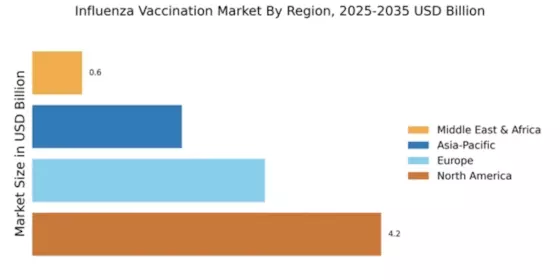
North America is poised to maintain its leadership in the Influenza Vaccination Market, holding a significant market size of $4.2 billion in 2025. Key growth drivers include increasing vaccination awareness, government initiatives, and a robust healthcare infrastructure. Regulatory support, such as streamlined approval processes for vaccines, further enhances market dynamics. The region's focus on public health and preventive measures is expected to sustain demand for influenza vaccines. The competitive landscape in North America is characterized by the presence of major players like Pfizer, Merck & Co., and Sanofi. These companies are investing heavily in R&D to develop innovative vaccine formulations. The U.S. leads the market, driven by high vaccination rates and extensive distribution networks. Collaboration between public health agencies and private sectors is also fostering a favorable environment for vaccine uptake, ensuring that North America remains at the forefront of influenza vaccination efforts.

Europe : Growing Demand for Vaccination

Europe's Influenza Vaccination Market is projected to reach $2.8 billion by 2025, driven by increasing public health campaigns and rising awareness about influenza prevention. Regulatory frameworks, such as the European Medicines Agency's guidelines, are facilitating faster vaccine approvals, which is crucial for meeting seasonal demands. The region's commitment to enhancing healthcare access and vaccination coverage is expected to further boost market growth. Leading countries in Europe include Germany, France, and the UK, where vaccination rates are notably high. The competitive landscape features key players like GlaxoSmithKline and AstraZeneca, who are actively involved in vaccine development and distribution. Collaborative efforts among EU member states to standardize vaccination protocols are enhancing market efficiency. This synergy is vital for addressing seasonal influenza outbreaks and ensuring public health safety across Europe.

Asia-Pacific : Emerging Market Potential

The Asia-Pacific region is witnessing a burgeoning Influenza Vaccination Market, projected to reach $1.8 billion by 2025. Key growth drivers include increasing healthcare expenditure, rising awareness of influenza risks, and government initiatives promoting vaccination. Regulatory bodies are also enhancing vaccine accessibility, which is crucial for improving public health outcomes. The region's diverse population and varying healthcare systems present unique challenges and opportunities for market expansion. Countries like Japan, Australia, and China are leading the charge in vaccination efforts, supported by both public and private sectors. Major players such as Seqirus and Baxter International are focusing on localized vaccine production to meet regional demands. The competitive landscape is evolving, with an emphasis on innovative vaccine technologies and distribution strategies to enhance coverage. This dynamic environment positions Asia-Pacific as a significant player in The Influenza Vaccination.

Middle East and Africa : Untapped Market Opportunities

The Middle East and Africa (MEA) region is gradually emerging in the Influenza Vaccination Market, with a projected size of $0.6 billion by 2025. Key growth drivers include increasing healthcare investments, rising awareness of influenza's impact, and government initiatives aimed at improving vaccination rates. Regulatory frameworks are evolving to support vaccine accessibility, which is essential for addressing public health challenges in the region. Leading countries such as South Africa and the UAE are making strides in vaccination efforts, supported by both local and international players. Companies like Novartis and MedImmune are exploring partnerships to enhance vaccine distribution and accessibility. The competitive landscape is characterized by a mix of established pharmaceutical companies and emerging local firms, creating a dynamic environment for growth. This region holds significant potential for expanding influenza vaccination coverage and improving overall public health outcomes.

Key Players and Competitive Insights

The Influenza Vaccination Market is characterized by a dynamic competitive landscape, driven by the increasing demand for effective vaccination solutions and the ongoing need for public health initiatives. Key players such as Sanofi (FR), GlaxoSmithKline (GB), and Pfizer (US) are strategically positioned to leverage their extensive research and development capabilities, focusing on innovation and regional expansion. These companies are actively enhancing their product portfolios and exploring partnerships to strengthen their market presence, thereby shaping a competitive environment that emphasizes both efficacy and accessibility.

In terms of business tactics, companies are increasingly localizing manufacturing to reduce supply chain vulnerabilities and optimize distribution channels. The market appears moderately fragmented, with several key players exerting considerable influence. This structure allows for a diverse range of products and strategies, fostering competition that encourages innovation while also addressing the varying needs of different regions.

In November 2025, Sanofi (FR) announced a collaboration with a leading biotechnology firm to develop a next-generation influenza vaccine that utilizes mRNA technology. This strategic move is significant as it positions Sanofi at the forefront of vaccine innovation, potentially enhancing efficacy and reducing production timelines. The partnership underscores the importance of leveraging cutting-edge technology to meet evolving public health demands.

In October 2025, GlaxoSmithKline (GB) launched a new initiative aimed at increasing vaccination rates among underserved populations. This program focuses on community outreach and education, reflecting GSK's commitment to social responsibility and public health. By addressing barriers to access, GSK not only enhances its corporate image but also contributes to broader vaccination goals, which may lead to increased market share in the long term.

In September 2025, Pfizer (US) expanded its manufacturing capabilities in Europe, investing €200 million in a new facility dedicated to influenza vaccine production. This expansion is likely to enhance Pfizer's supply chain resilience and responsiveness to market demands, particularly during peak influenza seasons. Such investments indicate a strategic focus on ensuring reliable vaccine availability, which is crucial for maintaining competitive advantage in a rapidly evolving market.

As of December 2025, current trends in the Influenza Vaccination Market include a pronounced shift towards digitalization, sustainability, and the integration of artificial intelligence in vaccine development and distribution. Strategic alliances are increasingly shaping the landscape, enabling companies to pool resources and expertise. Looking ahead, competitive differentiation is expected to evolve, with a greater emphasis on innovation and technology rather than solely on price. Companies that can reliably deliver effective vaccines while embracing sustainable practices are likely to emerge as leaders in this vital market.

Key Companies in the Influenza Vaccination Market market include

Industry Developments

March 2022: Fluzone is a high-dose influenza vaccination introduced by Sanofi. The flu shot gives defense against four different types that are present in Australia.

February 2020: A novel inactivated quadrivalent vaccination from Abbott was released for use in children under three. With this new introduction, the business increased the scope of its existing pharmaceutical product and distributed flu vaccinations to important markets like India.

Future Outlook

Influenza Vaccination Market Future Outlook

The Influenza Vaccination Market is projected to grow at a 6.07% CAGR from 2024 to 2035, driven by increasing vaccination awareness, technological advancements, and government initiatives.

New opportunities lie in:

  • Expansion of telehealth vaccination services
  • Development of personalized vaccine formulations
  • Partnerships with retail pharmacies for increased accessibility

By 2035, the market is expected to be robust, driven by innovation and strategic partnerships.

Market Segmentation

Influenza Vaccination Market End Use Outlook

  • Healthcare Providers
  • Pharmacies
  • Public Health Organizations
  • Corporate Health Programs

Influenza Vaccination Market Age Group Outlook

  • Pediatric
  • Adult
  • Geriatric

Influenza Vaccination Market Application Outlook

  • Preventive Care
  • Post-Exposure Prophylaxis
  • Travel Health
  • Occupational Health

Influenza Vaccination Market Vaccination Type Outlook

  • Inactivated Vaccine
  • Live Attenuated Vaccine
  • Recombinant Vaccine

Report Scope

MARKET SIZE 20248.4(USD Billion)
MARKET SIZE 20258.91(USD Billion)
MARKET SIZE 203516.07(USD Billion)
COMPOUND ANNUAL GROWTH RATE (CAGR)6.07% (2024 - 2035)
REPORT COVERAGERevenue Forecast, Competitive Landscape, Growth Factors, and Trends
BASE YEAR2024
Market Forecast Period2025 - 2035
Historical Data2019 - 2024
Market Forecast UnitsUSD Billion
Key Companies ProfiledSanofi (FR), GlaxoSmithKline (GB), Pfizer (US), Merck & Co. (US), AstraZeneca (GB), Seqirus (AU), Baxter International (US), Novartis (CH), MedImmune (GB)
Segments CoveredApplication, End Use, Age Group, Vaccination Type
Key Market OpportunitiesIntegration of digital health technologies enhances accessibility and engagement in the Influenza Vaccination Market.
Key Market DynamicsRising consumer awareness and regulatory support drive demand for innovative influenza vaccination solutions and improved accessibility.
Countries CoveredNorth America, Europe, APAC, South America, MEA

Market Highlights

Author
Kinjoll Dey
Research Analyst Level I

He is an extremely curious individual currently working in Healthcare and Medical Devices Domain. Kinjoll is comfortably versed in data centric research backed by healthcare educational background. He leverages extensive data mining and analytics tools such as Primary and Secondary Research, Statistical Analysis, Machine Learning, Data Modelling. His key role also involves Technical Sales Support, Client Interaction and Project management within the Healthcare team. Lastly, he showcases extensive affinity towards learning new skills and remain fascinated in implementing them.

Leave a Comment

FAQs

What is the projected growth of the Influenza Vaccines market?

The Influenza Vaccines market is the expected increase in total market value of 16.07 USD billion over a defined forecast period 2025–2035. It is driven by factors such as demand trends, technological advances, regulatory changes, and geographic expansion.

What is the size of the Influenza Vaccines market?

Influenza Vaccines market size was valued at approximately 8.4 billion USD in 2024. This figure will reach 16.07 billion USD covering all regions (America, Europe, Asia, MEA and ROW), focusing its segments / services / distribution channels till 2035.

What is the CAGR of the Influenza Vaccines market?

Influenza Vaccines market is expected to grow at a CAGR of 6.07% between 2025 and 2035.

Download Free Sample

Kindly complete the form below to receive a free sample of this Report

Compare Licence

×
Features License Type
Single User Multiuser License Enterprise User
Price $4,950 $5,950 $7,250
Maximum User Access Limit 1 User Upto 10 Users Unrestricted Access Throughout the Organization
Free Customization
Direct Access to Analyst
Deliverable Format
Platform Access
Discount on Next Purchase 10% 15% 15%
Printable Versions