Acute Coronary Syndrome Market

Key Players: AstraZeneca, Sanofi, Bristol-Myers Squibb, Eli Lilly / Daiichi Sankyo, Abbott Laboratories, Medtronic, Boston Scientific, Pfizer

Acute Coronary Syndrome Market

Acute Coronary Syndrome Market Research Report by Type (Unstable Angina, Nstemi), by Diagnosis (Blood Tests, Imaging, Stress Test), Treatment (Medication, Surgery), End-User (Hospitals & Clinics, Diagnostic Centers) - Forecast Till 2035
ID: MRFR/Pharma/4326-HCR
100 Pages
Vikita Thakur, Rahul Gotadki
Last Updated: June 16, 2026

Acute Coronary Syndrome Market Summary

The Global Acute Coronary Syndrome Market size was valued at USD 13.85 Billion in 2025, and the market is projected to grow from USD 14.84 Billion in 2026 to USD 27.61 Billion by 2035, registering a CAGR of 7.14% during the forecast period 2026–2035. Two catalysts anchor that trajectory: the WHO Global Hearts Initiative, which has channeled over USD 1.2 Billion into cardiovascular care infrastructure since 2016 [2], and updated ACC/AHA chest-pain evaluation guidelines that mandate high-sensitivity troponin testing at first contact, broadening the treatment-eligible population [3]. Heart attack treatment drugs continue to absorb the largest share of therapeutic spending, and regulatory fast-tracks for next-generation P2Y12 inhibitors keep the pipeline commercially attractive.

Legacy thrombolytic-only protocols are giving way to integrated percutaneous coronary intervention (PCI) pathways paired with prolonged antiplatelet ACS treatment regimens. A 2024 Lancet analysis estimated that early invasive strategies reduce 12-month mortality by 22% compared with conservative management, reinforcing health-system willingness to invest in drug-eluting stents and catheterization lab expansion [4]. ACS cardiac medications — spanning ticagrelor, prasugrel, and emerging factor-XI inhibitors — now represent the fastest-evolving pharmacological category within cardiovascular therapeutics.

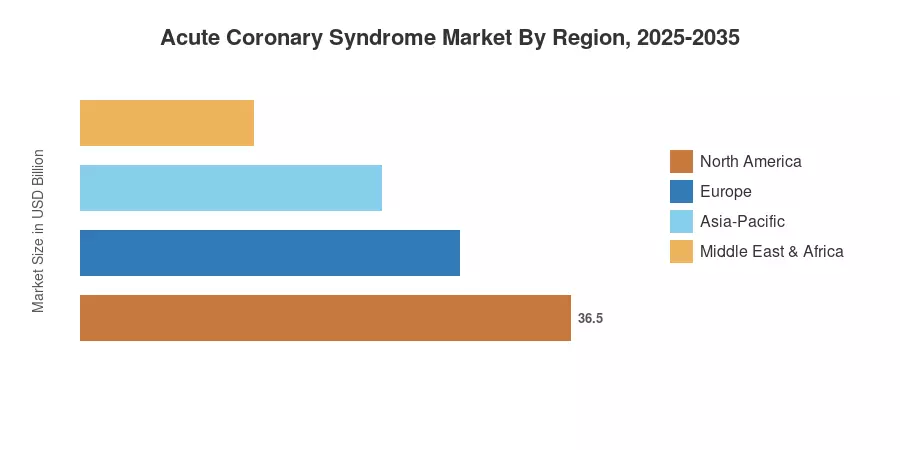
North America commands roughly 41.5% of the Acute Coronary Syndrome Market, underpinned by dense catheterization networks and premium reimbursement. Asia-Pacific is the fastest-growing region at an estimated 9.06% CAGR, driven by coronary artery syndrome management scale-up across China and India. Europe holds the second-largest share at approximately 27.3%, supported by ESC guideline harmonization and cross-border STEMI referral networks [5]. These dynamics position the Acute Coronary Syndrome Market for sustained double-digit absolute growth through 2035.


Key Report Takeaways

• By Condition Type

  • Non-ST-elevation myocardial infarction (NSTEMI) captured an estimated 42.3% of the Acute Coronary Syndrome Market in 2024, reflecting widespread adoption of troponin-guided risk stratification
  • ST-elevation myocardial infarction (STEMI) is forecast to advance at an 11.18% CAGR through 2035, propelled by hub-and-spoke reperfusion networks expanding across emerging economies
  • Unstable angina therapy protocols continue to influence roughly a quarter of the addressable patient pool, though the segment grows at a moderate pace as diagnostic reclassification shifts borderline cases into NSTEMI

• By Treatment

  • Medications — including antiplatelet ACS treatment and anticoagulants — held a 47.5% share of the Acute Coronary Syndrome Market in 2024
  • Interventional modalities are expanding at an 11.49% CAGR, outpacing pharmacotherapy as PCI infrastructure proliferates globally

• By End User

  • Hospitals accounted for 74.2% of revenue in the Acute Coronary Syndrome Market during 2024, reflecting emergency-department-driven diagnosis
  • Ambulatory surgical centers are the fastest-growing end-user segment at a 9.13% CAGR, supported by outpatient PCI approvals in the US and EU

• By Region

  • North America led the Acute Coronary Syndrome Market with 41.5% revenue share in 2024
  • Asia-Pacific is forecast to register the highest regional CAGR at 9.06% through 2035


Market Size and Forecast (2021–2035)

MRFR derives historical values from audited company revenues, payer claims databases, and WHO cardiovascular expenditure reports. Forecast projections use a bottom-up model calibrated against epidemiological incidence rates, procedural volume trends, and anticipated regulatory milestones.
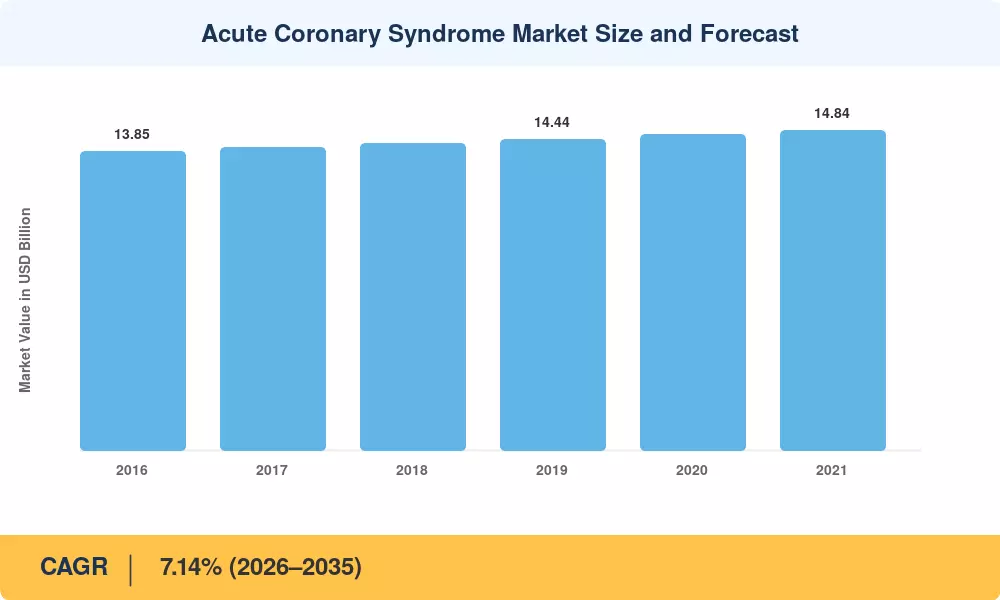
Acute Coronary Syndrome Market Size and Forecast
Our Impact
Enabled $4.3B Revenue Impact for Fortune 500 and Leading Multinationals
Partnering with 2000+ Global Organizations Each Year
30K+ Citations by Top-Tier Firms in the Industry

Driver Impact Analysis

Driver ~% Impact on CAGR Geographic Relevance Impact Timeline
Rising coronary artery disease prevalence ~22% Global Long-term (≥4 yr)
High-sensitivity troponin adoption ~18% North America, Europe Short-term (≤2 yr)
PCI infrastructure expansion ~17% Asia-Pacific, South America Medium-term (2–4 yr)
Next-gen P2Y12 inhibitor launches ~15% North America, Europe Short-term (≤2 yr)
AI-based cardiac triage tools ~12% North America, Asia-Pacific Medium-term (2–4 yr)
Population aging dynamics ~10% Europe, Japan Long-term (≥4 yr)
Dual antiplatelet therapy guideline extensions ~6% Global Medium-term (2–4 yr)


Rising Coronary Artery Disease Prevalence

The Global Burden of Disease Study 2023 documented over 200 million prevalent cases of ischemic heart disease worldwide, a 28% increase over the preceding decade [2]. Metabolic risk factors — diabetes, hypertension, dyslipidemia — compound at faster rates in middle-income nations, creating a structural demand floor for heart attack treatment drugs and coronary artery syndrome management services that extends well beyond 2035.

High-Sensitivity Troponin Adoption

Regulatory clearance of fifth-generation high-sensitivity cardiac troponin assays across the EU and US has redefined rule-in/rule-out windows from hours to minutes, increasing NSTEMI detection rates by an estimated 18–25% [3]. The downstream effect is a measurable rise in antiplatelet ACS treatment prescriptions and interventional referrals, amplifying per-patient revenue for the Acute Coronary Syndrome Market.

PCI Infrastructure Expansion in Emerging Economies

India's Ayushman Bharat scheme and China's Healthy China 2030 plan collectively earmarked a significant amount of cardiovascular infrastructure between 2020 and 2025 [9]. New catheterization labs across tier-2 and tier-3 cities directly boost procedure volumes and device consumption, making these economies pivotal for ACS cardiac medications and stent vendors.

Next-Generation P2Y12 Inhibitors

Clinical trials for reversible P2Y12 agents with shorter half-lives — such as selatogrel's subcutaneous self-administration program — aim to reduce bleeding risk while maintaining efficacy [8]. Successful Phase III readouts could reshape unstable angina therapy and NSTEMI treatment paradigms, adding an estimated USD 1.8 Billion in incremental pharmacotherapy revenue by 2032.


Restraints Impact Analysis

Restraint estimates follow the same directional methodology as drivers and are not subtracted from the headline CAGR.

Restraint ~% Drag on CAGR Geographic Relevance Impact Timeline
High PCI procedural costs ~–20% Low-/middle-income countries Long-term
Generic antiplatelet erosion ~–18% Global Short-term
Bleeding-risk concerns with DAPT ~–15% Global Medium-term
Reimbursement pressure on stent pricing ~–12% Europe, Asia-Pacific Medium-term
Cath-lab workforce shortages ~–10% North America, MEA Long-term


Generic Antiplatelet Erosion

Patent expiration on first-generation P2Y12 inhibitors, including clopidogrel and early ticagrelor formulations, has compressed average selling prices by 35–50% across major markets since 2021 [7]. While this broadens patient access, it directly reduces per-unit revenue for originators and constrains the Acute Coronary Syndrome Market's value growth relative to volume growth.

Bleeding-Risk Concerns with Extended DAPT

Extended dual antiplatelet ACS treatment regimens beyond 12 months reduce recurrent ischemic events but raise major bleeding incidence by 1.5–2.0 percentage points [14]. Several payers now mandate bleeding-risk scoring before authorizing prolonged therapy, slowing uptake of premium heart attack treatment drugs in cost-sensitive health systems.

PCI Cost Barriers in Developing Regions

A single PCI procedure averages USD 8,000–USD 15,000 in sub-Saharan Africa, equivalent to several years of median household income [13]. This cost barrier limits device-intensive coronary artery syndrome management to urban tertiary centers and suppresses addressable volumes across large population segments.


Acute Coronary Syndrome Market Opportunities

AI-Powered Cardiac Decision Support

Machine learning methods using ECG waveforms, troponin kinetics, and patient history can shorten door-to-balloon times by 15-20 minutes in STEMI cases [10]. Health systems engaging in AI triage can gain reimbursement premiums for quality-metric compliance, boosting the addressable footprint of the Acute Coronary Syndrome Market


Subcutaneous Self-Administered Antiplatelets

Subcutaneous P2Y12 inhibitors like selatogrel enable pre-hospital antiplatelet ACS treatment by patients or bystanders before to EMS arrival [8]. This paradigm change from hospital-initiated to community-initiated therapy could reduce time-to-treatment and open up new income avenues for pharmaceutical makers


Emerging-Market STEMI Network Build-Out

Hub-and-spoke STEMI networks in Southeast Asia and Latin America reduced reperfusion periods from >120 minutes to <90 minutes at scale [9]. These networks are funded by governments and build the infrastructure that generates demand for ACS cardiac medicines, drug-eluting stents and monitoring equipment (→Section 7).


Data Monetization Through ACS Registries

National ACS registries such as the UK’s MINAP and Australia’s SNAPSHOT create real-world evidence datasets that pharmaceutical and device companies license for post-market surveillance and label-expansion studies [17]. Registry analytics is an emerging revenue stream beyond the primary pharmaceutical sales.


Personalized Antiplatelet Therapy via Pharmacogenomics

CYP2C19 genotyping now costs under USD 50 per test and can guide selection between clopidogrel and ticagrelor, reducing both adverse events and treatment failures [18]. Pairing pharmacogenomic testing with unstable angina therapy selection creates value-based care models that support premium pricing for heart attack treatment drugs


Acute Coronary Syndrome Market Future Outlook

AI-Integrated Cardiac Care Pathways

By 2030, an estimated 40% of high-volume PCI centers in North America and Europe will deploy AI-assisted ECG interpretation and risk-scoring engines, compressing diagnostic latency and standardizing unstable angina therapy escalation decisions [10]. These tools will differentiate market leaders in the Acute Coronary Syndrome Market by enabling evidence-based throughput gains.

Precision Pharmacotherapy and Factor-XI Inhibition

Factor-XI inhibitors — currently in Phase III for ACS indications — promise antithrombotic efficacy without the bleeding penalty of traditional anticoagulants [8]. Successful commercialization could restructure antiplatelet ACS treatment sequencing and capture a meaningful share of heart attack treatment drug spending by the early 2030s.

Decentralized PCI and Ambulatory ACS Care

Regulatory acceptance of same-day-discharge PCI protocols in the US (CMS) and EU (EMA guidance) is shifting lower-risk NSTEMI procedures to ambulatory settings [15]. This trend compresses hospital length-of-stay economics and amplifies demand for ACS cardiac medications optimized for outpatient adherence within the Acute Coronary Syndrome Market.

ESG-Aligned Cardiovascular Prevention Programs

Corporate wellness mandates and ESG reporting frameworks increasingly include cardiovascular risk screening as a measurable health outcome [22]. Employer-sponsored screening programs detect ACS-prone populations earlier, funneling patients into coronary artery syndrome management pathways and expanding the market's upstream diagnostic and pharmaceutical revenue base.


Acute Coronary Syndrome Market Segmentation

By Condition Type

The Acute Coronary Syndrome Market segments into ST-elevation MI, non-ST-elevation MI, and unstable angina.

Segment Key Metric Primary Demand Driver
Non-ST-Elevation MI (NSTEMI) 42.3% share (2024) High-sensitivity troponin screening [3]
ST-Elevation MI (STEMI) 11.18% CAGR (2026–2035) Hub-and-spoke reperfusion networks [9]
Unstable Angina USD 3.35 Billion (2025) Risk-stratification-guided therapy [5]


NSTEMI dominates the Acute Coronary Syndrome Market by volume because improved biomarker sensitivity reclassifies cases previously labeled as unstable angina therapy candidates. STEMI, though lower in prevalence share, commands the highest per-episode cost due to emergent PCI requirements and extended ACS cardiac medications regimens. Unstable angina therapy spending remains stable, but growth lags as diagnostic precision redirects borderline presentations toward NSTEMI classification.

By Treatment

Segment Key Metric Primary Demand Driver
Medications 47.5% share (2024) Guideline-driven antiplatelet ACS treatment [5]
Interventional Modality 11.49% CAGR (2026–2035) Drug-eluting stent innovation [11]
Others (Diagnostics, Rehabilitation) USD 2.45 Billion (2025) Cardiac rehab reimbursement expansion [15]


Heart attack treatment drugs — particularly ticagrelor, prasugrel, and enoxaparin — anchor the medication segment's leadership position. Interventional modalities are growing faster as PCI penetration deepens in Asia-Pacific and Latin America, with bioresorbable scaffolds and intravascular lithotripsy creating premium price points within coronary artery syndrome management.

By End User

Segment Key Metric Primary Demand Driver
Hospitals 74.2% share (2024) Emergency-department ACS volume [6]
Cardiac Centres USD 2.02 Billion (2025) Specialized referral concentration [17]
Ambulatory Surgical Centres 9.13% CAGR (2026–2035) Outpatient PCI protocol approvals [15]


Hospitals remain the primary setting for the Acute Coronary Syndrome Market because most ACS presentations arrive via emergency departments. Ambulatory surgical centers are the fastest-growing end-user segment, benefiting from payer incentives that shift lower-acuity PCI procedures out of inpatient settings.


Regional Market Share Analysis

Region Key Metric (2024) Primary Investment Themes
North America 41.5% share Premium PCI reimbursement, AI triage adoption
Europe 27.3% share ESC guideline harmonization, cross-border STEMI networks
Asia-Pacific 9.06% CAGR (2026–2035) Cath-lab expansion, population-scale screening
South America USD 0.72 Billion Public-health cardiology programs
Middle East & Africa USD 0.58 Billion Tertiary hospital investment
Total USD 13.85 Billion (2025)

The Acute Coronary Syndrome Market exhibits distinct regional growth trajectories shaped by healthcare infrastructure maturity, reimbursement frameworks, and epidemiological burden. North America remains the dominant revenue contributor, while Asia-Pacific offers the steepest growth curve for coronary artery syndrome management investment.


North America

Country Key Metric Key Driver
US 82.4% of regional share Medicare PCI bundled payments [15]
Canada 11.3% of regional share Provincial cardiac networks [19]
Mexico 6.67% CAGR IMSS cardiovascular program expansion [9]


The US dominates the Acute Coronary Syndrome Market in North America through high per-capita catheterization rates, aggressive guideline adoption, and robust commercial payer coverage of ACS cardiac medications. CMS bundled payment models incentivize quality-driven PCI programs, while FDA breakthrough designations accelerate novel antiplatelet ACS treatment approvals [15].

Europe

Country Key Metric Key Driver
Germany 23.8% of regional share G-BA benefit assessment for novel agents [5]
UK 7.52% CAGR NICE ACS pathway updates [20]
France 18.2% of regional share National STEMI registry mandates [17]
Italy 12.5% of regional share Regional cath-lab consolidation [6]
Spain 9.8% of regional share Public cardiology investment plans
Nordic Countries 8.4% of regional share Universal PCI access models
Russia 6.15% CAGR Federal cardiovascular mortality reduction targets
Rest of Europe 11.1% of regional share EU cross-border referral directives


ESC 2023 NSTE-ACS guideline revisions elevated the role of high-sensitivity troponin and intravascular imaging, accelerating heart attack treatment drugs adoption and device procurement across EU member states [5]. Cross-border STEMI transfer agreements between smaller nations and specialized cardiac centers in Germany and France further concentrate spending.

Asia-Pacific

Country Key Metric Key Driver
China 36.4% of regional share Healthy China 2030 cardiovascular targets [9]
India 10.52% CAGR Ayushman Bharat PCI coverage [9]
Japan 22.6% of regional share Aging population, premium device adoption [12]
South Korea 12.1% of regional share National Health Insurance PCI bundling
ASEAN 8.94% CAGR Hospital infrastructure modernization
Rest of Asia-Pacific 7.8% of regional share Diagnostic capacity building


Asia-Pacific represents the highest-growth frontier for the Acute Coronary Syndrome Market. China alone added over 1,200 PCI-capable centers between 2020 and 2024, while India's public insurance expansion brought coronary artery syndrome management within reach of over 500 million previously uninsured citizens [9].

South America

Country Key Metric Key Driver
Brazil 58.3% of regional share SUS cardiovascular network expansion
Argentina 22.7% of regional share PAMI cardiac program modernization
Rest of South America 7.38% CAGR Pan-American Heart Health Initiative


Brazil's Unified Health System (SUS) has expanded PCI access beyond state capitals into secondary cities, driving demand for both ACS cardiac medications and interventional devices. Antiplatelet ACS treatment prescribing remains concentrated in urban teaching hospitals, but telemedicine-guided STEMI triage is extending reach [9].

Middle East & Africa

Country Key Metric Key Driver
Saudi Arabia 31.5% of regional share Vision 2030 healthcare investment [21]
UAE 24.8% of regional share Medical tourism cardiac centers
South Africa 18.6% of regional share Private-sector cath-lab expansion
Egypt 7.85% CAGR National heart disease screening programs
Rest of MEA 14.3% of regional share NGO-supported cardiac care


Saudi Arabia's Vision 2030 allocates significant capital to building cardiac-specialty hospitals, creating new demand for heart attack treatment drugs and interventional platforms within the Acute Coronary Syndrome Market [21].


Acute Coronary Syndrome Market By Region, 2025-2035

Competitive Benchmarking

The Acute Coronary Syndrome Market exhibits medium concentration, with the top five players controlling an estimated 38–45% of global revenue. The competitive field spans pharmaceutical originators, generic antiplatelet manufacturers, interventional device companies, and diagnostic platforms. Strategic differentiation increasingly depends on integrated portfolios that combine ACS cardiac medications with device ecosystems and real-world evidence analytics.

Company Est. Revenue Share Range Key Offerings Strategic Positioning
AstraZeneca ~8–11% Brilinta (ticagrelor), pipeline P2Y12 agents Antiplatelet ACS treatment franchise leader
Sanofi ~6–9% Plavix legacy, Lovenox (enoxaparin) Broad anticoagulant and antiplatelet portfolio
Bristol-Myers Squibb ~5–7% Eliquis (apixaban, ACS adjunct use) Oral anticoagulant extension into ACS
Eli Lilly / Daiichi Sankyo ~4–6% Effient (prasugrel) PCI-linked antiplatelet positioning
Abbott Laboratories ~5–8% XIENCE stent platform, high-sensitivity troponin assays Device-diagnostics integration
Medtronic ~4–7% Resolute Onyx stent, Abre venous stent PCI device portfolio depth
Boston Scientific ~4–6% SYNERGY stent, intravascular imaging Stent-imaging combined solutions
Pfizer ~3–5% Cardiovascular co-development pipeline Strategic partnerships in heart attack treatment drugs
Boehringer Ingelheim ~3–5% Factor-XI inhibitor pipeline (abelacimab collaboration) Next-gen antithrombotic positioning
Merck & Co. ~2–4% Cardiovascular metabolic pipeline Lipid-lowering and ACS risk reduction


Recent News & Developments


  • Abbott Laboratories (2025 ): Received FDA 510(k) clearance for a sixth-generation high-sensitivity troponin-I assay with 8-minute turnaround, expanding NSTEMI diagnostic capacity [3].


Acute Coronary Syndrome Market Report Scope

Parameter Detail
Market Scope Acute Coronary Syndrome Market — drugs, devices, diagnostics, and services
Study Period 2021–2035
CAGR Window 2026–2035 (7.14%)
Base Year 2025 (USD 13.85 Billion)
Forecast Endpoint 2035 (USD 27.61 Billion)
Fastest Growing Segment Interventional Modality (11.49% CAGR)
Companies Profiled 10
Valuation Currency USD Billion


FAQs

How does CYP2C19 genotyping influence antiplatelet prescribing in the Acute Coronary Syndrome Market?

CYP2C19 poor-metabolizer status reduces clopidogrel efficacy by roughly 30%, prompting clinicians to switch to ticagrelor or prasugrel [18]. Pharmacogenomic-guided prescribing is gaining traction as point-of-care tests fall below USD 50.

What role do bioresorbable stents play in coronary artery syndrome management?

Bioresorbable scaffolds dissolve within 3–4 years, restoring natural vessel function and eliminating long-term stent thrombosis risk [11]. Adoption is accelerating in Europe and Japan as clinical registries report favorable 5-year outcomes.

How are factor-XI inhibitors expected to reshape ACS cardiac medications?

Factor-XI inhibitors decouple antithrombotic efficacy from bleeding risk, potentially replacing extended DAPT in high-bleed-risk patients [8]. Phase III readouts expected by 2027 could open a USD 2 Billion incremental opportunity.

Which reimbursement models most affect the Acute Coronary Syndrome Market?

Bundled payment programs like CMS OPPS tie PCI reimbursement to quality outcomes rather than volume [15]. These models reward centers that optimize antiplatelet ACS treatment adherence and reduce readmissions.

How does telemedicine support STEMI care in rural settings?

Tele-ECG transmission enables remote cardiologist interpretation and catheterization lab pre-activation before ambulance arrival [9]. This approach cuts door-to-balloon times by 20–30 minutes in underserved areas.

What investment risks should stakeholders monitor in the Acute Coronary Syndrome Market?

Generic erosion of blockbuster antiplatelets compresses margins, while regulatory delays in novel agent approvals can stall pipeline-driven growth [7]. Geographic concentration risk in Asia-Pacific also warrants portfolio diversification.

How do heart attack treatment drugs pricing dynamics differ between the US and EU?

US branded antiplatelet prices average 3–5× higher than EU reference-priced equivalents due to fragmented payer negotiations [15]. EU tender-based procurement compresses margins but guarantees volume access.


Author
Author
Author Profile
Vikita Thakur LinkedIn
Senior Research Analyst
She holds an experience of about 5+ years in market research and business consulting projects for sectors such as life sciences, medical devices, and healthcare IT. She possesses a robust background in data analysis, market estimation, competitive intelligence, pipeline analysis market trend identification, and consumer behavior insights. Her expertise lies in technical Sales support, client interaction and project management, designing and implementing market research studies, conducting competitive analysis, and synthesizing complex data into actionable recommendations that drive business growth.
Co-Author
Co-Author Profile
Rahul Gotadki LinkedIn
Research Manager
He holds an experience of about 9+ years in Market Research and Business Consulting, working under the spectrum of Life Sciences and Healthcare domains. Rahul conceptualizes and implements a scalable business strategy and provides strategic leadership to the clients. His expertise lies in market estimation, competitive intelligence, pipeline analysis, customer assessment, etc.

Research Approach


Secondary Research

The secondary research process involved comprehensive analysis of regulatory databases, peer-reviewed cardiology journals, clinical trial repositories, and authoritative cardiovascular health organizations. Key sources included the US Food & Drug Administration (FDA), European Medicines Agency (EMA), Pharmaceuticals and Medical Devices Agency (PMDA), Health Canada, and the National Medical Products Administration (NMPA). Clinical and epidemiological data were gathered from the American College of Cardiology (ACC), American Heart Association (AHA), European Society of Cardiology (ESC), Society for Cardiovascular Angiography and Interventions (SCAI), European Association for Percutaneous Cardiovascular Interventions (EAPCI), and the World Heart Federation.

Government health statistics were sourced from the Centers for Disease Control and Prevention (CDC) National Center for Health Statistics (NHCS, NHANES), Centers for Medicare & Medicaid Services (CMS), National Institutes of Health (NIH) National Heart, Lung, and Blood Institute (NHLBI), National Center for Biotechnology Information (NCBI/PubMed), Agency for Healthcare Research and Quality (AHRQ), NHS Digital (UK), European Commission Eurostat Health Database, and the World Health Organization (WHO) Global Health Observatory. Clinical trial data were reviewed via ClinicalTrials.gov, EU Clinical Trials Register, and WHO International Clinical Trials Registry Platform (ICTRP). These sources were utilized to collect myocardial infarction hospitalization statistics, regulatory approval data for antiplatelet and anticoagulant therapies, interventional cardiology procedure volumes (PCI/CABG), clinical safety and efficacy studies, cardiovascular disease mortality trends, and ACS epidemiology across STEMI, NSTEMI, and unstable angina segments.


Primary Research

Qualitative and quantitative insights were obtained by interviewing supply-side and demand-side stakeholders during the primary research process. Executives from interventional cardiology device manufacturers (stent and catheter systems) as well as Chief Executive Officers, Vice Presidents of Cardiovascular Business Units, heads of Regulatory Affairs and Market Access, and Commercial Directors from pharmaceutical manufacturers that are developing antiplatelet agents, anticoagulants, and lipid-lowering therapies were included in the supply-side sources. Demand-side sources included procurement leads from tertiary care hospitals, cardiac centers, and ambulatory surgical centers, as well as board-certified interventional cardiologists, cardiac surgeons, emergency medicine department leaders, catheterization laboratory directors, and hospital pharmacy directors. Primary research has confirmed pipeline drug development timelines, validated market segmentation across STEMI, NSTEMI, and unstable angina indications, and gathered insights on clinical adoption of dual antiplatelet therapy (DAPT) protocols, pricing strategies for novel anticoagulants, hospital formulary inclusion criteria, and reimbursement dynamics for percutaneous coronary intervention (PCI) procedures.

Primary Respondent Breakdown:

• By Designation: C-level Primaries (32%), Director Level (33%), Others (35%)

• By Region: North America (38%), Europe (28%), Asia-Pacific (26%), Rest of World (8%)


Market Size Estimation

Global market valuation was derived through revenue mapping and procedure volume analysis across pharmacological and interventional segments. The methodology included:

• Identification of 50+ key pharmaceutical and medical device manufacturers across North America, Europe, Asia-Pacific, Latin America, and Middle East & Africa developing antiplatelet agents, anticoagulants, beta-blockers, statins, and coronary stents

• Product mapping across STEMI, NSTEMI, and unstable angina treatment pathways, including drug classes (P2Y12 inhibitors, Factor Xa inhibitors, fibrinolytics) and revascularization devices (drug-eluting stents, balloon catheters)

• Analysis of reported and modeled annual revenues specific to acute coronary syndrome therapeutic portfolios and interventional cardiology divisions

• Coverage of manufacturers representing 75-80% of global antiplatelet/anticoagulant market share and 70% of interventional cardiology device market share in 2024

• Extrapolation using bottom-up (hospital admission volumes × treatment cost by ACS type by country) and top-down (manufacturer revenue validation and epidemiological burden modeling) approaches to derive segment-specific valuations for pharmaceutical and device markets

Download Free Sample

Kindly complete the form below to receive a free sample of this Report

Download PDF ×

We do not share your information with anyone. However, we may send you emails based on your report interest from time to time. You may contact us at any time to opt-out.
















