Cardiac Imaging Software Market Research Report Information By Imaging Modality (Computed Tomography, Magnetic Resonance, Ultrasound Imaging, X-Ray Imaging, Combined Modalities, SPECT, OVUS, OCT), By Application (Diagnostic Imaging, And Image Guided Treatment, Patient Monitoring), By End Users (Hospitals and Clinics, Diagnostic Centers), And By Region (North America, Europe, Asia-Pacific, And Rest Of The World) - Growth & Industry Forecast 2025 To 2035
Forecast Period
2025 - 2035
CAGR
8.52%
2024 Market Size
$ 705.38 Million
2035 Market Size
$ 1,733.97 Million
Medical Device● Updated July 22, 2026Report ID: MRFR/MED/3503-CR|Pages: 250|Author: Vikita Thakur, Rahul Gotadki
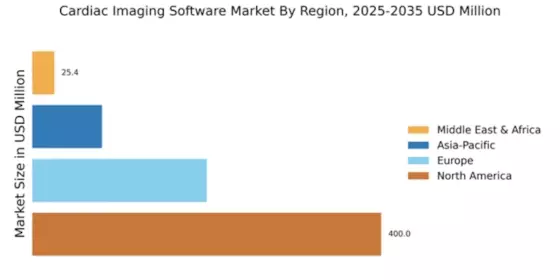
Global Cardiac Imaging Software Market Size was valued at USD 705.38 Million in 2024 & the market is projected to grow from USD 765.48 Million in 2025 to USD 1,733.97 Million by 2035, registering a CAGR of 8.52% during the forecast period 2025–2035. North America led the market with over 56.71% share, generating around USD 400 Million in revenue. The increasing global burden of cardiovascular diseases is a major driver of the Cardiac Imaging Software Market. Healthcare providers are adopting advanced imaging software to improve diagnostic accuracy, accelerate clinical decision-making, and enhance patient management, supporting broader utilization of cardiac imaging technologies across healthcare systems. Data Backup: According to the WHO, cardiovascular diseases cause approximately 17.9 million deaths annually, accounting for nearly 32% of all global deaths, highlighting the growing need for advanced cardiac imaging and diagnostic solutions worldwide.
Key Market Trends & Highlights
The Cardiac Imaging Software Market is poised for substantial growth driven by technological advancements and increasing healthcare demands.
North America led the market with 43.74% revenue share in 2024, supported by advanced healthcare infrastructure and innovation.
Europe accounted for 28.35% of global revenue in 2024, making it the second-largest regional market for cardiac imaging software.
Echocardiography accounted for an estimated 46.2% market share in 2024, supported by widespread clinical adoption and diagnostic efficiency.
Cloud-based deployment represented approximately 63.5% of revenue in 2024, driven by scalable infrastructure and remote imaging accessibility.
Hospitals captured an estimated 58.7% market share in 2024, reflecting strong demand for advanced cardiac diagnostic workflows.
3D Imaging held approximately 42.8% market share in 2024, benefiting from enhanced visualization and diagnostic precision capabilities.
Market Size & Forecast
2024 Market Size
705.38 (USD Million)
2035 Market Size
1733.97 (USD Million)
CAGR (2025 - 2035)
8.52%
Major Players
Companies such as GE Healthcare (US), Siemens Healthineers (DE), Philips Healthcare (NL), Canon Medical Systems (JP), Agfa HealthCare (BE), Medtronic (US), Fujifilm (JP), Lantheus Medical Imaging (US), Esaote (IT) are some of the major participants in the market.
Our Impact
Enabled $4.3B Revenue Impact for Fortune 500 and Leading Multinationals
Partnering with 2000+ Global Organizations Each Year
30K+ Citations by Top-Tier Firms in the Industry
Cardiac Imaging Software Market Trends
The Cardiac Imaging Software Market is currently experiencing a transformative phase, driven by advancements in technology and an increasing emphasis on early diagnosis and treatment of cardiovascular diseases. The integration of artificial intelligence and machine learning into imaging software is enhancing the accuracy and efficiency of cardiac assessments. This evolution not only improves patient outcomes but also streamlines workflows for healthcare professionals. Furthermore, the growing prevalence of heart-related ailments is prompting healthcare providers to adopt innovative imaging solutions that facilitate better decision-making and personalized treatment plans.
In addition, the Cardiac Imaging Software Market is witnessing a shift towards cloud-based solutions, which offer enhanced accessibility and collaboration among medical teams. This trend is likely to foster improved data sharing and storage capabilities, ultimately leading to more comprehensive patient care. As healthcare systems continue to evolve, the demand for sophisticated imaging software that can integrate seamlessly with existing technologies is expected to rise. Overall, the market appears poised for substantial growth, driven by technological advancements and an increasing focus on patient-centered care.
Integration of Artificial Intelligence
The incorporation of artificial intelligence into cardiac imaging software is revolutionizing diagnostic processes. AI algorithms enhance image analysis, enabling quicker and more accurate interpretations. This trend is likely to improve clinical outcomes and reduce the burden on radiologists.
GE Healthcare continues to strengthen AI-driven cardiac imaging through innovations such as CardIQ Suite and ViewPoint EchoPilot, which automate image analysis and reporting workflows. Strategic collaborations supporting AI integration have enhanced diagnostic efficiency, while newly CE-marked cardiology solutions improve workflow standardization and clinical confidence, accelerating adoption of AI-enabled cardiac imaging platforms globally.
Shift to Cloud-Based Solutions
There is a noticeable movement towards cloud-based cardiac imaging solutions, which facilitate remote access and collaboration among healthcare professionals. This transition may enhance data management and sharing, ultimately leading to improved patient care.
Siemens Healthineers has expanded its digital imaging portfolio through acquisitions, partnerships, and cloud-enabled platforms that support enterprise-wide imaging access. Regulatory clearances for AI-powered imaging software, including automated CT analysis solutions, strengthen remote collaboration and data-sharing capabilities, enabling healthcare providers to improve operational efficiency and patient management across distributed care networks.
Focus on Personalized Medicine
The Cardiac Imaging Software Market is increasingly aligning with the principles of personalized medicine. Tailored imaging solutions that cater to individual patient needs are becoming more prevalent, suggesting a shift towards more customized treatment approaches.
Philips Healthcare is advancing personalized cardiac care through AI-enabled cardiovascular imaging platforms and FDA-cleared diagnostic applications. Innovations including automated cardiac quantification and integrated cardiovascular workspaces support individualized treatment planning, while regulatory-approved technologies enhance diagnostic precision, enabling clinicians to deliver more patient-specific cardiac assessments and therapeutic strategies.
Cardiac Imaging Software Market Drivers
Growing Geriatric Population
The Global Cardiac Imaging Software Market Industry is also influenced by the growing geriatric population, which is more susceptible to cardiovascular diseases. As individuals age, the risk of heart-related ailments increases, leading to a higher demand for effective diagnostic tools. The elderly population often requires specialized imaging techniques to accurately assess cardiac health. Consequently, healthcare providers are investing in advanced cardiac imaging software to cater to this demographic. This trend is expected to drive market growth, as the geriatric population is projected to continue expanding, further emphasizing the need for innovative imaging solutions.
According to the World Bank, the global population aged 65 years and above exceeded 800 million people, representing more than 10% of the world's population. The expanding elderly demographic significantly increases demand for advanced cardiac diagnostic technologies, supporting sustained adoption of cardiac imaging software solutions across healthcare systems.
Increased Healthcare Expenditure
The Global Cardiac Imaging Software Market Industry benefits from increased healthcare expenditure across various regions. Governments and private sectors are allocating more resources to healthcare, particularly in diagnostics and imaging technologies. This financial commitment enables healthcare facilities to acquire advanced cardiac imaging software, thereby improving diagnostic capabilities. Enhanced funding is likely to facilitate research and development in imaging technologies, leading to the introduction of more sophisticated solutions. As healthcare expenditure continues to rise, the market is expected to experience robust growth, aligning with the projected CAGR of 8.47% from 2025 to 2035.
According to PubMed-published healthcare expenditure analyses, global health spending surpassed USD 9 trillion, accounting for approximately 10% of global GDP. Rising investments in healthcare infrastructure, diagnostics, and digital imaging technologies are creating favorable conditions for wider adoption of advanced cardiac imaging software solutions.
Regulatory Support and Initiatives
The Global Cardiac Imaging Software Market Industry is positively impacted by regulatory support and initiatives aimed at improving cardiac care. Governments and health organizations are implementing policies that promote the adoption of advanced imaging technologies. These initiatives often include funding for research, development, and training programs for healthcare professionals. By fostering an environment conducive to innovation, regulatory bodies are encouraging the integration of advanced cardiac imaging software into clinical practice. This support is likely to enhance the market's growth trajectory, as healthcare providers increasingly adopt these technologies to comply with evolving standards.
According to IHME, healthcare-focused investments and policy initiatives have contributed to substantial improvements in cardiovascular disease management globally. Increasing governmental support for diagnostic innovation and healthcare modernization continues to strengthen adoption pathways for advanced cardiac imaging software, enabling healthcare providers to improve clinical outcomes and diagnostic efficiency.
Rising Prevalence of Cardiovascular Diseases
The Global Cardiac Imaging Software Market Industry is significantly driven by the rising prevalence of cardiovascular diseases worldwide. According to health statistics, cardiovascular diseases remain a leading cause of morbidity and mortality, necessitating advanced diagnostic tools for effective management. The increasing incidence of conditions such as heart attacks and strokes has led to a heightened demand for cardiac imaging solutions. As healthcare systems strive to enhance patient outcomes, the adoption of sophisticated imaging software is likely to accelerate. This trend is expected to contribute to the market's growth, with projections indicating a rise to 1.74 USD Billion by 2035.
According to IHME Global Burden of Disease estimates, cardiovascular diseases remain the leading cause of death worldwide, responsible for over 20 million deaths annually. The growing disease burden is driving healthcare providers to invest in sophisticated cardiac imaging software capable of supporting earlier detection and more accurate diagnosis.
Technological Advancements in Imaging Techniques
The Global Cardiac Imaging Software Market Industry is experiencing rapid growth due to continuous technological advancements in imaging techniques. Innovations such as 3D imaging, artificial intelligence integration, and enhanced visualization tools are revolutionizing cardiac diagnostics. These advancements not only improve the accuracy of diagnoses but also enhance the efficiency of imaging procedures. As a result, healthcare providers are increasingly adopting advanced cardiac imaging solutions, contributing to the market's expansion. The market is projected to reach 0.71 USD Billion in 2024, with a significant increase anticipated as these technologies become more prevalent in clinical settings.
According to PubMed research studies, AI-enabled cardiac imaging platforms have demonstrated substantial improvements in image interpretation efficiency and diagnostic accuracy. Continuous advancements in 3D imaging, AI-assisted analysis, and automated quantification technologies are accelerating the adoption of next-generation cardiac imaging software across clinical settings.
Market Segment Insights
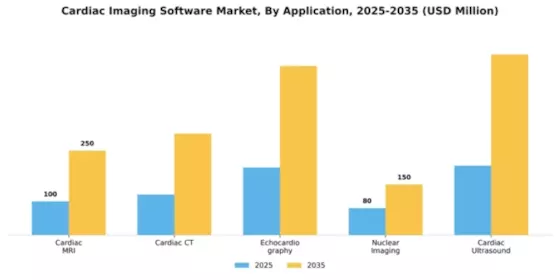
By Application: Echocardiography (Largest) vs. Cardiac MRI (Fastest-Growing)
The cardiac imaging software market demonstrates a diverse application landscape, with echocardiography accounting for the largest share of 46.2% among the various modalities. This dominance can be attributed to its widespread adoption and cost-effectiveness in diagnosing heart conditions. Following closely is cardiac MRI, which is gaining traction due to its non-invasive nature and ability to provide detailed cardiac images, positioning it as a vital tool in advanced diagnostics. Recent trends indicate significant growth potential in cardiac MRI as technologies advance and more healthcare facilities integrate these systems. The increasing prevalence of cardiovascular diseases globally is driving demand across all applications. Additionally, innovations in echocardiography software are contributing to heightened efficiency and accuracy, propelling both segments forward in today’s dynamic healthcare environment.
GE Healthcare's AI-enabled ViewPoint EchoPilot and CardIQ Suite solutions enhance echocardiography workflow automation and cardiac image analysis, supporting broader utilization of echocardiography as a primary cardiac diagnostic modality across hospitals and imaging centers.
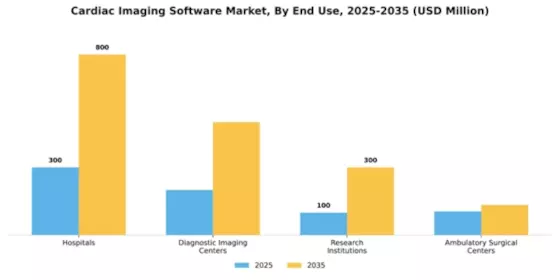
By End Use: Hospitals (Largest) vs. Diagnostic Imaging Centers (Fastest-Growing)
The Cardiac Imaging Software Market is primarily segmented into Hospitals, Diagnostic Imaging Centers, Research Institutions, and Ambulatory Surgical Centers. Among these, Hospitals hold the largest share of 58.7%, catering to a significant volume of cardiac patients requiring advanced imaging solutions. This extensive network of Hospitals often relies on sophisticated cardiac imaging software to enhance diagnostic accuracy and treatment outcomes, thus solidifying their dominant market position. Conversely, Diagnostic Imaging Centers are emerging rapidly due to the increasing demand for specialized imaging services that offer quick and efficient diagnostics, attributing to their fast-growing market presence.
Siemens Healthineers continues to support large hospital networks through advanced imaging and AI-enabled diagnostic platforms, helping hospitals manage growing cardiovascular patient volumes while improving workflow efficiency and diagnostic precision.
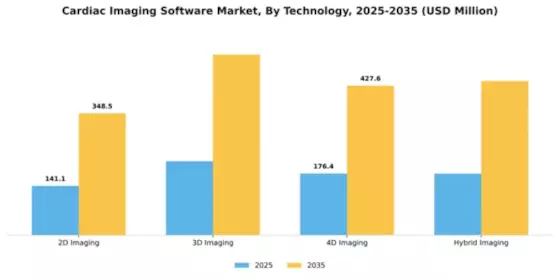
By Technology: 3D Imaging (Largest) vs. 4D Imaging (Fastest-Growing)
The technology segment of the Cardiac Imaging Software Market is characterized by a dynamic distribution of market share among its values. 3D Imaging retains its position as the largest segment owing to its advanced visualization capabilities and widespread adoption in clinical settings holding market share of 42.8%. Meanwhile, 2D Imaging still holds a notable share but faces growing competition from more sophisticated imaging technologies, as healthcare providers increasingly seek enhanced diagnostic accuracy and improved patient outcomes. Growth trends within this segment reflect a significant shift towards more advanced imaging techniques, particularly 4D Imaging, which is emerging as the fastest-growing area. This growth is fueled by technological advancements that allow for real-time imaging and increased functionality. Furthermore, the rising prevalence of cardiovascular diseases coupled with the demand for precise diagnostic tools are key drivers of the adoption of these innovative imaging solutions.
Technology: 3D Imaging (Dominant) vs. 4D Imaging (Emerging)
3D Imaging has established itself as the dominant technology in the Cardiac Imaging Software Market, praised for its detailed and accurate representations of cardiac anatomy. Its ability to provide comprehensive visualizations of cardiac structures is critical for detailed assessments and surgical planning. On the contrary, 4D Imaging is rapidly emerging, offering real-time imaging capabilities that allow healthcare professionals to observe the physiological functions of the heart as they occur. This advancement enhances diagnostic accuracy and improves patient monitoring during interventions. As healthcare facilities look to adopt the latest technologies and enhance patient care, 4D Imaging is expected to gain significant traction, positioning itself as a pivotal component of future cardiac imaging strategies.
By Deployment: Cloud-Based (Largest) vs. On-Premise (Fastest-Growing)
In the Cardiac Imaging Software Market, the distribution of deployment methods shows a significant preference for Cloud-Based solutions, as they provide scalability, flexibility, and cost-efficiency that many healthcare providers desire. On-Premise systems, while still relevant, are losing ground due to the increasing shift towards remote access and integration with telemedicine solutions. As technologies evolve, organizations are increasingly looking to minimize their on-site infrastructure, favoring cloud solutions for their operational advantages.
Deployment: Cloud-Based (Dominant) vs. On-Premise (Emerging)
Cloud-Based cardiac imaging software solutions dominate the market primarily due to their ability to support remote diagnostics and collaborative care. These solutions offer easy integration with existing hospital systems and enable healthcare providers to access imaging data from anywhere. On the other hand, On-Premise solutions, while traditionally favored for their perceived security and control, are now viewed as restrictive in terms of scalability and adaptability. This growing limitation positions them as an emerging option, appealing primarily to organizations with fixed infrastructure preferences but slowly eclipsed by the dynamic capabilities of cloud-based platforms.
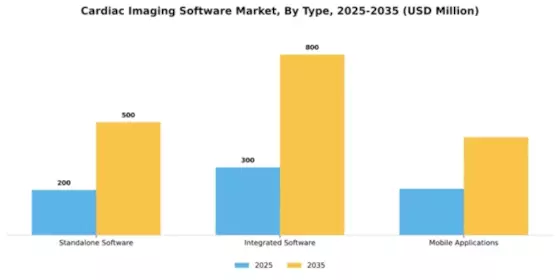
By Type: Standalone Software (Largest) vs. Integrated Software (Fastest-Growing)
The cardiac imaging software market is primarily composed of three main segments: Standalone Software, Integrated Software, and Mobile Applications. Among these, Standalone Software holds the largest market share of 54.3%, providing substantial functionalities tailored for cardiac imaging without relying on other systems. Integrated Software follows, which combines cardiac imaging features with existing hospital information systems, streamlining workflow and enhancing efficiency. Mobile Applications, while smaller in share, are gaining traction as they offer on-the-go access for healthcare professionals. The growth of the cardiac imaging software market is significantly driven by advancements in technology and the increasing adoption of integrated solutions. Standalone Software remains the reigning choice for institutions seeking specific functionalities, yet Integrated Software is rapidly becoming the preferred option for hospitals and clinics aiming for connectivity and interoperability. Mobile Applications, catering to the trend of remote healthcare, are expected to show robust growth as they provide flexibility and accessibility to healthcare practitioners.
Standalone Software (Dominant) vs. Integrated Software (Emerging)
Standalone Software is dominant in the cardiac imaging software market due to its specialized functions that focus solely on cardiac imaging tasks. This software is preferred by facilities looking for dedicated solutions without dependency on additional systems. On the other hand, Integrated Software represents an emerging segment that is capturing attention with its ability to connect various systems within healthcare environments, leading to optimized workflows and reduced redundancy. The integration flexibility facilitates real-time data sharing among departments, thereby enhancing diagnostic accuracy and patient care. As healthcare shifts towards a more integrated approach, Integrated Software is poised for significant growth, appealing to medical institutions aiming for comprehensive care solutions.
Get more detailed insights about Cardiac Imaging Software MarketRequest Free Sample
Regional Insights
North America : Market Leader in Innovation
North America leads in the Cardiac Imaging Software Market Size, accounting for over 43.74% of the global revenue in 2024. The region's growth is driven by advanced healthcare infrastructure, increasing prevalence of cardiovascular diseases, and a strong focus on technological innovation. Regulatory support from agencies like the FDA further catalyzes market expansion, ensuring that cutting-edge solutions are rapidly adopted to improve patient outcomes.
According to CDC data, approximately 805,000 Americans experience a heart attack each year, creating sustained demand for advanced cardiac diagnostic technologies and imaging software solutions capable of supporting timely and accurate cardiovascular assessment.
The competitive landscape in North America is robust, featuring key players such as GE Healthcare, Siemens Healthineers, and Philips Healthcare. These companies are at the forefront of developing innovative cardiac imaging solutions, leveraging advanced technologies like AI and machine learning. The presence of a well-established healthcare system and significant investment in R&D positions the region for sustained growth in the coming years.
GE Healthcare expanded its cardiology portfolio with newly CE-marked solutions including CardIQ Suite and ViewPoint EchoPilot, strengthening AI-enabled cardiac imaging capabilities and supporting improved workflow efficiency across North American healthcare facilities.
Europe : Emerging Market with Potential
Europe Cardiac Imaging Software Market size was valued at USD 200 Million in 2024, making it the second-largest regional market with a 28.35% share. The region benefits from a high prevalence of cardiovascular diseases and a strong emphasis on preventive healthcare. Regulatory frameworks, such as the EU Medical Device Regulation, are enhancing the safety and efficacy of cardiac imaging technologies, driving demand for innovative solutions that improve diagnostic accuracy and patient care.
The European regulatory environment, supported by EMA and broader EU medical technology frameworks, continues to facilitate adoption of innovative cardiac imaging technologies. Strong regulatory emphasis on safety, performance, and clinical effectiveness encourages healthcare providers to deploy advanced imaging software, supporting improved cardiovascular diagnosis and patient outcomes across European healthcare systems.
Leading countries in this region include Germany, France, and the UK, where major players like Siemens Healthineers and Philips Healthcare are actively investing in new technologies. The competitive landscape is characterized by collaborations and partnerships aimed at enhancing product offerings. As healthcare systems evolve, the demand for advanced cardiac imaging solutions is expected to rise significantly, positioning Europe as a key player in the global market.
Asia-Pacific : Rapidly Growing Market
The Asia-Pacific region is witnessing rapid growth in the Cardiac Imaging Software Market, with a market size of 80.0M. Factors such as increasing healthcare expenditure, rising awareness of cardiovascular diseases, and advancements in imaging technologies are driving this growth. Governments are also investing in healthcare infrastructure, which is expected to further boost the adoption of cardiac imaging solutions across the region.
Countries like Japan, China, and India are leading the charge, with significant contributions from key players such as Canon Medical Systems and Fujifilm. The competitive landscape is evolving, with local companies emerging alongside established global players. As the region continues to modernize its healthcare systems, the demand for innovative cardiac imaging solutions is anticipated to grow, making Asia-Pacific a vital market for future investments.
Middle East and Africa : Emerging Market Opportunities
The Middle East and Africa region, with a market size of 25.38M, presents emerging opportunities in the Cardiac Imaging Software Market. The growth is driven by increasing healthcare investments, rising prevalence of cardiovascular diseases, and a growing focus on improving healthcare infrastructure. Regulatory bodies are also beginning to establish frameworks that support the adoption of advanced medical technologies, which is crucial for market expansion. Leading countries in this region include South Africa and the UAE, where healthcare systems are evolving rapidly.
Key players like Agfa HealthCare and Esaote are making strides in this market, focusing on tailored solutions that meet local needs. As healthcare access improves and awareness of cardiac health increases, the demand for advanced imaging solutions is expected to rise significantly, positioning the region for future growth.
Key Players and Competitive Insights
The Cardiac Imaging Software Market is currently characterized by a dynamic competitive landscape, driven by technological advancements and an increasing demand for precise diagnostic tools. Major players such as GE Healthcare (US), Siemens Healthineers (DE), and Philips Healthcare (NL) are at the forefront, each adopting distinct strategies to enhance their market presence. GE Healthcare (US) focuses on innovation through the development of advanced imaging algorithms, while Siemens Healthineers (DE) emphasizes partnerships with healthcare providers to integrate their software solutions into existing systems. Philips Healthcare (NL) is actively pursuing digital transformation initiatives, aiming to streamline workflows and improve patient outcomes.Collectively, these strategies contribute to a competitive environment that is increasingly centered around technological innovation and collaborative efforts.In terms of business tactics, companies are localizing manufacturing and optimizing supply chains to enhance operational efficiency. The market appears moderately fragmented, with several key players exerting influence over various segments. This fragmentation allows for niche players to emerge, yet the collective strength of major companies shapes the overall market dynamics, fostering a competitive atmosphere that encourages continuous improvement and innovation.In November GE Healthcare (US) announced the launch of its latest cardiac imaging software, which incorporates AI-driven analytics to enhance diagnostic accuracy. This strategic move is significant as it positions GE Healthcare at the cutting edge of technology, potentially increasing its market share by appealing to healthcare providers seeking advanced solutions. The integration of AI not only improves diagnostic capabilities but also streamlines the workflow for clinicians, thereby enhancing overall patient care.In October Siemens Healthineers (DE) entered into a strategic partnership with a leading telehealth provider to expand its cardiac imaging software's reach. This collaboration is noteworthy as it allows Siemens to leverage telehealth trends, thereby enhancing accessibility to cardiac imaging services. By integrating their software with telehealth platforms, Siemens Healthineers is likely to capture a broader audience, particularly in remote areas where access to specialized care is limited.In September Philips Healthcare (NL) unveiled a new cloud-based platform designed to facilitate remote monitoring and analysis of cardiac patients. This initiative reflects a growing trend towards digital health solutions, enabling healthcare providers to monitor patients in real-time. The strategic importance of this development lies in its potential to improve patient outcomes through timely interventions, thereby reinforcing Philips' commitment to innovation in cardiac care.As of December the competitive trends in the Cardiac Imaging Software Market are increasingly defined by digitalization, sustainability, and the integration of AI technologies. Strategic alliances are becoming more prevalent, as companies recognize the value of collaboration in enhancing their offerings. Looking ahead, competitive differentiation is likely to evolve from traditional price-based competition to a focus on innovation, technological advancements, and supply chain reliability. This shift underscores the importance of not only delivering high-quality products but also ensuring that they are supported by robust and efficient operational frameworks.
Key Companies in the Cardiac Imaging Software Market include
Industry Developments
February 2022 Neudesic, LLC (US) acquired by IBM (US) which was aimed advancement in hybrid cloud and AI strategy and further expansion of IBM’s portfolio.
March 2021 Symphony Innovation, LLC (US) acquired TeraRecon, one of the primary healthcare imaging AI technology companies. By joining hands with Symphony AI Group has ongoing its new portfolio of healthcare AI solutions aimed at medical imaging.
June 2021 Circle Cardiovascular Imaging Inc. (Canada) join hands with DiA Imaging Analysis (Israel). Through this partnership, clients will receive complete all-in-one AI-based cardiovascular imaging solutions, and there will be new potential for multi-modality imaging solutions for doctors, patients, and hospitals all over the world. Circle’s Cardiac imagining portfolio will be strengthened by DiA’s range of cutting-edge AI-based cardiac ultrasound products, Vivo Toolbox, which has received FDA clearance and CE certification.
Future Outlook
Cardiac Imaging Software Market Future Outlook
The Cardiac Imaging Software Market is projected to grow at an 8.52% CAGR from 2025 to 2035, driven by technological advancements, increasing cardiovascular diseases, and rising healthcare expenditure.
New opportunities lie in:
Integration of AI-driven analytics for enhanced diagnostic accuracy. Development of cloud-based platforms for remote imaging access. Partnerships with telehealth providers to expand service reach.
By 2035, the market is expected to be robust, driven by innovation and strategic partnerships.
Market Segmentation
Cardiac Imaging Software Market Type Outlook
Standalone Software
Integrated Software
Mobile Applications
Cardiac Imaging Software Market End Use Outlook
Hospitals
Diagnostic Imaging Centers
Research Institutions
Cardiology Clinics
Cardiac Imaging Software Market Deployment Outlook
On-Premise
Cloud-Based
Web-Based
Cardiac Imaging Software Market Technology Outlook
2D Imaging
3D Imaging
4D Imaging
Hybrid Imaging
Cardiac Imaging Software Market Application Outlook
Cardiac MRI
Cardiac CT
Echocardiography
Nuclear Imaging
Cardiac Ultrasound
Report Scope
MARKET SIZE 2024
705.38(USD Million)
MARKET SIZE 2025
765.48(USD Million)
MARKET SIZE 2035
1733.97(USD Million)
COMPOUND ANNUAL GROWTH RATE (CAGR)
8.52% (2025 - 2035)
REPORT COVERAGE
Revenue Forecast, Competitive Landscape, Growth Factors, and Trends
BASE YEAR
2024
Market Forecast Period
2025 - 2035
Historical Data
2019 - 2024
Market Forecast Units
USD Million
Key Companies Profiled
GE Healthcare (US), Siemens Healthineers (DE), Philips Healthcare (NL), Canon Medical Systems (JP), Agfa HealthCare (BE), Medtronic (US), Fujifilm (JP), Lantheus Medical Imaging (US), Esaote (IT)
Segments Covered
Application, End Use, Technology, Deployment, Type
Key Market Opportunities
Integration of artificial intelligence enhances diagnostic accuracy in the Cardiac Imaging Software Market.
Key Market Dynamics
Technological advancements and regulatory changes drive innovation and competition in the cardiac imaging software market.
What is the current valuation of the Cardiac Imaging Software Market?
The Cardiac Imaging Software Market was valued at 705.38 USD Million in 2024.
What is the projected market size for the Cardiac Imaging Software Market by 2035?
The market is projected to reach 1733.97 USD Million by 2035.
What is the expected CAGR for the Cardiac Imaging Software Market during the forecast period?
The expected CAGR for the market from 2025 to 2035 is 8.52%.
Which companies are considered key players in the Cardiac Imaging Software Market?
Key players include Siemens Healthineers, GE Healthcare, Philips Healthcare, and Canon Medical Systems.
What are the primary applications of Cardiac Imaging Software?
Primary applications include Cardiac MRI, Cardiac CT, Echocardiography, Nuclear Imaging, and Cardiac Ultrasound.
How does the market segment by end use?
The market segments by end use include Hospitals, Diagnostic Imaging Centers, Research Institutions, and Ambulatory Surgical Centers.
What technologies are utilized in Cardiac Imaging Software?
Technologies include 2D Imaging, 3D Imaging, 4D Imaging, and Hybrid Imaging.
What are the deployment models for Cardiac Imaging Software?
Deployment models include On-Premise, Cloud-Based, and Web-Based solutions.
What types of software are available in the Cardiac Imaging Software Market?
Types of software include Standalone Software, Integrated Software, and Mobile Applications.
What is the valuation range for Echocardiography in the market?
Echocardiography is valued between 200.0 and 500.0 USD Million.
Author
Author
Vikita Thakur
Senior Research Analyst
She holds an experience of about 5+ years in market research and business consulting projects for sectors such as life sciences, medical devices, and healthcare IT. She possesses a robust background in data analysis, market estimation, competitive intelligence, pipeline analysis market trend identification, and consumer behavior insights. Her expertise lies in technical Sales support, client interaction and project management, designing and implementing market research studies, conducting competitive analysis, and synthesizing complex data into actionable recommendations that drive business growth.
read more
Co-Author
Rahul Gotadki
Research Manager
He holds an experience of about 9+ years in Market Research and Business Consulting, working under the spectrum of Life Sciences and Healthcare domains. Rahul conceptualizes and implements a scalable business strategy and provides strategic leadership to the clients. His expertise lies in market estimation, competitive intelligence, pipeline analysis, customer assessment, etc.
The secondary research process involved comprehensive analysis of regulatory databases, peer-reviewed medical journals, clinical publications, and authoritative health organizations. Key sources included the US Food & Drug Administration (FDA), European Medicines Agency (EMA), International Organization for Standardization (ISO), National Institutes of Health (NIH), National Center for Biotechnology Information (NCBI/PubMed), Centers for Medicare & Medicaid Services (CMS), Centers for Disease Control and Prevention (CDC) National Center for Health Statistics, World Health Organization (WHO) Global Health Observatory, European Society of Cardiology (ESC), American College of Cardiology (ACC), American Heart Association (AHA), Society for Cardiovascular Magnetic Resonance (SCMR), American Society of Echocardiography (ASE), Radiological Society of North America (RSNA), EU Eurostat Health Database, OECD Health Statistics, and national health ministry reports from key markets (CMS.gov, HHS.gov, NHS England, Japan Ministry of Health). These sources were used to collect cardiovascular disease prevalence statistics, regulatory approval data for cardiac imaging devices, clinical safety and efficacy studies, hospital IT adoption trends, and market landscape analysis for computed tomography, magnetic resonance imaging, ultrasound imaging, X-ray imaging, SPECT, OCT, and combined modality imaging technologies.
Primary Research
In order to gather both qualitative and quantitative insights, supply-side and demand-side stakeholders were interviewed during the primary research process. Supply-side sources included CEOs, VPs of Product Development, regulatory affairs heads, and commercial directors from cardiac imaging software developers, medical device manufacturers, and healthcare IT solution providers. Demand-side sources comprised chief of cardiology departments, director of diagnostic imaging, hospital CIOs/CMIOs, procurement leads from hospitals and health systems, medical directors from diagnostic imaging centers, and cardiology clinic administrators. Primary research validated market segmentation across imaging modalities (CT, MRI, ultrasound, X-ray, SPECT, OCT), confirmed AI integration and cloud deployment timelines, and gathered insights on clinical adoption patterns, pricing strategies, and reimbursement dynamics for diagnostic imaging versus image-guided treatment applications.
Primary Respondent Breakdown:
By Designation: C-level Primaries (32%), Director Level (30%), Others (38%)
By Region: North America (38%), Europe (25%), Asia-Pacific (28%), Rest of World (9%)
Market Size Estimation
Global market valuation was derived through revenue mapping and procedure volume analysis. The methodology included:
Identification of 40+ key manufacturers across North America, Europe, Asia-Pacific, and Latin America specializing in cardiac imaging software
Product mapping across imaging modalities including computed tomography, magnetic resonance imaging, ultrasound imaging, X-ray imaging, SPECT, OCT, and combined modalities
Analysis of reported and modeled annual revenues specific to cardiac imaging software portfolios
Coverage of manufacturers representing 75-80% of global market share in 2024
Extrapolation using bottom-up (imaging procedure volume × software licensing fees by country) and top-down (manufacturer revenue validation) approaches to derive segment-specific valuations for standalone software, integrated software, and mobile applications across hospital, diagnostic center, and research institution end-users
“This is really good guys. Excellent work on a tight deadline. I will continue to use you going forward and recommend you to others. Nice job”
Noah MalgeriCo-Founder
“Thanks. It’s been a pleasure working with you, please use me as reference with any other Intel employees.”
Joseph AguayoSales Operations & Pricing Manager
“Thanks for sending the report it gives us a good global view of the Betaïne market.”
Peter Groot koerkampAccount and Business Manager
“Thank you, this will be very helpful for OQS.”
La Terria DoddProgram Support Specialist
“We found the report very insightful! we found your research firm very helpful. I'm sending this email to secure our future business.”
Younghwan ChoiSenior Retail Manager
“I am very pleased with how market segments have been defined in a relevant way for my purposes (such as "Portable Freezers & refrigerators" and "last-mile").
In general the report is well structured. Thanks very much for your efforts.”
Mark IrwinManagement Consultant
“I have been reading the first document or the study, ,the Global HVAC and FP market report 2021 till 2026. Must say, good info! I have not gone in depth at all parts, but got a good indication of the data inside!”
Rob KooikerGroup Product Manager HVAC & Fire Protection GMA
“We got the report in time, we really thank you for your support in this process. I also thank to all of your team as they did a great job.”
Akif MorogluStrategy & Business Development Director
“The Automotive 48V ECU Components Procurement Intelligence Study” was a complex project, but the Market Research Future (MRFR) team handled it with quality, agility, and customer-centricity. They delivered all requested data on time and within the agreed scope. The team, including Shubhendra Anand and Rahul Gotadki, was always readily available to clarify questions and swiftly implement necessary adjustments, driving the project to a successful conclusion within a very demanding timeframe.
I would also like to specifically commend Akshay Agarwal for his responsiveness and support at every stage—from our initial inquiry on May 6th through to final delivery on June 18th. His dedication made the entire process seamless.”
Guilherme Gomes MartinsProduct Management Director