×
Request Free Sample ×

Kindly complete the form below to receive a free sample of this Report

* Please use a valid business email

Leading companies partner with us for data-driven Insights

clients tt-cursor
Hero Background

Cocoa Butter Alternatives Market

ID: MRFR/FnB/4351-CR
128 Pages
Snehal Singh
September 2022

Cocoa Butter Alternatives Market Research Report Information By Type (Cocoa Butter Equivalents, Cocoa Butter Replacers, and Cocoa Butter Substitutes), By Source (Shea, Sal, Kokum & Mango Kernel and Illipe & Palm Kernel Stearin), By Application (Bakery & Confectionery, Dairy & Frozen Desserts, Sweet & Savory Snacks, and Dips, Sauces, and Dressings), And By Region (North America, Europe, Asia-Pacific, And Rest Of The World) –Market Forecast Till 2035

Share:
Download PDF ×

We do not share your information with anyone. However, we may send you emails based on your report interest from time to time. You may contact us at any time to opt-out.

Cocoa Butter Alternatives Market Infographic
Purchase Options

Cocoa Butter Alternatives Market Summary

As per MRFR analysis, the Cocoa Butter Alternatives Market Size was estimated at 1344.23 USD Million in 2024. The Cocoa Butter Alternatives industry is projected to grow from 1437.14 in 2025 to 2803.91 by 2035, exhibiting a compound annual growth rate (CAGR) of 6.91 during the forecast period 2025 - 2035.

Key Market Trends & Highlights

The Cocoa Butter Alternatives Market is experiencing robust growth driven by evolving consumer preferences and sustainability initiatives.

  • The demand for plant-based ingredients continues to rise, particularly in North America, which remains the largest market for cocoa butter alternatives.
  • Sustainability and ethical sourcing practices are becoming increasingly important to consumers, influencing purchasing decisions across various segments.
  • Innovation in flavor and texture is driving growth in the food and beverages segment, which is currently the fastest-growing area within the market.
  • Rising health consciousness and consumer preference for ethical brands are key drivers propelling the market forward, especially in the cosmetics segment.

Market Size & Forecast

2024 Market Size 1344.23 (USD Million)
2035 Market Size 2803.91 (USD Million)
CAGR (2025 - 2035) 6.91%

Major Players

Cargill (US), BASF (DE), Kerry Group (IE), Olam International (SG), Wilmar International (SG), Austrian Chocolate (AT), Cocoa Supply (US), Sambavanam (IN), Sambavanam (IN)

Cocoa Butter Alternatives Market Trends

The Cocoa Butter Alternatives Market is currently experiencing a notable transformation, driven by evolving consumer preferences and the increasing demand for plant-based products. As health consciousness rises, consumers are gravitating towards alternatives that offer similar sensory and functional properties to traditional cocoa butter. This shift is further fueled by the growing awareness of sustainability and ethical sourcing, prompting manufacturers to explore innovative formulations that align with these values. The market landscape is characterized by a diverse array of ingredients, including shea butter, mango butter, and various vegetable oils, which are being utilized to create products that cater to both culinary and cosmetic applications. In addition, the Cocoa Butter Alternatives Market is witnessing a surge in product development aimed at enhancing flavor profiles and texture, appealing to a broader audience. Companies are investing in research and development to refine their offerings, ensuring that they meet the expectations of quality and performance. This dynamic environment suggests that the market will continue to evolve, with potential for new entrants and established players alike to capitalize on emerging trends. As consumer preferences shift towards healthier and more sustainable options, the Cocoa Butter Alternatives Market is poised for growth, reflecting a broader movement towards conscious consumption in the food and beauty sectors.

Rising Demand for Plant-Based Ingredients

The Cocoa Butter Alternatives Market is seeing an increase in the preference for plant-based ingredients. Consumers are becoming more health-conscious and are seeking alternatives that provide similar benefits to cocoa butter without compromising on quality. This trend is likely to drive innovation in product formulations.

Focus on Sustainability and Ethical Sourcing

Sustainability is becoming a central theme in the Cocoa Butter Alternatives Market. Manufacturers are increasingly prioritizing ethical sourcing practices and environmentally friendly production methods. This focus not only appeals to consumers but also aligns with global efforts to promote sustainable agriculture.

Innovation in Flavor and Texture

The market is characterized by ongoing innovation aimed at enhancing flavor and texture in cocoa butter alternatives. Companies are investing in research to develop products that not only mimic the sensory attributes of cocoa butter but also offer unique taste experiences, thereby attracting a wider consumer base.

Cocoa Butter Alternatives Market Drivers

Market Growth Projections

The Global Cocoa Butter Alternatives Industry is projected to experience substantial growth over the next decade. With a current market valuation of 1.34 USD Billion in 2024, the industry is expected to reach 2.8 USD Billion by 2035, reflecting a compound annual growth rate (CAGR) of 6.93% from 2025 to 2035. This growth trajectory suggests a robust demand for cocoa butter alternatives across various sectors, including food, cosmetics, and personal care. The increasing consumer awareness regarding health, sustainability, and ethical sourcing is likely to drive this growth, positioning the industry favorably for future opportunities.

Health and Wellness Trends

The Global Cocoa Butter Alternatives Industry is significantly impacted by the rising health and wellness trends among consumers. With a growing awareness of the benefits of healthier ingredients, many consumers are opting for alternatives that offer lower saturated fat content and higher nutritional value. Cocoa butter alternatives, such as shea butter and mango butter, are perceived as healthier options, which enhances their appeal in the food and cosmetic sectors. This shift is likely to contribute to the market's growth, as consumers increasingly seek products that support their health goals. The industry's evolution aligns with the broader movement towards clean label products.

Rising Demand for Vegan Products

The Global Cocoa Butter Alternatives Industry experiences a notable surge in demand for vegan and plant-based products. As consumers increasingly prioritize health and sustainability, the shift towards veganism influences the market dynamics. In 2024, the market is valued at 1.34 USD Billion, reflecting the growing preference for alternatives to traditional cocoa butter. This trend is further supported by the rise of ethical consumerism, where individuals seek products that align with their values. The increasing availability of plant-based ingredients in food and cosmetics sectors propels the growth of cocoa butter alternatives, indicating a robust trajectory for the industry.

Innovation in Product Development

Innovation plays a crucial role in the Global Cocoa Butter Alternatives Industry, as manufacturers continuously explore new formulations and applications. The development of innovative cocoa butter alternatives that mimic the sensory properties of cocoa butter while offering distinct advantages is gaining traction. For instance, advancements in processing techniques enhance the texture and flavor profiles of these alternatives, making them more appealing to consumers. This focus on innovation is expected to drive market growth, with projections indicating a market value of 2.8 USD Billion by 2035. The ability to meet diverse consumer preferences through innovative products positions the industry favorably for future expansion.

Sustainability and Ethical Sourcing

Sustainability and ethical sourcing are increasingly becoming pivotal factors in the Global Cocoa Butter Alternatives Industry. As consumers demand transparency in sourcing practices, companies are compelled to adopt sustainable methods in their production processes. This shift not only addresses environmental concerns but also enhances brand loyalty among consumers who prioritize ethical consumption. The industry's commitment to sustainability is reflected in the growing number of certifications and initiatives aimed at promoting responsible sourcing. This trend is likely to bolster the market's growth, as consumers gravitate towards products that align with their values, thereby influencing purchasing decisions.

Expanding Applications in Cosmetics and Personal Care

The Global Cocoa Butter Alternatives Industry is witnessing an expansion in applications across the cosmetics and personal care sectors. As consumers increasingly seek natural and nourishing ingredients in their beauty products, cocoa butter alternatives are gaining popularity for their moisturizing and emollient properties. Ingredients like shea butter and coconut oil are being incorporated into a wide range of products, from lotions to lip balms. This trend is expected to contribute to the market's growth, as the demand for clean and effective beauty solutions continues to rise. The industry's adaptability to consumer preferences positions it well for sustained growth.

Market Segment Insights

By Application: Cosmetics (Largest) vs. Food and Beverages (Fastest-Growing)

In the Cocoa Butter Alternatives Market, the application segment is primarily dominated by cosmetics, which holds the largest market share due to the increasing demand for natural and organic ingredients in skin and hair care products. This trend is driven by consumers' awareness of the benefits of using cocoa butter alternatives, such as plant-based options that offer moisturizing properties without harmful additives. Other applications like food and beverages are witnessing significant growth, attributing to the rise in health-conscious consumers preferring vegan and clean-label products. The enhancement of food products with these alternatives adds a unique flavor and texture appeal in the culinary sector. Growth trends in the Cocoa Butter Alternatives Market indicate that the food and beverages sector is rapidly expanding, propelled by the increasing preference for plant-based diets and healthy eating habits. The pharmaceuticals and nutraceuticals segments are also emerging stronger as the demand for health supplements and functional foods rises. This transition towards natural ingredients reflects the broader global trend of sustainability and clean labeling, compelling manufacturers to innovate in their product lines while adhering to consumer expectations for quality and transparency.

Cosmetics: Largest vs. Food and Beverages: Emerging

Within the Cocoa Butter Alternatives Market, the cosmetics segment stands out as the dominant application, characterized by its established infrastructure and extensive product range including lotions, creams, and balms that benefit from cocoa butter alternatives' emollient properties. The increasing consumer shift towards clean beauty products supports the expansive growth in this segment, as brands increasingly incorporate natural ingredients to cater to discerning customers. On the other hand, the food and beverages segment is emerging with robust growth potential, driven by trends in clean eating, plant-based diets, and innovative food products that utilize cocoa derivatives. This segment appeals to health-conscious consumers seeking indulgent yet guilt-free options, enabling manufacturers to explore creative culinary applications.

By Source: Plant-based (Largest) vs. Synthetic (Fastest-Growing)

In the Cocoa Butter Alternatives Market, the 'Source' segment is primarily comprised of Plant-based, Synthetic, and Animal-based alternatives. Among these, Plant-based cocoa butter alternatives occupy the largest market share, driven by increasing consumer demand for natural and sustainable products. This trend is particularly prevalent among health-conscious consumers who prefer products labeled as organic or plant-derived. Synthetic alternatives, while smaller in percentage, are gaining traction due to advancements in technology, making them a competitive option in terms of cost and availability. The growth trends in the 'Source' segment are heavily influenced by changing consumer preferences towards healthier and more sustainable food options. Plant-based alternatives are enjoying a surge in popularity, aligning with the global shift towards plant-focused diets. On the other hand, Synthetic alternatives are emerging as the fastest-growing sub-segment, propelled by innovations that improve their textures and flavors, making them increasingly appealing to manufacturers and consumers alike. Overall, this segment is poised for significant growth as both trends continue to evolve in response to market demands.

Plant-based (Dominant) vs. Synthetic (Emerging)

In the Cocoa Butter Alternatives Market, Plant-based alternatives hold the dominant position, driven by their alignment with health-conscious consumer preferences and sustainable practices. These types are often derived from sources such as shea butter and mango butter, which are not only perceived as healthier but also cater to a growing demand for clean-label ingredients. As consumers become more informed about the benefits of plant-based nutrition, products utilizing these alternatives are expected to lead the market. In contrast, Synthetic alternatives are emerging, primarily crafted through innovative formulations that replicate the sensory and functional characteristics of cocoa butter. Although they currently command a smaller market share, their rapid development indicates a strong potential for growth, particularly as food technology continues to evolve and address concerns regarding texture and flavor.

By Form: Solid (Largest) vs. Liquid (Fastest-Growing)

In the Cocoa Butter Alternatives Market, the segment of solid forms commands the largest share. This is primarily due to its versatility and wide range of applications across confectionery, bakery, and personal care products. Solid cocoa butter alternatives are overwhelmingly preferred for their ease of handling and stability in various formulations. Meanwhile, liquid forms have emerged as a notable contender, experiencing rapid growth as manufacturers seek ingredients that offer improved functionality and ease of incorporation into recipes and formulations.

Solid (Dominant) vs. Liquid (Emerging)

Solid cocoa butter alternatives are characterized by their robust texture and ability to provide a desirable mouthfeel in confections and baked goods. Their dominance in the market is driven by their favorable melting points and the convenience they offer to manufacturers in production processes. In contrast, liquid alternatives are gaining traction as an emerging type, particularly in the health-conscious segment of the market. Their fluid characteristics allow for versatile use in beverages and sauces, catering to the increasing demand for innovative and convenient products. Both forms are vital to meeting consumer preferences and market trends.

By End Use: Skincare Products (Largest) vs. Chocolate Products (Fastest-Growing)

The Cocoa Butter Alternatives Market has seen significant differentiation in market share among its key end-use segments. Skincare products have emerged as the largest segment, capturing a substantial portion of the market due to the increasing consumer preference for natural and plant-based ingredients in beauty applications. Chocolate products follow as a strong competitor, driven by the rising demand for premium and artisanal chocolate that incorporates sustainable and health-conscious alternatives to traditional cocoa butter. In terms of growth trends, chocolate products represent the fastest-growing segment, supported by shifting consumer behaviors towards gourmet and functional chocolate options. The skincare segment holds steady due to consistent demand and a long-standing reputation for quality and effectiveness. Key drivers influencing growth include the expanding wellness movement, increasing awareness of ethical sourcing, and the rise in clean beauty trends that emphasize the need for higher-quality, innovative ingredients in end products.

Skincare Products: Dominant vs. Chocolate Products: Emerging

The skincare products segment is characterized by its strong foothold in the Cocoa Butter Alternatives Market, primarily due to the rising consumer inclination towards products that promise both efficacy and sustainability. This segment is largely defined by its commitment to using virtuous ingredients that align with environmental and health standards. On the other hand, chocolate products, while still in an emerging phase, are quickly gaining traction as manufacturers experiment with cocoa butter alternatives to create indulgent yet healthier options. The versatility and adaptability of chocolate products illustrate the shift in consumer preferences towards inclusivity and diversity in flavor profiles and health benefits, making this segment an exciting area for future development.

By Distribution Channel: Online Retail (Largest) vs. Supermarkets (Fastest-Growing)

In the Cocoa Butter Alternatives Market, the distribution channels are diverse, with Online Retail commanding the largest market share. This channel has seen robust performance as consumer preferences shift towards convenience and e-commerce. Meanwhile, Supermarkets, although currently a strong contender, are quickly catching up as they enhance their product offerings and improve accessibility to cocoa butter alternatives. Specialty Stores and Direct Sales fall behind but remain relevant in catering to niche markets. The growth trends within this segment indicate that Online Retail will continue to thrive due to increasing consumer comfort with digital shopping and home delivery services. On the other hand, Supermarkets are emerging as the fastest-growing channel, benefitting from a revamped shopping experience that combines both in-store and online purchasing. This dynamic shift reflects changing consumer behavior towards convenience and one-stop shopping solutions.

Online Retail (Dominant) vs. Specialty Stores (Emerging)

Online Retail has established itself as a dominant channel for cocoa butter alternatives, primarily due to its ability to reach a wide consumer base and offer a variety of choices at competitive prices. The convenience of shopping from home along with the proliferation of digital payment solutions has made this channel attractive to health-conscious consumers. Conversely, Specialty Stores represent an emerging segment, catering to a discerning clientele that values quality and authenticity. These stores often provide a curated selection of premium products that appeal to consumers looking for unique cocoa butter alternatives, thus creating a loyal customer base eager for specialized offerings. While Online Retail focuses on volume, Specialty Stores prioritize customer experience and product knowledge.

Get more detailed insights about Cocoa Butter Alternatives Market

Regional Insights

North America : Market Leader in Cocoa Alternatives

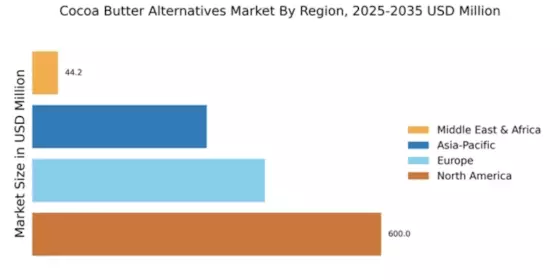
North America is poised to maintain its leadership in the Cocoa Butter Alternatives market, holding a significant market share of $600.0M in 2025. The region's growth is driven by increasing consumer demand for plant-based products and health-conscious alternatives. Regulatory support for sustainable sourcing and production practices further enhances market dynamics, encouraging innovation and investment in this sector. The competitive landscape is characterized by major players such as Cargill, BASF, and Olam International, which are actively expanding their product portfolios. The U.S. and Canada are the leading countries, with a robust infrastructure for distribution and a growing trend towards organic and non-GMO products. This positions North America as a hub for innovation in cocoa alternatives, attracting both local and international investments.

Europe : Emerging Market for Alternatives

Europe is witnessing a notable rise in the Cocoa Butter Alternatives market, with a market size of $400.0M projected for 2025. The region's growth is fueled by increasing health awareness and a shift towards sustainable food options. Regulatory frameworks promoting clean label products and transparency in sourcing are significant catalysts for this market expansion, aligning with consumer preferences for ethical consumption. Leading countries in this region include Germany, France, and the Netherlands, where key players like BASF and Kerry Group are enhancing their market presence. The competitive landscape is vibrant, with a focus on innovation and product differentiation. European consumers are increasingly seeking high-quality, sustainable alternatives, driving companies to invest in research and development to meet these demands.

Asia-Pacific : Rapidly Growing Market Segment

Asia-Pacific is emerging as a significant player in the Cocoa Butter Alternatives market, with a projected size of $300.0M by 2025. The region's growth is driven by rising disposable incomes and changing dietary preferences towards healthier options. Additionally, government initiatives promoting agricultural sustainability and food innovation are fostering a conducive environment for market expansion. Countries like India and China are at the forefront of this growth, with increasing investments from key players such as Olam International and Wilmar International. The competitive landscape is evolving, with local manufacturers also entering the market to cater to the growing demand for cocoa alternatives. This dynamic environment is expected to enhance product availability and variety, further driving market growth.

Middle East and Africa : Emerging Market Potential

The Middle East and Africa region is gradually developing its Cocoa Butter Alternatives market, with a size of $44.23M anticipated by 2025. The growth is primarily driven by increasing urbanization and a rising middle class seeking diverse food options. Regulatory support for food safety and quality standards is also playing a crucial role in shaping market dynamics, encouraging local production and consumption of cocoa alternatives. Leading countries in this region include South Africa and Nigeria, where local players are beginning to establish a foothold in the market. The competitive landscape is characterized by a mix of international and regional companies, with a focus on adapting products to local tastes and preferences. This emerging market presents significant opportunities for growth as consumer awareness and demand for cocoa alternatives continue to rise.

Key Players and Competitive Insights

The Cocoa Butter Alternatives Market is currently characterized by a dynamic competitive landscape, driven by increasing consumer demand for plant-based and sustainable products. Key players are actively engaging in innovation and strategic partnerships to enhance their market positioning. For instance, Cargill (US) has been focusing on expanding its product portfolio to include more sustainable alternatives, while BASF (DE) emphasizes innovation in its product formulations to meet evolving consumer preferences. These strategies collectively contribute to a competitive environment that is increasingly centered around sustainability and product differentiation.

In terms of business tactics, companies are localizing manufacturing and optimizing supply chains to enhance efficiency and responsiveness to market demands. The market structure appears moderately fragmented, with several key players exerting influence over various segments. This fragmentation allows for niche players to thrive, while larger corporations leverage their scale to optimize operations and drive innovation.

In November 2025, Kerry Group (IE) announced a strategic partnership with a leading plant-based ingredient supplier to enhance its offerings in the Cocoa Butter Alternatives segment. This collaboration is expected to bolster Kerry's product development capabilities, allowing it to cater to the growing demand for clean-label and sustainable ingredients. Such partnerships are indicative of a broader trend where companies seek to combine expertise to accelerate innovation and meet consumer expectations.

In October 2025, Olam International (SG) launched a new line of cocoa butter alternatives that are derived from sustainable sources, aligning with global sustainability goals. This initiative not only enhances Olam's product range but also positions the company as a leader in sustainable sourcing practices. The strategic importance of this launch lies in its potential to attract environmentally conscious consumers and strengthen Olam's market share in a competitive landscape.

In September 2025, Wilmar International (SG) expanded its production capacity for cocoa butter alternatives in response to rising global demand. This expansion is crucial as it enables Wilmar to meet the needs of its clients more effectively while also enhancing its competitive edge through increased supply chain reliability. Such capacity enhancements are vital in a market where demand is rapidly evolving.

As of December 2025, current competitive trends in the Cocoa Butter Alternatives Market are heavily influenced by digitalization, sustainability, and the integration of AI technologies. Strategic alliances are increasingly shaping the landscape, allowing companies to pool resources and expertise. Looking ahead, it appears that competitive differentiation will likely evolve from traditional price-based competition to a focus on innovation, technological advancements, and supply chain reliability. This shift underscores the importance of adaptability and forward-thinking strategies in maintaining a competitive edge.

Key Companies in the Cocoa Butter Alternatives Market market include

Industry Developments

For Instance, August 2022 Karibon, the first premium cocoa butter equivalent (CBE) made exclusively from shea and exceeding industry standards, was recently introduced, according to Bunge Loders Croklaan. This plant-based, nutritionally balanced, and sustainably sourced ingredient will likely satisfy consumer demand for more ethical and sustainable food options without sacrificing taste and quality.

For Instance, September 2022 Illexao, a collection of fats suitable for creating a "super compound" that can substitute up to 100% of the free cocoa butter in a chocolate recipe, was introduced by AAK AB.

Future Outlook

Cocoa Butter Alternatives Market Future Outlook

The Cocoa Butter Alternatives Market is projected to grow at a 6.91% CAGR from 2024 to 2035, driven by rising health consciousness and demand for sustainable products.

New opportunities lie in:

  • Development of plant-based cocoa butter alternatives for vegan markets.
  • Investment in R&D for innovative formulations targeting premium chocolate segments.
  • Expansion of e-commerce platforms for direct-to-consumer sales of cocoa butter alternatives.

By 2035, the market is expected to achieve robust growth, positioning itself as a leader in sustainable food ingredients.

Market Segmentation

Cocoa Butter Alternatives Market Form Outlook

  • Solid
  • Liquid
  • Powder

Cocoa Butter Alternatives Market Source Outlook

  • Plant-based
  • Synthetic
  • Animal-based

Cocoa Butter Alternatives Market End Use Outlook

  • Skincare Products
  • Chocolate Products
  • Baking Ingredients
  • Confectionery

Cocoa Butter Alternatives Market Application Outlook

  • Cosmetics
  • Food and Beverages
  • Pharmaceuticals
  • Personal Care
  • Nutraceuticals

Cocoa Butter Alternatives Market Distribution Channel Outlook

  • Online Retail
  • Supermarkets
  • Specialty Stores
  • Direct Sales

Report Scope

MARKET SIZE 20241344.23(USD Million)
MARKET SIZE 20251437.14(USD Million)
MARKET SIZE 20352803.91(USD Million)
COMPOUND ANNUAL GROWTH RATE (CAGR)6.91% (2024 - 2035)
REPORT COVERAGERevenue Forecast, Competitive Landscape, Growth Factors, and Trends
BASE YEAR2024
Market Forecast Period2025 - 2035
Historical Data2019 - 2024
Market Forecast UnitsUSD Million
Key Companies ProfiledCargill (US), BASF (DE), Kerry Group (IE), Olam International (SG), Wilmar International (SG), Austrian Chocolate (AT), Cocoa Supply (US), Sambavanam (IN), Sambavanam (IN)
Segments CoveredApplication, Source, Form, End Use, Distribution Channel
Key Market OpportunitiesGrowing demand for plant-based ingredients drives innovation in the Cocoa Butter Alternatives Market.
Key Market DynamicsRising consumer demand for plant-based products drives innovation in cocoa butter alternatives and enhances market competition.
Countries CoveredNorth America, Europe, APAC, South America, MEA

Market Highlights

Author
Snehal Singh
Assistant Manager - Research

High acumen in analyzing complex macro & micro markets with more than 6 years of work experience in the field of market research. By implementing her analytical skills in forecasting and estimation into market research reports, she has expertise in Packaging, Construction, and Equipment domains. She handles a team size of 20-25 resources and ensures smooth running of the projects, associated marketing activities, and client servicing.

Leave a Comment

FAQs

How much is the cocoa butter alternatives market?

The cocoa butter alternatives market size was valued at USD 1.26 Billion in 2023

What is the growth rate of the cocoa butter alternatives market?

The market is projected to grow at a CAGR of 6.9% during the forecast period, 2025-2034.

Which region held the largest cocoa butter alternatives market share?

North America had the largest share in the market

Who are the key players in the cocoa butter alternatives market?

The key players in the market are Nisshin OilliO Group, Ltd. (Japan), Fuji Oil Holdings, Inc. (Japan), Cargill, Incorporated (US), Bunge Ltd. (US), Wilmar International Ltd. (Singapore), AAK AB (Sweden), 3F INDUSTRIES LIMITED(India), Felda IFFCO Sdn. Bhd. (Malaysia), Musim Mas (Singapore), and The Mewah Group (Singapore).

Which type led the cocoa butter alternatives market?

The cocoa butter equivalents category dominated the market in 2023.

Which application had the largest cocoa butter alternatives market share?

The bakery & confectionery had the largest share in the market.

Download Free Sample

Kindly complete the form below to receive a free sample of this Report

Compare Licence

×
Features License Type
Single User Multiuser License Enterprise User
Price $4,950 $5,950 $7,250
Maximum User Access Limit 1 User Upto 10 Users Unrestricted Access Throughout the Organization
Free Customization
Direct Access to Analyst
Deliverable Format
Platform Access
Discount on Next Purchase 10% 15% 15%
Printable Versions