×
Request Free Sample ×

Kindly complete the form below to receive a free sample of this Report

* Please use a valid business email

Leading companies partner with us for data-driven Insights

clients tt-cursor
Hero Background

Whole Exome Sequencing Market

ID: MRFR/HC/7291-CR
164 Pages
Kinjoll Dey
May 2020

Whole Exome Sequencing Market Research Report Information By Product (Kits, Systems, And Services), By Technology (Sequencing by Synthesis (SBS) And ION Semiconductor Sequencing), By Application (Diagnostics, Drug Discovery and development, And Agriculture and Animal Research), By End-User (Research Centers and Government Institutes, Hospitals and Diagnostics Centers And Pharmaceuticals & Biotechnology Companies), And By Region (North America, Europe, Asia-Pacific, And Rest Of The World) –Market Forecast Till 2035

Share:
Download PDF ×

We do not share your information with anyone. However, we may send you emails based on your report interest from time to time. You may contact us at any time to opt-out.

Whole Exome Sequencing Market Infographic
Purchase Options

Whole Exome Sequencing Market Summary

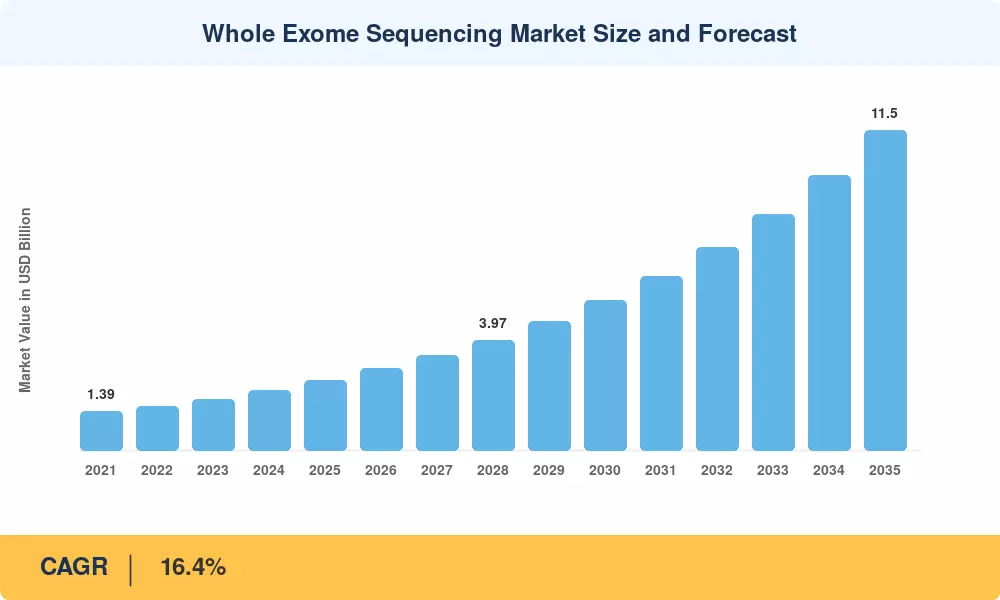
As per MRFR analysis, the Whole Exome Sequencing Market Size was estimated at 2163.64 USD Million in 2024. The Whole Exome Sequencing industry is projected to grow from 2600.73 in 2025 to 16376.23 by 2035, exhibiting a compound annual growth rate (CAGR) of 20.2 during the forecast period 2025 - 2035.

Key Market Trends & Highlights

The Whole Exome Sequencing Market is poised for substantial growth driven by technological advancements and increasing demand for personalized medicine.

  • Technological advancements in sequencing are enhancing the accuracy and efficiency of whole exome sequencing.
  • North America remains the largest market, while the Asia-Pacific region is emerging as the fastest-growing area for whole exome sequencing.
  • The clinical diagnostics segment dominates the market, whereas the personalized medicine segment is experiencing rapid growth.
  • Rising demand for genetic testing and increased investment in genomic research are key drivers propelling market expansion.

Market Size & Forecast

2024 Market Size 2163.64 (USD Million)
2035 Market Size 16376.23 (USD Million)
CAGR (2025 - 2035) 20.2%

Major Players

Illumina (US), Thermo Fisher Scientific (US), Agilent Technologies (US), BGI Genomics (CN), Roche (CH), PerkinElmer (US), Macrogen (KR), Eurofins Scientific (LU), Fulgent Genetics (US)

Whole Exome Sequencing Market Trends

The Whole Exome Sequencing Market is currently experiencing a notable transformation, driven by advancements in genomic technologies and an increasing emphasis on personalized medicine. As healthcare systems worldwide recognize the potential of exome sequencing in diagnosing genetic disorders, the demand for these services is on the rise. This trend is further supported by the growing number of research initiatives aimed at understanding the genetic basis of diseases, which in turn fuels the need for comprehensive genomic analysis. Additionally, the integration of artificial intelligence and machine learning in data interpretation is enhancing the efficiency and accuracy of exome sequencing, making it more accessible to a broader range of healthcare providers. Moreover, the Whole Exome Sequencing Market is witnessing a shift towards more cost-effective solutions, as companies strive to reduce the financial barriers associated with genetic testing. This is likely to encourage wider adoption among clinicians and patients alike. Furthermore, collaborations between academic institutions and biotechnology firms are fostering innovation, leading to the development of novel applications for exome sequencing in various fields, including oncology and rare disease research. As the market continues to evolve, it appears poised for sustained growth, driven by technological advancements and an increasing understanding of the importance of genetic information in healthcare.

Technological Advancements

Recent innovations in sequencing technologies are enhancing the speed and accuracy of whole exome sequencing. These advancements are likely to improve the overall efficiency of genetic testing, making it more appealing to healthcare providers and patients.

Personalized Medicine Growth

The rising focus on personalized medicine is driving demand for whole exome sequencing. As healthcare professionals seek tailored treatment options based on genetic profiles, the relevance of exome sequencing in clinical settings is expected to increase.

Cost Reduction Initiatives

Efforts to lower the costs associated with whole exome sequencing are becoming more prevalent. By making these services more affordable, the market may see a broader adoption among various healthcare sectors, ultimately benefiting patient care.

Whole Exome Sequencing Market Drivers

Market Growth Projections

The Global Whole Exome Sequencing Market Industry is projected to experience substantial growth in the coming years. With a market value of 2.16 USD Billion in 2024, it is anticipated to reach 16.4 USD Billion by 2035, reflecting a remarkable compound annual growth rate of 20.23% from 2025 to 2035. This growth trajectory indicates a robust demand for whole exome sequencing services, driven by advancements in technology, increasing applications in various fields, and supportive government initiatives. The market's expansion is likely to reshape the landscape of genetic testing, making whole exome sequencing an integral component of modern healthcare.

Growing Applications in Oncology

The application of whole exome sequencing in oncology is a significant driver for the Global Whole Exome Sequencing Market Industry. As cancer research progresses, the ability to identify specific genetic mutations associated with various cancers allows for tailored treatment strategies. Whole exome sequencing aids in the discovery of novel biomarkers, which can lead to the development of targeted therapies. This trend is particularly evident in precision oncology, where understanding the genetic landscape of tumors enhances treatment efficacy. The increasing focus on personalized cancer therapies is likely to contribute to the market's growth trajectory in the coming years.

Rising Demand for Genetic Testing

The Global Whole Exome Sequencing Market Industry experiences a surge in demand for genetic testing, driven by the increasing prevalence of genetic disorders and the need for personalized medicine. As healthcare systems worldwide prioritize precision medicine, whole exome sequencing becomes a pivotal tool in identifying genetic mutations. In 2024, the market is valued at approximately 2.16 USD Billion, reflecting a growing recognition of the importance of genetic insights in clinical decision-making. This trend is expected to continue, with projections indicating a market expansion to 16.4 USD Billion by 2035, highlighting the critical role of whole exome sequencing in modern healthcare.

Government Initiatives and Funding

Government initiatives and funding play a crucial role in advancing the Global Whole Exome Sequencing Market Industry. Various countries are investing in genomic research and infrastructure to promote the integration of genetic testing into routine clinical practice. For instance, national health programs are increasingly supporting initiatives that facilitate access to whole exome sequencing for patients with rare diseases. Such investments not only enhance research capabilities but also encourage collaboration between public and private sectors. As governments recognize the potential of genomics in improving healthcare outcomes, the market is poised for substantial growth, driven by supportive policies and funding.

Increasing Awareness and Education

Increasing awareness and education regarding the benefits of whole exome sequencing significantly influence the Global Whole Exome Sequencing Market Industry. Healthcare professionals and patients alike are becoming more informed about the advantages of genetic testing in disease prevention and management. Educational campaigns and resources provided by healthcare organizations contribute to a better understanding of how whole exome sequencing can impact patient care. This heightened awareness is likely to drive demand for genetic testing services, as individuals seek proactive approaches to their health. Consequently, the market is expected to expand as more stakeholders recognize the value of genomic insights.

Technological Advancements in Sequencing Techniques

Advancements in sequencing technologies significantly propel the Global Whole Exome Sequencing Market Industry. Innovations such as next-generation sequencing (NGS) enhance the speed and accuracy of exome sequencing, making it more accessible and cost-effective. These technological improvements not only reduce the time required for sequencing but also increase the throughput of genetic data analysis. As a result, healthcare providers are more inclined to adopt whole exome sequencing as a standard practice in diagnostics. The anticipated compound annual growth rate of 20.23% from 2025 to 2035 underscores the transformative impact of these advancements on the market.

Market Segment Insights

By Application: Clinical Diagnostics (Largest) vs. Personalized Medicine (Fastest-Growing)

The Whole Exome Sequencing Market is significantly diverse, with 'Clinical Diagnostics' taking the lead in market share among the various applications. This segment is widely recognized for its role in disease identification, with healthcare providers increasingly adopting exome sequencing for precision diagnostics. Following closely are 'Research and Development', 'Drug Discovery', and 'Personalized Medicine', all contributing to the robust competitive landscape of the market.

Clinical Diagnostics (Dominant) vs. Personalized Medicine (Emerging)

The 'Clinical Diagnostics' segment remains dominant in the Whole Exome Sequencing Market, primarily due to its critical role in identifying genetic disorders and tailoring treatment protocols. Healthcare systems are investing heavily in this segment, as accurate diagnostic capabilities significantly enhance patient outcomes. On the other hand, 'Personalized Medicine' is emerging as a rapidly gaining segment, driven by advancements in genomics and a growing demand for tailored healthcare solutions. Personalized medicine leverages whole exome sequencing to customize patient therapies, making it a transformative approach that aligns with contemporary healthcare trends.

By End Use: Hospitals (Largest) vs. Pharmaceutical Companies (Fastest-Growing)

In the Whole Exome Sequencing Market, the end use segment is primarily dominated by hospitals, which account for a significant share due to their advanced infrastructure and growing focus on personalized medicine. Research Institutes and Diagnostic Laboratories also contribute to the market, but they hold a smaller margin compared to hospitals. Pharmaceutical companies are emerging as a crucial player in the market, utilizing whole exome sequencing for drug development and precision medicine initiatives, thus expanding their market share.

Hospitals (Dominant) vs. Pharmaceutical Companies (Emerging)

Hospitals play a dominant role in the Whole Exome Sequencing Market due to their substantial resources and capabilities to conduct comprehensive genomic analyses, making them essential for personalized healthcare. They serve a high volume of patients, translating into steady demand for sequencing services. In contrast, pharmaceutical companies are seen as an emerging segment, leveraging whole exome sequencing for innovative drug discovery and development. They utilize genetic information to develop targeted therapies, which accelerates their growth as personalized medicine gains traction in the industry. This shift creates a dynamic landscape where collaboration between hospitals and pharmaceutical companies can enhance patient outcomes and propel advancements in genomic medicine.

By Technology: Next Generation Sequencing (Largest) vs. Sanger Sequencing (Fastest-Growing)

In the Whole Exome Sequencing Market, Next Generation Sequencing (NGS) holds the largest share, owing to its advanced capabilities in high-throughput data generation and comprehensive genomic analysis. In contrast, Sanger Sequencing, while traditionally considered a gold-standard technique, has seen a revitalized interest as an accessible testing method, which leads to a growing but smaller market share. Microarray Technology also plays a critical role, focusing on specific genomic regions but is less dominant in the wider market context than NGS and Sanger Sequencing. The growth trends in the Whole Exome Sequencing Market are primarily driven by the increasing adoption of NGS technology due to its efficiency and cost-effectiveness in genomic research. Sanger Sequencing, recognized for its reliability, is being utilized in specific applications such as confirmatory testing, leading to its fast growth. Furthermore, as advancements in Microarray Technology improve, it shows promise as an essential tool for comparative genomic studies. Overall, innovations and advancements across these technologies continue to shape the market dynamics significantly.

Technology: Next Generation Sequencing (Dominant) vs. Sanger Sequencing (Emerging)

Next Generation Sequencing (NGS) is the dominant technology in the Whole Exome Sequencing Market due to its ability to provide rapid, cost-effective, and comprehensive sequencing results for large-scale genomic studies. Its high-throughput capabilities facilitate extensive sequencing, enabling researchers to uncover complex genetic variations efficiently. On the other hand, Sanger Sequencing, while seen as an emerging technology, is characterized by its accuracy and precision, making it a suitable choice for targeted applications such as smaller-scale sequencing and validation of results obtained from NGS. Both technologies serve critical roles in the market, with NGS leading in usage and innovation while Sanger Sequencing continues to evolve for specific niche applications.

By Product Type: Reagents (Largest) vs. Instruments (Fastest-Growing)

In the Whole Exome Sequencing market, the product type segmentation reveals that reagents hold the largest share, dominating the market with their essential role in the sequencing process. Instruments, which include sequencers and other equipment, are gaining traction and are identified as the fastest-growing segment as technological advancements drive their demand. Software also plays a crucial role but maintains a smaller market share compared to reagents and instruments.

Reagents (Dominant) vs. Instruments (Emerging)

Reagents are fundamental to the Whole Exome Sequencing process, providing the necessary tools to prepare samples and ensure accuracy during sequencing. Their confidence in delivering high-quality results has solidified their position as the dominant force in this segment. On the other hand, instruments are emerging swiftly due to continuous innovations in sequencing technology. With advanced capabilities and enhanced throughput, these instruments are increasingly adopted by research and clinical laboratories, making them a key factor in the future of genome analysis.

By Service Type: Data Analysis Services (Largest) vs. Consultation Services (Fastest-Growing)

In the Whole Exome Sequencing Market, Data Analysis Services hold a significant share, marking them as the largest segment in this field. Their prevalence is driven by increasing demands for detailed genomic insights and the need for precise interpretation of exome data. On the other hand, Consultation Services, while smaller in market share, are gaining traction due to a rise in personalized medicine which calls for expert guidance in exome sequencing processes.

Data Analysis Services (Dominant) vs. Consultation Services (Emerging)

Data Analysis Services dominate the Whole Exome Sequencing Market due to their critical role in interpreting complex genomic data deriving from exomes. With an increasing number of research organizations and clinical laboratories relying on sophisticated data analysis, this segment continues to see steady demand. In contrast, Consultation Services are emerging as an important facilitator, offering expertise in navigating genomic testing and interpreting results. The growth of personalized medicine has catalyzed this segment, as healthcare providers seek to understand the implications of exome sequencing for patient care.

Get more detailed insights about Whole Exome Sequencing Market

Regional Insights

North America : Market Leader in Innovation

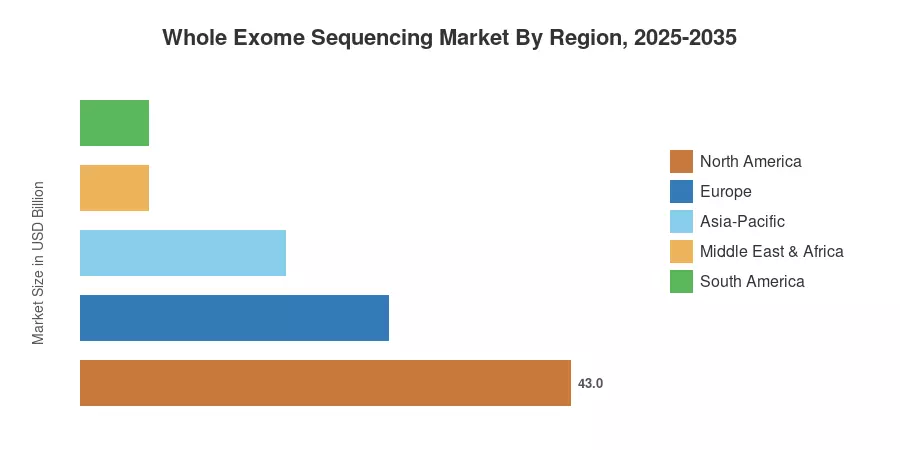
North America continues to lead the Whole Exome Sequencing market, holding a significant share of 1080.0M in 2024. The region's growth is driven by advanced healthcare infrastructure, increasing investments in genomics, and a rising prevalence of genetic disorders. Regulatory support from agencies like the FDA further catalyzes innovation and adoption of exome sequencing technologies, enhancing research and clinical applications. The competitive landscape is robust, with key players such as Illumina, Thermo Fisher Scientific, and Agilent Technologies dominating the market. The U.S. remains the largest contributor, supported by a strong focus on personalized medicine and extensive research initiatives. The presence of leading companies fosters a dynamic environment for technological advancements, ensuring North America's continued leadership in the global market.

Europe : Emerging Market with Growth Potential

Europe's Whole Exome Sequencing market is valued at 600.0M, reflecting a growing demand for genetic testing and personalized medicine. The region benefits from supportive regulatory frameworks and funding initiatives aimed at enhancing genomic research. Countries like Germany and the UK are at the forefront, driving advancements in healthcare technology and increasing public awareness of genetic disorders. The competitive landscape features prominent players such as Roche and Eurofins Scientific, contributing to a vibrant market. The European Union's commitment to genomic research and healthcare innovation is evident in initiatives like Horizon Europe, which aims to boost research funding. This regulatory support is crucial for fostering collaboration among stakeholders and enhancing the region's market position.

Asia-Pacific : Rapidly Growing Market Segment

The Asia-Pacific region, with a market size of 400.0M, is witnessing rapid growth in Whole Exome Sequencing driven by rising healthcare expenditures and increasing awareness of genetic testing. Countries like China and Japan are leading the charge, supported by government initiatives aimed at enhancing genomic research and healthcare services. The demand for personalized medicine is also on the rise, further propelling market growth. The competitive landscape is evolving, with key players like BGI Genomics and Macrogen making significant strides. The region's diverse population and varying healthcare needs present unique opportunities for tailored genomic solutions. As investments in biotechnology increase, the Asia-Pacific market is poised for substantial growth, attracting both local and international players.

Middle East and Africa : Emerging Market with Challenges

The Middle East and Africa (MEA) region, valued at 83.64M, presents a nascent but promising market for Whole Exome Sequencing. Growth is driven by increasing healthcare investments and a rising focus on genetic research. However, challenges such as limited infrastructure and regulatory hurdles remain. Countries like South Africa and the UAE are making strides in enhancing their genomic capabilities, supported by government initiatives aimed at improving healthcare access. The competitive landscape is still developing, with a few key players beginning to establish a presence. The region's unique demographic diversity offers opportunities for personalized genomic solutions. As awareness of genetic testing grows, the MEA market is expected to expand, albeit at a slower pace compared to other regions, necessitating strategic investments and collaborations.

Key Players and Competitive Insights

The Whole Exome Sequencing Market is currently characterized by a dynamic competitive landscape, driven by advancements in genomic technologies and increasing demand for personalized medicine. Key players such as Illumina (US), Thermo Fisher Scientific (US), and BGI Genomics (CN) are at the forefront, each adopting distinct strategies to enhance their market positioning. Illumina (US) focuses on innovation through continuous development of next-generation sequencing technologies, while Thermo Fisher Scientific (US) emphasizes strategic partnerships to expand its product offerings. BGI Genomics (CN) is leveraging its cost-effective solutions to penetrate emerging markets, thereby shaping a competitive environment that is increasingly collaborative yet fiercely competitive.

In terms of business tactics, companies are localizing manufacturing and optimizing supply chains to enhance efficiency and reduce costs. The market structure appears moderately fragmented, with several players vying for market share. However, the collective influence of major companies is significant, as they drive technological advancements and set industry standards, thereby impacting smaller players and new entrants.

In November 2025, Illumina (US) announced a partnership with a leading healthcare provider to integrate its sequencing technology into routine clinical practice. This strategic move is likely to enhance patient access to genomic testing, thereby solidifying Illumina's position as a leader in the market. The partnership underscores the growing trend of integrating genomic data into healthcare, which could potentially revolutionize patient care.

In October 2025, Thermo Fisher Scientific (US) launched a new exome sequencing platform designed to improve throughput and reduce turnaround times. This innovation is crucial as it addresses the increasing demand for rapid genomic analysis in clinical settings. By enhancing its technological capabilities, Thermo Fisher Scientific (US) is positioning itself to capture a larger share of the market, particularly in regions where speed and efficiency are paramount.

In September 2025, BGI Genomics (CN) expanded its operations into Southeast Asia, establishing a new facility aimed at increasing its production capacity. This expansion is indicative of BGI's strategy to capitalize on the growing demand for genomic services in emerging markets. By localizing its operations, BGI Genomics (CN) not only reduces shipping costs but also enhances its ability to respond to regional market needs swiftly.

As of December 2025, current competitive trends in the Whole Exome Sequencing Market are heavily influenced by digitalization, sustainability, and the integration of artificial intelligence (AI) into genomic research. Strategic alliances are increasingly shaping the landscape, as companies recognize the value of collaboration in driving innovation. Looking ahead, competitive differentiation is expected to evolve, with a notable shift from price-based competition towards a focus on technological innovation and supply chain reliability. This transition may redefine market dynamics, emphasizing the importance of quality and efficiency in genomic solutions.

Key Companies in the Whole Exome Sequencing Market market include

Industry Developments

  • Q2 2024: Illumina Appoints Jacob Thaysen as Chief Executive Officer Illumina, a leading provider of whole exome sequencing solutions, announced the appointment of Jacob Thaysen as CEO, signaling a new phase of leadership for the company’s genomics and sequencing business.
  • Q1 2024: Thermo Fisher Scientific Launches Ion Torrent Genexus System for Clinical Exome Sequencing Thermo Fisher Scientific introduced the Ion Torrent Genexus System, a fully integrated next-generation sequencing platform designed to streamline clinical exome sequencing workflows for hospitals and diagnostic labs.
  • Q2 2024: Roche Receives CE-IVD Mark for AVENIO Tumor Tissue Comprehensive Genomic Profiling Kit Roche announced that its AVENIO Tumor Tissue CGP Kit, which includes whole exome sequencing capabilities, received CE-IVD approval, enabling its use in clinical diagnostics across Europe.
  • Q2 2024: Agilent Technologies Launches SureSelect Human All Exon V9 for Enhanced Exome Sequencing Agilent Technologies released the SureSelect Human All Exon V9, a new exome enrichment solution designed to improve coverage and accuracy for whole exome sequencing applications.
  • Q1 2024: BGI Genomics Expands Clinical Sequencing Lab in Europe BGI Genomics opened a new clinical sequencing laboratory in Copenhagen, Denmark, to increase its capacity for whole exome and genome sequencing services in the European market.
  • Q2 2024: Eurofins Launches Clinical Exome Sequencing Service for Rare Disease Diagnosis Eurofins Scientific announced the launch of a new clinical exome sequencing service aimed at accelerating the diagnosis of rare genetic disorders in Europe and North America.
  • Q1 2024: QIAGEN and Illumina Announce Partnership to Integrate QIAGEN’s Bioinformatics with Illumina Sequencers QIAGEN and Illumina entered a strategic partnership to integrate QIAGEN’s bioinformatics solutions with Illumina’s sequencing platforms, enhancing data analysis for whole exome sequencing workflows.
  • Q2 2024: Oxford Nanopore Technologies Launches New Exome Sequencing Kit for Long-Read Applications Oxford Nanopore Technologies introduced a new exome sequencing kit optimized for long-read sequencing, enabling more comprehensive variant detection in clinical and research settings.
  • Q1 2024: Novogene Opens New Sequencing Facility in Singapore Novogene, a global provider of whole exome sequencing services, inaugurated a new high-throughput sequencing facility in Singapore to serve the Asia-Pacific region.
  • Q2 2024: Myriad Genetics Receives FDA Clearance for Exome-Based Hereditary Cancer Test Myriad Genetics announced FDA clearance for its new exome-based hereditary cancer test, expanding its portfolio of clinical genetic testing solutions.
  • Q1 2024: Pacific Biosciences Launches Revio System for High-Throughput Exome Sequencing Pacific Biosciences launched the Revio System, a new sequencing platform designed to deliver high-throughput and high-accuracy whole exome sequencing for research and clinical applications.
  • Q2 2024: Roche and Genentech Announce Collaboration with UCSF for Large-Scale Exome Sequencing Study Roche and Genentech partnered with the University of California, San Francisco to conduct a large-scale whole exome sequencing study aimed at identifying novel genetic drivers of neurodegenerative diseases.

Future Outlook

Whole Exome Sequencing Market Future Outlook

The Whole Exome Sequencing Market is projected to grow at a 20.2% CAGR from 2024 to 2035, driven by advancements in genomics, increasing demand for personalized medicine, and technological innovations.

New opportunities lie in:

  • Development of integrated bioinformatics platforms for data analysis.
  • Expansion of direct-to-consumer exome sequencing services.
  • Partnerships with pharmaceutical companies for drug development based on genetic insights.

By 2035, the Whole Exome Sequencing Market is expected to be a pivotal component of precision medicine.

Market Segmentation

Whole Exome Sequencing Market End Use Outlook

  • Hospitals
  • Research Institutes
  • Pharmaceutical Companies
  • Diagnostic Laboratories

Whole Exome Sequencing Market Technology Outlook

  • Next Generation Sequencing
  • Sanger Sequencing
  • Microarray Technology

Whole Exome Sequencing Market Application Outlook

  • Clinical Diagnostics
  • Research and Development
  • Drug Discovery
  • Personalized Medicine

Whole Exome Sequencing Market Product Type Outlook

  • Reagents
  • Instruments
  • Software

Whole Exome Sequencing Market Service Type Outlook

  • Data Analysis Services
  • Consultation Services
  • Sample Preparation Services

Report Scope

MARKET SIZE 20242163.64(USD Million)
MARKET SIZE 20252600.73(USD Million)
MARKET SIZE 203516376.23(USD Million)
COMPOUND ANNUAL GROWTH RATE (CAGR)20.2% (2024 - 2035)
REPORT COVERAGERevenue Forecast, Competitive Landscape, Growth Factors, and Trends
BASE YEAR2024
Market Forecast Period2025 - 2035
Historical Data2019 - 2024
Market Forecast UnitsUSD Million
Key Companies ProfiledIllumina (US), Thermo Fisher Scientific (US), Agilent Technologies (US), BGI Genomics (CN), Roche (CH), PerkinElmer (US), Macrogen (KR), Eurofins Scientific (LU), Fulgent Genetics (US)
Segments CoveredApplication, End Use, Technology, Product Type, Service Type
Key Market OpportunitiesAdvancements in personalized medicine drive demand for Whole Exome Sequencing Market solutions and services.
Key Market DynamicsTechnological advancements and regulatory changes drive competitive dynamics in the Whole Exome Sequencing Market.
Countries CoveredNorth America, Europe, APAC, South America, MEA

Market Highlights

Author
Kinjoll Dey
Research Analyst Level I

He is an extremely curious individual currently working in Healthcare and Medical Devices Domain. Kinjoll is comfortably versed in data centric research backed by healthcare educational background. He leverages extensive data mining and analytics tools such as Primary and Secondary Research, Statistical Analysis, Machine Learning, Data Modelling. His key role also involves Technical Sales Support, Client Interaction and Project management within the Healthcare team. Lastly, he showcases extensive affinity towards learning new skills and remain fascinated in implementing them.

Leave a Comment

FAQs

What is the projected growth of the Whole Exome Sequencing market?

The Whole Exome Sequencing market is the expected increase in total market value of 16.38 USD billion over a defined forecast period 2025–2035. It is driven by factors such as demand trends, technological advances, regulatory changes, and geographic expansion.

What is the size of the Whole Exome Sequencing market?

Whole Exome Sequencing market size was valued at approximately 2.16 billion USD in 2024. This figure will reach 16.38 billion USD covering all regions (America, Europe, Asia, MEA and ROW), focusing its segments / services / distribution channels till 2035.

What is the CAGR of the Whole Exome Sequencing market?

Whole Exome Sequencing market is expected to grow at a CAGR of 20.2% between 2025 and 2035.

How much will the Whole Exome Sequencing market be worth by 2035?

Whole Exome Sequencing market is expected to be worth of 16.38 billion USD, reflecting growth driven by usage, technology and global demands by the end of 2035.

How will the Whole Exome Sequencing market perform over the next 10 years?

Over the next 10 years the Whole Exome Sequencing market is expected to shift from usd billion 2.16 to 16.38 billion USD, led by adoption of advanced tech, demographic trends, regulatory approvals, with potential headwinds from 2025 to 2035.

Which region held the largest market share in the Whole Exome Sequencing market?

North America had the largest share of the market

Download Free Sample

Kindly complete the form below to receive a free sample of this Report

Compare Licence

×
Features License Type
Single User Multiuser License Enterprise User
Price $4,950 $5,950 $7,250
Maximum User Access Limit 1 User Upto 10 Users Unrestricted Access Throughout the Organization
Free Customization
Direct Access to Analyst
Deliverable Format
Platform Access
Discount on Next Purchase 10% 15% 15%
Printable Versions